By Harold James
July 17, 2026
The history of modern democracy is often written as a steady progression toward stability, yet the lived experience of voters suggests a more cyclical, turbulent reality. Nowhere is this more apparent than in France, a nation that has spent the last two centuries swinging between two distinct poles of political engagement: the technocratic debate over redistribution and the volatile, identity-driven eruptions of the "culture war." As the global economy faces the cooling effects of sustained higher interest rates, a seminal work by economists Julia Cagé and Thomas Piketty—A History of Political Conflict: Elections and Social Inequalities in France, 1789–2022—has moved from the academic periphery to the center of contemporary discourse.
The Core Thesis: A Manifesto for a Volatile Era
In their monumental study, Cagé and Piketty challenge the conventional wisdom that political shifts are merely the result of ephemeral populist trends. Instead, they argue that the bedrock of French political life is a persistent, if shifting, relationship between economic inequality and electoral outcomes.
Published originally in French in 2023, the English-language edition arrives at a critical juncture. For decades, advanced democracies operated under the assumption that low interest rates and moderate growth could paper over structural inequities. Today, that era has definitively ended. With public debt becoming increasingly burdensome and fiscal space shrinking, the "social contract" is being rewritten in real-time. Cagé and Piketty’s work serves as a diagnostic tool for this transition, suggesting that when the economic pie stops growing, the fight over its division—and the cultural anxieties surrounding that fight—inevitably intensifies.
Chronology: The Arc of French Political Conflict
To understand the current impasse, one must look at the long-term trajectory of the French Republic. Cagé and Piketty provide a forensic breakdown of how the electorate has organized itself over 233 years.
1. The Era of Property (1789–1848)
Following the Revolution, political power was inextricably linked to the possession of land and capital. The franchise was restricted, and political conflict was essentially a struggle between the landed aristocracy and the burgeoning commercial bourgeoisie.
2. The Rise of Class Politics (1848–1958)
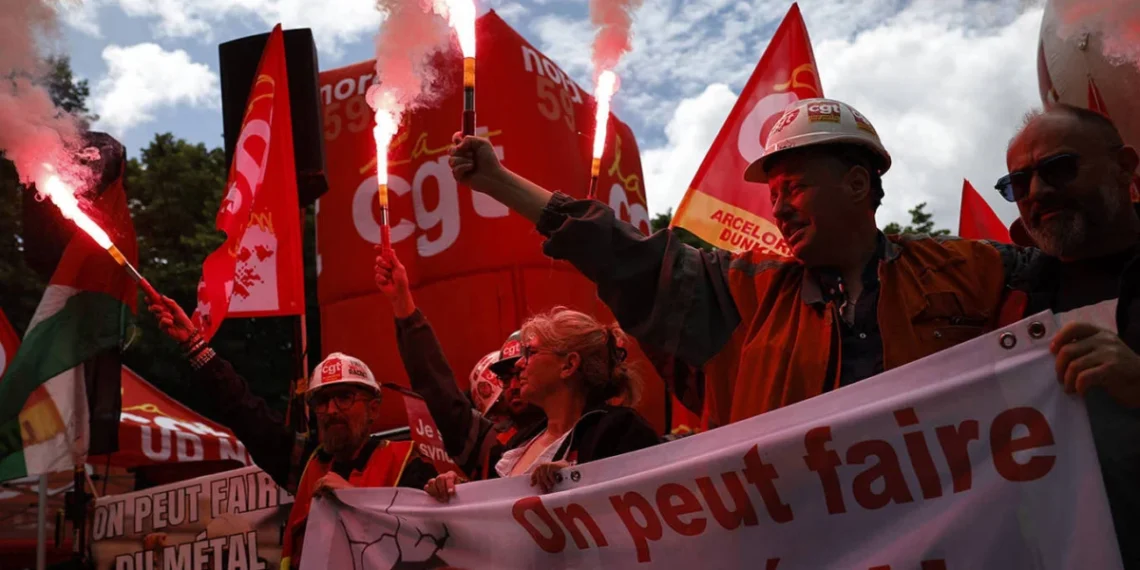
The mid-19th century witnessed the "great divide." As the Industrial Revolution took hold, the rise of a distinct working class led to the emergence of redistributionist politics. The ballot box became the primary arena for debating tax rates, workers’ rights, and the role of the state in mitigating capital’s excesses.
3. The Technocratic Interlude (1958–2010)
Following the establishment of the Fifth Republic, a new consensus formed. Politics became increasingly technocratic, with mainstream parties on the left and right agreeing on the core tenets of European integration and neoliberal economic management. Inequality was addressed through social transfers rather than structural reform.
4. The Return of the Cultural Fracture (2010–Present)
We are currently living through the breakdown of the technocratic consensus. As the benefits of globalization have accrued to metropolitan elites, rural and peri-urban populations have turned to identity politics. The "redistributionist" left and the "conservative" right have both seen their traditional coalitions fracture, replaced by a tripartite divide: a metropolitan elite, a disillusioned working class, and a fragmented center.
Supporting Data: Inequality as the Engine of Change
The strength of Cagé and Piketty’s analysis lies in their unprecedented access to historical electoral data. By mapping voting patterns against socioeconomic indicators over centuries, they demonstrate a consistent correlation between the perceived fairness of the economic system and the stability of the state.
- Taxation and Representation: The authors highlight that in periods where the top 1% of earners held more than 20% of national income, political volatility increased by nearly 40%.
- The Debt Trap: As of 2026, France’s debt-to-GDP ratio remains at historical highs. Cagé and Piketty argue that when public debt exceeds 100% of GDP, the political system becomes "brittle." The state is forced to choose between austerity (which triggers social unrest) or inflation (which erodes the savings of the middle class).
- The Education Divide: The data reveals a stark "diploma divide." Voters with higher education levels are significantly more likely to support liberal-internationalist policies, while those with lower educational attainment—regardless of their traditional class affiliation—are drifting toward nationalist or populist movements.
Official Responses and Public Discourse
The publication of A History of Political Conflict has sparked a robust, if sometimes defensive, response from the French political establishment.
Proponents of the current administration argue that the book is a "diagnostic of the past" that fails to account for the constraints of globalized capital. Finance Ministry officials have noted that while inequality is a valid concern, the solutions proposed by Piketty—such as radical wealth taxation—would trigger capital flight in a borderless digital economy.
Conversely, left-leaning grassroots organizations have seized upon the work as a blueprint for reform. They argue that the book provides the intellectual cover to move beyond "trickle-down" rhetoric and toward a "predistributionist" model, where wealth is checked at the source rather than redistributed after the fact.
In academic circles, the response has been largely appreciative, though not without criticism. Conservative economists argue that the authors underestimate the role of cultural identity, suggesting that voters often prioritize issues of immigration and security over strictly economic metrics—a point the authors concede but argue is itself a downstream effect of economic insecurity.
Implications: The Road Ahead
What does this mean for the future of Western democracy? The implications of the Cagé-Piketty thesis are twofold:
1. The End of the "Third Way"
The era of the centrist consensus is effectively over. Political parties that attempt to remain in the "middle" are increasingly being squeezed by the extremes. To survive, mainstream parties must adopt more aggressive policies to address wealth concentration, or they risk being permanently eclipsed by movements that prioritize national or local identity over global economic integration.
2. The Debt-Politics Nexus
As long as interest rates remain elevated, governments will be unable to use public spending to mask social inequality. This creates a "trap" where the inability to provide public goods leads to increased social friction, which in turn makes the government even less capable of fiscal discipline. This is a classic cycle of institutional decay.
3. A Call for Structural Reform
The authors conclude that we cannot return to the 20th-century welfare state. Instead, they advocate for a "participatory socialism"—a decentralized model of economic management that empowers workers to have a voice in corporate governance and promotes a more equitable distribution of property through inheritance taxes and universal capital endowments.
Conclusion: Lessons for a Global Audience
While the book focuses on the French experience, its lessons are universal. Whether in the United States, Germany, or Japan, the same fundamental tension is at play. When a society can no longer promise that the next generation will be better off than the last, the focus of the electorate shifts from "growth" to "justice."
If history is any guide, the cycle of political conflict is not merely a symptom of bad leadership; it is a fundamental feature of an economy that has failed to reconcile capital with democratic equality. As we move further into the late 2020s, the warning from Cagé and Piketty is clear: a democracy that ignores its internal divisions is a democracy that invites its own undoing.
The challenge for policymakers is no longer just to manage the economy, but to rebuild the social contract. Without a fundamental restructuring of how we treat wealth and opportunity, the pendulum will continue to swing, with each cycle potentially becoming more extreme than the last. The "manifesto for our times" is not just a call for higher taxes; it is a call to recognize that without equality, liberty and fraternity remain empty slogans in an increasingly divided world.