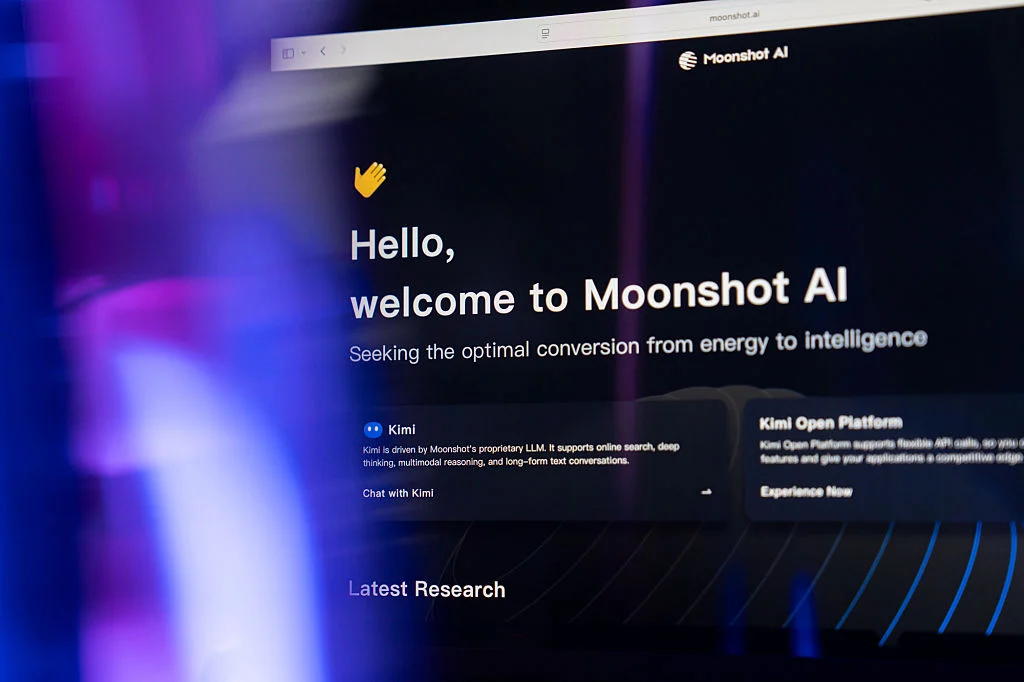
The release of Kimi K3, the latest open-weight model from the Beijing-based startup Moonshot AI, has sent shockwaves through the global artificial intelligence landscape. Coming on the heels of a high-profile speech by Chinese President Xi Jinping at the World AI Conference in Shanghai, the model’s debut has reignited a fierce, high-stakes debate over the future of open-source development, national security, and the geopolitical race for technological supremacy.
As Washington grapples with a complex web of tariff wars, export controls, and domestic regulatory friction, the arrival of Kimi K3 serves as a stark reminder that the "AI moat" American firms once thought impenetrable is rapidly drying up.
The Facts: Kimi K3 and the Performance Gap
Moonshot AI’s announcement this week was characterized by a rare blend of humility and bold assertion. While the company candidly admitted that Kimi K3 "still trails the most powerful proprietary models," such as Claude Fable 5 and GPT 5.6 Sol, it simultaneously touted the model’s performance as "frontier-level."
According to benchmarks released by Moonshot and corroborated by independent observers at Arena.ai and Vals AI, Kimi K3 is not merely a regional curiosity; it is a globally competitive system. The model demonstrates high-level reasoning, coding capabilities, and linguistic nuance that rival the flagship products of the most well-funded Silicon Valley labs.
For the broader AI community, this is a pivotal moment. If a Chinese startup can reach near-parity with the world’s most advanced models while adopting an open-weight distribution strategy, it challenges the fundamental business model of American giants—who have long argued that closed-source, proprietary systems are the only path to safety and excellence.
A Chronology of Escalation: From DeepSeek to Kimi
The discourse surrounding Kimi K3 feels hauntingly familiar to industry veterans. In January 2025, the release of the DeepSeek R1 model marked the first major "China shock" in the generative AI era. At the time, skeptics in the West dismissed the model as a derivative effort, relying heavily on data "distilled" from American models.
However, the months following the DeepSeek release have been marked by a series of cascading events that have heightened tensions:
- Mid-2025: The Trump administration implements a series of aggressive tariffs on high-end computing hardware, aiming to choke off the supply chain for advanced AI training.
- Late 2025: Security concerns regarding Anthropic reach a boiling point, leading the U.S. government to pull back on certain public-private partnerships, citing "national security threats."
- Early 2026: Leading American AI firms, including OpenAI, announce confidential filings for their initial public offerings (IPOs), placing intense pressure on these companies to demonstrate long-term growth and technical dominance.
- Mid-2026: The release of Kimi K3 occurs against the backdrop of President Xi’s Shanghai address, which emphasized China’s commitment to "indigenous innovation" and the strategic necessity of AI as a public utility.
The market response was immediate and visceral. On the Friday following the announcement, the Nasdaq index dropped approximately 1% as investors aggressively sold off shares in chip manufacturers like Nvidia, signaling a broader anxiety that the competitive advantage of American hardware and software is no longer a guaranteed certainty.
The "Distillation" Debate and Technological Sovereignty
One of the most contentious aspects of the Kimi release is the practice of "distillation"—the process of training smaller models on the outputs of larger, more powerful ones.
Former Uber CEO Travis Kalanick recently voiced the frustrations of many in Silicon Valley, arguing that American companies are being hamstrung by their own innovation. "If distillation isn’t enforced against, then everyone should be able to distill from everyone else," Kalanick wrote in a post, suggesting that American models are essentially training their future competitors.
However, the irony of this accusation is not lost on experts. Reports have confirmed that even some American coding platforms, such as Cursor, have previously integrated Moonshot’s Kimi models into their own infrastructure. The reality is that the AI ecosystem has become a tangled web of cross-pollination. The notion of a "purely American" versus "purely Chinese" stack is increasingly a fiction of political rhetoric rather than a reflection of technical reality.
Official Responses and the "AI Communism" Hypothesis
The political fallout has been swift. David Sacks, former AI czar for the Trump administration and co-chair of the President’s Council of Advisors on Science and Technology, used the Kimi news to launch a scathing critique of current U.S. policy.
"The United States is tying itself in knots," Sacks stated. "Politicians and bureaucrats are banning new data centers, piling on state regulations, and pushing for new federal agencies to pre-approve frontier models. This is how you lose the AI race." Sacks further ignited the culture wars by labeling current American models, particularly Anthropic’s Claude, as "woke lobotomized models," arguing that ideological constraints are hindering American technical efficiency.
Conversely, Dean Ball, the former Trump official now serving as the head of strategic futures at OpenAI, offered a more cerebral, albeit dystopian, analysis. Ball suggested that Kimi’s performance is too sophisticated to be dismissed as mere mimicry or simple distillation.
His most provocative claim, however, concerned the long-term trajectory of open-weight models. Ball posited that we are moving toward a state of "AI communism," where the technology is treated as a state-provided "public good."
"This future strikes me as a dystopian hellscape," Ball noted. "But I’ve never met an open-weight models advocate who doesn’t ultimately concede this is where things end." His proposed solution? Rather than an outright ban—which he views as a "dumb" policy motif—Ball advocates for the use of "soft law" to create an environment of Fear, Uncertainty, and Doubt (FUD). By having agencies like the Federal Reserve issue warnings about potential "backdoors" in foreign models, the government could effectively chill the adoption of Chinese AI by regulated American enterprises.
Implications: Is the Panic Justified?
Despite the alarmism, some voices within the industry are urging calm. Shakeel Hashim, editor of the AI-focused publication Transformer, argues that the current "China panic" is largely overblown.
Hashim points out two critical factors:
- Capability Gaps: While Kimi K3 is impressive, it lacks the specialized, high-risk cyber-offensive capabilities that would genuinely threaten national security.
- Incentive Alignment: The Chinese government, despite its current support for open-source AI, will eventually face the same "safety" dilemmas as the U.S. Once Chinese models become sufficiently powerful to pose domestic risks to the state, Beijing will likely move to restrict them just as aggressively as Washington currently does.
The Path Forward
The arrival of Kimi K3 signals that the AI arms race has entered a new phase—one defined less by the absolute power of a single proprietary model and more by the speed of diffusion. If American firms continue to focus on regulatory walls and internal ideological battles, they risk losing the very agility that allowed them to lead in the first place.
Conversely, if the U.S. government follows Dean Ball’s roadmap of regulatory FUD, it may succeed in slowing the adoption of foreign models, but it may also stifle the competitive pressure necessary to keep American companies at the top of their game.
As the world watches, the Kimi K3 event is more than a technical benchmark; it is a litmus test for the global order. Whether the future of AI is defined by the "digital public infrastructure" of the state or the proprietary, market-driven innovation of private labs remains an open question—one that will likely be decided not in the boardrooms of Silicon Valley or the labs of Beijing, but in the legislative halls of Washington and the regulatory agencies of the world’s major powers.