While the headlines following Watches and Wonders Geneva 2026 were dominated by the high-end Rolesium and enamel Daytona, the revamped Yacht-Master II, and the introduction of the proprietary "Jubilee gold" alloy for the Day-Date, a quieter but far more significant transformation was taking place within the brand’s bedrock collection. Rolex, in its characteristic understated fashion, used the 2026 showcase to roll out an expansive update to the Datejust line—a move that effectively reshapes the aesthetic trajectory of its most iconic model.
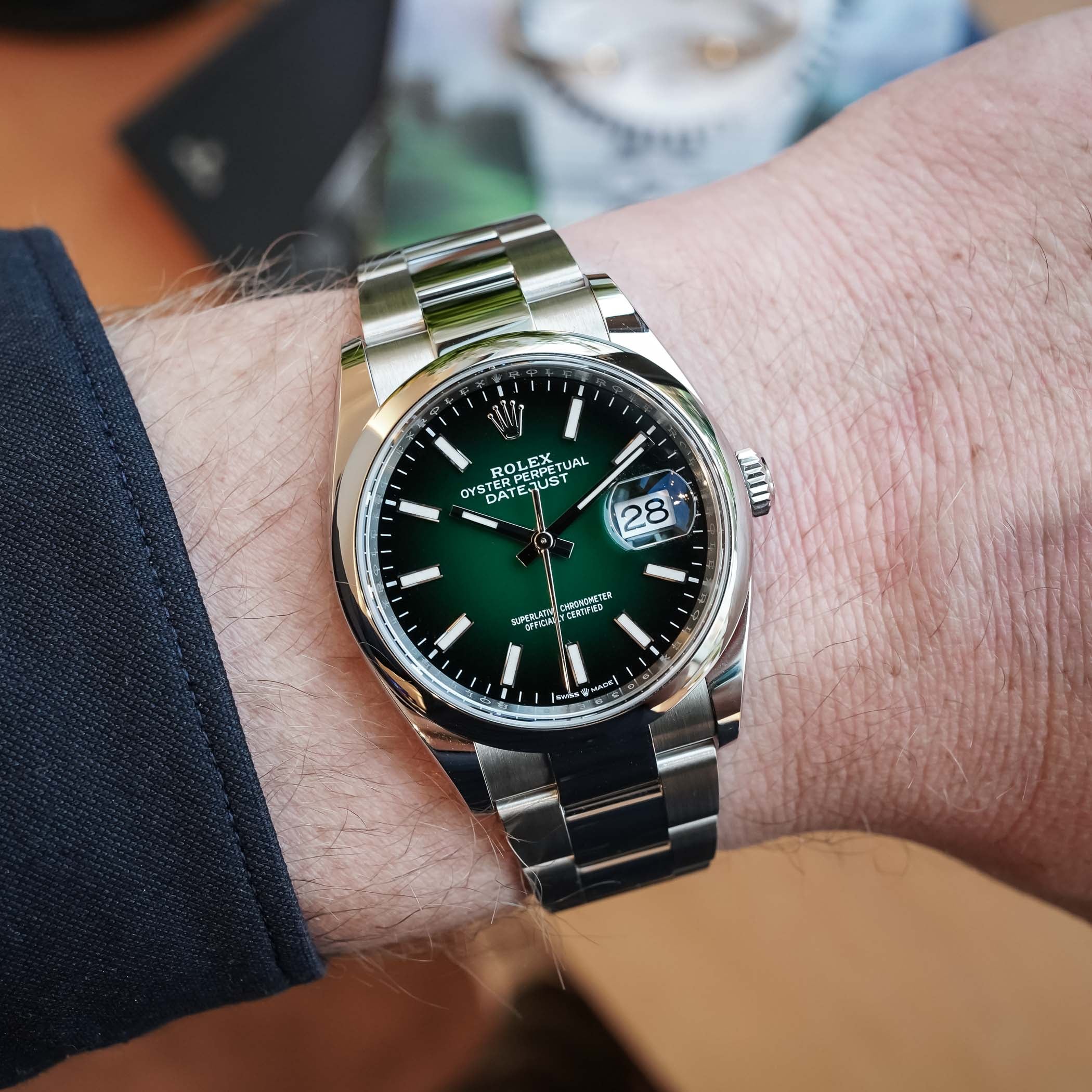
Beyond the widely publicized 100th Anniversary Oyster Perpetual and the singular green ombré Datejust 41 displayed on the showroom floor, the brand quietly introduced over 100 new references to the Datejust family. This massive undertaking, which we had the privilege to examine hands-on at the brand’s Brussels headquarters, represents a profound redesign of the Roman numeral dial aesthetic and a strategic rebalancing of the collection’s core offerings.
Main Facts: A Quiet Revolution in Steel and Gold
The 2026 Datejust update is defined by two primary pillars: the introduction of a new, visually arresting ombré (gradient) dial and a comprehensive redesign of the Roman numeral indices.
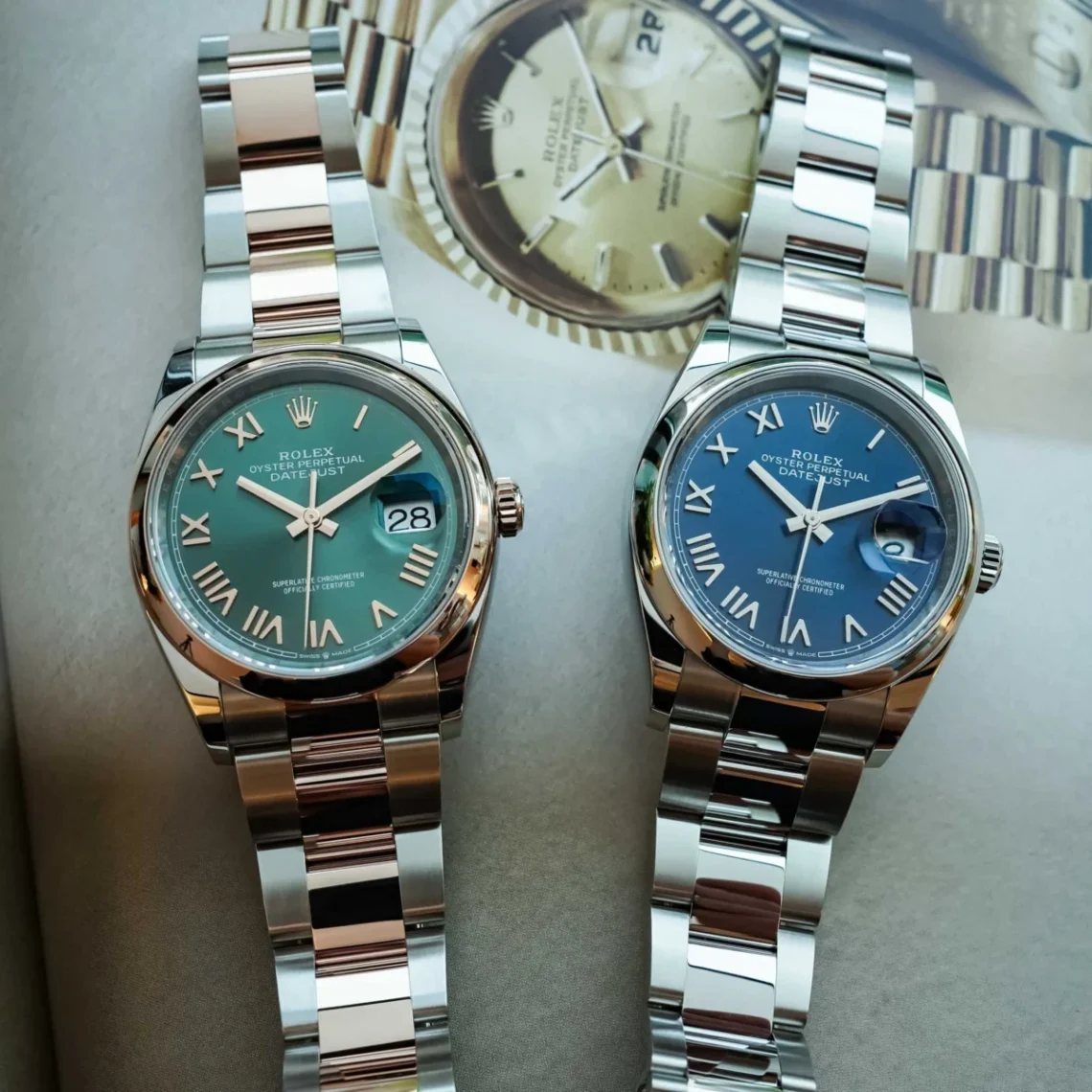
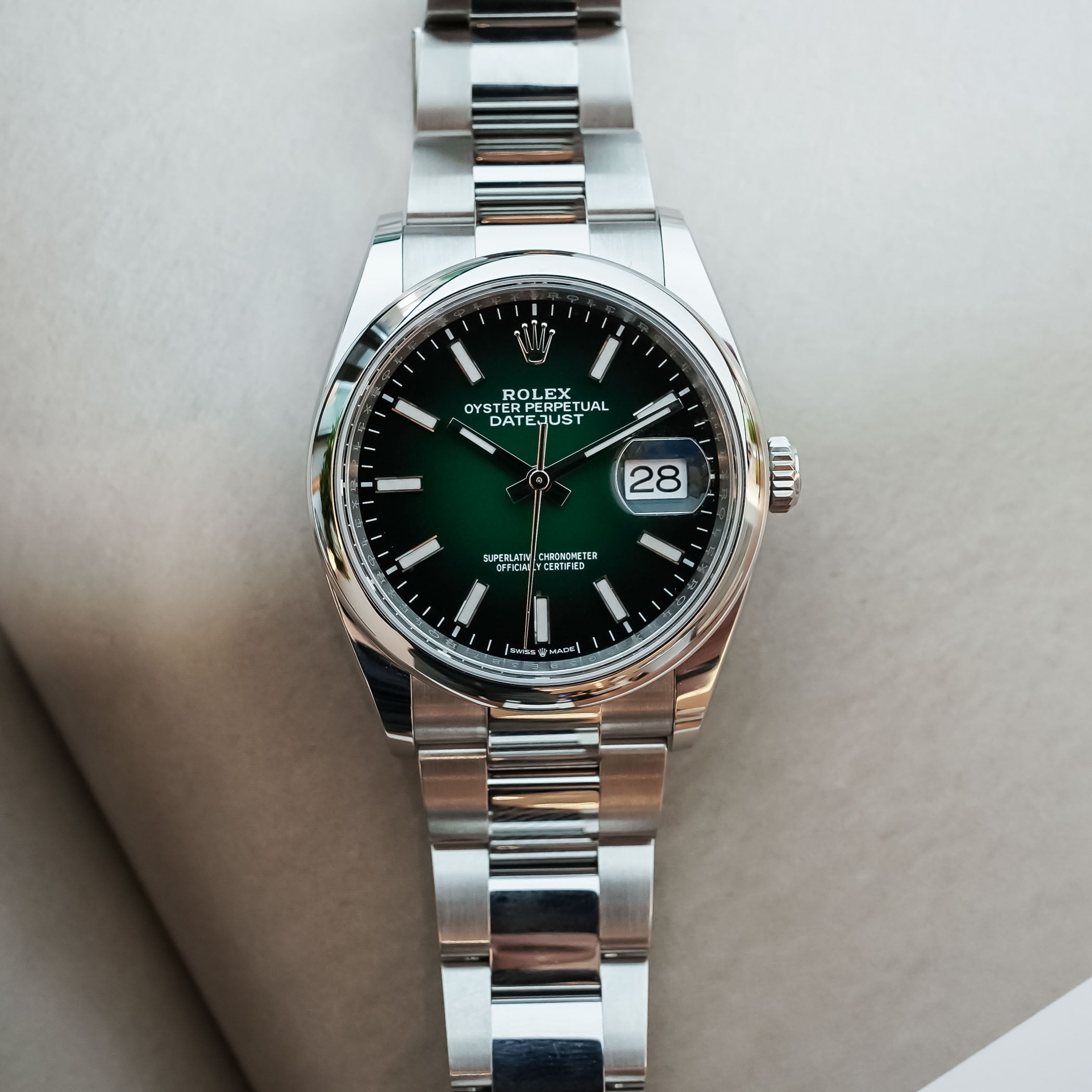
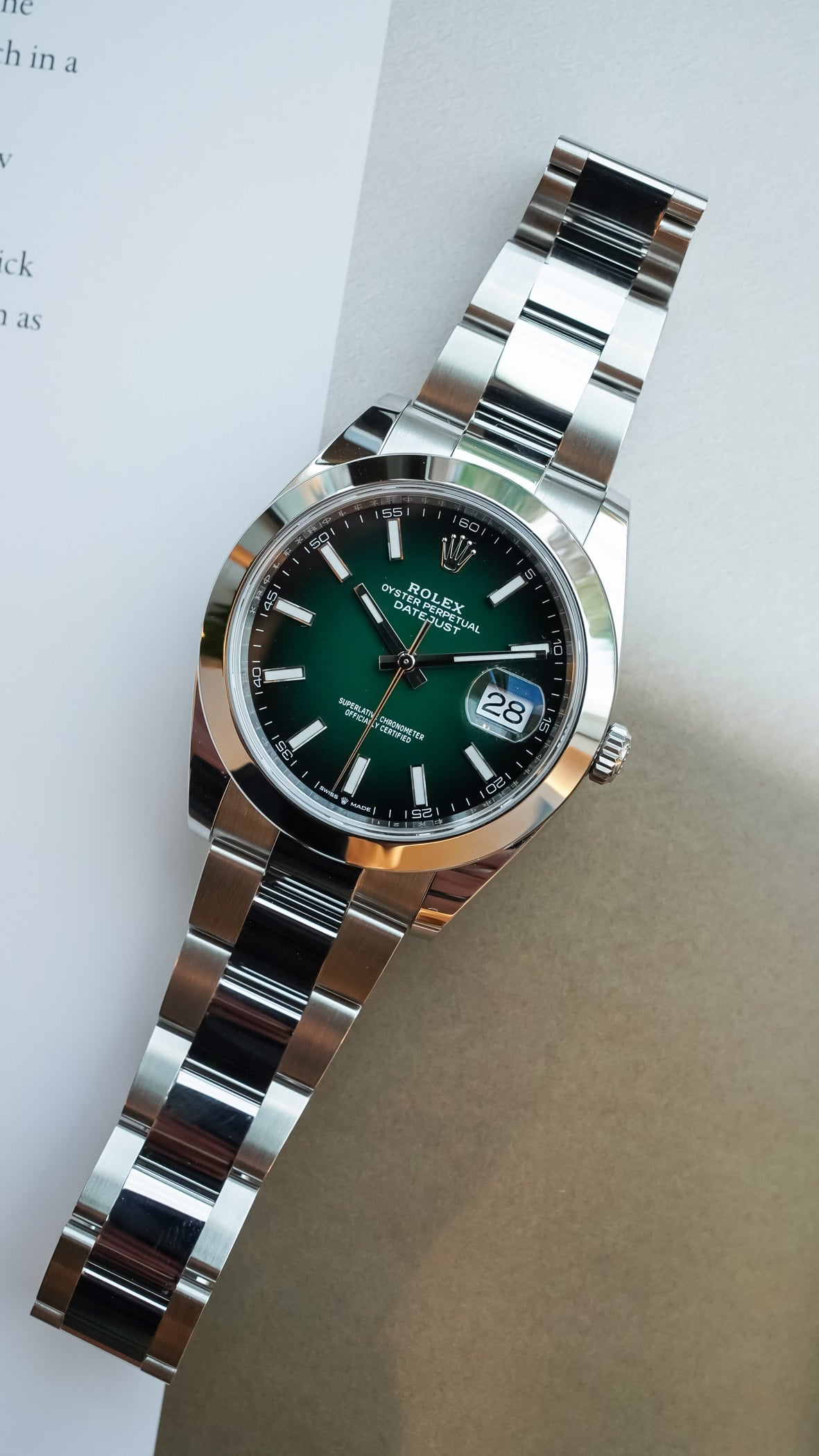
The ombré dial, a style previously reserved for the more exclusive Day-Date range, has finally descended into the Datejust collection. While Rolex’s official presentation focused on a singular 41mm steel model paired with an Oyster bracelet and a white gold fluted bezel, the reality is far more diverse. The green ombré dial is, in fact, available across eight distinct references, spanning both 36mm and 41mm case sizes, and compatible with both Oyster and Jubilee bracelets, as well as smooth or fluted bezels.
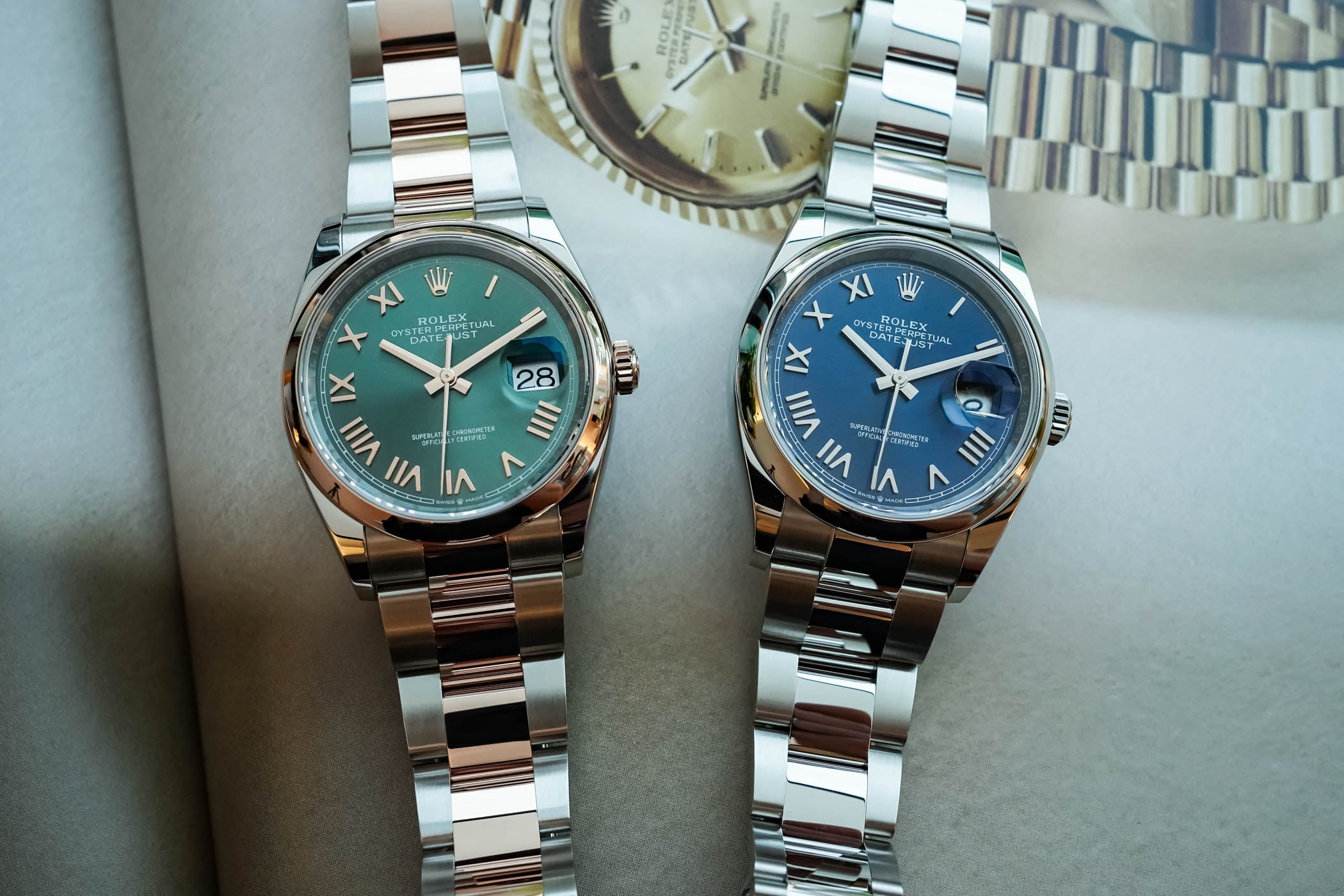
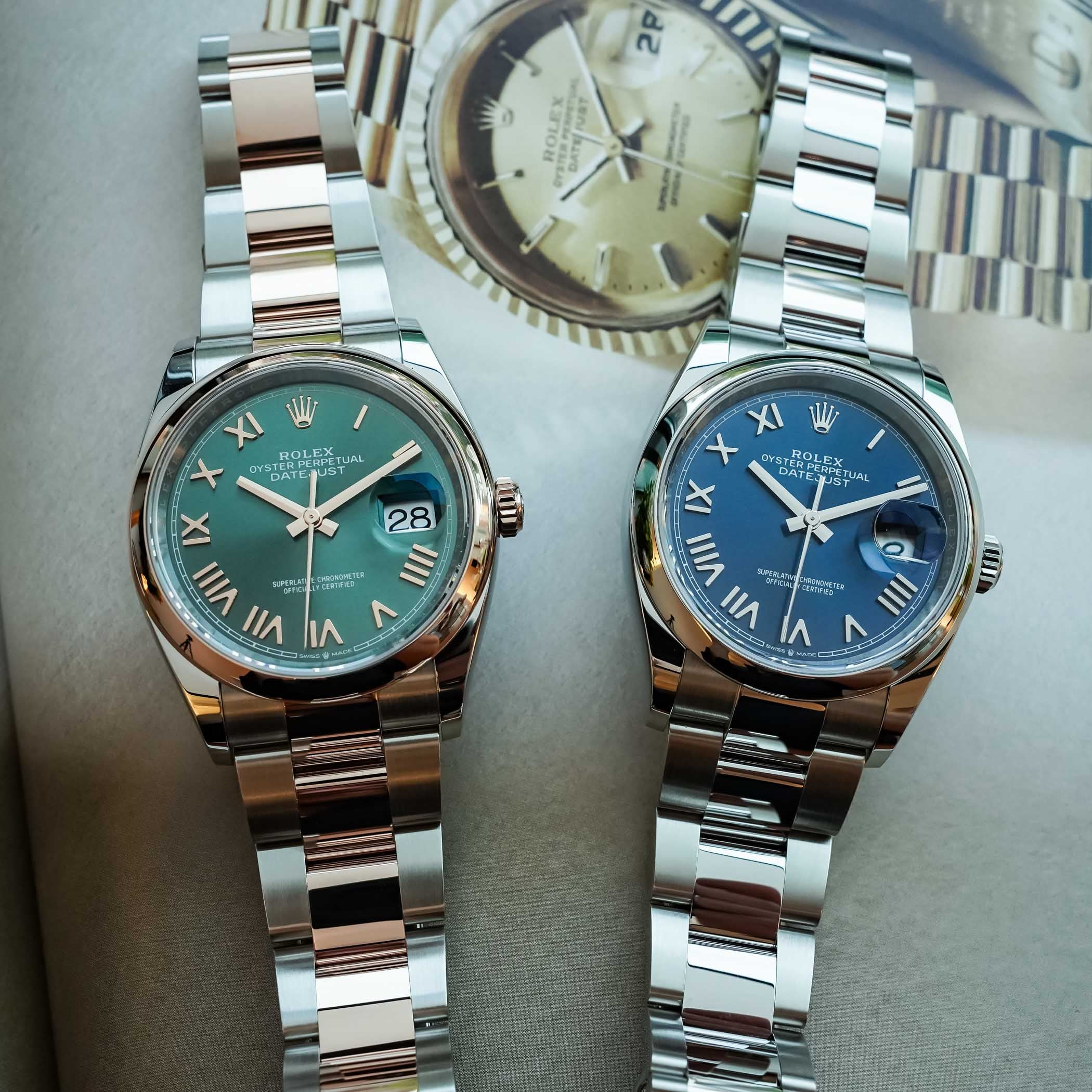
Furthermore, the "hidden" update lies in the Roman numeral dials. Except for the perennial favorite "Wimbledon" model, every Roman numeral dial in the Datejust 36 and 41 lineups has been replaced. This change is not merely cosmetic; it involves a fundamental shift in the geometry, typography, and construction of the applied numerals, moving the Datejust closer to the design language of the Day-Date 40.
Chronology: The Evolution of an Icon
To understand the magnitude of this change, one must look at the recent history of the Datejust. Since the 2016 and 2017 updates, which introduced the state-of-the-art Calibre 3235 movement, the Datejust has remained largely consistent in its technical execution. The 2019 reintroduction of ombré dials on the Day-Date established a design language that has now become a standard for the brand’s premium catalog.
The 2026 release cycle can be broken down as follows:
- Early 2026: Initial industry speculation regarding a potential "refresh" of the Datejust collection following the successful implementation of the Calibre 3235.
- Watches and Wonders 2026: The official unveiling of the 100th Anniversary Oyster Perpetual and the flagship green ombré Datejust 41.
- Post-Show Phase: The gradual discovery of the secondary, silent release of the 100+ new reference numbers, including the redesigned Roman numeral dials.
- Mid-2026: Hands-on review periods confirming that the updates extend to the entire material catalog, including steel, white Rolesor, yellow Rolesor, and Everose Rolesor.
Supporting Data: The Technical Divergence of 36mm vs. 41mm
A common misconception among collectors is that the Datejust 36 and 41 are simply scaled versions of the same watch. Our hands-on analysis reveals that they are, in fact, distinct products with different design intents.
Comparative Metrics
| Feature | Datejust 36 | Datejust 41 |
|---|---|---|
| Thickness | 11.8mm | 11.6mm |
| Lug-to-Lug | 43.1mm | 47.4mm |
| Lug Width | 20mm | 21mm |
| Dial Opening | 30mm | 32mm |
| Movement | Calibre 3235 | Calibre 3235 |
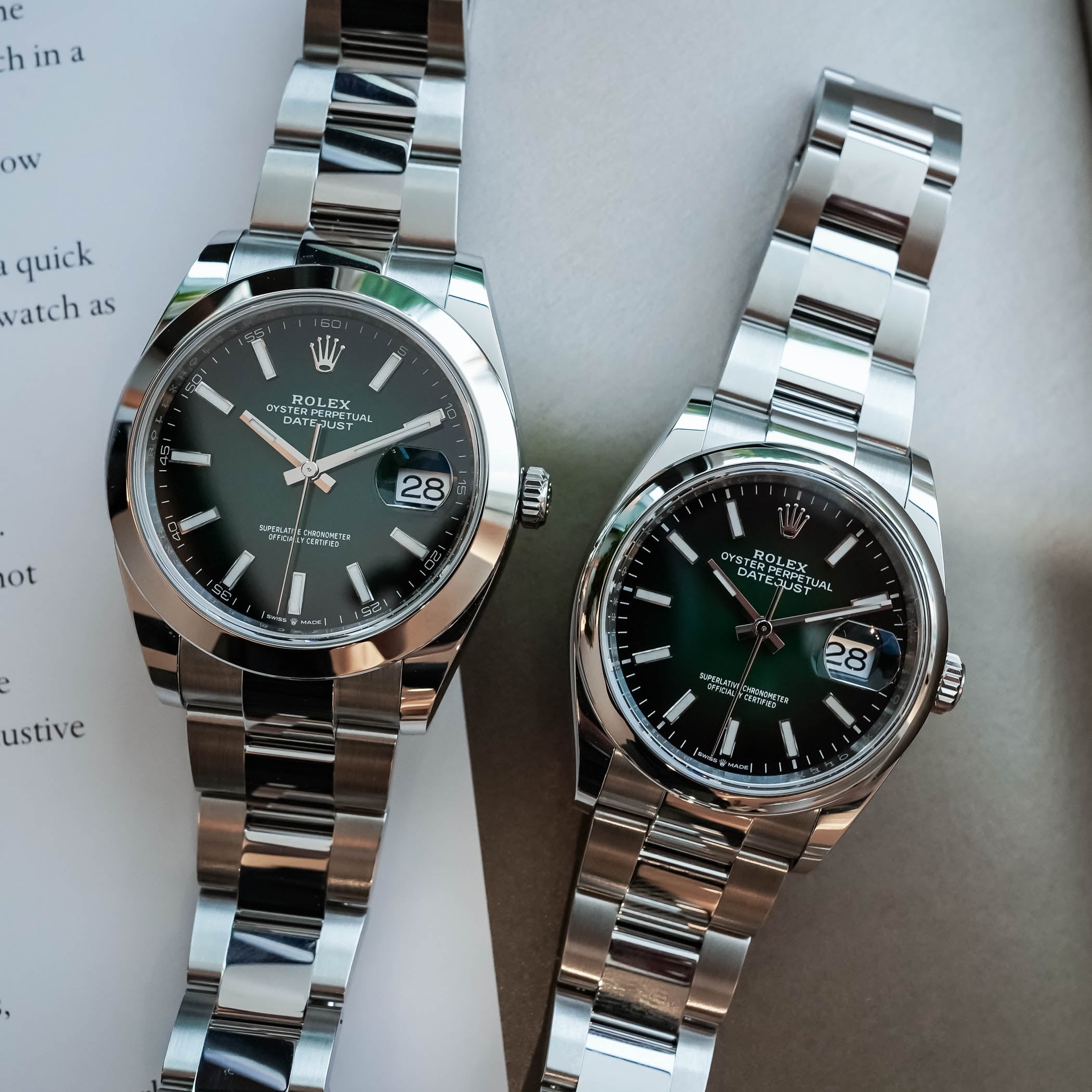
The visual contrast is startling. The 41mm variant possesses a "sportier" presence, driven by a wider, flatter bezel and a larger dial-to-case ratio (9mm difference between opening and total diameter). The 36mm, by contrast, feels more traditional, featuring a domed, polished steel bezel that softens the watch’s profile and creates a more fluid transition into the bracelet. The 36mm lugs are noticeably narrower, contributing to a lighter, more elegant wrist presence.
The dials themselves reinforce this divergence. The 41mm features a minute track with numerals—a clear nod to its utilitarian roots—whereas the 36mm opts for a more refined, minimal scale. These nuances suggest that while the technology (the 3235 caliber and 100m water resistance) is identical, the intended use cases for these two watches have significantly drifted apart.
The Redesign of the Roman Numeral Dial
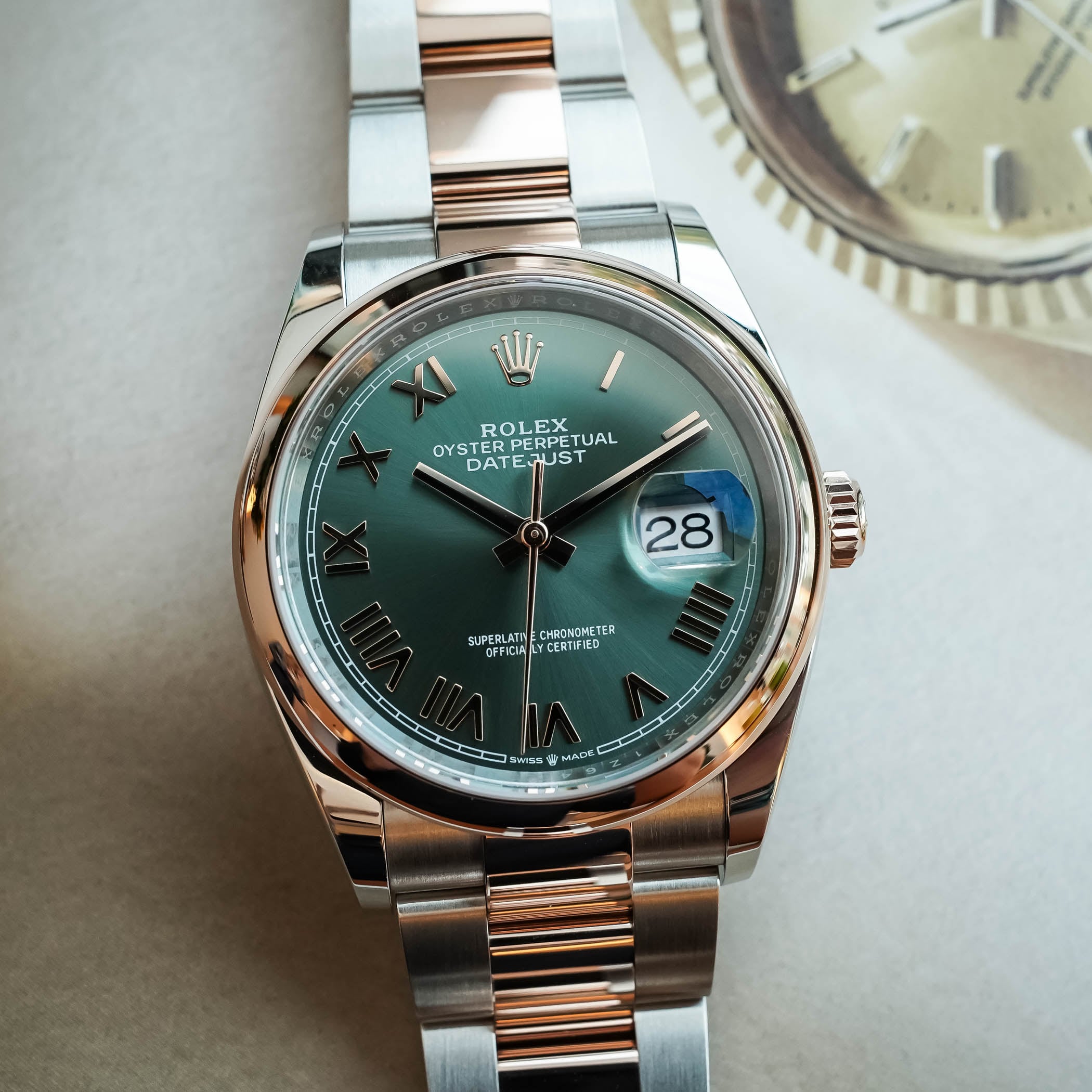
Perhaps the most significant technical shift is the total overhaul of the applied Roman numerals. In previous generations, Roman numerals were singular, stamped or applied elements. The new design language, heavily influenced by the Day-Date, features:
- Modular Construction: Numerals are now composed of separate, distinct elements (e.g., the ‘IIII’ is made of four individual batons).
- Angular Geometry: The numerals are now flat, sans-serif, and possess a thicker profile, providing a cleaner, more modern look.
- Enhanced Layout: The 9 o’clock baton has been replaced by a Roman numeral, providing better symmetry across the dial.
- Uniformity: A standardized, continuous railroad-style minute track has been implemented across the entire Roman numeral range, replacing the varied tracks of previous years.
This change is not just about aesthetics; it is about brand cohesion. By aligning the Datejust with the design language of the flagship Day-Date, Rolex is elevating the perception of the Datejust as a "serious" luxury timepiece rather than just an entry-level professional watch.

Official Responses and Strategic Implications
While Rolex is famously reticent about its product strategy, the scope of these changes speaks volumes. The company is leaning into its heritage while aggressively modernizing its most volume-driven line.
Why the Ombré Green?
The use of lacquer in the new ombré dial is a masterclass in modern manufacturing. The green lacquer is applied to the base plate, followed by a meticulous spraying of black lacquer in concentric motions to create the gradient. This level of craftsmanship, now applied to the Datejust, highlights a deliberate move to offer "high-end" dial treatments to a broader audience.
The Implications for the Collector
The removal of the previous generation of Roman numeral dials—including the iconic Azzuro and classic models—effectively makes those references "vintage" overnight. For the market, this means an immediate scarcity of the previous designs and a shift in demand toward the cleaner, sharper 2026 aesthetic.
For the modern collector, the 2026 Datejust collection represents a "Goldilocks" scenario. The watches are technically perfect, utilizing the most reliable movement in the industry, while the new design choices—particularly the ombré dials and the refined Roman numerals—offer a fresh, sophisticated look that feels perfectly in tune with the current trend toward mid-century modern design sensibilities.
Conclusion: A Masterclass in Iteration
Rolex has once again demonstrated why it remains the dominant force in the horological world. Rather than chasing fleeting trends with drastic case redesigns or experimental materials, the brand has opted for a series of subtle, high-impact refinements. By updating the dial geometry and expanding the options for its most classic model, Rolex has ensured that the Datejust will remain the quintessential timepiece for the next decade.
The 2026 Datejust is not a revolution; it is an evolution. And in the world of high-end watchmaking, that is precisely what the market demands. Whether one chooses the sporty, commanding presence of the 41mm or the timeless elegance of the 36mm, the message is clear: the Datejust is no longer just a watch—it is a platform for the brand’s most sophisticated design experiments. For those looking to invest in a piece of horological history that feels simultaneously rooted in tradition and entirely current, the 2026 collection is, quite simply, the standard-bearer.