
For years, Tesla stood as a defiant outlier in the global automotive industry, maintaining a philosophy that its product output—the widespread adoption of electric vehicles (EVs)—was a sufficient contribution to global climate goals. While legacy automakers grappled with complex ESG (Environmental, Social, and Governance) reporting frameworks and ambitious decarbonization timelines, Tesla consistently pivoted the conversation toward the emissions its products prevented.
However, in a significant shift that marks a new chapter for the world’s most valuable automaker, Tesla has officially pledged to reach net-zero emissions by 2040. This commitment, outlined in the company’s latest Impact Report, represents the first time the Palo Alto-based giant has established a time-bound, company-wide deadline for its internal operations and value chain.
A Fundamental Shift in Corporate Strategy
Tesla’s announcement is not merely a change in administrative policy; it is a fundamental shift in the company’s narrative. Historically, Elon Musk has been a vocal critic of corporate ESG standards, famously labeling the movement as the "Devil Incarnate." Tesla’s management has long argued that traditional target-setting frameworks were designed to favor incumbent, carbon-heavy industries while penalizing lean, innovative newcomers.
By refusing to participate in standardized disclosure platforms like the CDP (formerly the Carbon Disclosure Project) and delaying the inclusion of Scope 3 emissions in its reports until 2022, Tesla maintained a posture of skepticism toward the "check-the-box" culture of corporate sustainability.
The 2040 commitment, paired with a decision to align its reporting with the IFRS Foundation’s sustainability disclosure standards, signals a quiet but undeniable maturation. Tesla is moving away from the era of "product-only" impact and toward a model of comprehensive corporate accountability.
Chronology of an Evolving Climate Stance
The path to the 2040 net-zero pledge has been a slow, iterative process rather than a sudden epiphany.
- Pre-2022: Tesla’s climate strategy was almost exclusively focused on "avoided emissions." The company frequently published data on how many millions of tons of carbon dioxide were prevented from entering the atmosphere because consumers chose a Model 3 or Y over an internal combustion engine vehicle.
- 2022: A milestone year in reporting. Under pressure from institutional investors and changing regulatory environments, Tesla finally began to disclose its Scope 3 emissions—the indirect emissions that occur in the company’s value chain, including the mining and processing of raw materials for batteries.
- 2023–2024: The company began to socialize the concept of net-zero, acknowledging the goal without setting a firm calendar date. During this period, it successfully transitioned portions of its Supercharger network to renewable energy, serving as a proof-of-concept for its broader operational goals.
- 2025: The current turning point. The release of the 2025 Impact Report codifies the 2040 target and demonstrates a commitment to aligning with global reporting standards, effectively ending years of isolationist climate strategy.
The Data: A Growing Operational Footprint
While the 2040 pledge is a major headline, the underlying data reveals the scale of the challenge Tesla faces. As the company has scaled its manufacturing capacity to meet global demand, its internal emissions have risen in tandem with its production volume.
According to the latest figures:
- Scope 1 Emissions: Emissions stemming directly from Tesla’s manufacturing operations have spiked 43% since 2023.
- Scope 2 Emissions: Emissions associated with the electricity purchased to run factories and offices have surged 80%.
- Scope 3 Emissions: The most daunting category—which includes the carbon-intensive extraction of lithium, nickel, and cobalt for batteries—sits at 56 million metric tons of CO2 equivalent (tCO2e), representing a 14% increase year-over-year.
These figures illustrate a paradox: as Tesla accelerates the global transition to EVs, its own corporate carbon footprint grows. Critics argue that without a near-term roadmap to decouple production volume from emission growth, the 2040 goal remains a distant aspiration rather than an actionable strategy.
The "Avoided Emissions" Argument vs. Industry Standards
Tesla continues to stand by its core thesis: the company’s environmental net-positive contribution is unparalleled. The company estimates that every vehicle it produces avoids an average of 32 tCO2e over its lifetime. In 2025 alone, Tesla’s total product suite accounted for an estimated 37 million tCO2e in avoided emissions—a figure that Musk has claimed dwarfs the efforts of all other automotive manufacturers combined.
The International Council on Clean Transportation (ICCT) seems to support this sentiment, placing Tesla at the top of its 2025 automaker ratings. This ranking considers the life-cycle impact of vehicles, confirming that Tesla’s primary contribution to the climate remains the replacement of fossil-fuel-burning cars on the road.
However, industry experts are beginning to push back on the sufficiency of this "avoided emissions" narrative. Frederic Hans, a senior climate policy advisor at the NewClimate Institute, highlights a critical distinction: "We agree that traditional target-setting frameworks centered on absolute emission reduction can disadvantage innovators. But a focus on vehicle sales alone is insufficient."
The "Transition Target" Gap
The conversation around Tesla’s climate strategy is shifting toward the supply chain. Experts like Hans suggest that for a company of Tesla’s size, true leadership requires "transition targets"—specific, verifiable goals for the production and procurement of low-carbon materials like steel, aluminum, and battery-grade minerals.
In a 2025 study conducted by the NewClimate Institute, which analyzed five major global automakers, it was found that competitors such as Ford and General Motors had already established explicit procurement targets for "green steel" and low-carbon aluminum. Tesla, despite its technological edge, has yet to integrate such granular targets into its annual Impact Report.
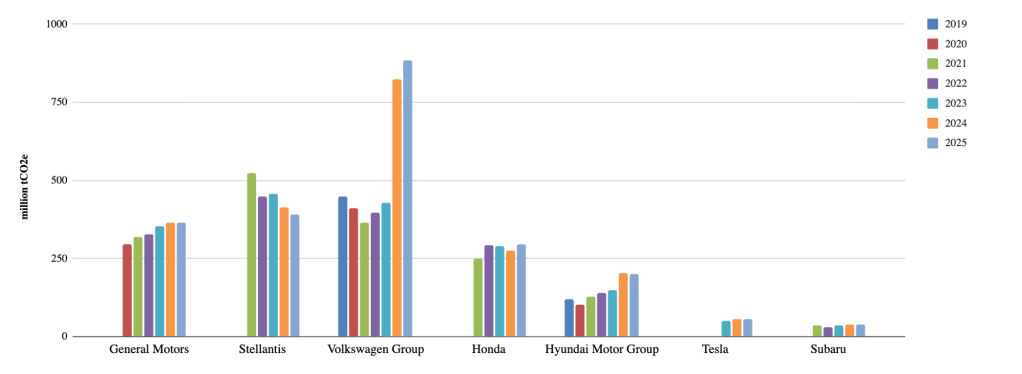
Without these intermediate targets, Tesla remains vulnerable to the volatility of global commodity markets, where the production of battery materials remains one of the most carbon-intensive processes in the industrial world.
Implications for the Future of ESG
The implications of Tesla’s move are twofold. First, for the automotive sector, it signals the end of the "special case" era. Even the most successful, high-growth, technology-driven automaker has eventually had to conform to the transparency requirements that investors and regulators demand. By adopting IFRS-aligned reporting, Tesla is effectively joining the mainstream financial community’s approach to climate risk.
Second, for Tesla shareholders, the move is a risk-mitigation strategy. Institutional investors, particularly those in Europe and those with strict net-zero mandates of their own, have long been wary of Tesla’s lack of transparency. By providing a 2040 target, Tesla reduces the "governance" risk that previously kept some large-scale capital managers on the sidelines.
The Road Ahead
Tesla did not provide a comment on its new target or on the absence of near-term milestones in its report. This silence is characteristic of the company’s "black box" approach to communications.
The next few years will be the true test of the 2040 pledge. For the goal to move from a marketing commitment to an operational reality, Tesla will likely need to:
- Establish Near-Term Milestones: Set 2027 and 2030 benchmarks to ensure the trajectory toward 2040 is linear rather than exponential.
- Decarbonize the Supply Chain: Engage with battery material suppliers to incentivize the transition to renewable energy in mineral processing.
- Formalize Disclosure: Eventually bridge the gap between its own reporting and the rigorous data-sharing platforms it has historically shunned.
As the automotive landscape becomes increasingly crowded with EV competitors from China, Europe, and the U.S., Tesla’s ability to prove its environmental superiority will depend on more than just the efficiency of its motors. It will depend on the sustainability of the entire ecosystem that creates the car. The 2040 pledge is a recognition of that reality—a sign that while Tesla is still the leader, it is finally ready to play by the rules it once sought to disrupt.