
For months, Alphabet—the parent company of Google—has navigated a volatile landscape of investor skepticism. Wall Street, increasingly wary of the "AI bubble," had spent much of the year questioning whether the tech giant’s massive, multibillion-dollar capital expenditure on artificial intelligence infrastructure would ever yield a meaningful return. Critics argued that the costs of building data centers and securing high-end processing chips were ballooning far beyond the revenue generated by nascent AI tools.
However, with the release of its latest earnings report, the narrative has shifted dramatically. Alphabet’s financial results demonstrate not just resilience, but a clear, accelerating path to monetization. By posting record-breaking cloud revenue and surging profit margins, the company has effectively silenced the chorus of skeptics, proving that its aggressive "build-it-and-they-will-come" strategy is, in fact, paying off.
The Financial Breakdown: A Quarter of Records
The headline figures from the latest quarter tell a story of a company firing on all cylinders. Alphabet reported a total quarterly revenue of $119.8 billion, a 24% year-over-year increase. More impressively, the company’s profit skyrocketed to $112.1 billion, a massive jump from the $28.1 billion recorded in the same period last year.
While Google Services—the company’s bread-and-butter advertising and search segment—remains a dominant force with revenue climbing 15% to $94.5 billion, the true star of the show was Google Cloud.
The cloud division posted an astounding 82% revenue surge, reaching $24.8 billion. To put this in perspective, this performance not only eclipses the 63% growth seen in the previous quarter but also handily beats the consensus Wall Street estimate of $22.46 billion. This consistent, high-velocity growth marks the company’s 12th consecutive quarter of double-digit revenue expansion, reinforcing Alphabet’s position as a heavyweight in the enterprise technology sector.
Chronology of a Transformation
The trajectory toward this earnings milestone did not happen overnight. The last eighteen months have been defined by a fundamental restructuring of Alphabet’s priorities.
- Early 2025: The Infrastructure Push: Faced with the explosive rise of generative AI, Alphabet committed to a massive capital expenditure program. The company began aggressively reallocating resources to build the specialized data centers required to train and run large-scale models.
- Late 2025: The Gemini Integration: By Q4 2025, the focus shifted toward adoption. Google began embedding its proprietary Gemini model across its suite of products. During this time, the company reported 750 million monthly active users for the Gemini app, a milestone that proved the consumer appetite for conversational AI was real.
- Mid-2026: Scaling and Monetization: The current quarter represents the maturation of these efforts. With 950 million monthly active users on Gemini—a jump of 200 million in just two quarters—the company has successfully transitioned from a research-heavy organization to a platform-as-a-service powerhouse. The current backlog of $514 billion in cloud contracting work signifies that this is not a short-term trend, but a multi-year commitment from enterprise clients to Google’s AI ecosystem.
Supporting Data: Why Investors Are Reassessing
The skepticism surrounding Alphabet was primarily rooted in the "CapEx" (Capital Expenditure) conversation. With annual spending on data centers and chips projected to hit between $180 billion and $190 billion, analysts were understandably nervous about the margin impact. However, the latest data suggests these investments are acting as a "moat."
The Cloud-AI Symbiosis
Google Cloud is no longer just a storage and computing utility; it has become the backbone for enterprise AI. Corporations are not just buying server space; they are buying the "stack"—the infrastructure, the Gemini API, and the security protocols needed to integrate AI into their proprietary workflows. The $514 billion backlog is the most critical metric here; it represents long-term, locked-in revenue that guarantees the company’s AI build-out will continue to be subsidized by its biggest customers.
User Growth Velocity
The jump in Gemini monthly active users from 750 million to 950 million illustrates that Google is successfully defending its search and productivity turf. By weaving AI into the fabric of the user experience, Alphabet has prevented the "search migration" that many analysts feared would occur as users moved toward AI-first search alternatives.
Official Responses: CEO Sundar Pichai’s Defense
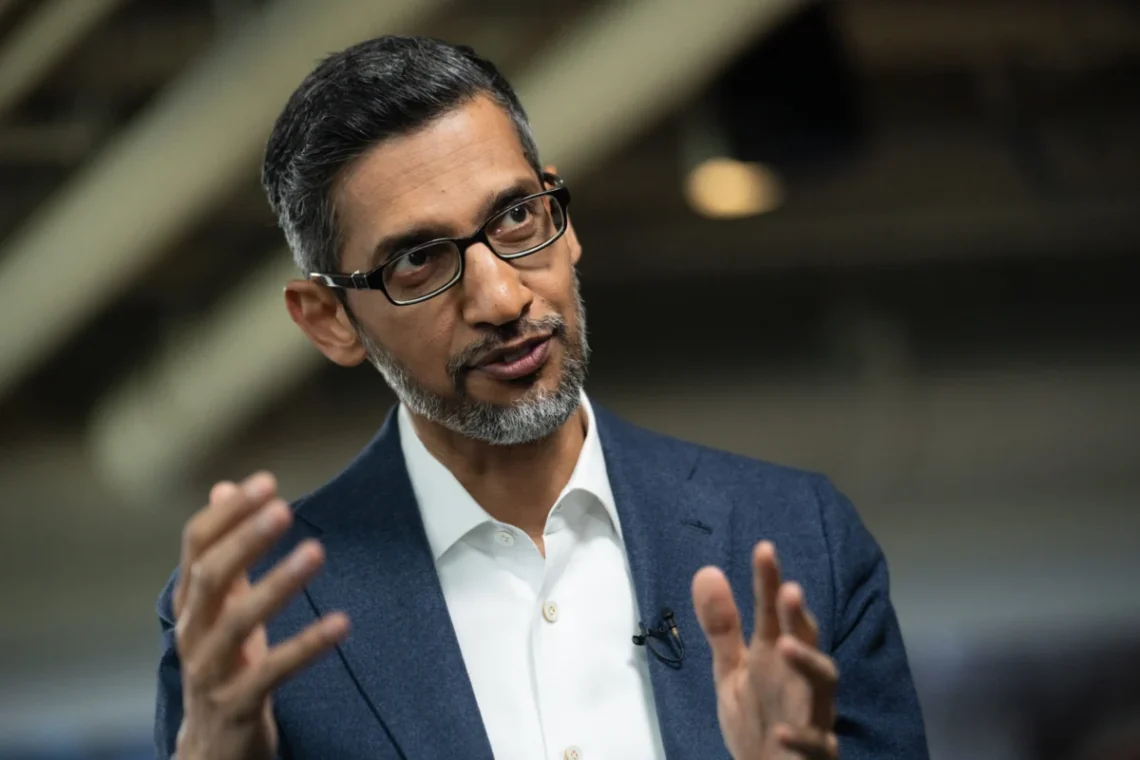
During the earnings call, CEO Sundar Pichai was forced to defend the company’s spending, which remains high by any historical standard. Addressing the concerns of analysts who questioned when the massive infrastructure costs would taper off, Pichai struck a tone of measured confidence.
"Our AI investments are redefining what’s possible across every part of our business," Pichai stated. He emphasized that the demand indicators are stronger today than they were a year ago. When pressed specifically about the 2027 compute capacity investments, he noted that the current "dynamics look healthier" than previous models suggested.
Pichai’s rhetoric signals that the board is not merely chasing a trend but is instead building the foundational layer for the next decade of internet computing. He argued that the "exciting momentum" observed across the company is a direct result of having the compute capacity ready before the market demand fully matured.
Implications: The New Normal for Tech Giants
The success of Alphabet’s latest earnings report carries significant implications for the broader technology sector.
1. The Death of the "AI Bubble" Narrative?
While it is premature to say the AI bubble has completely vanished, Alphabet has provided a blueprint for how to survive it: deliver tangible revenue. Companies that can demonstrate a clear link between their infrastructure spend and their cloud-based AI revenue are likely to be rewarded by the market. Those that cannot, however, remain at risk.
2. The Infrastructure Arms Race
With Alphabet signaling its intent to continue heavy spending into 2027, the "arms race" between Google, Microsoft, and Amazon is likely to intensify. The winner of this race will likely be the company that can achieve the highest "compute-to-revenue" efficiency. Alphabet’s 82% growth in cloud suggests they are currently winning that efficiency battle.
3. Enterprise Integration as a Moat
The $514 billion in contract backlog is perhaps the most significant indicator of long-term stability. Enterprise clients are rarely prone to switching providers once they have deeply integrated a vendor’s AI infrastructure into their core business processes. By securing these long-term contracts, Alphabet has created a sticky ecosystem that will be difficult for competitors to disrupt.
Conclusion: A Turning Point
Alphabet has successfully navigated the most difficult phase of its AI transition. By moving past the initial period of skepticism and proving that its infrastructure investments are generating substantial, compounding returns, the company has positioned itself as the dominant player in the enterprise AI space.
Investors who were previously worried about the "hefty" spending are now beginning to see the forest for the trees. The capital expenditures of 2025 and 2026 are not just costs; they are the foundation of a new, highly scalable revenue stream. As the company continues to refine its Gemini models and expand its data center footprint, it is increasingly clear that Alphabet is not just participating in the AI revolution—it is the one building the stage upon which it plays out.
For the foreseeable future, the focus will remain on whether this growth can be sustained. But for now, the data is unequivocal: the gamble on AI has paid off, and Alphabet is entering its next chapter from a position of profound financial strength.