London’s ultra-prime residential market is undergoing a seismic shift, signaling a definitive return to form for the British capital. After a period of relative stagnation, the city’s most exclusive neighborhoods are witnessing a surge in activity, with high-net-worth individuals from across the globe staking their claims on some of the world’s most coveted real estate.
According to a comprehensive new report from luxury property consultancy Beauchamp Estates, the first six months of 2026 have been defined by a dramatic uptick in both volume and value. As the global economic landscape shifts, London has once again solidified its status as the preeminent "safe haven" for the world’s most affluent investors.
The State of the Market: A Statistical Renaissance
The data for the first half of 2026 is striking. During this period, 34 properties priced above £15 million ($20 million) changed hands across London. These transactions represent a total value of £1.24 billion ($1.6 billion), a staggering 79 percent increase compared to the same period in 2025, when total sales amounted to roughly $694 million. Beyond the sheer capital flow, the frequency of these "mega-deals" has surged by 26 percent, underscoring a broader, more resilient recovery.

This resurgence is not merely a reflection of a few outlier sales; it represents a fundamental change in the appetite for trophy assets. The average sale price for these elite properties has climbed to £36.5 million ($49 million), up significantly from the £25.7 million ($34.5 million) average recorded just one year prior.
The American Influence and Global Capital Flows
The driving force behind this recovery is a demographic pivot. Historically, London’s luxury market was dominated by a diverse array of international buyers, but 2026 has seen a distinct "Americanization" of the ultra-prime sector.
American buyers now account for 30 percent of all ultra-prime home purchases in the city, a sharp increase from the 20 percent recorded at the close of 2025. This influx of U.S.-based capital is largely attributed to the unprecedented wealth generated in the sectors of artificial intelligence, high-frequency fintech, and private equity. These individuals, often younger and more tech-oriented than the traditional landed gentry, are seeking to park their liquidity in tangible, historical assets that offer both status and long-term capital preservation.

"Since April 2026, we have done five big deals, all with American buyers who have wanted homes in London’s best addresses," notes Jeremy Gee, Managing Director of Beauchamp Estates.
The Middle Eastern contingent remains a pillar of the market, accounting for another 25 percent of sales. Together, American and Middle Eastern buyers now represent over half of the transactions in the ultra-prime bracket, effectively creating a "two-tier" demand structure that stabilizes the market against localized economic fluctuations.
A Chronology of Monumental Deals
The first half of 2026 was defined by a series of landmark transactions that have set new benchmarks for property valuations in the UK.

The $367 Million Benchmark
The most significant transaction of the year—and perhaps the decade—was the sale of Providence House in Chelsea. In a deal that made international headlines, property developer Nick Candy sold the estate to Suneil Setiya, co-founder of the hedge fund giant Quadrature Capital. At £275 million ($367 million), the sale underscores the insatiable demand for "turnkey" mansions that offer unparalleled security, privacy, and scale.
The Regent’s Park Heritage
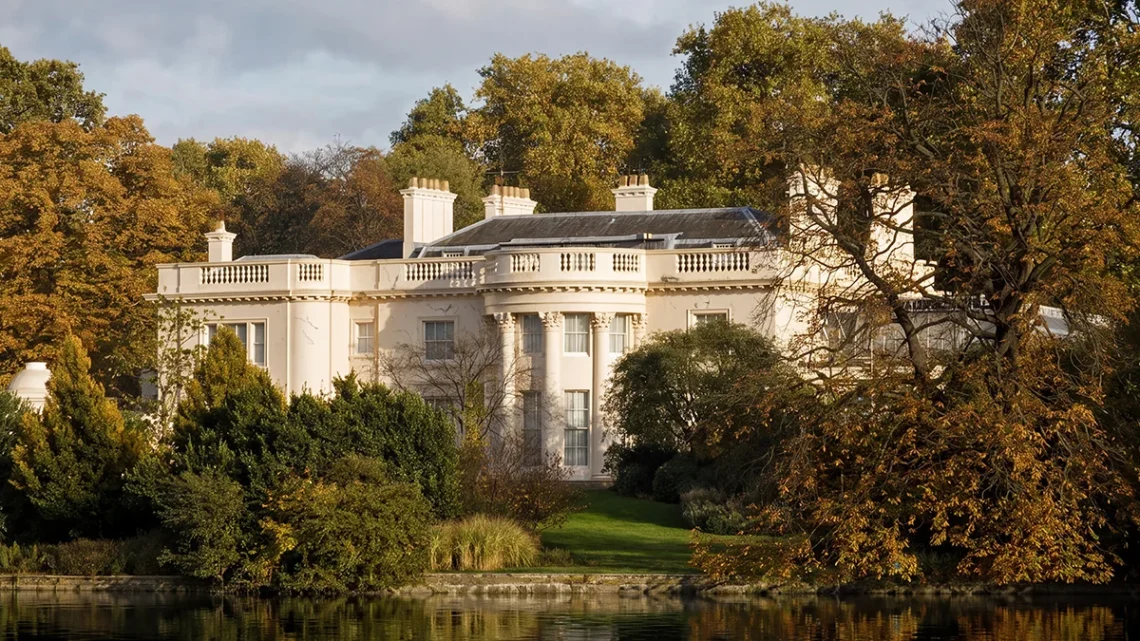
Following closely behind was the high-profile sale of The Holme. A historic landmark in Regent’s Park, the property was previously owned by members of the Saudi royal family. The estate, known for its expansive gardens and neoclassical architecture, traded for £195 million ($260 million). This sale served as a bellwether for the market, proving that despite broader macroeconomic debates, the appetite for iconic, "trophy" architecture remains undiminished.
Geographical Preferences: Where the Elite Settle
While the market is active, it is not uniform. The geography of wealth in London has become increasingly concentrated in specific enclaves.

- Belgravia: Once again, Belgravia holds the crown, leading the market with nine transactions exceeding the £15 million threshold. Its combination of grand white-stucco terraces and proximity to Buckingham Palace continues to attract the traditional ultra-wealthy.
- Chelsea: Bolstered by the massive Providence House deal, Chelsea remains the epicenter of modern ultra-prime development.
- Mayfair: Perhaps the most notable shift is the rise of Mayfair. Once a bastion of traditional commerce, it has become the preferred residential hub for the "Tech-Elite." The concentration of AI firms and private equity offices in and around Mayfair has turned the neighborhood into a "live-work" destination for the newly minted American billionaire class.
The "Bargain" Thesis: Why Now?
Perhaps the most fascinating insight from the Beauchamp Estates report is the perception of London as a "discounted" market. Despite the high price tags, analysts point out that prime London residential prices remain more than 20 percent below their 2014 peak.
For the global elite, this represents a unique window of opportunity. When factoring in the current exchange rate and the relative stability of the British legal system, many international buyers view London as a "value play." This is a significant pivot from the pre-2014 era, where London was viewed primarily as an expensive growth market. Today, it is viewed as a foundational asset class that is "on sale."
Future Implications: The "Landmaxxing" Phenomenon
The demand for space is also evolving. Buyers are no longer satisfied with standard luxury; they are seeking scale. The trend of "landmaxxing"—the acquisition of not just one property, but the surrounding homes to ensure total privacy and future expansion—is becoming a common strategy among the ultra-wealthy.

As buyers look to consolidate their holdings, the supply of large-scale mansions in central London is tightening. This scarcity is expected to keep upward pressure on prices for the remainder of 2026. For those looking for smaller, more manageable footprints, the market is seeing a surge in demand for "hotel-serviced" penthouses. These properties, which offer 24-hour concierge, private security, and wellness facilities, are increasingly preferred by the itinerant American billionaire who requires a base in London that functions seamlessly from the moment they arrive.
Conclusion: A City Transformed
London’s luxury market is not just recovering; it is being redefined. The emergence of a new guard of tech-wealthy buyers, the strategic focus on "trophy" assets, and the perception of the city as a bargain for the global elite have created a perfect storm of demand.
As we look toward the second half of 2026, all indicators suggest that the "London comeback" is not a fleeting trend, but the start of a new era. Whether it is the historic elegance of Regent’s Park or the modern, tech-driven vibrancy of Mayfair, London remains, undeniably, the home base for the world’s most ambitious and successful individuals. The city has proven its resilience, reaffirming its status as the heartbeat of global wealth.