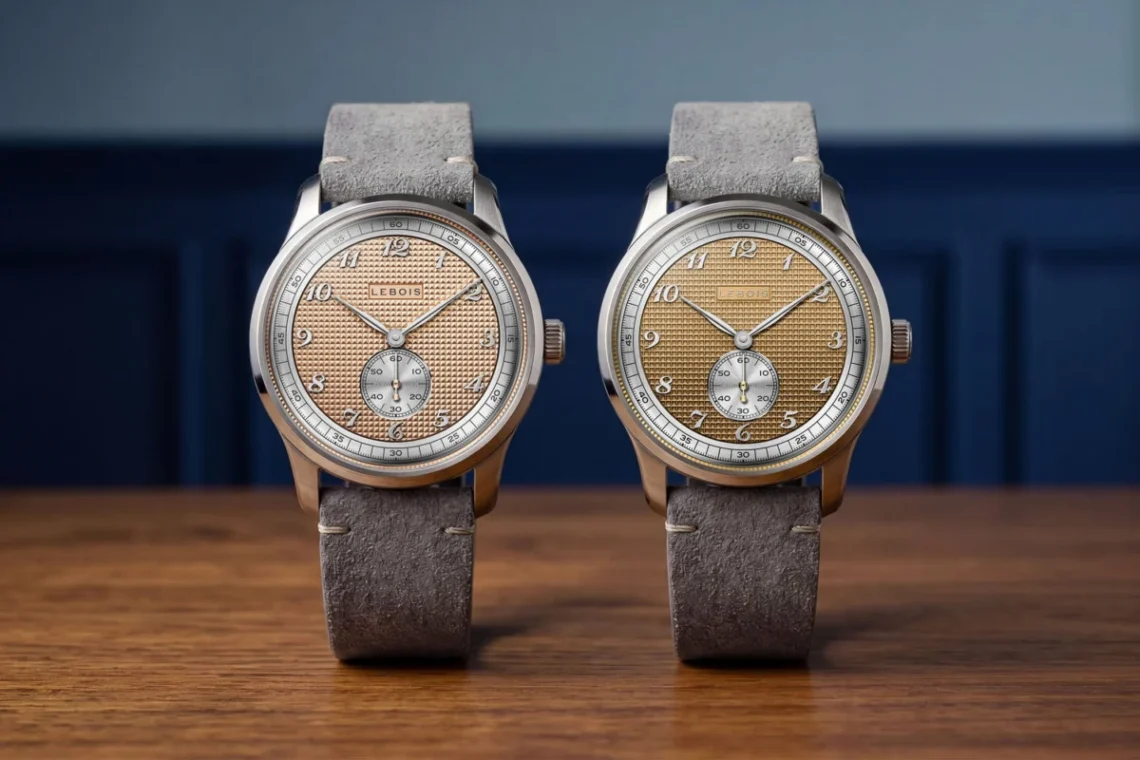
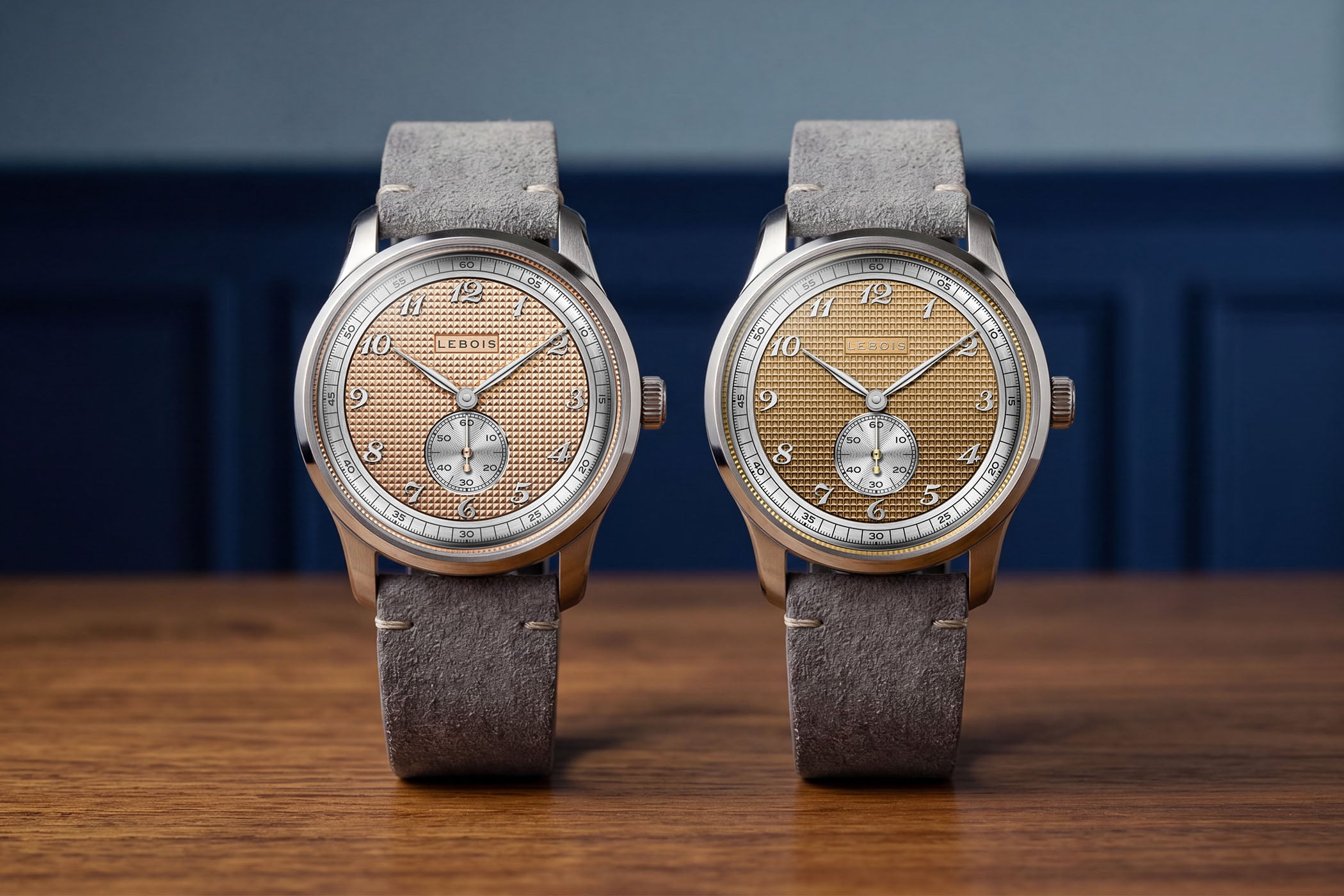
In the nuanced world of independent watchmaking, the revival of a historic brand is often a delicate balancing act between honoring the ghosts of the past and establishing a relevant, contemporary identity. Under the stewardship of Dutch entrepreneur Tom van Wijlick, Lebois & Co has managed this feat with remarkable precision. Following the success of the Heritage Small Seconds collection, the brand is now elevating its offering with the launch of the Heritage Atelier series. Featuring two distinct dials—the classical Clous de Paris and the whimsically inspired Stroopwafel—this new collection represents a bold step forward in the brand’s commitment to artisanal craftsmanship, achieved in collaboration with the esteemed Swiss dial specialist GT Cadrans.
The Genesis of the Heritage Atelier: Main Facts
The Heritage Atelier collection serves as a refined evolution of the brand’s mid-century design language. At its core, the collection remains true to the compact, elegant proportions that have become a hallmark of Van Wijlick’s vision for the brand. Both the Clous de Paris and Stroopwafel references are housed in a 38.7mm stainless steel case, offering a wrist presence that feels distinctly vintage yet entirely modern in its finish.
The technical architecture of these timepieces is anchored by the calibre LC-350, a robust, COSC-certified automatic movement based on the industry-standard Sellita SW360-1. With a 56-hour power reserve and a beat rate of 28,800 vibrations per hour, the movement provides the reliability expected of a modern daily wearer, while the exhibition caseback invites the owner to appreciate the mechanical heart of their timepiece.
From New York to Neuchâtel: A Chronology of Inspiration
The story behind the Stroopwafel dial is perhaps one of the most charming anecdotes in recent horological history. It was during the 2024 New York watch fairs that the Lebois & Co team, seeking a point of connection with their community, shared a tin of traditional Dutch stroopwafels—the iconic caramel-filled waffle cookie—with friends and collectors.
As the conversation turned toward design motifs, the texture of the cookie, with its distinctively deep, woven grid, became a subject of fascination. What began as a lighthearted discussion quickly evolved into a serious design challenge: could the tactile, geometric appeal of a national delicacy be translated into the language of high-end watchmaking?
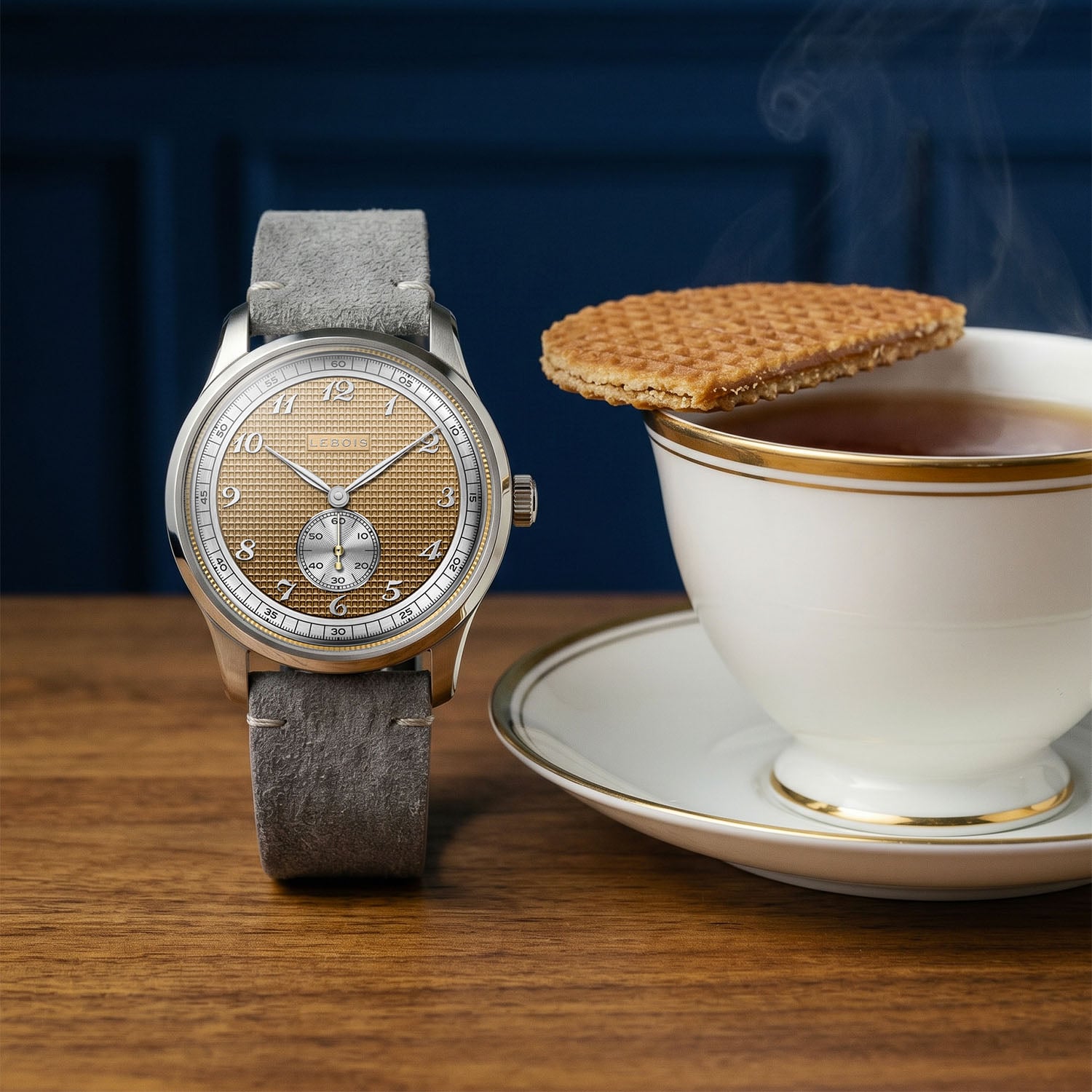
Working alongside the master dial-makers at GT Cadrans, the Lebois & Co design team spent the subsequent months refining the concept. By 2025, prototypes were in development, utilizing advanced laser-engraving technology to capture the intricate depth of the waffle pattern. The goal was never to create a novelty, but to create a texture that felt organic and sophisticated. When paired with a warm, caramel-toned galvanic finish, the resulting dial achieved a level of detail that holds its own against traditional guilloché, balancing a playful narrative with serious execution.
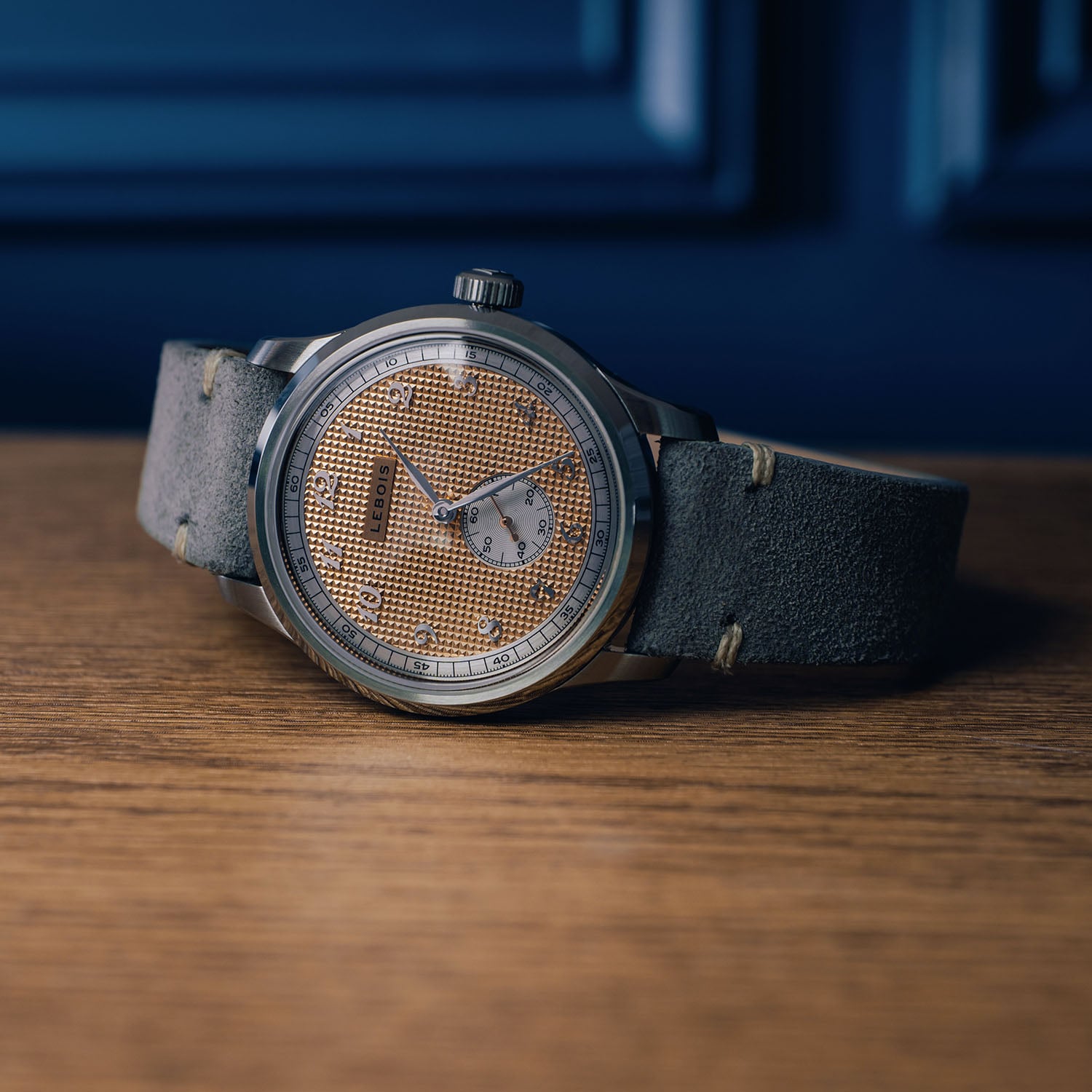
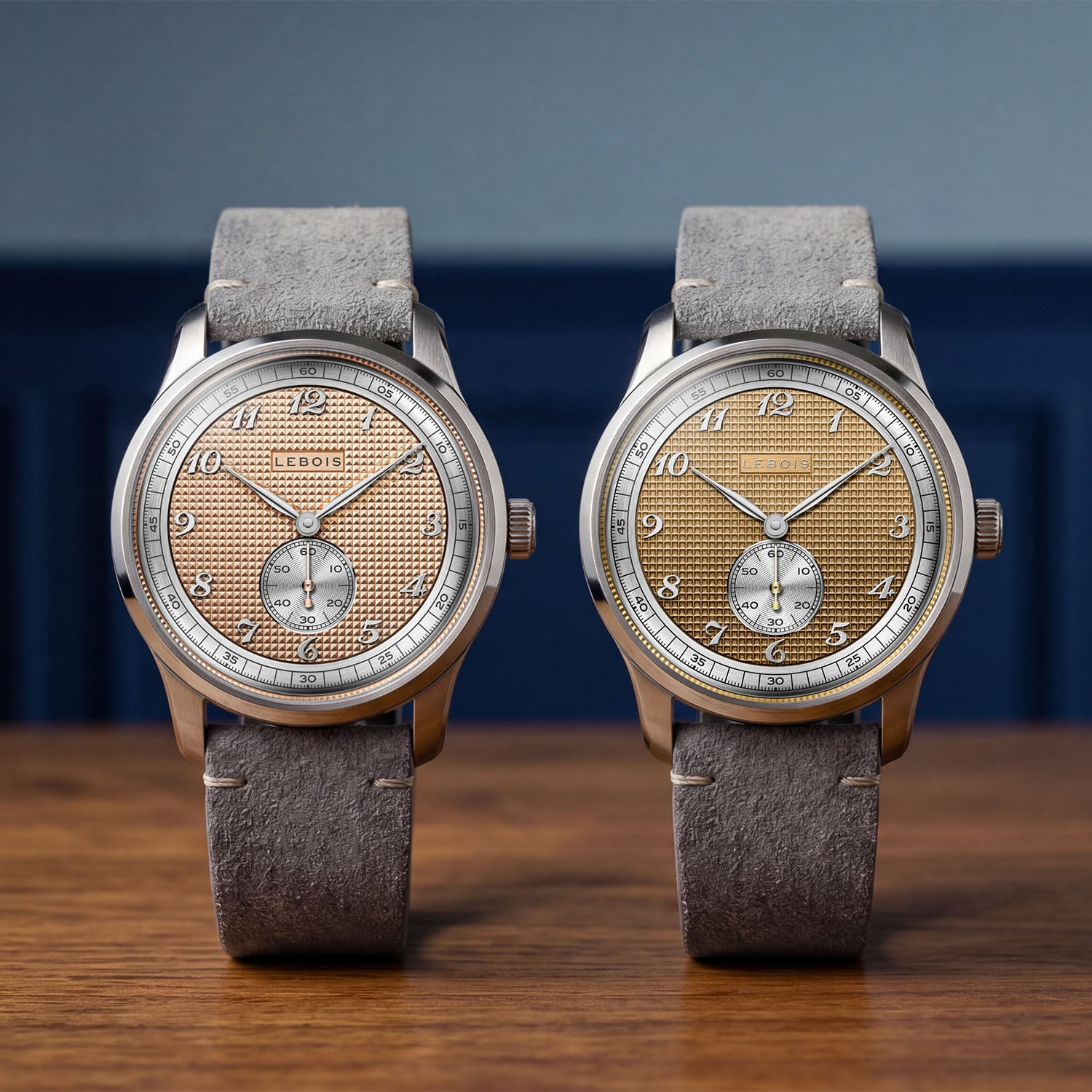
Simultaneously, the brand opted for a more conservative approach with the Clous de Paris reference. While the stroopwafel pattern pushed the boundaries of modern manufacturing, the Clous de Paris—a classic pattern of interlocking pyramids—demonstrates the brand’s mastery of traditional decorative motifs. Through a precision CNC diamond-cutting process, the dial is finished with a 24-carat gold galvanic treatment, bestowing it with a rich, rose-gold warmth that pays homage to the opulent dress watches of the 1950s.
Technical Rigor: The Art of the Dial
The excellence of the Heritage Atelier collection lies in the interplay between light and surface. In watchmaking, a dial is not merely a surface for legibility; it is the face of the watch, the primary point of emotional connection for the wearer.
The Clous de Paris
This reference utilizes one of the most enduring motifs in horology. By employing a CNC diamond-cutting process, the pyramids on the dial are cut with such sharpness that they scatter light in a way that hand-turned guilloché machines of the past once did. The 24-carat gold plating adds a depth of color that changes subtly depending on the ambient lighting, ensuring that the watch feels alive on the wrist.
The Stroopwafel
While the inspiration is culinary, the execution is purely horological. The laser-engraving required to replicate the "waffle" texture necessitates a high degree of precision to ensure that the pattern remains consistent across the entire dial surface. The caramel-toned galvanic treatment is a feat of color engineering, requiring precise control over the plating bath to ensure the specific shade of warm, burnt sugar is achieved without appearing overly saturated or flat.
Both dials are adorned with applied Breguet-style numerals and leaf-shaped hands, providing a sophisticated contrast against the busy textures of the dials. The railroad-style minutes track in silver offers a crisp, clean perimeter that grounds the more decorative elements, ensuring the time remains legible at a glance.
Perspectives on Production and Availability
In an era where many brands seek to scale production to meet mass-market demand, Lebois & Co has chosen a more measured path. The Heritage Atelier is a "controlled production" model. By opening the ordering window for a limited period of 14 days, starting July 27, 2026, the brand effectively manages its inventory while creating a sense of anticipation among collectors.
This strategy serves two purposes. First, it ensures that the master craftsmen at GT Cadrans are not overwhelmed by volume, allowing them to maintain the rigorous quality control standards required for such intricate dial work. Second, it fosters a direct relationship between the brand and the end-user. As Tom van Wijlick has noted in previous interviews, the strength of an independent brand lies in its community. By treating the production cycle as an "event" rather than a continuous retail operation, the brand reinforces its commitment to the "Atelier" philosophy.
Implications for the Independent Sector
The launch of the Heritage Atelier collection carries broader implications for the independent watchmaking scene. For years, the industry has debated the merits of CNC and laser-engraving versus traditional hand-turned rose engines. With the Stroopwafel dial, Lebois & Co is making a compelling argument that modern manufacturing, when guided by artistic intent and high-level finishing, is just as valid as traditional craft.
Furthermore, the price point of EUR 5,500 places the collection in a competitive segment of the market. It is a price that assumes a level of connoisseurship—the buyer is not just purchasing a movement and a case, but an aesthetic vision that bridges the gap between historical heritage and modern cultural relevance.
By collaborating with GT Cadrans—a Swiss specialist often tapped by prestigious houses—Lebois & Co is signaling that it intends to compete on quality rather than just nostalgia. The use of a COSC-certified movement, while standard for some, is a clear indicator that the brand refuses to compromise on the internal performance of its timepieces.
Conclusion: A Sweet Synthesis
The Lebois & Co Heritage Atelier collection is more than a duo of new references; it is a testament to the brand’s maturation. By successfully integrating a quirky, personal story like the Stroopwafel with the timeless technical prowess of the Clous de Paris, the brand has carved out a unique space for itself.
It is rare to see a watch that manages to be both profoundly serious in its construction and delightfully whimsical in its inspiration. Whether one chooses the classical elegance of the gold-toned Clous de Paris or the unique, textured narrative of the Stroopwafel, the Heritage Atelier collection offers a rare opportunity to own a piece of horology that feels intimately human. As deliveries begin in early 2027, the watches will likely serve as a benchmark for how independent brands can use modern technology to tell compelling, original stories. For those looking for a dress watch that transcends the ordinary, Lebois & Co has once again proven that the finest details are often found in the most unexpected places.
Technical Summary at a Glance
- Case Dimensions: 38.7mm x 10.5mm (including crystal), 45.5mm lug-to-lug.
- Case Material: 316L brushed and polished stainless steel.
- Crystal: Double-domed sapphire with anti-reflective coating.
- Movement: Calibre LC-350 (Sellita SW360-1 base), COSC-certified chronometer.
- Functions: Hours, minutes, small seconds at 6 o’clock.
- Dial Options:
- Clous de Paris: CNC diamond-cut with 24k gold galvanic finish.
- Stroopwafel: Laser-engraved with caramel galvanic finish.
- Water Resistance: 50 meters.
- Ordering: 14-day window opening July 27, 2026.
- Retail Price: EUR 5,500 (incl. VAT).