

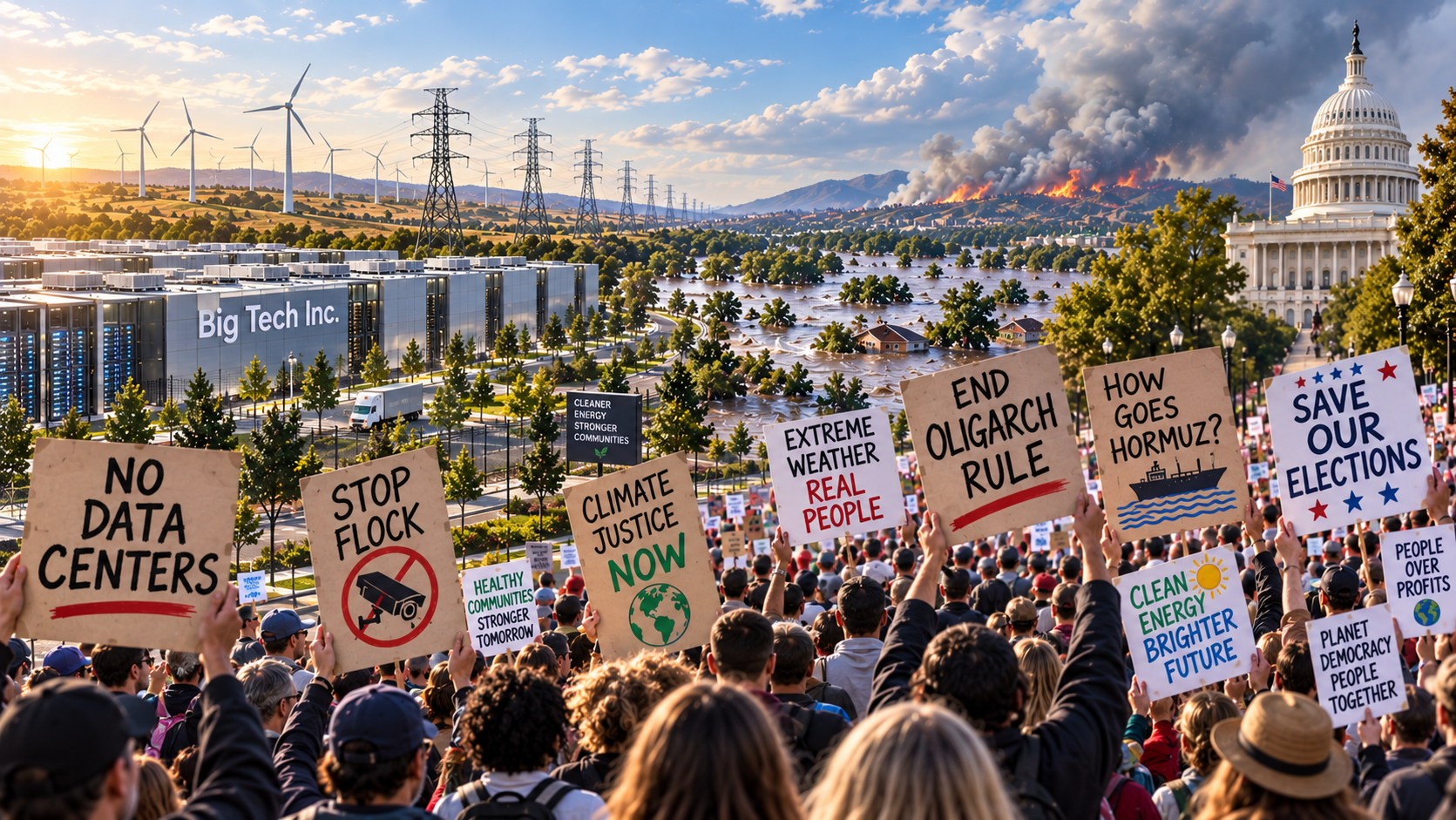
In the landscape of modern corporate strategy, "sustainability" was long synonymous with carbon accounting, supply chain transparency, and ESG reporting. It was a practice of measuring the past to inform the future. However, a volatile confluence of "wild card" events—unexpected, high-impact disruptions—is rapidly rendering those backward-looking metrics obsolete. From the grassroots resistance against massive data centers to the looming threat of a "Super El Niño" and the geopolitical instability stemming from the Iran conflict, the business world is facing a perfect storm.
As explored in the Two Steps Forward podcast, co-hosted by Solitaire Townsend and Joel Makower, we are witnessing a transition from isolated incidents to a potential systemic movement. This convergence of grievances—economic, environmental, and technological—suggests that the era of passive corporate compliance is over. Companies are no longer just fighting specific policies; they are struggling to maintain their "social license to operate."
The Anatomy of the Convergence: Main Facts
The current unrest is not merely a collection of disparate complaints; it is a structural backlash against the status quo. Several key pillars define this environment:
- The Data Center Backlash: As the AI revolution demands unprecedented energy and water resources, local communities are pushing back against the physical footprint of digital infrastructure, challenging the "invisible" nature of cloud computing.
- Energy-Price Volatility: Geopolitical tension, specifically in the Middle East, is once again exposing the fragility of global energy markets, creating a secondary inflationary shock that disproportionately hits working-class populations.
- Environmental Extremes: The forecast of a "Super El Niño" threatens to disrupt global food supply chains and infrastructure, creating a direct link between climate change and economic stability.
- The Tech-Bro/Oligarch Backlash: A growing cultural antipathy toward the perceived unchecked power of the billionaire class and the monopolistic tendencies of big tech has moved from fringe internet forums to the mainstream political discourse.
- The Privacy Erosion: Technologies like Flock license-plate cameras are triggering spontaneous local-level resistance, signaling a public that is increasingly wary of the surveillance-state-meets-corporate-interest model.
A Chronology of Unrest: From Seattle to Silicon Valley
To understand where this movement might lead, one must look at historical precedents for how society reacts to rapid, perceived injustice.
The 1999 WTO Protests (The Catalyst)
The 1999 Seattle protests against the World Trade Organization remain the gold standard for how disparate groups can form an "unlikely alliance." Labor unions, environmental activists, and anti-corporate agitators found common cause. This convergence eventually birthed institutional successes like the Blue Green Alliance, demonstrating that when social friction is high enough, it can force lasting policy shifts.
The 2014 Fracking Ban (The Warning)
Conversely, the New York fracking ban serves as a cautionary tale. Initially, the movement enjoyed cross-partisan, grassroots support that spanned from rural landowners to urban progressives. However, the movement struggled to pivot from a "protest" identity to a "governance" identity. It was eventually successfully framed by opponents as an elitist, radical-left agenda, causing it to lose its broad coalition and fade from the national spotlight.
The Present Moment
Today, the friction is shifting. We are seeing a generational divide where "late-stage capitalism" is no longer a rhetorical flourish, but a lived reality for those under 40. This ideological shift is being amplified by digital-native creators who are bypassing traditional media to frame the narrative, making it increasingly difficult for corporate PR departments to control the conversation.
Supporting Data: The Gilded Age Parallel
Why does this feel different? Economists and historians point to the sheer scale of wealth inequality. We are currently observing levels of wealth concentration that mirror two of the most volatile periods in history:
- Victorian Britain (The Chartist Movement): A period defined by the struggle for political reform amidst the Industrial Revolution’s massive upheaval.
- The American Gilded Age: A time of massive technological advancement (railroads, steel) that led to the rise of monopolies, eventually resulting in the trust-busting era and major labor reforms.
Data from the past decade shows that the share of income held by the top 1% has consistently trended upward, while real wages for the bottom 50% have remained stagnant against the backdrop of rising cost-of-living indices. When you combine this with the rapid displacement of jobs by AI, the "social contract" that keeps modern markets stable begins to fray.
Official Responses: The Silence of the Boardrooms
Thus far, the response from the C-suite has been characterized by "corporate paralysis." Many firms are caught between their fiduciary duties to shareholders and the mounting pressure from their employees and local communities.
- The Tech Sector: Most large tech firms have doubled down on their "build at all costs" mentality, treating community opposition as a PR nuisance to be managed rather than a fundamental flaw in their growth model.
- The Energy Sector: Faced with the "trilemma" of energy security, affordability, and sustainability, many traditional energy companies have reverted to lobbying for deregulation, hoping that geopolitical volatility will grant them a reprieve from decarbonization pressures.
- Regulatory Bodies: In cities like Atlanta or San Francisco, where the backlash against surveillance and data infrastructure is most acute, local governments are increasingly caught in the crossfire. Some are imposing moratoriums on data center construction, while others are passing restrictive privacy ordinances that directly threaten the profitability of tech-enabled business models.
The lack of a unified, proactive strategy from the corporate sector is a significant risk factor. When corporations fail to articulate their value to the public—beyond just dividends—they leave a vacuum that is rapidly being filled by populist political movements.
Implications: The Future of the Social License
The "social license to operate" is no longer a static permit granted by regulators; it is a dynamic, revocable contract with the public. For companies, the implications are profound:
1. From ESG Reporting to "Early Warning" Systems
Sustainability teams must evolve. Historically, these teams have functioned as data processors, documenting carbon emissions and water usage after the fact. In a world of "wild cards," they must become the company’s "early-warning" antennae. This involves "red-teaming" corporate strategy—constantly asking, "What if our core operation becomes a lightning rod for this new wave of anti-oligarch sentiment?"
2. The Cost of Being "Unlikely"
The most dangerous scenarios for a business are the ones that seem "unlikely." The convergence of environmentalists and privacy advocates, or labor unions and AI-ethics researchers, creates alliances that traditional corporate lobbying is ill-equipped to handle. Companies must begin to map these intersections, acknowledging that their stakeholders are no longer siloed.
3. The Re-Politicization of Business
For decades, the goal of the corporation was to remain "apolitical." That era is ending. Whether a company chooses to engage in politics or not, politics is engaging with them. A brand that ignores the systemic concerns of the public regarding inequality or surveillance will find its social license stripped away in the court of public opinion, regardless of what the legal statutes say.
4. Strategic Foresight as a Fiduciary Duty
Boards of directors must demand more than just quarterly earnings reports. They need to integrate "wild card" scenario planning into their governance. This is not about predicting the future; it is about building the organizational resilience to handle a world where the unexpected is the new standard.
Conclusion: The Path Forward
The convergence of these trends creates a choice for modern leadership. Companies can continue to view these issues as separate, manageable PR hurdles, waiting for them to dissipate as they did in the past. Or, they can recognize the underlying shift in the societal tide.
The history of the 20th century suggests that when inequality becomes the defining feature of an era, institutions that ignore the mandate for change are eventually swept away. For sustainability professionals, the challenge is clear: stop looking at the rearview mirror. It is time to look forward, identify the potential collisions, and prepare the organization for a reality where the "social license to operate" is the most valuable asset on the balance sheet.
The convergence is coming. The only question is whether companies will be standing on the side of that change, or in its path.