Main Facts: The Return of the Jump Hour
The contemporary horological landscape is experiencing a profound renaissance of a mechanical marvel once relegated to the vintage archives: the jump hour. Spurred by standout releases throughout the year—most notably highlighted during the prestigious Geneva Watch Days by independent trailblazers like De Bethune and the refreshingly unconventional M.A.D. Editions—watchmakers large and independent are once again embracing digital-style time displays powered by traditional mechanical movements.
Unlike standard analog watches driven by a sweeping continuum of hands, jump hour watches replace the traditional hour hand with a numerical disc that instantly snaps into place the exact moment a new hour begins. This marriage of mechanical precision and digital readability offers a playful yet highly sophisticated way to experience time.
To celebrate this horological movement, we have curated six of the absolute coolest jump hour watches of the year. Spanning high-end independent masterpieces, avant-garde Japanese creations, and revivals of historical design icons, these timepieces prove that the jump hour is more than just a passing trend—it is a canvas for limitless creative expression.
Chronology of Innovation: Tracing the Evolution of the Jump Hour
While the modern resurgence feels entirely fresh, the roots of the jump hour run deep in horological history. Understanding how these mechanical marvels evolved gives critical context to today’s avant-garde interpretations.
- Early Beginnings: Pocket watches featuring digital jump hour apertures date back to the 19th century, serving as an early effort to make time-telling instantaneous and legible.
- The 1970s Drivers’ Era: The aesthetic of the jump hour shifted dramatically during the quartz crisis era, giving rise to futuristic, wedge-shaped "driver’s watches" like the original Amida Digitrend, which used clever prism systems to display time vertically for drivers gripping a steering wheel.
- The Mechanical Revival (2005–2014): Brands began reintroducing mechanical jump hours to modern audiences. Chronoswiss launched the iconic Digiteur in 2005, while MeisterSinger introduced its Salthora collection in 2014, bringing jump hour mechanics to single-handed watchmaking.
- The 2026 Resurgence: Propelled by breakthroughs from independent watchmakers and high-end manufactures alike, 2026 has witnessed an explosion of new releases—ranging from industrial Japanese micro-productions to ultra-luxury haute horlogerie statements—solidifying the jump hour as the complication of the year.
Supporting Data: The 2026 Jump Hour Lineup
Here is a closer look at six remarkable timepieces leading the current jump hour wave, categorized by their distinct design philosophies and technical specifications.
1. Louis Vuitton Tambour Spin Time
Building on previous limited editions, Louis Vuitton has integrated the brilliantly playful Spin Time concept directly into its permanent collection. Instead of a traditional dial, the watch utilizes rotating cubes that make an instant 180-degree turn precisely on the hour, with the illuminated side indicating the current time.
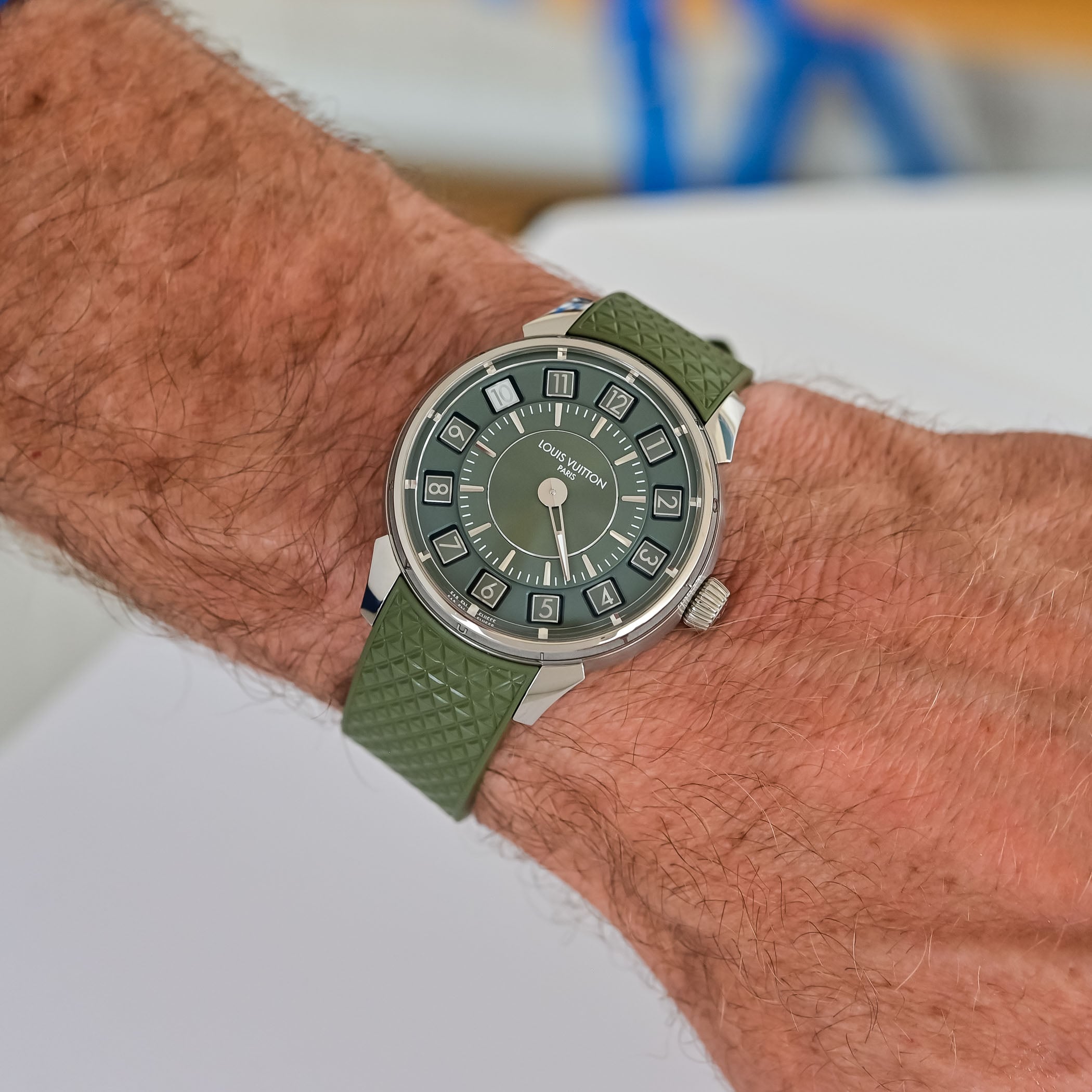
- Case: 39.5mm x 12.15mm white gold, sandblasted bezel featuring 12 LV letters
- Movement: In-house automatic Calibre ST13.01 (28,800 vph, 45-hour power reserve)
- Dial: Khaki green sunray and sandblasted finish with central minutes hand
- Price: EUR 86,000 (Ref. W9WGA2)
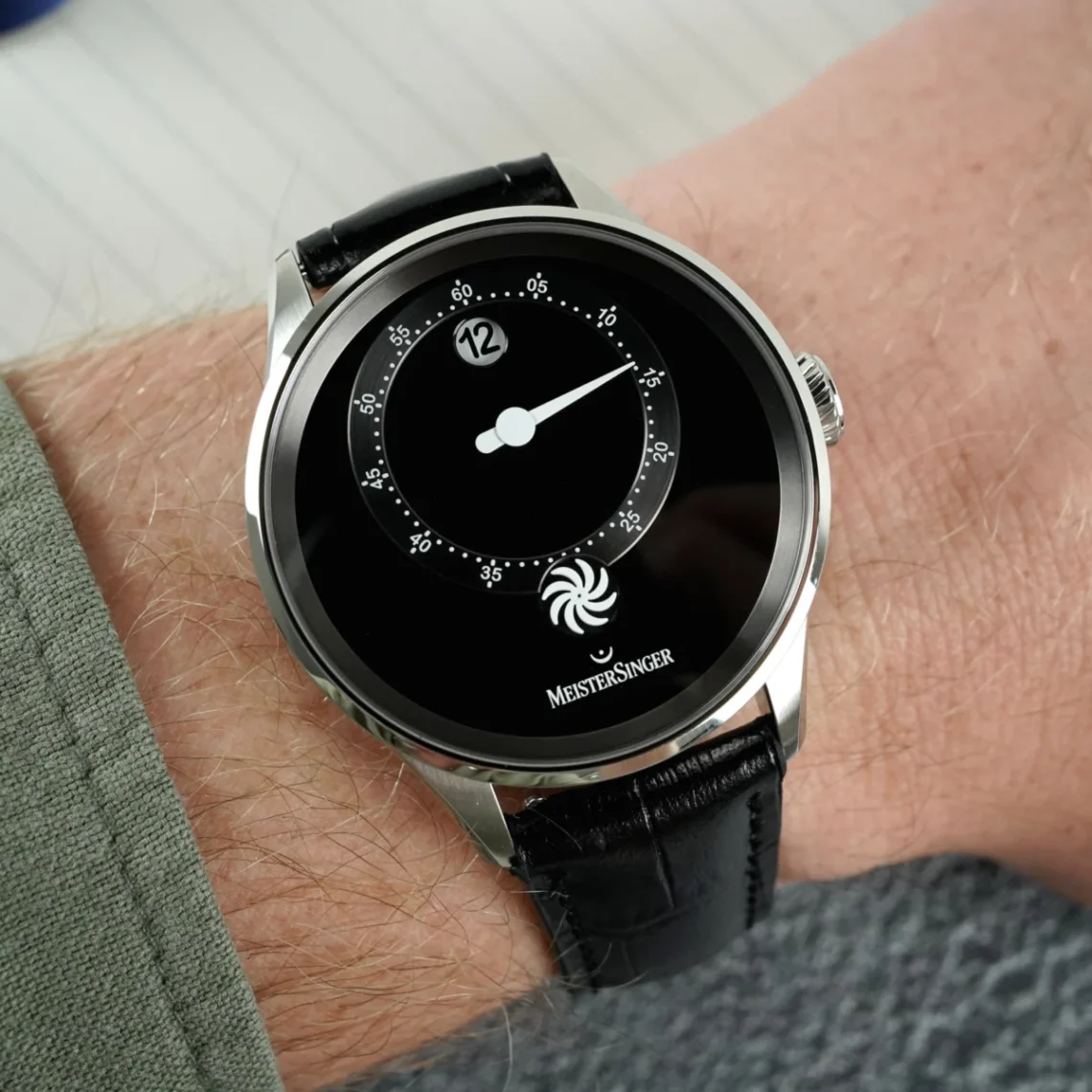
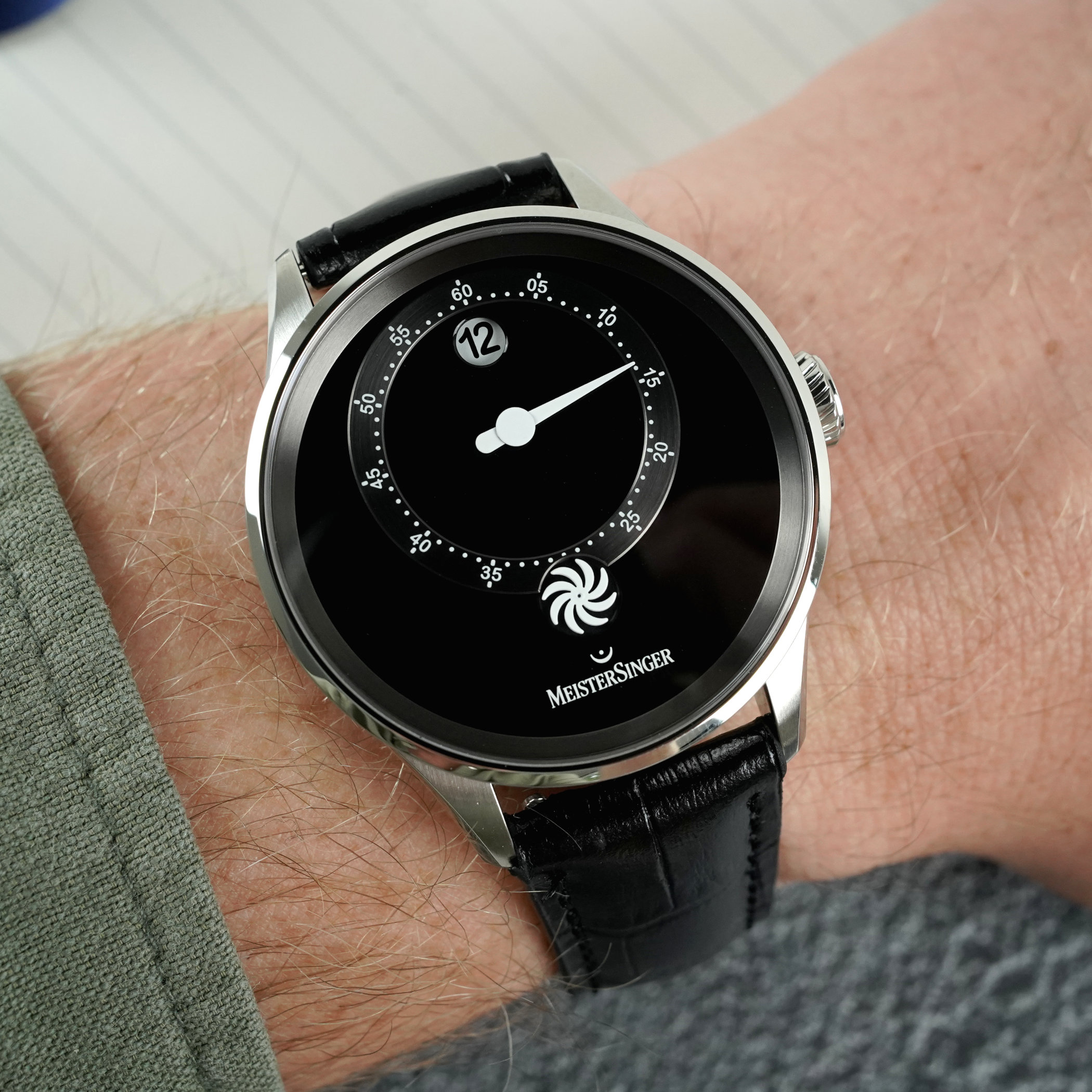
2. MeisterSinger Panthero
Known for its minimalist single-handed approach, MeisterSinger elevates its 2014 Salthora concept with the Panthero. It features an off-centre minute dial, a jumping hour aperture at the top, and a running seconds sun wheel at the bottom.
- Case: 40.5mm x 11.25mm stainless steel with sapphire crystals front and back
- Movement: Automatic Calibre MS_JH-01 (Sellita SW300 base with Dubois-Depraz module; 28,800 vph, 47-hour power reserve)
- Dial: Black lacquered face with single minute hand
- Price: EUR 6,990 (Standard) / EUR 7,990 (Guilloché limited editions)
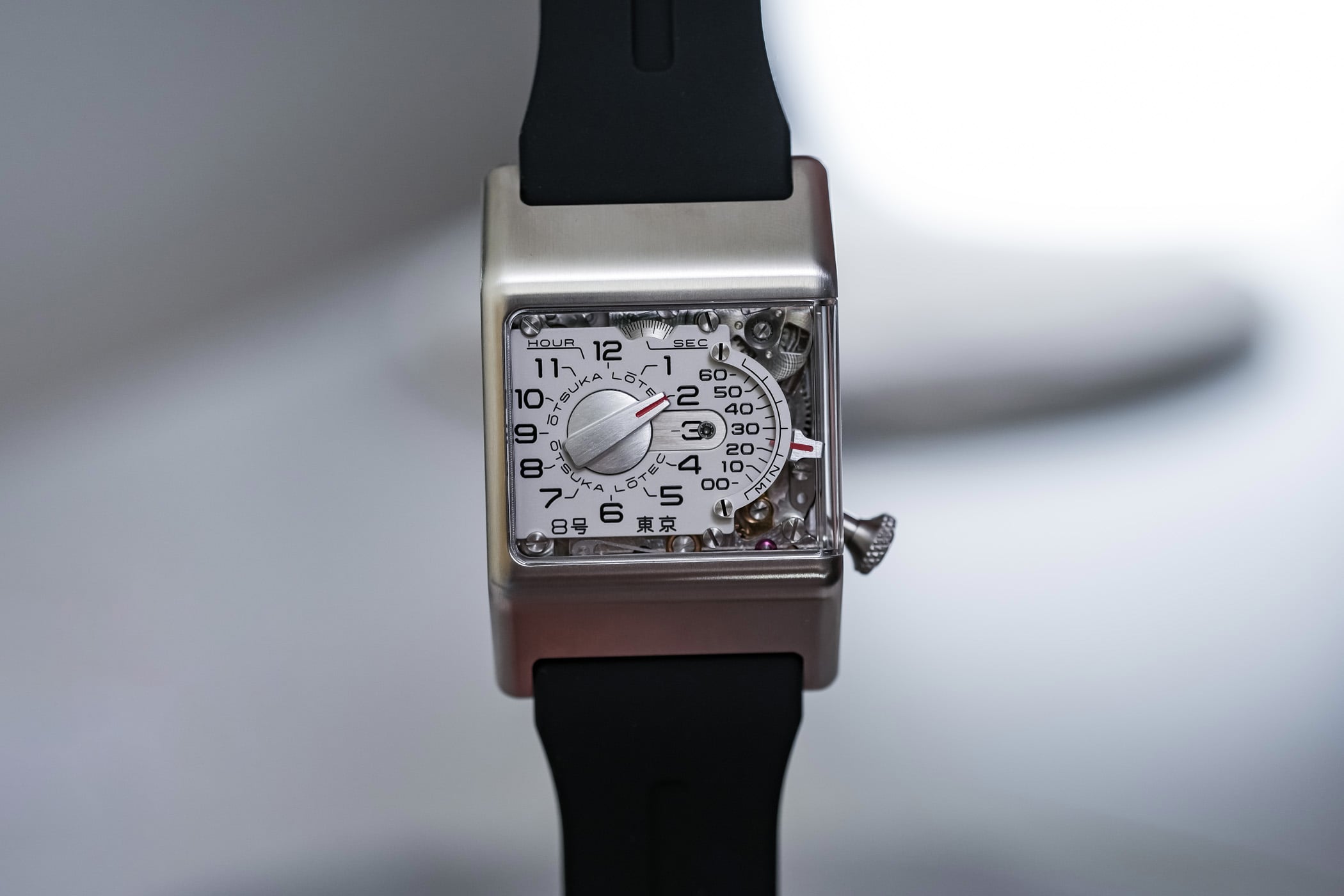
3. Otsuka Lotec No.8
Bursting onto the international stage from Japan, independent creator Jiro Katayama brings industrial design to life with the No.8. The watch splits time across a jumping hour display, a retrograde minute display slowed by a flywheel, and a running seconds disc at noon.
- Case: 31mm x 47.8mm x 10.8mm stainless steel with curved sapphire crystal
- Movement: Automatic Miyota 9S05 base with in-house display module (28,800 vph, 32-hour power reserve)
- Distribution: Exclusively via raffle-based allocations for domestic Japanese buyers
- Price: Approx. EUR 5,500
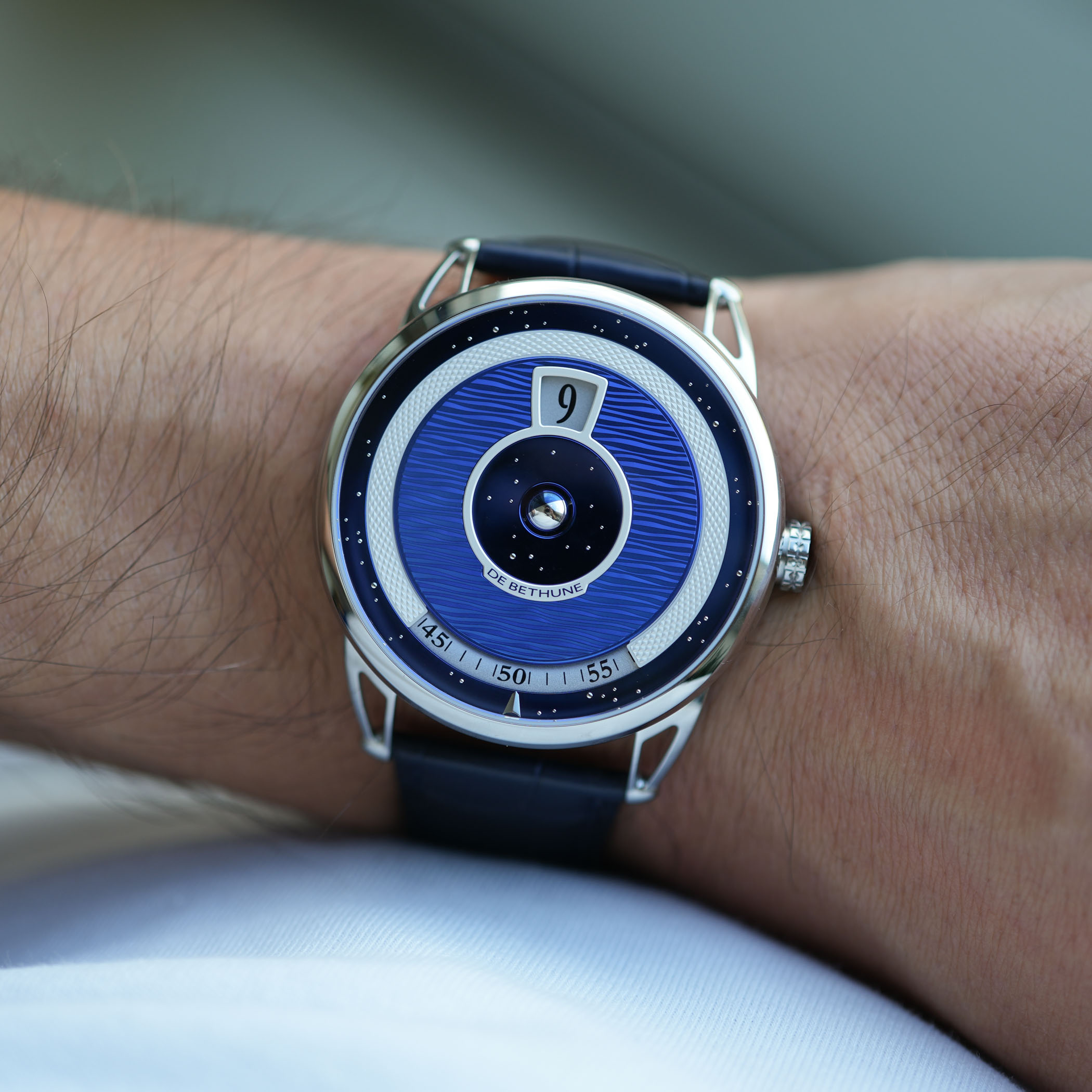
4. De Bethune DB25 Digitale
Hailed as one of the standout triumphs of Geneva Watch Days, the DB25 Digitale captures the pinnacle of independent haute horlogerie. It pairs a spherical moonphase and a gold-studded blue Starry Varius disc with a jumping hour at 12 o’clock and running minutes at 6 o’clock.
- Case: 42mm x 11.9mm Grade 5 titanium with signature openworked lugs
- Movement: In-house manual-winding Calibre DB2144V3 featuring 416 components (28,800 vph, 120-hour power reserve)
- Dial: Blue random guilloché sections with silver barleycorn ring
- Price: Upon request
5. Amida Digitrend OSII Black
A faithful yet thoroughly modernized homage to 1970s driving watches, the Amida Digitrend OSII Black utilizes a special LRD prism to project vertical jumping hours and scrolling minutes underneath a dramatic sapphire crystal hood.
- Case: 39.6mm x 39mm x 15.6mm stainless steel with polished "roll bars" and ribbed "air vent" styling
- Movement: Automatic Soprod Newton P092 base with in-house jumping hour disc module (28,800 vph, 44-hour power reserve)
- Availability: Limited edition of 150 pieces
- Price: CHF 5,150 (on Alcantara strap) / CHF 5,500 (on steel bracelet)
6. Chronoswiss Neo Digiteur Pastel Code
Continuing the legacy of the cult-favorite 2005 Digiteur, Chronoswiss has dropped three vibrant new Pastel Code editions (Rose, Mint, and Sky) featuring a regulator-style layout with a jumping hour, dragging minutes, and sweeping seconds.
- Case: Rectangular 48mm x 30mm x 9.7mm stainless steel case with reshaped onion-style crown
- Movement: Manual Chronoswiss Calibre C.85757 (Peseux 7001 base with proprietary module; 21,600 vph, 48-hour power reserve)
- Availability: Limited to 99 pieces per colorway
- Price: EUR 12,700
Official Responses and Industry Perspectives
The resurgence of mechanical jump hours has not gone unnoticed by top-tier watchmaking executives and independent artisans. Industry leaders point to a growing consumer fatigue with generic round dials and an increasing appetite for visual mechanical theater.
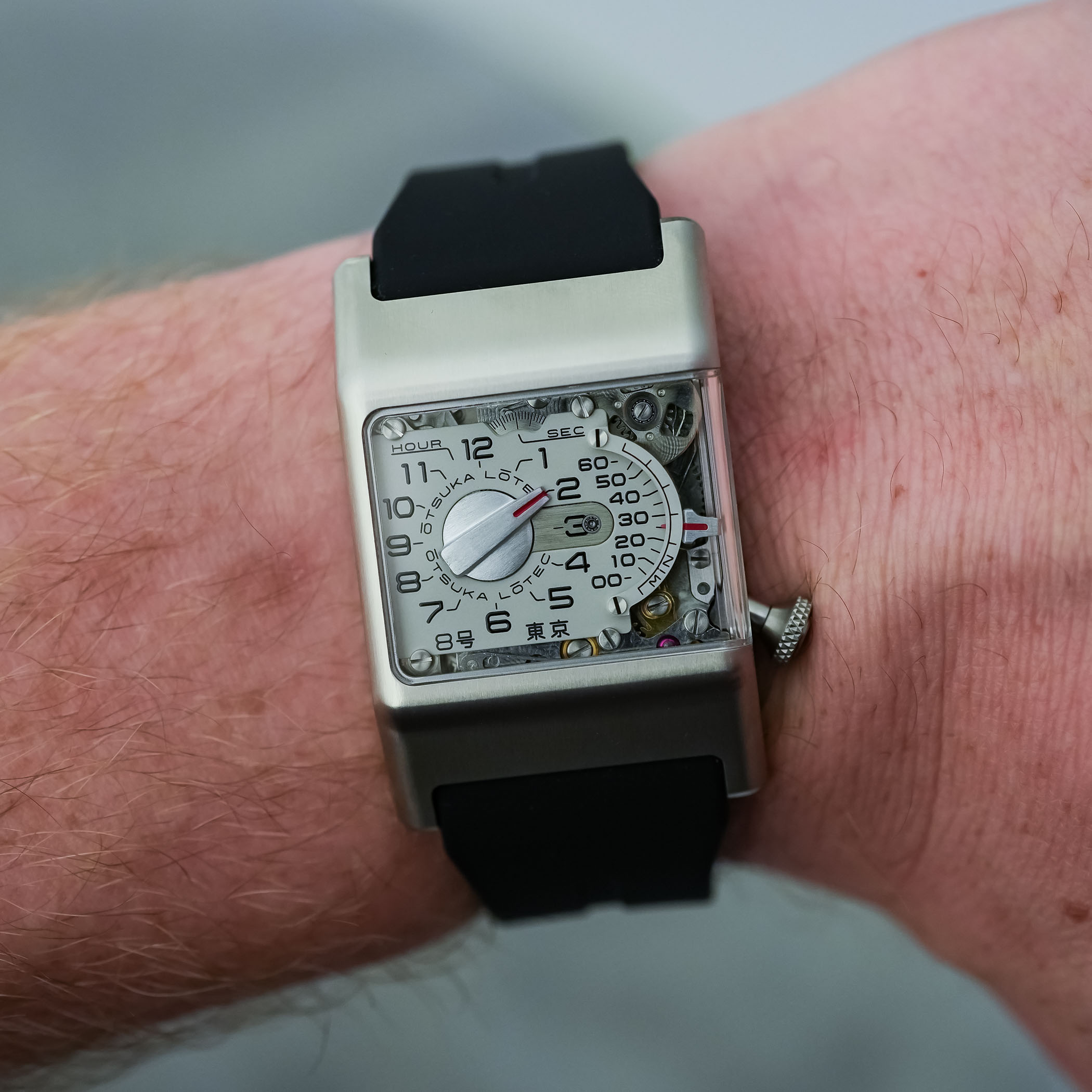
Makers like Jiro Katayama of Otsuka Lotec emphasize that mechanical creativity must serve a narrative purpose. "Industrial design is not just about looking retro or futuristic; it’s about making the mechanical passage of time feel visceral and tactile to the wearer," Katayama noted during a recent interview discussing the engineering behind the No.8’s retrograde flywheel.
Similarly, high-end houses like De Bethune view complications like the jump hour as an opportunity to marry poetry with high technology. By integrating complex astronomical displays—such as the spherical moonphase—alongside a crisp digital hour window, brands are proving that classical complications and modern digital aesthetics can coexist in harmony.
Implications for the Future of Independent Watchmaking
The widespread embrace of the jump hour carries several profound implications for the watch industry at large:
- A Shift Toward Display Innovation: As seen with Amida and Louis Vuitton, collectors are placing a higher premium on how time is displayed rather than simply what material the case is made of. Novelty in time display format is driving secondary market demand and brand loyalty.
- Empowerment of Independent Ateliers: Because jump hour mechanisms often rely on proprietary modules rather than standard base gear trains, independent watchmakers and boutique brands have a unique competitive advantage. They can pivot quickly to introduce daring designs that conservative legacy conglomerates might avoid.
- Collectibility and Scarcity: With limited production runs—such as Chronoswiss’s 99-piece Pastel Code series and Amida’s 150-piece allocations—jump hour watches are fast becoming crown jewels for collectors seeking alternative, conversation-starting timepieces.
Ultimately, the jump hour revival demonstrates that watchmaking is as much an art form as it is a science. Whether through the industrial edge of Otsuka Lotec, the cosmic poetry of De Bethune, or the retro-futurism of Amida, the mechanical jump hour has firmly reclaimed its place at the bleeding edge of horological design.