GENEVA/PARIS — When the European Union sits down to deliberate over what constitutes a strategic economic asset, its gaze is invariably drawn to the volatile horizons of global technology and heavy industry. Brussels fixates on semiconductors, advanced batteries, critical rare earth minerals, and green hydrogen—commodities where foreign rivals like China or the United States dominate production chains, or threaten to do so.
Yet, this fixation on high-tech dependencies blinds European policymakers to a foundational asset that cannot be imported, replicated, or substituted from abroad: the European continent’s soil.
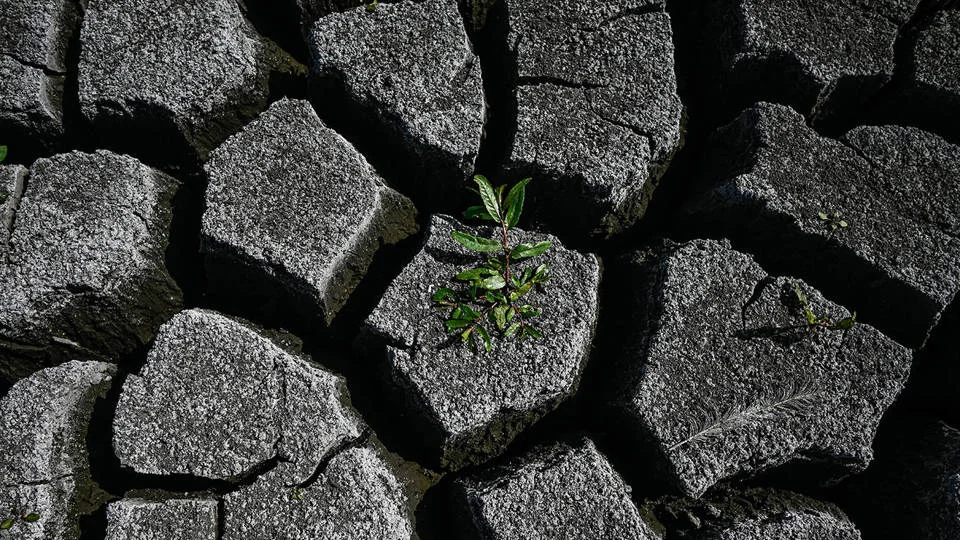
While trade wars and supply chain bottlenecks dominate the headlines, a much more fundamental, silent catastrophe is unfolding across Europe’s rural landscape. Europe’s soil is gradually dying. Despite its irreplaceable role in sustaining human life, buffering against extreme weather, and storing staggering amounts of carbon, the continent still fails to recognize soil as a primary strategic pillar.
Addressing this crisis requires more than localized conservation efforts; it demands a sweeping, overarching framework that fundamentally realigns economic policy, integrates natural capital into national accounts, and guarantees that farmers receive robust financial rewards for measurable, restorative soil outcomes.
Main Facts: The Anatomy of an Unfolding Disaster
At its core, soil is not merely a passive medium for plants to anchor into; it is a living, breathing, and vital piece of natural infrastructure. It is the absolute bedrock of global and European food systems, responsible for producing an estimated 95% of the food humanity consumes.
Beyond its agricultural output, European soil serves as a monumental carbon sink. It holds an estimated 75 billion tons of organic carbon—several times more than the living biomass found in all of Europe’s forests combined. Furthermore, healthy, porous soil acts as a natural sponge, providing a crucial defense buffer against droughts and devastating floods. These extreme weather events have transitioned from rare anomalies to destructive, recurring features of the European summer.
Despite these vital functions, the statistics governing European land health are alarming. According to assessments by the European Commission, an estimated 60% to 70% of all soils across the EU are currently classified as unhealthy. This widespread degradation carries an exorbitant economic toll, costing the European economy more than €50 billion ($58 billion) annually in lost agricultural productivity, disaster recovery, and ecological remediation.
The timeline of ecological recovery makes this crisis uniquely perilous. While a factory can be built in months and a semiconductor plant in a few years, it can take up to a thousand years for nature to form just a few centimeters of fertile topsoil. To continue down the current path of degradation is to gamble with the long-term viability of European civilization.
Chronology of a Blind Spot: From Energy Shocks to Land Neglect
To understand why policymakers have been so slow to act, one must examine how modern economies track value. In contemporary macroeconomic accounting, what is not formally counted is rarely protected. When a country’s soil ecosystem degrades and ultimately collapses, its Gross Domestic Product (GDP) barely flickers downward on quarterly charts, creating a dangerous illusion of stability while the nation as a whole grows structurally poorer.
Europe has walked this path of unaccounted dependencies before, most notably in the energy sector. For decades, European governments relied on cheap natural gas piped directly from Russia, treating the supply as an infinite, unthreatened background condition. When the Kremlin launched its full-scale invasion of Ukraine and energy supplies were abruptly choked off, the hidden cost of that dependency was laid bare. European governments were forced to scramble, splurging roughly €500 billion in emergency subsidies and fiscal buffers to shield citizens and heavy industries from soaring energy prices.
Soil degradation differs from a sudden geopolitical energy shock in one critical aspect: it is a slow-motion, cumulative process for which Europe itself is wholly responsible. Because no foreign adversary is intentionally withholding topsoil overnight, policymakers routinely fail to recognize that healthy soil is the ultimate guarantor of resilience—the foundational capacity of an economy to continue functioning in the face of profound environmental and systemic shocks.
Fortunately, the legislative landscape within the European Union has begun to evolve, even if the pieces have yet to be assembled into a cohesive strategy:
- December (Recent Years): The landmark Soil Monitoring Law entered into force, establishing a common, standardized framework across member states for assessing soil carbon content, erosion rates, biological activity, and water retention capacity.
- November 2024: The EU officially adopted pioneering rules requiring member states to compile accounts for seven specific ecosystem services, marking an initial step toward integrating nature into economics (though the vital services provided by soil, particularly water retention, remain largely marginal in these accounts).
- July: The European Commission formally adopted robust certification methodologies under the Carbon Removal and Carbon Farming (CRCF) regulation, laying the groundwork for farmers to access financial rewards tied to measurable soil outcomes.
- Upcoming (Later This Year): The European Commission is scheduled to release its comprehensive framework for European climate resilience and risk management, presenting a golden opportunity to bridge policy gaps.
Supporting Data: The Cost of Inaction vs. The Value of Resilience
Skeptics within fiscal and political circles frequently argue that Europe simply cannot afford the sweeping regulatory and financial commitments required to restore its soils. However, a rigorous look at the data suggests the exact opposite: inaction is infinitely more expensive than restoration.
| Metric / Indicator | Data Point / Estimate | Source / Context |
|---|---|---|
| Global Food Production | 95% | Food and Agriculture Organization (FAO) |
| European Soil Carbon Storage | ~75 billion tons | Environmental research data (MDPI) |
| Unhealthy EU Soils | 60% – 70% | European Commission |
| Annual Economic Cost of Degradation | > €50 billion ($58 billion) | EU environmental health assessments |
| Recent Energy Crisis Spending | ~€500 billion | European government outlays post-Ukraine invasion |
| Soil Formation Rate | Up to 1,000 years per cm | Geological and agricultural baselines |
Dead or severely degraded soil directly triggers lower agricultural yields, volatile and structurally higher food prices, and an acute exposure to unmitigated droughts and floods. Furthermore, this form of ecological fragility acts as a regressive hidden tax.
When food prices spike due to harvest failures driven by degraded land, low-income households bear the brunt of the burden. To prevent vulnerable populations from being squeezed by inflation and increasingly violent climate disasters, Europe must abandon the comforting fiction that degrading soil carries no real economic cost.
Official Responses and Global Context
Europe’s agricultural and environmental crisis is not unfolding in a vacuum. On the global stage, international bodies are grappling with the same sobering realities, though political will often lags behind scientific urgency.
In August, the 17th Conference of the Parties (COP17) to the United Nations Convention to Combat Desertification convened in Ulaanbaatar, Mongolia. The summit brought together global leaders to confront the escalating crises of land degradation and drought. While participating governments successfully agreed to mobilize new funding initiatives for land restoration and drought resilience, they ultimately failed to forge a binding global framework on drought management—a stark reminder of the persistent gap between scientific warnings and political execution.
Interestingly, many nations in the Global South—particularly developing economies reliant on the export of coffee, cocoa, and specialized fruits—have outpaced Europe in treating soil health as a vital strategic asset out of sheer economic survival.
Business leaders, agricultural investors, and financial advisers across these value chains argue that Europe must step up to lead. Rather than letting initiatives remain fragmented, the EU should spearhead an international "Soil Alliance." This alliance would be backed by governments committed to standardized measurement and regulatory frameworks that actively reward land restoration.
This agenda must be championed on the international circuit, serving as a cornerstone at upcoming gatherings such as the UN Biodiversity Conference in Yerevan, Armenia, and the UN Climate Change Conference in Antalya, Turkey.
Implications: Three Commitments for Europe’s Future
As the European Commission prepares to unveil its integrated framework for European climate resilience and risk management later this year, business leaders and environmental economists are urging policymakers to bake three non-negotiable commitments into the strategy:
- Expand Mandatory Ecosystem Accounting: The framework must broaden mandatory ecosystem accounting to explicitly encompass the services provided by healthy soil, beginning with water retention capacity, and mandate their inclusion in official national economic accounts.
- Extend Outcome-Based Rewards: Financial incentives must move beyond simple carbon accounting. Rewards must be extended to holistic soil health and water retention, ensuring that farmers, foresters, and land managers can generate stable livelihoods from verifiable, measurable ecological results.
- Integrate Metrics into Public Support: Public subsidies, agricultural support programs, and public investment decisions must be systematically guided by these soil indicators, ensuring that taxpayer funds reward regenerative stewardship just as carbon metrics govern industrial emissions today.
Conclusion
The renowned French poet René Char once wrote, "Our inheritance was left to us by no testament."
Soil is the ultimate inheritance. It passes silently from one generation to the next, yet it remains absent from our national balance sheets and GDP calculations. For decades, Europe has fallen into the trap of counting only what it manufactures and produces, completely ignoring what it possesses beneath its feet.
Unless and until that foundational mindset changes, the slow, systemic death of the continent’s soil will continue unabated—turning the green heart of Europe into a fragile monument to what could have been saved.