When purchasing a new or pre-owned vehicle, buyers weigh a multitude of factors: fuel economy, technological features, safety ratings, and upfront cost. However, for many motorists, long-term durability remains the holy grail of automotive ownership. Drivers want to know that their investment will endure years of daily commuting, road trips, and harsh weather conditions without requiring catastrophic engine or transmission repairs.
A comprehensive new data study released by automotive research firm iSeeCars sheds light on this exact question. While previous industry analyses have examined which automotive brands generally boast the highest longevity, this latest report zeroes in on specific models—excluding heavy-duty commercial trucks—to reveal precisely which passenger cars, SUVs, and standard light-duty vehicles give owners the highest statistical probability of crossing the coveted quarter-million-mile threshold.
The results offer both validation for loyal fans of certain brands and surprising revelations about which segments and regions of the global automotive landscape truly build vehicles meant to stand the test of time.
Main Facts: The Ultimate Survivors
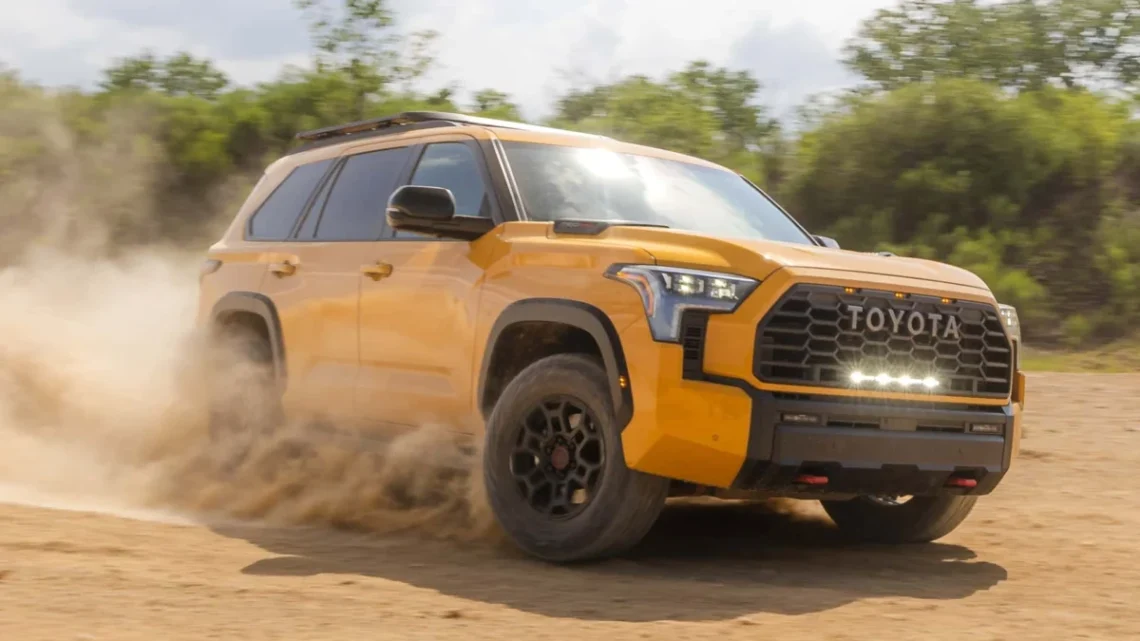
Topping the newly released iSeeCars study is a familiar automotive powerhouse: the Toyota Motor Corporation. When examining the absolute highest probability ratings for reaching 250,000 miles or more, Toyota and its luxury division, Lexus, utterly dominate the upper echelons of the chart. Out of the top 10 individual vehicle models identified in the study, a staggering nine hail from the Japanese manufacturing giant—six bearing the Toyota badge and three proudly wearing the Lexus emblem.
Leading the entire pack is the Toyota Sequoia, a full-size, truck-based SUV that commands an impressive 42.3 percent chance of hitting 250,000 miles. Closely following in second place is the luxurious Lexus LS flagship sedan at 38.8 percent, while the rugged, off-road-bred Toyota 4Runner secures third place with a 33.1 percent likelihood.
For everyday passenger cars and non-luxury options, Asian automakers continue to hold a tight monopoly on longevity. The only non-Toyota vehicle to crack the top 10 passenger car and SUV list is the Honda Accord Hybrid, which secures the 10th spot with an 18.5 percent chance of reaching the quarter-million-mile mark. Other Honda models also perform admirably: the subcompact Honda HR-V ranks 11th at 17.6 percent, and the evergreen Honda Civic comes in at 15th with 17.3 percent.
Meanwhile, breaking into the top 27 rankings from outside the traditional Asian automotive sphere requires unique engineering pedigree. The first non-Asian vehicle to appear on the list is the iconic Mercedes-Benz G-Class, ranking 14th with a 17.4 percent probability. On the American side, the first domestic brand to claim a spot is the Chevrolet Suburban, which lands at 24th place with an 11.6 percent chance of hitting 250,000 miles—outperforming the broader industry average significantly, yet trailing far behind Asian market competitors.
Chronology and Industry Evolution: Shift Toward Longevity
The conversation surrounding vehicle lifespan has evolved dramatically over the last three decades. In the 1980s and 1990s, crossing the 100,000-mile mark was considered a monumental milestone for any automobile, often signaling that a car was entering its twilight years and would soon require extensive overhauls.
As manufacturing techniques improved, computer-aided design matured, and electronic fuel injection replaced carburetors, the baseline expectation for automotive durability shifted. By the turn of the century, 150,000 miles became the new benchmark for a well-maintained vehicle. Today, thanks to advanced synthetic lubricants, tighter manufacturing tolerances, and robust metallurgy, reaching 250,000 miles—and beyond—is no longer an impossible dream, though it remains a rare feat across the industry at large.
The current landscape, as mapped out by iSeeCars, illustrates how corporate philosophies established decades ago continue to yield dividends. Japanese manufacturers like Toyota and Honda staked their global reputations in the late 20th century on bulletproof reliability, simple yet over-engineered powertrains, and rigorous quality control. While other global automakers prioritized rapid stylistic changes, bleeding-edge interior technology, or aggressive lease-turnover cycles, Japanese brands focused heavily on refining existing mechanical architectures.
This long-term dedication has created a distinct generational trust among consumers. Even as modern vehicles incorporate complex hybrid powertrains, touchscreens, and advanced driver-assistance systems, the foundational engineering principles of these top-ranking brands have allowed them to maintain their competitive edge in longevity studies year after year.
Supporting Data: By the Numbers
To truly appreciate the significance of these top-tier longevity rankings, one must examine the broader statistical context. According to iSeeCars, the overall industry average for a standard passenger vehicle or light-duty truck reaching a quarter-million miles is a modest 5.4 percent.
Against this baseline, the leading vehicles are operating in an entirely different league:
- Toyota Sequoia: 42.3% chance of reaching 250,000 miles
- Lexus LS: 38.8%
- Toyota 4Runner: 33.1%
- Honda Accord Hybrid: 18.5%
- Toyota HR-V: 17.6%
- Mercedes-Benz G-Class: 17.4%
- Honda Civic: 17.3%
- Toyota Prius: 11.5%
- Toyota Camry Hybrid: 11.5%
- Honda Odyssey: 10.7%
Even at the lower end of this elite bracket—such as the Honda Odyssey minivan at 10.7 percent—a vehicle has roughly double the lifespan probability of the standard automotive average.
America’s Saving Grace: Heavy-Duty Trucks
While traditional American passenger cars and standard light SUVs struggle to crack the top tiers of the passenger vehicle longevity study, the domestic automotive industry redeems itself emphatically in the heavy-duty and commercial truck sector. When heavier, commercial-grade workhorses are factored into the equation, American engineering shines.
The Ram 3500 takes the crown as the number one truck on the longevity index, boasting an impressive 31.9 percent chance of reaching 250,000 miles. If integrated into the overall passenger vehicle study, this heavy-duty titan would comfortably rank fourth overall.
Other heavy-duty American trucks follow closely behind:
- GMC Sierra 3500 HD: 26.2%
- GMC Sierra 2500 HD: 17.2%
- Ford F-350 Super Duty: 15.1%
- Ford F-450 Super Duty: 14.9%
- Ram 2500: 14.3%
- Chevrolet Silverado 2500HD: 14.1%
- Ford F-250 Super Duty: 13.4%
All of these domestic heavy-duty contenders comfortably outperform the overall truck longevity average of 11.1 percent, proving that when American manufacturers build heavy-duty commercial platforms designed for towing, hauling, and industrial use, the resulting machinery is built to endure punishing conditions for decades.
Official Responses and Expert Insights
Industry experts point to specific design philosophies and historical lineages to explain why certain vehicles consistently defy the odds.
Commenting on the data, iSeeCars Executive Analyst Karl Brauer offered a clear breakdown of the forces driving these statistics:
"It’s clear Toyota and Honda have a corporate philosophy focused on durability and a long vehicle lifespan. But the military background of the Mercedes-Benz G-Class, and the robust design and wide range of capabilities of Chevrolet’s Suburban, allow them to break into the top 27 rankings."
Brauer’s analysis highlights the divergence in how vehicles achieve longevity. For Japanese manufacturers, durability is baked into the DNA of high-volume mass-market production—utilizing naturally aspirated engines, conservative tuning, and meticulously refined transmissions.
Conversely, European luxury icons like the Mercedes-Benz G-Class achieve longevity through sheer over-engineering rooted in military utility. Originally designed as a rugged, utilitarian vehicle for armed forces before transitioning into a luxury status symbol, the G-Class retains a heavy-duty ladder frame, robust solid axles, and mechanical fortitude that separates it from unibody luxury crossovers.
Similarly, the Chevrolet Suburban relies on decades of body-on-frame truck architecture. Designed to haul large families and heavy cargo across vast continental expanses, its simplicity of scale and heavy-duty drivetrain components give it the physical resilience required to outlast smaller, highly stressed utility vehicles.
Implications for Consumers and the Automotive Market
The findings of this latest longevity study carry profound implications for car buyers, financial planners, and the broader secondary automotive market.
1. The True Cost of Ownership
Upfront sticker prices only tell part of the financial story. A vehicle with a higher probability of lasting 250,000 miles represents a significantly lower cost-per-mile depreciation curve over its lifetime. Purchasing a vehicle with proven long-term durability allows buyers to bypass years of car payments, making higher initial investments in models like the Toyota Sequoia or Lexus LS financially sound over a 10-to-15-year ownership horizon.
2. Resale Value Retention
Unsurprisingly, vehicles that dominate longevity studies also tend to hold their residual values exceptionally well. Used car buyers actively scour the market for models with a reputation for bulletproof reliability. As a result, trucks like the Toyota 4Runner or Ram 3500 command high resale values even with well over 100,000 miles on the odometer.
3. Shifting Consumer Preferences
As new car prices continue to hover near historic highs—with average monthly payments frequently exceeding $800—consumers are holding onto their existing vehicles longer than ever before. Knowing which specific models can comfortably surpass a quarter-million miles provides buyers with practical guidance in an economic climate where vehicle retention is increasingly becoming a financial necessity rather than a personal choice.
Ultimately, whether you are shopping for a fuel-efficient hybrid commuter car, a rugged off-road SUV, or a heavy-duty commercial towing machine, data-driven insights from studies like this empower consumers to make smarter, long-lasting investments that pay dividends miles down the road.