By Automotive Industry Desk
Main Facts: The Current State of the EV Landscape
As fluctuating gas prices continue to strain the wallets of American drivers, the automotive marketplace is undergoing a profound transformation. Consumers are actively searching for ways to insulate themselves from the volatility at the pump, triggering a significant shift in buying habits. While traditional hybrids have surged in popularity due to their familiar driving dynamics and immediate fuel savings, battery-electric vehicles (BEVs) are carving out a different narrative—one defined by sliding retail prices, shifting market dominance, and a booming second-hand sector.
According to comprehensive new data released by Cox Automotive, the American electric vehicle market is exhibiting a tale of two segments. The new EV market is experiencing modest month-over-month gains weighed down by tough year-over-year comparisons. Specifically, new EV sales rose by 2.5 percent in August compared to July. However, that figure must be contextualized: overall battery-electric vehicle sales remain down 46.9 percent compared to the same period a year prior, a statistical anomaly driven by a massive consumer rush to purchase EVs ahead of sweeping federal tax credit expirations.
Simultaneously, financial barriers to entry are slowly crumbling. New EV transaction prices are on a downward trajectory, tumbling 1.3 percent in August and marking a 2.8 percent decline year-over-year. While buying a brand-new EV still commands a premium over a traditional internal combustion engine (ICE) vehicle—averaging $54,754 compared to $49,907—the price gap is rapidly closing.
Yet, the true engine of growth in the electric sector is happening on dealership used-car lots. The used EV market is experiencing an unprecedented boom, fueled by a healthy influx of returning off-lease vehicles that offer budget-conscious buyers an accessible entry point into zero-emission motoring.
Chronology: How the Market Shifted Through 2024 and Late Summer
To understand how the automotive sector arrived at its current crossroads, one must examine the timeline of consumer behavior and regulatory changes over the past year.
- Late Summer 2023 (The Tax Credit Rush): A year prior to the latest reporting period, the American EV market witnessed an aggressive surge in consumer demand. Fearing the impending expiration or tightening of lucrative federal EV tax credits, buyers rushed dealerships en masse. This created an artificially inflated sales baseline that would make year-over-year comparisons for 2024 particularly punishing for automakers.
- Early-to-Mid 2024 (The Hybrid Pivot and Price Corrections): As gas prices steadily crept upward through the spring and summer, consumers began balking at the high sticker prices of brand-new EVs. Automakers responded by adjusting production forecasts, ramping up hybrid offerings, and quietly lowering MSRPs or introducing aggressive lease incentives to move inventory.
- July 2024 (The Baseline): Moving into the second half of the summer, the new EV market hit a stabilization point. Dealership lots began filling up with an increasing number of returned leases, laying the groundwork for a dramatic uptick in pre-owned vehicle availability.
- August 2024 (The Turning Point): According to Cox Automotive, August data revealed a divergence in the market. While new EV sales managed a modest 2.5 percent bump over July (reaching nearly 79,000 units sold), the used EV market exploded. Used EV sales jumped 25.9 percent month-over-month and 14.7 percent year-over-year, hitting 44,350 units. At the same time, used EV listing prices dropped 1 percent from July to a national average of $37,441, making them vastly more affordable than their new counterparts.
Supporting Data: Market Breakdown and Brand Performance
The raw numbers from Cox Automotive paint a vivid picture of market share, pricing parity, and consumer preferences.
New EV Market Dynamics
Out of the nearly 79,000 new EVs sold in August, market titan Tesla continued to command an outsized share of the pie, accounting for just under 41,000 units. Despite this dominance, Tesla’s sales dipped 3.8 percent from July, signaling a maturing market where legacy automakers and alternative brands are beginning to chip away at the monopoly.
Toyota emerged as the standout traditional manufacturer, capturing the second-place spot for the month. Toyota’s EV and electrified sales surged an impressive 34.9 percent, totaling 4,964 units. The broader industry sentiment, however, remains encapsulated by industry analysts who observe: "It’s Tesla and then everyone else."
Pricing metrics reveal a narrowing chasm between powertrains:
- Average New EV Price (August): $54,754 (down 1.3% MoM, down 2.8% YoY)
- Average New ICE Vehicle Price: $49,907
- Price Difference: Down to roughly $4,847, bringing price parity closer to reality than ever before.
The Used EV Explosion
The secondary market is where affordability is driving true volume. In August, 44,350 used EVs changed hands.
- Average Used EV Listing Price: $37,441 (down 1% from July, though up 8.2% compared to the previous year).
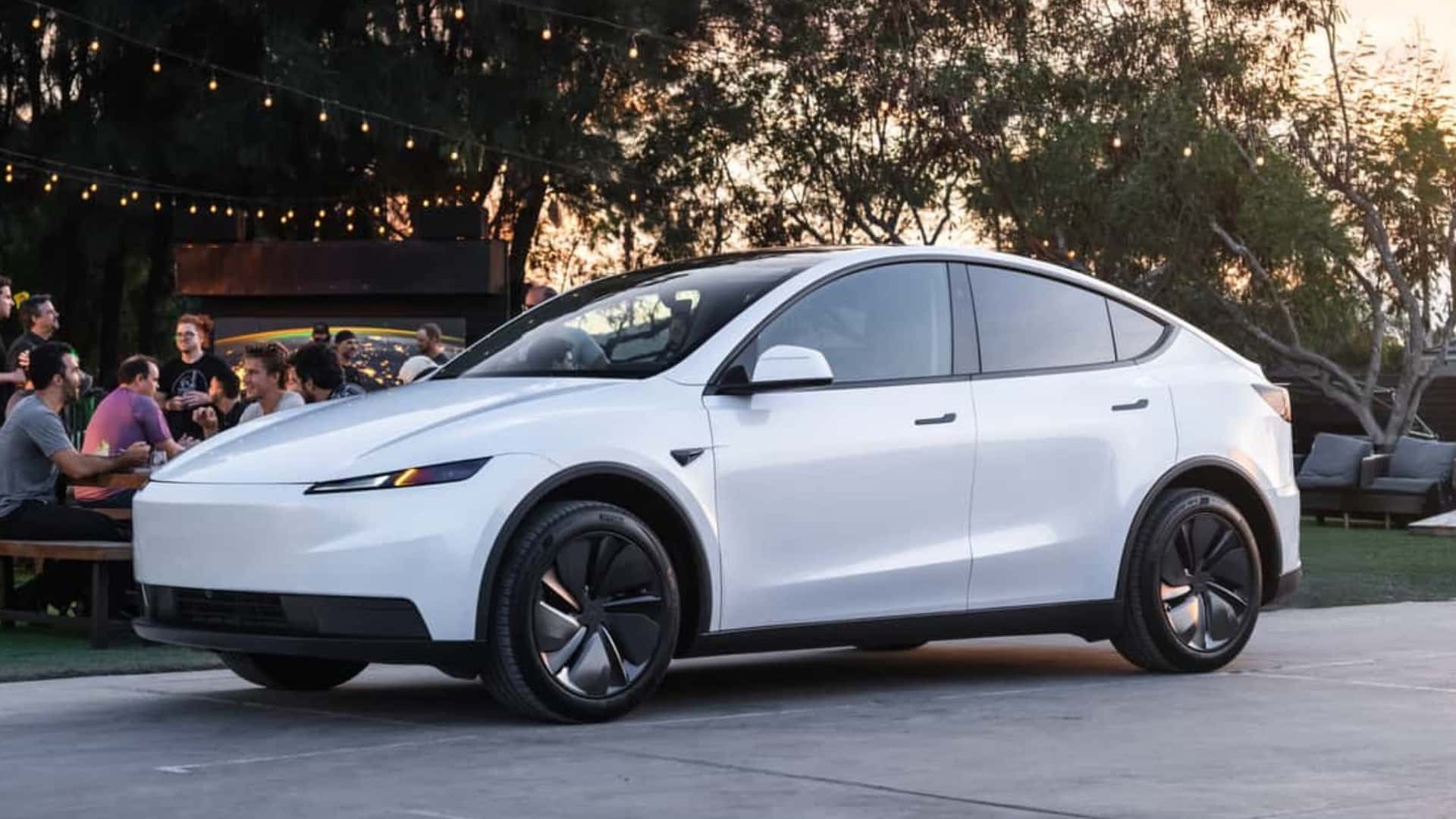
- Tesla’s Pre-Owned Footprint: Tesla maintained its leadership in the used sector as well, capturing nearly 30 percent of all used EV sales.
- Legacy Brand Growth: While Tesla leads in sheer volume, brands like Nissan and Kia experienced massive percentage gains in the used sector, surging 45.1 percent and 32.1 percent, respectively, buoyed by aging inventory of models like the Nissan Leaf and early Kia e-Niro/EV6 leases.
- Top-Selling Models: The volume leaders—cars seeing the largest month-over-month volume increases on pre-owned lots—remained the Tesla Model 3, Tesla Model Y, and the Ford Mustang Mach-E.
Official Responses and Industry Insights
Automotive analysts and industry observers have been quick to dissect what these fluctuating metrics mean for the broader transportation ecosystem.
In its official market summary, the Motor1 Take encapsulated the prevailing consumer sentiment:
"The latest data reveals consumers are looking for ways to save money. New EV sales aren’t popping off like used ones, but the used market is bigger than new, and an off-lease EV is the perfect car for cost-conscious buyers looking to wean themselves off the pump."
Financial analysts point out that the massive influx of off-lease vehicles is an inevitable and healthy maturation phase for the automotive industry. When the initial wave of long-term EV leases—predominantly signed between 2021 and 2023—began expiring, it injected a steady supply of modern, tech-forward electric vehicles into the secondary market at depreciation-discounted rates.
Furthermore, dealership networks report that prospective buyers who were previously priced out of the new EV market—where transaction averages hovered well above $60,000 just two years ago—are finding the sub-$40,000 price point of a used Tesla Model 3 or Ford Mustang Mach-E to be an irresistible value proposition.
Implications: What This Means for the Future of Mobility
The convergence of rising fuel costs, falling new car prices, and a booming used EV market carries profound implications for manufacturers, policymakers, and everyday drivers.
1. Affordability is the Ultimate Catalyst
For years, critics argued that EV adoption was hindered primarily by "range anxiety." However, current market data suggests that price anxiety has been the far more formidable barrier. As average new EV prices edge closer to the $50,000 threshold and the used market offers robust options in the mid-$30,000 range, electric mobility is transitioning from a luxury novelty to a mainstream financial choice.
2. The Pressure on Legacy Automakers
Traditional internal combustion engine manufacturers are caught in a delicate balancing act. While they must continue investing heavily in research, development, and retooling for electric architectures, slowing year-over-year new EV sales mean they cannot abandon hybrid and high-efficiency gas vehicles just yet. The success of brands like Toyota—which leans heavily into hybrids—proves that consumers want fuel economy without committing fully to charging infrastructure constraints.
3. Infrastructure and the Second-Hand Buyer
As more budget-conscious buyers snap up used EVs, the demographics of EV ownership are shifting from affluent, single-home suburbanites (who easily install home Level 2 chargers) to urban and apartment-dwelling motorists. This shift places renewed urgency on municipal governments and private entities to expand public charging infrastructure, particularly in metropolitan areas where home-charging options are limited.
4. The Long-Term Outlook
Ultimately, the data from Cox Automotive points to a resilient, evolving market. The steep year-over-year drops in new EV sales are largely a statistical illusion cast by past tax credit deadlines, while the month-over-month growth and explosive used-car activity prove that consumer appetite for electrification remains fundamentally strong. For drivers tired of bleeding cash at the local gas station, the secondary EV market has officially arrived as the ultimate escape hatch.