By Maritime & Conservation Reporting Desk
Updated October 2026
Main Facts
The New Jersey-based luxury boatbuilder Viking Yacht Company is formally petitioning the National Oceanic and Atmospheric Administration (NOAA) to accelerate its ongoing efforts to modernize federal vessel-speed regulations designed to protect the endangered North Atlantic right whale. Viking argues that sweeping, blanket speed restrictions—which have governed U.S. East Coast waters for nearly two decades—can now be successfully supplemented or replaced by sophisticated, technology-driven alternatives.
At the center of Viking’s advocacy is a rapidly evolving suite of marine mammal detection and avoidance tools. These systems combine high-definition thermal imaging, advanced radar, and artificial intelligence (AI) classification software to identify whales in real time. According to industry leaders, this technology provides a more targeted, dynamic, and practical solution than mandatory slow-speed zones, protecting vulnerable marine life while minimizing economic and operational burdens on recreational and commercial boaters.
The debate centers around the federal North Atlantic right whale vessel-speed rule, originally enacted in 2008. The current regulation requires most vessels measuring 65 feet and longer to restrict their speed to 10 knots or less when traveling through designated Seasonal Management Areas (SMAs) along the Atlantic seaboard. While conservationists credit the rule with mitigating vessel-strike risks, boating industry stakeholders have long contended that blanket 10-knot limits fail to account for modern vessel engineering, localized whale movements, and technological leaps made over the last 18 years.
Viking’s recent push follows a decisive executive order signed on September 17, which directs the Department of Commerce and NOAA to actively embrace technological advancements in marine mammal avoidance. Furthermore, the directive calls for closer collaboration with private-sector innovators to integrate these systems into federal management strategies. In response, Viking sent a formal letter to NOAA Administrator Neil Jacobs on September 18, urging the agency to prioritize rulemaking and partner directly with private developers who are actively testing real-time detection systems on the water.
Chronology of the Right Whale Speed Rule and Industry Action
To understand the weight of Viking’s current appeal to NOAA, it is necessary to examine the timeline of events that brought marine conservation and the recreational boating industry to this technological crossroads.
2008: Implementation of the Original Rule
NOAA officially implements the North Atlantic right whale vessel-speed rule. Designed to reduce the incidence of lethal ship strikes—one of the leading causes of unnatural mortality for the critically endangered whale population—the regulation mandates that vessels 65 feet and older operate at speeds not exceeding 10 knots within specific seasonal zones along the East Coast. While widely supported by conservation groups, the rule draws immediate criticism from maritime sectors regarding its inflexibility.
2022: The Launch of the WAVS Task Force
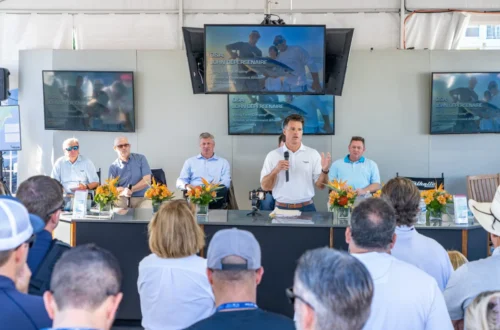
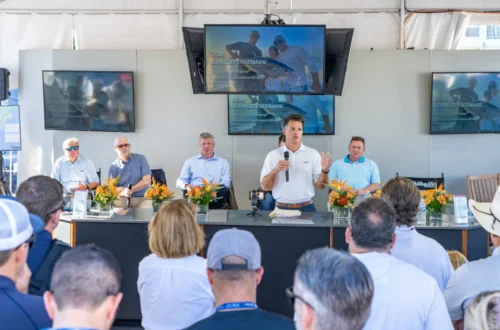
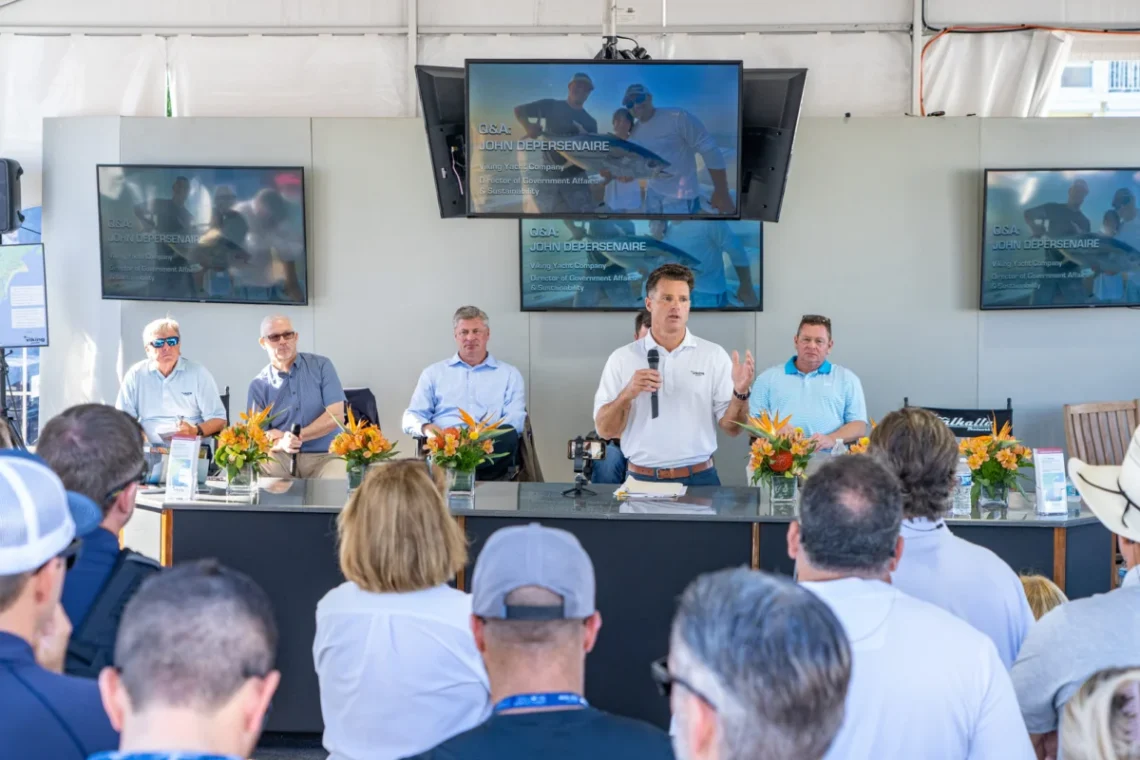
Recognizing that decades-old regulatory frameworks have not kept pace with modern marine electronics, Viking Yacht Company takes a proactive stance. During the Fort Lauderdale International Boat Show, Viking launches its Whale and Vessel Safety (WAVS) Task Force. Led by John DePersenaire, Viking’s Director of Government Affairs and Sustainability, the task force deploys a specialized 24-foot Contender research vessel. This boat serves as a floating laboratory equipped with cutting-edge detection gear, marine radar, and AI software designed to autonomously spot marine mammals and alert captains.
March 2026: NOAA Opens Advance Notice of Proposed Rulemaking
Responding to years of industry lobbying, technological testing, and shifting conservation strategies, NOAA opens an Advance Notice of Proposed Rulemaking (ANPR). The federal agency signals its willingness to evaluate potential modifications to the 2008 rule, openly considering whether traditional seasonal speed restrictions could be replaced or supplemented by dynamic management areas and real-time, technology-based strike-avoidance measures.
September 17, 2026: Executive Order on Marine Technology
The federal government issues a significant executive order instructing the Department of Commerce and NOAA to leverage cutting-edge technological advancements in marine mammal protection. The order emphasizes private-public partnerships, directing federal regulators to work hand-in-hand with marine manufacturers and tech developers to validate and integrate real-time detection systems.
September 18, 2026: Viking’s Formal Appeal to NOAA
Capitalizing on the momentum of the executive order, Viking Yacht Company dispatches an urgent letter to NOAA Administrator Neil Jacobs. Viking formally requests that the agency accelerate its rulemaking timeline, urging regulators to incorporate the advanced detection and data-sharing networks that have been rigorously tested by the WAVS Task Force and other private-sector innovators over the previous four years.
Supporting Data and Technological Innovation
The feasibility of replacing blanket speed restrictions with dynamic, tech-centric solutions rests entirely on the rapid evolution of onboard marine electronics. When the 2008 rule was drafted, captains relied almost exclusively on visual spotting and rudimentary sighting reports—methods that proved ineffective during rough seas, fog, or nighttime navigation.
Today, the landscape looks fundamentally different. Through the efforts of the WAVS Task Force, Viking and its partners in the marine electronics sector have evaluated multiple layers of advanced detection infrastructure:
- Infrared and Thermal Imaging: High-resolution thermal cameras can detect the subtle temperature differentials created when a whale breaks the surface to blow, even in low-visibility conditions or at night.
- Artificial Intelligence (AI) and Machine Learning: Modern processing units running specialized AI algorithms can autonomously scan camera feeds and radar returns, differentiating between wave clutter, floating debris, and the distinct profile of a surfacing whale, thereby drastically reducing false alarms.
- Real-Time Data Sharing Networks: Emerging platforms allow vessels equipped with detection hardware to broadcast whale sightings instantaneously to other nearby watercraft, creating a dynamic, crowdsourced hazard-awareness network akin to terrestrial traffic applications.
- Acoustic Monitoring: Underwater hydrophone arrays can detect the vocalizations of right whales miles away, feeding auditory data into navigation systems to warn captains long before a visual sighting is possible.
Industry analysts point out that these tools transform modern sportfishing yachts and large recreational vessels from passive participants in conservation into active, data-gathering sentinels. Rather than forcing a multi-million-dollar sportfisher designed for offshore transit to crawl at 10 knots across vast stretches of empty ocean, detection technology allows vessels to maintain safe speeds until a verified hazard is detected within their immediate vicinity.
Official Responses and Stakeholder Perspectives
The debate over right whale protection highlights a classic regulatory tension: balancing the imperative of preserving an endangered species with the operational and economic realities of the maritime industry. Key stakeholders have staked out clear positions on the matter.
Viking Yacht Company
Viking leadership has been vocal about its dual commitment to environmental stewardship and the viability of the recreational marine industry. Pat Healey, President and CEO of Viking Yacht Company, emphasized this balanced approach:
"We have been working on this since 2022 because technology has to be part of the solution. We want to protect the whales, we want to make boating safer, and we want a rule that reflects how today’s recreational boats operate."
Echoing these sentiments, John DePersenaire, Viking’s Director of Government Affairs and Sustainability, stressed that regulatory frameworks must evolve alongside technological capabilities:
"Technology has emerged as a way to address this important conservation issue without unnecessarily restricting boaters. We have made great progress since the rule took effect 18 years ago, and it’s time to acknowledge that progress and modernize the rule accordingly."
NOAA and Federal Regulators
NOAA has acknowledged the validity of industry concerns while maintaining its core mandate to protect marine mammal populations under the Marine Mammal Protection Act and the Endangered Species Act. By opening the Advance Notice of Proposed Rulemaking, the agency has signaled a willingness to explore alternative management areas (AMAs) and technology-based exemptions. However, federal regulators emphasize that any transition from mandatory seasonal speed limits to tech-based mitigation must be supported by rigorous, peer-reviewed data proving that new systems offer an equivalent or superior level of protection against vessel strikes.
Conservationists and Environmental Groups
While environmental organizations generally support the exploration of new technology, many retain a cautious stance regarding the total removal of blanket speed restrictions. Conservation groups argue that electronic detection systems are not infallible—citing limitations related to sea state, whale behavior (such as logging just beneath the surface without blowing), and hardware reliability. Many advocate for a hybrid approach: retaining seasonal speed restrictions as a baseline safety net while simultaneously deploying and validating detection technology as an additive layer of protection.
Broader Implications for the Maritime Industry
The outcome of Viking’s petition to NOAA carries significant ramifications that extend far beyond the North Atlantic right whale habitat along the U.S. East Coast.
- A Precedent for Dynamic Regulation: If NOAA successfully integrates real-time detection technology into its right whale management strategy, it could establish a regulatory precedent for marine mammal and wildlife protection across other U.S. waters and international jurisdictions. Dynamic, technology-driven management could eventually replace rigid seasonal boundaries for other species, such as manatees in Florida or humpback whales on the West Coast.
- Driving Marine Electronics Innovation: The regulatory push is already acting as an economic catalyst for marine electronics manufacturers. Knowing that the federal government is seriously evaluating technology-based strike avoidance, companies are pouring millions of dollars into research and development to produce market-ready thermal, radar, and AI integration packages for recreational and commercial vessels.
- Economic Relief for Coastal Economies: The recreational boating industry is a multi-billion-dollar economic engine supporting thousands of boatyards, marinas, tackle shops, and tourism operations along the Atlantic seaboard. Blanket 10-knot speed restrictions have frequently been cited by charter captains and private owners as a major deterrent to offshore trips, dampening economic activity. Modernizing the rule to accommodate verified safety technology could restore operational flexibility without compromising environmental goals.
Next Steps in the Regulatory Process
Viking’s formal request to NOAA Administrator Neil Jacobs is an early step in what promises to be a comprehensive administrative undertaking. Any substantive changes proposed by NOAA as a result of the ongoing rulemaking process must be formally drafted, published for public comment, and subjected to rigorous environmental review before a final rule can be adopted and implemented.
For now, the marine industry watches and waits, hopeful that federal regulators will bridge the gap between 21st-century technological innovation and 2008-era conservation policy.