Main Facts: The Dawn of a New Era in Regional Travel
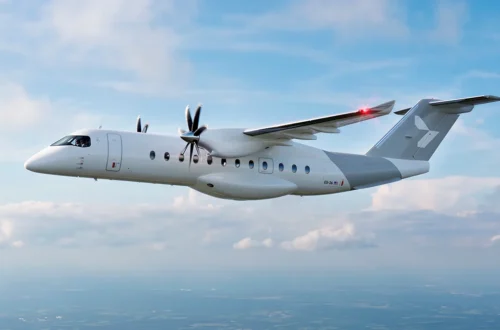
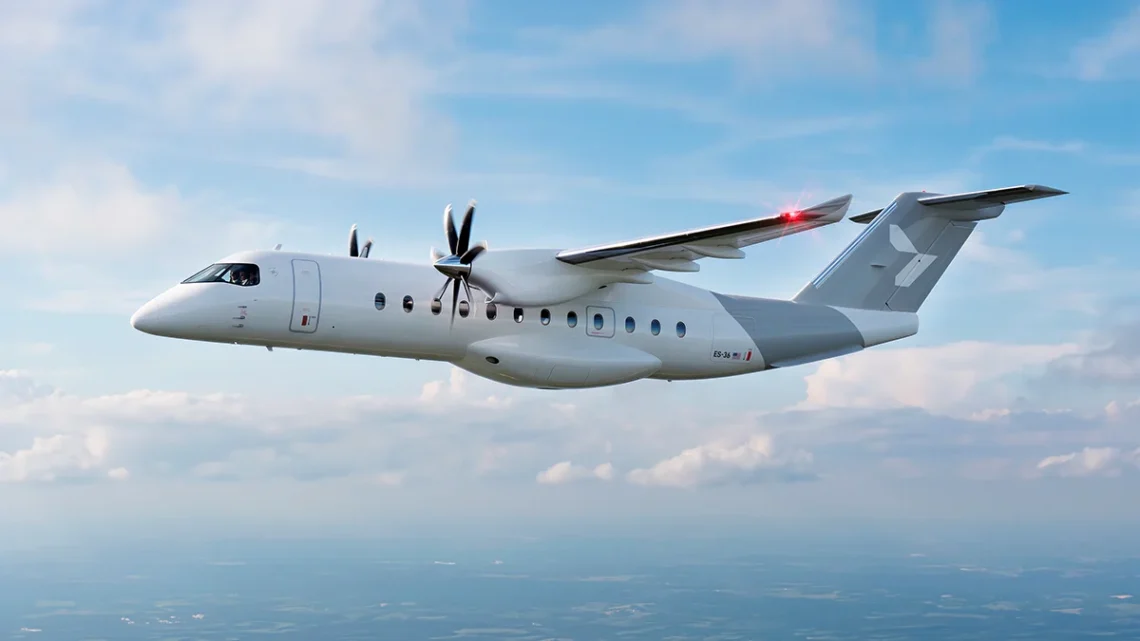
The landscape of regional commercial aviation is undergoing a profound transformation, driven by the urgent need to decarbonize short-haul transit while maintaining economic viability for airline operators. Entering this high-stakes arena with a major technological leap forward is Heart Aerospace, an innovative aircraft manufacturer boasting deep roots in sustainable aviation development. Today, the company officially unveiled its flagship production aircraft: the ES-36, a cutting-edge, 36-seat hybrid-electric regional airliner engineered specifically to connect community airports with significantly reduced emissions, lower operational overhead, and enhanced passenger capacity.
Building upon years of rigorous research, development, and flight testing, the ES-36 represents the culmination of lessons learned from the company’s earlier concepts, including the ES-30 model introduced in 2022 and the X1 technology demonstrator that successfully took to the skies earlier this year. Despite offering an expanded seating capacity—accommodating six more passengers than its predecessor—alongside a substantial 1,415-pound increase in payload capacity, the ES-36 ingeniously retains the exact same maximum takeoff weight and total battery capacity as the initial design iteration.
This engineering feat was achieved through a meticulously optimized aerodynamic airframe designed to maximize internal volume for passengers and cargo alike. Furthermore, the aircraft features a simplified propulsion layout, shifting from the four-engine architecture of earlier concepts to a robust dual-nacelle and dual-propeller configuration. This reduction in moving parts directly translates into lower maintenance expenditures for regional carriers, positioning the ES-36 not merely as an environmentally friendly alternative, but as a superior, profit-generating asset for commercial operators.
Powered by two advanced hybrid-electric powertrains—each utilizing a formidable 1.65-megawatt electric motor to drive a propeller—the ES-36 is equipped to handle short-range sectors entirely on battery power. On purely electric missions, the aircraft delivers a zero-emission range of up to 125 miles, allowing it to complete quick hops between regional hubs without burning a single drop of fossil fuel. For longer journeys, the powertrains integrate a state-of-the-art turbogenerator powered by a gas turbine, which generates in-flight electricity to recharge and supplement the batteries. This hybrid configuration extends the aircraft’s maximum operational range to an impressive 745 miles, granting airlines the flexibility to service diverse regional route networks without compromising on range or efficiency.
Chronology: The Evolutionary Path to the ES-36
To fully understand the significance of the ES-36, one must examine the rapid, purposeful timeline of innovation that brought Heart Aerospace to this pivotal milestone. The company’s journey toward commercializing electric flight has been marked by continuous iteration, rigorous prototyping, and real-world testing.

- 2022: Heart Aerospace initially captures global attention with the public debut of the ES-30, a 30-seat hybrid-electric regional airplane concept designed to prove the commercial viability of electric aviation for short-haul routes.
- Early 2026: The company achieves a major engineering milestone by successfully flying its X1 technology demonstrator. This custom-built flying laboratory serves as an invaluable testbed for assessing battery performance, thermal management, motor efficiency, and flight control software under real-world atmospheric conditions.
- Late 2026: Drawing directly from the flight-test data and operational insights gathered during the X1 program, Heart Aerospace unveils the production-ready ES-36. This updated design incorporates expanded seating, aerodynamic refinements, and a simplified dual-propeller layout.
- Current Status (Ongoing): Construction of the very first pre-production ES-36 airframe is actively underway at Heart’s specialized pilot manufacturing plant located in Los Angeles, California.
- Second Half of 2028: Heart Aerospace anticipates the maiden test flight of the pre-production ES-36, marking the formal commencement of its comprehensive flight-certification campaign.
- 2031: The targeted commercial entry into service, at which point the ES-36 is expected to begin carrying paying passengers for early launch customers.
Supporting Data: Technical Specifications and Fleet Economics
The commercial appeal of any new aircraft ultimately hinges on hard numbers: payload, range, operating economics, and infrastructure compatibility. The ES-36 has been carefully optimized across all these metrics to ensure it fits seamlessly into existing regional airline ecosystems while offering transformative cost advantages.
Core Performance Metrics
- Passenger Capacity: 36 seats, optimized for a comfortable regional travel experience featuring no middle seats in standard configurations.
- Payload Capacity: Enhanced by 1,415 pounds compared to previous iterations, maximizing revenue potential from both passenger luggage and cargo.
- All-Electric Range: 125 miles, enabling completely carbon-emission-free operations on short-haul city pairs.
- Hybrid Range: 745 miles, providing the necessary operational flexibility for longer regional legs.
- Propulsion System: Twin hybrid-electric powertrains, each featuring a 1.65 MW electric motor coupled with an integrated gas turbine-powered turbogenerator.
- Maximum Takeoff Weight (MTOW): Maintained equivalent to preceding designs despite the increased passenger and payload capacity, demonstrating superior structural efficiency.
Economic and Maintenance Advantages
Regional airlines operate on notoriously tight profit margins, where every dollar spent on fuel, maintenance, and turnaround time directly impacts the bottom line. The transition from a four-engine architecture to a streamlined dual-nacelle setup on the ES-36 directly addresses these financial pressures. Fewer propulsion components mean reduced inspection times, lower spare-parts inventory requirements, and fewer man-hours dedicated to routine engine overhauls.
Furthermore, the ability to fly short routes entirely on electricity drastically cuts fuel expenditures—historically one of the most volatile and expensive operational costs for commercial carriers. By combining lower maintenance overhead with reduced fuel consumption on short sectors and increased revenue-generating capacity through higher passenger counts, the ES-36 offers a compelling business case for fleet modernization.
Official Responses: Industry Validation and Strategic Partnerships
The true test of any aircraft program’s viability is the willingness of commercial operators to invest in its future. Even at this stage of development, the ES-36 has secured powerful industry backing, most notably from prominent public charter operator JSX.
Demonstrating strong confidence in Heart’s technological roadmap, JSX has already committed to a firm order for 50 ES-36 aircraft, alongside purchase rights for an additional 50 units. This substantial commitment underscores JSX’s ongoing dedication to sustainable aviation and customer-centric innovation.

“The hybrid-electric ES-36 will enable more nonstop routes from more convenient airports while further elevating the award-winning, no-middle-seat onboard experience that JSX customers love,” said Alex Wilcox, Chief Executive Officer of JSX, emphasizing how the new airliner aligns with the carrier’s operational model.
From the manufacturing perspective, leadership at Heart Aerospace points to the invaluable data harvested from their testing programs as the driving force behind the aircraft’s refined design. Ben Stabler, Chief Technology Officer at Heart Aerospace, highlighted the collaborative and iterative nature of the development process in an official statement:
“The ES-36 design is a direct result of what Heart learned designing, building, testing, and flying our X1 demonstrator aircraft,” Stabler noted. “Those learnings have helped us make the production aircraft more capable in the air and more productive for operators.”
Implications: Reshaping Regional Mobility and Community Connectivity
The introduction of the ES-36 carries profound implications not just for Heart Aerospace and its launch partners, but for the broader aviation industry, local communities, and global environmental efforts.
Revitalizing Underutilized Regional Airports
For decades, the hub-and-spoke airline model has centralized commercial air traffic into major metropolitan airports, often leaving smaller community airports underutilized or entirely disconnected from commercial networks. Because the ES-36 can operate cleanly, quietly, and efficiently over short distances, it lowers the economic threshold for opening or reviving routes between secondary and tertiary cities. Passengers will increasingly be able to bypass congested mega-hubs, flying directly from their local community airports to regional destinations.

Advancing Global Decarbonization Goals
Aviation accounts for a significant share of global greenhouse gas emissions, with short-haul flights generating a disproportionate amount of pollution per passenger-mile due to the energy-intensive takeoff and climb phases. By utilizing zero-emission electric propulsion for flights up to 125 miles—and dramatically cutting emissions via hybrid power on longer legs up to 745 miles—the ES-36 provides a practical, scalable pathway toward meeting net-zero carbon targets set by international aviation authorities.
Setting a New Benchmark for Regional Comfort
Modern travelers increasingly demand sustainable travel options without sacrificing personal comfort. By preserving a spacious cabin layout free of dreaded middle seats—a hallmark of forward-thinking regional operators like JSX—the ES-36 proves that ecological responsibility and premium passenger experience can coexist harmoniously.
As construction of the first pre-production prototype progresses at Heart Aerospace’s Los Angeles facility, the global aviation community watches with great anticipation. With flight testing slated for late 2028 and commercial entry into service targeted for 2031, the ES-36 stands ready to redefine how the world approaches regional flight—proving that the future of aviation is not only cleaner and quieter, but fundamentally smarter.