By Global Tech & Energy Desk
Bratislava / Brussels
Main Facts
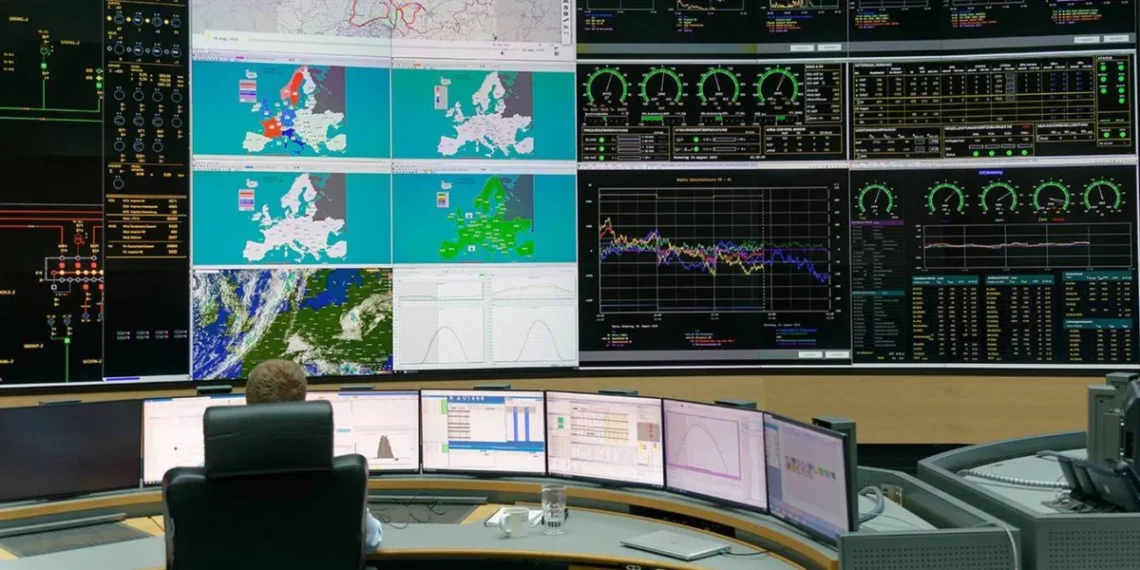
Europe has firmly set its sights on achieving technological sovereignty, aspiring to become a global leader in artificial intelligence (AI), cloud computing, and advanced digital infrastructure. However, this grand vision faces an immediate, physical bottleneck: the continent’s power grids.
According to energy and economic analysts, Europe is racing to rapidly expand its AI data-center capacity at a time when its legacy electrical grids are already severely strained. Furthermore, local communities across the European Union are increasingly pushing back against the construction of massive new data facilities due to concerns over water usage, noise pollution, and skyrocketing energy consumption.
As noted by economic strategist and columnist Soňa Muzikářová, achieving true European digital independence will require moving past political grandstanding. Instead, policymakers and industry leaders must pivot toward practical solutions that optimize existing resources, massively upgrade transmission networks, and rebuild public trust. Without a synchronized overhaul of both energy infrastructure and regulatory frameworks, Europe risks stalling its digital revolution before it fully begins.
Chronology: The Escalation of Europe’s Infrastructure Crisis
- Early 2023: Following the global explosion of generative AI sparked by large language models, European policymakers begin drafting ambitious strategies to secure the continent’s "digital sovereignty," aiming to reduce reliance on American and Asian cloud providers and AI developers.
- Late 2023 – Mid 2024: Major tech giants and domestic European startups announce billions of euros in planned data-center investments. Locations are primarily targeted around established tech hubs like Frankfurt, London, Amsterdam, Dublin, and Paris (the "FLAP-D" markets), as well as emerging nodes in Central and Eastern Europe.
- Late 2024: Transmission system operators (TSOs) across Germany, France, and Ireland begin issuing formal warnings. They report that connection queues for new industrial and digital loads are stretching into years, as local distribution grids lack the capacity to handle the sudden, massive power demands of AI training clusters.
- 2025: Grassroots opposition intensifies. Local communities in countries like Ireland, the Netherlands, and Germany stage protests and legal challenges against new data-center builds, citing risks of localized blackouts, rising consumer electricity bills, and heavy strain on local water tables used for cooling.
- 2026 and Beyond: Analysts—including economic commentators based in Bratislava and Brussels—warn that Europe’s policy rhetoric on AI leadership is diverging sharply from ground-level physical realities, forcing a urgent re-evaluation of how the continent powers its digital ambitions.
Supporting Data & Economic Analysis
The scale of the energy challenge facing Europe’s data-center boom is unprecedented. To understand why European grids are buckling, one must look at the math of modern artificial intelligence workloads:
- Exponential Power Demand: Training advanced frontier AI models requires massive clusters of specialized hardware, such as Graphics Processing Units (GPUs). A single modern AI data center can consume anywhere from 100 megawatts to over 1 gigawatt of continuous power—equivalent to the electricity consumption of a medium-sized European city.
- Grid Congestion: According to European transmission reports, more than 30% of requested grid connections for heavy industrial and digital projects are currently delayed by over 24 months.
- The "FLAP-D" Saturation: Traditional primary markets (Frankfurt, London, Amsterdam, Dublin, and Paris) are enacting strict moratoriums or caps on new data-center connections. For instance, Ireland’s utility regulator has effectively restricted new data centers in the greater Dublin area due to fears over reserve margin depletion in the national grid.
- Capital Deficit: Industry estimates suggest that modernizing and expanding European transmission and distribution grids to accommodate the combined demands of the green transition (EVs, heat pumps) and the digital transition (AI, cloud) will require upwards of €600 billion to €800 billion in cumulative investments over the next decade.
Official Responses and Stakeholder Perspectives
The friction between high-level political ambitions and operational realities has drawn sharp commentary from various stakeholders across the continent:
- The Analytical Viewpoint: Commentators like Soňa Muzikářová have emphasized that Europe’s strategy suffers from a disconnect. While Brussels crafts visionary legislative frameworks—such as the EU AI Act and various digital sovereignty declarations—it often overlooks the unglamorous, foundational physics of copper wires, transformers, and grid management. Muzikářová argues that policymakers must stop treating infrastructure as an afterthought and instead prioritize regional grid interconnectivity and energy efficiency.
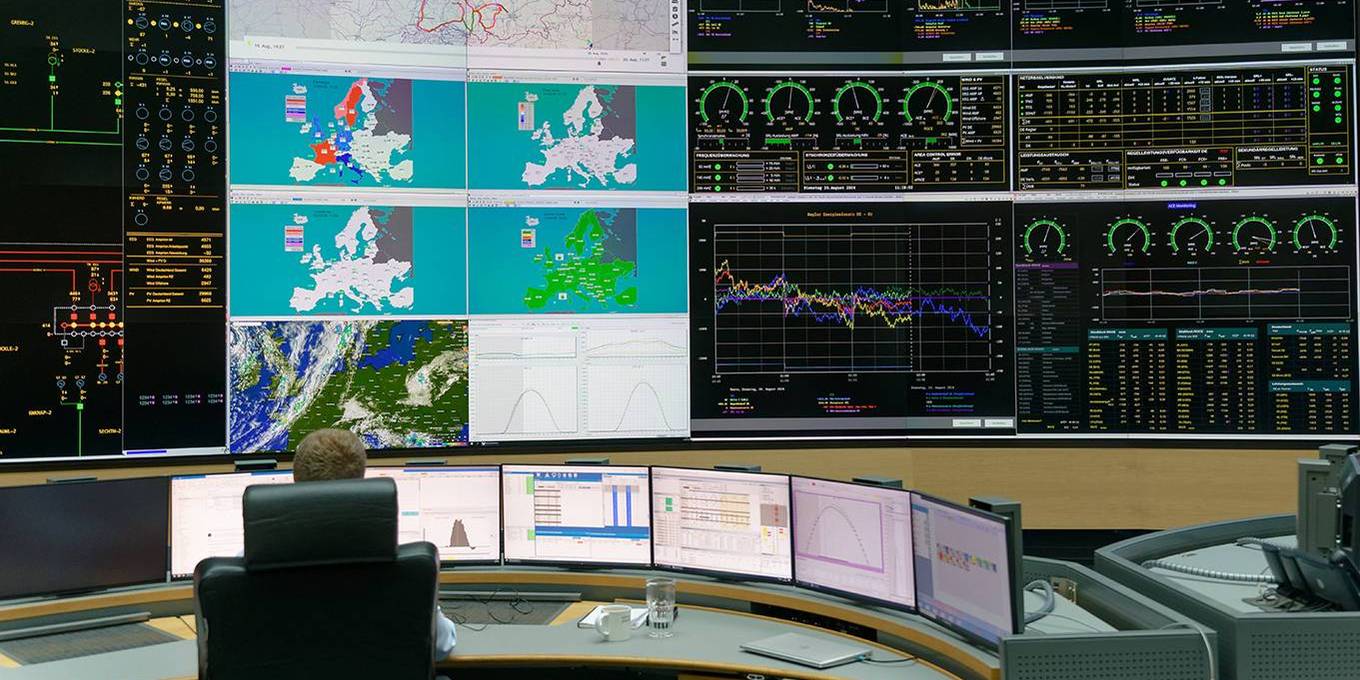
- Transmission System Operators (TSOs): German TSOs, such as Amprion and TenneT, have repeatedly stressed that while they support technological innovation, the physical laws of electricity cannot be bypassed. Operators point out that building high-voltage transmission lines takes up to a decade due to complex environmental permitting processes and localized opposition.
- Local Communities and Municipalities: Local resistance has become a formidable political barrier. Mayors and regional councils argue that while AI data centers generate massive corporate revenues for multinational firms, they offer relatively few permanent local jobs while placing heavy burdens on municipal infrastructure, water supplies, and carbon reduction targets.
- Tech Industry Coalition: Representatives from the European tech sector argue that without swift government intervention to streamline permitting and subsidize green energy integration for data centers, European tech companies will be forced to migrate their heavy computing workloads to regions with more flexible energy markets, such as North America or parts of the Middle East.
Implications for Europe’s Future
The collision course between Europe’s AI aspirations and its energy constraints carries profound long-term implications:
1. The Threat to Digital Sovereignty
If European firms cannot reliably access the high-performance computing power required to build and train advanced AI models locally, the continent’s quest for digital sovereignty will fail. Rather than achieving independence, Europe risks becoming a digital colony dependent on foreign infrastructure providers based in the United States and Asia.
2. A Shift Toward Decentralization and Edge Computing
To circumvent overloaded primary grids in major Western European hubs, the industry is being forced to decentralize. Future data-center investments are likely to flow toward regions with underutilized energy assets—such as areas with surplus renewable energy generation in Southern or Eastern Europe, or locations adjacent to decommissioned industrial sites and nuclear power plants.
3. Regulatory Pragmatism Over Grandstanding
The crisis serves as a wake-up call for European policymakers. Moving forward, industrial policy must align closely with energy planning. Streamlining environmental impact assessments for grid upgrades, incentivizing demand-response technologies (where data centers dynamically scale back power usage during peak grid stress), and utilizing waste heat from servers for district heating systems will be essential.
Ultimately, Europe’s AI future will not be decided solely in legislative chambers in Brussels or corporate boardrooms in Silicon Valley. It will be decided in sub-stations, across high-voltage transmission lines, and through constructive dialogue with the local communities who must live alongside the digital age’s heavy machinery.