By Motor1 News Desk
It is a tale as old as time in the automotive world: British luxury and off-road capability paired with a healthy dose of electrical anxiety. Jaguar Land Rover (JLR) has issued a safety recall notice affecting nearly 24,000 vehicles in the United States due to an insidious electrical issue. Fortunately, this latest gremlin does not stem from the infamous, long-suffering ghost of Lucas Electronics—the historic purveyor of British automotive wiring once derisively nicknamed "The Prince of Darkness."
Instead, the culprit is a modern component failure involving the vehicle’s high-voltage charging systems. According to documents filed with the National Highway Traffic Safety Administration (NHTSA), affected JLR vehicles may suffer from a failing DC-to-DC converter. This critical hardware component is responsible for stepping down and managing voltage between the vehicle’s distinct electrical architectures.
While the prospect of a total electrical shutdown on a modern luxury vehicle sounds daunting, the remediation process thankfully avoids messy hardware swaps or tearing apart dashboards. Here is a comprehensive breakdown of the recall, the potential dangers, the affected models, and what owners need to know.
Main Facts: The Core of the Issue
The core of the recall centers on a potential internal failure within the DC-to-DC converter found in select modern Jaguar and Land Rover models.
- Total Vehicles Affected: 23,677 units in the U.S. market.
- The Defect: A malfunctioning DC-to-DC converter can suddenly stop charging the vehicle’s vital 12-volt electrical architecture.
- The Consequence: A cascading system failure that ultimately results in a total loss of motive power and exterior lighting.
- The Remedy: A straightforward software update administered free of charge by authorized JLR dealerships.
- Notification Timeline: Official notification letters are scheduled to be mailed to registered owners by November 13.
Despite the historic jokes regarding British automotive electronics, engineers have pinpointed this specific software- and hardware-interaction anomaly as a modern electronic management issue rather than a traditional wiring harness breakdown.
Chronology of the Recall: How the Defect Was Discovered
Understanding how automotive manufacturers catch and address these invisible software-driven defects provides valuable insight into modern vehicle safety monitoring.
While the public often hears about recalls only after an official NHTSA announcement, the timeline typically begins months prior with field reports and warranty claims.
- Early Field Monitoring: JLR quality engineers began monitoring warranty claims and field reports regarding unexpected electrical system warnings and intermittent 12-volt battery charging issues in late 2023 and early 2024.
- Engineering Investigation: JLR’s technical teams launched an internal investigation alongside component suppliers to evaluate the performance of the DC-to-DC converters under various operating conditions.
- Identification of Root Cause: Investigators determined that under certain circumstances, the converter’s internal control software could experience a fault, causing the unit to stop functioning and ceasing the supply of charge to the 12-volt battery system.
- Safety Assessment and Determination: Recognizing that a dead 12-volt system in a modern vehicle causes cascading module shutdowns—including the loss of the powertrain and exterior lighting—JLR determined the issue constituted a safety defect.
- NHTSA Filing and Recall Declaration: JLR formally submitted its recall safety report to the NHTSA under campaign identifier 26V599000, setting the stage for owner notifications and dealership service protocols.
Supporting Data: Which Models Are Affected?
The scope of the recall varies wildly across JLR’s diverse lineup. While some nameplates see widespread exposure, others are barely touched by the campaign. The heavy-hitting Range Rover Sport accounts for nearly half of all vehicles included in the recall, whereas niche models like the Discovery Sport register in the single digits.
According to NHTSA documentation, the breakdown of potentially affected vehicles is as follows:
- Range Rover Sport: ~11,000 units (The hardest hit model in the campaign)
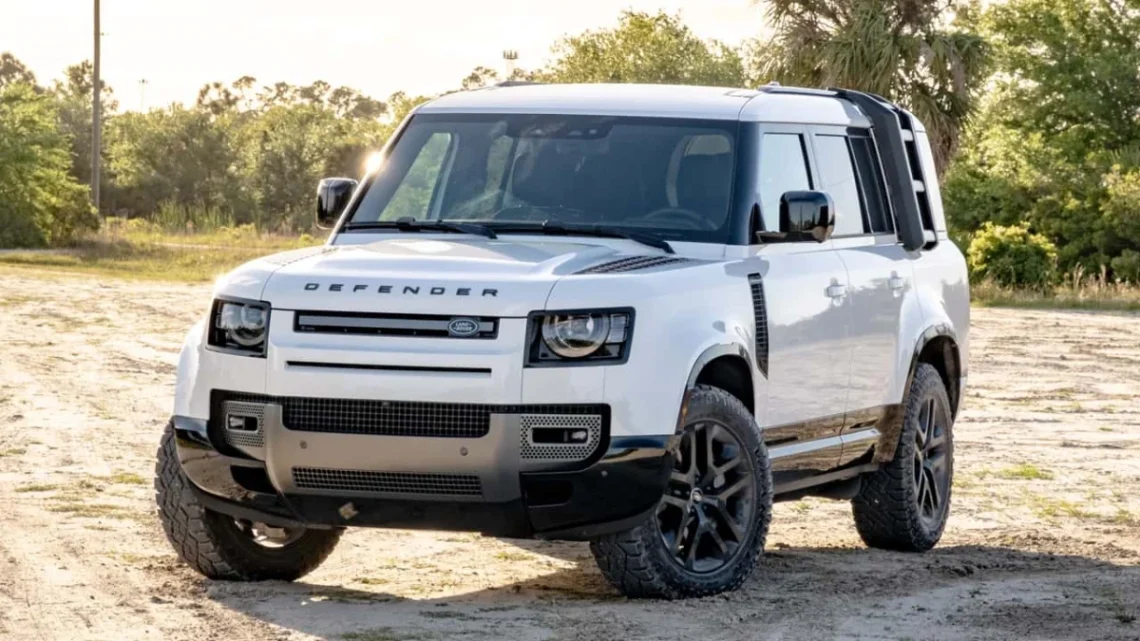
- Other Affected Models: Various current-generation Range Rover, Defender, and Jaguar nameplates rounding out the total of 23,677 vehicles.
- Discovery Sport: 3 units (The least affected model in the recall pool).
Vehicle owners do not need to guess whether their specific luxury SUV or sedan is included. Owners can verify their vehicle’s status immediately by visiting the NHTSA Recalls Lookup Tool and inputting their 17-digit Vehicle Identification Number (VIN). Alternatively, customers can contact JLR customer service directly at 800-637-6837 for personalized assistance.
Official Responses and the Dealership Remedy
Automotive safety recalls often strike fear into the hearts of vehicle owners, who envision their prized possessions sitting at a dealership service bay for weeks waiting for back-ordered parts. In this instance, however, JLR and its dealer network have engineered a far more painless path to compliance.
The Software Solution
Rather than physically unbolting, replacing, and recycling thousands of heavy hardware units—which would strain supply chains and inconvenience owners—the fix for this DC-to-DC converter issue is entirely software-based.
Authorized JLR dealerships will reprogram the affected module with updated calibration software. This updated software optimizes the converter’s internal management protocols, preventing the fault condition that cuts off power to the 12-volt system.
Cost and Convenience
- Cost to Owner: $0.00. Under federal safety regulations, all recall-related repairs must be performed free of charge by authorized manufacturers.
- Time Commitment: The software flash typically takes less than an hour, though appointment wait times may vary depending on local dealership scheduling.
- Owner Action Required: Owners can wait for their official notification letters to arrive in the mail by November 13, or they can proactively contact their nearest JLR service center to schedule an appointment as soon as their VIN is confirmed in the NHTSA database.
Implications: The High Stakes of Modern Automotive Electronics
To the untrained eye, a recall driven entirely by software might seem minor—a digital hiccup easily cured with a few keystrokes at a service desk. However, the underlying mechanics of this recall highlight a profound reality of modern vehicle architecture: the absolute supremacy of software over mechanical robustness.
The Vulnerability of Complex Electrical Architectures
Decades ago, a failing alternator or charging component might cause headlights to dim or a battery to die, but a car’s fundamental ability to roll down the road often relied more on mechanical linkages and simple ignition circuits. Modern luxury vehicles, by contrast, are rolling supercomputers.
When a central electrical bridge like a DC-to-DC converter fails in a modern JLR product, the vehicle’s computer modules are starved of the stable 12-volt power required to maintain basic computing functions. This results in a terrifying domino effect:
- The Converter Fails: High-voltage battery power stops stepping down to the 12-volt system.
- The 12-Volt Battery Depletes: Accessories, safety computers, and powertrain controllers draw down the remaining reserve.
- System Cascade: Powertrain management modules shut down to protect themselves, resulting in a sudden loss of engine power.
- Darkness Falls: Exterior lighting systems fail, leaving the driver stranded in a dark, unresponsive vehicle potentially in the middle of active traffic.
Why Software Updates Are a Double-Edged Sword
On one hand, the automotive industry’s increasing reliance on Over-The-Air (OTA) capabilities and simple dealership software flashes represents a massive environmental and economic win. Swapping lines of code produces zero physical waste, requires no raw material extraction for replacement parts, and keeps cars on the road with minimal downtime.
On the other hand, it underscores how deeply vulnerable modern vehicles are to digital bugs. As cars transform into software-defined platforms, the distinction between a traditional mechanical breakdown and a software glitch has vanished. A corrupted line of code can pose just as severe a safety hazard as a fractured steering knuckle or a failing brake line.
Motor1’s Take
It is impossible to discuss a Jaguar Land Rover electrical recall without acknowledging the elephant in the room: decades of consumer folklore surrounding British electronics. From classic sports cars plagued by moisture-loving distributors to modern luxury SUVs testing the limits of digital integration, the brand has long worn its quirky electrical reputation as both a badge of honor and the punchline of every car-guy joke.
Yet, viewed objectively, this particular campaign represents a best-case scenario for modern vehicle recalls. A software update always beats swapping out heavy, expensive hardware components. It spares owners the headache of extended garage stays and proves that manufacturers are increasingly capable of deploying rapid, efficient digital patches to safeguard drivers before catastrophic field failures occur.
For the nearly 24,000 owners affected by this recall, the advice is simple: check your VIN, keep an eye out for your notification letter, and let your local dealer flash the system. Until then, enjoy the British road trip—hopefully with all your lights shining bright.