Main Facts: The Grand Arrival of the Princess X90
At the glittering backdrop of the 2026 Cannes Yachting Festival, British luxury yacht builder Princess Yachts made waves with the global debut of its newest creation: the Princess X90. Positioned strategically between the popular X80 and the flagship X95 Vista, this sophisticated 90-foot motoryacht expands the shipyard’s acclaimed "Super Flybridge" X Class lineup.
The X90 is not merely an incremental step in size; it represents a paradigm shift in spatial architecture, guest connectivity, and naval architecture. Incorporating a suite of groundbreaking design features for the brand—including fold-down cockpit balconies, sinuous curved patio doors, and an optional gullwing side-access door leading directly from the master stateroom to a private foredeck terrace—the X90 redefines what is possible on a vessel of this scale.
At its technical core, the X90 introduces a revolutionary Hybrid Progressive-Planing hull, meticulously engineered in collaboration with long-standing naval architecture partners Bernard Olesinski Limited. This advanced underwater profile is specifically tailored to optimize hydrodynamic efficiency across a broad spectrum of cruising speeds, offering a marked leap forward in sustainable, long-range luxury cruising.
Chronology: The Journey from Concept to Cannes Debut
The unveiling of the Princess X90 at Cannes is the culmination of years of iterative design, engineering breakthroughs, and market analysis within the luxury motoryacht sector.
The Evolution of the X Class
When Princess Yachts first launched the X Class concept with the introduction of the X95, the industry took notice of the "Super Flybridge" layout. By shifting the primary helm station to an enclosed upper wheelhouse and extending the superstructure forward, Princess effectively reclaimed massive volumes of interior real estate usually sacrificed to traditional bridge designs. Following the commercial success of the compact yet voluminous X80, clients began clamoring for an intermediate model that bridged the gap between these two heavyweights.
Development and Naval Architecture
Engineering a mid-range super flybridge that outpaces its predecessors in both utility and efficiency required a completely fresh sheet of paper. Working alongside Bernard Olesinski Limited, Princess’s product development teams spent the better part of three years testing hydrodynamic hull forms. The objective was clear: create a hull that could handle the immense interior volume of a wide-body superstructure without paying a heavy penalty in fuel burn or performance. The result was the Hybrid Progressive-Planing hull.
The 2026 Cannes Reveal
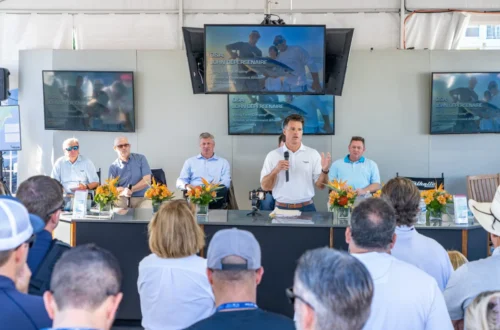
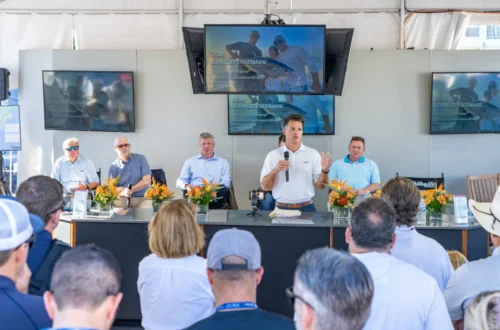
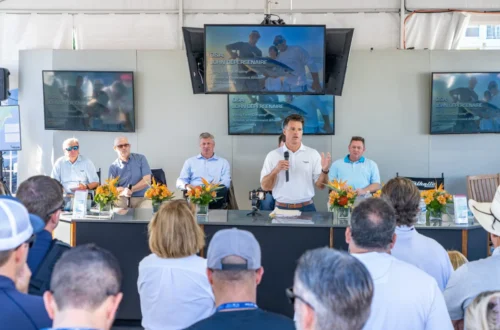
The culmination of this rigorous development timeline arrived in September 2026 at the Cannes Yachting Festival. Crowds of industry experts, prospective buyers, and maritime journalists swarmed the Princess display to witness the physical execution of the X90. From its sweeping profile on the water to its transformative indoor-outdoor living spaces, the yacht instantly positioned itself as one of the most talked-about launches of the international boat show season.
Supporting Data: Dimensions, Engineering, and Layout Innovations
To truly understand the engineering triumph of the Princess X90, one must examine the meticulous data driving its performance, layout, and operational capabilities.
Hull Efficiency and Performance Metrics
The defining technical achievement of the X90 is its proprietary Hybrid Progressive-Planing hull. When normalized for displacement, comparative sea trials and naval architectural computations reveal that this new hull form achieves approximately 10 percent lower power requirements at speeds exceeding 16 knots when compared directly to the Princess Y85. This efficiency gain translates into extended cruising ranges, reduced carbon footprints per nautical mile, and smaller engine footprints without sacrificing top-end performance.
The Expandable Cockpit and Transom Design
Space utilization on deck has been reimagined to establish a visceral connection with the marine environment:
- Fold-Down Bulwarks: Hydraulic drop-down balconies to port and starboard expand the aft cockpit beam exponentially, creating a virtual beach club atmosphere.
- Glass Transom Balustrade: Replaces traditional solid fiberglass transoms to guarantee uninterrupted, 180-degree panoramic views of the wake and horizon.
- Entertainment Infrastructure: Equipped with a state-of-the-art wet bar, flexible modular lounge seating, and thoughtfully designed overhead shading zones alongside sun-drenched sunpads.
Main Deck Architecture
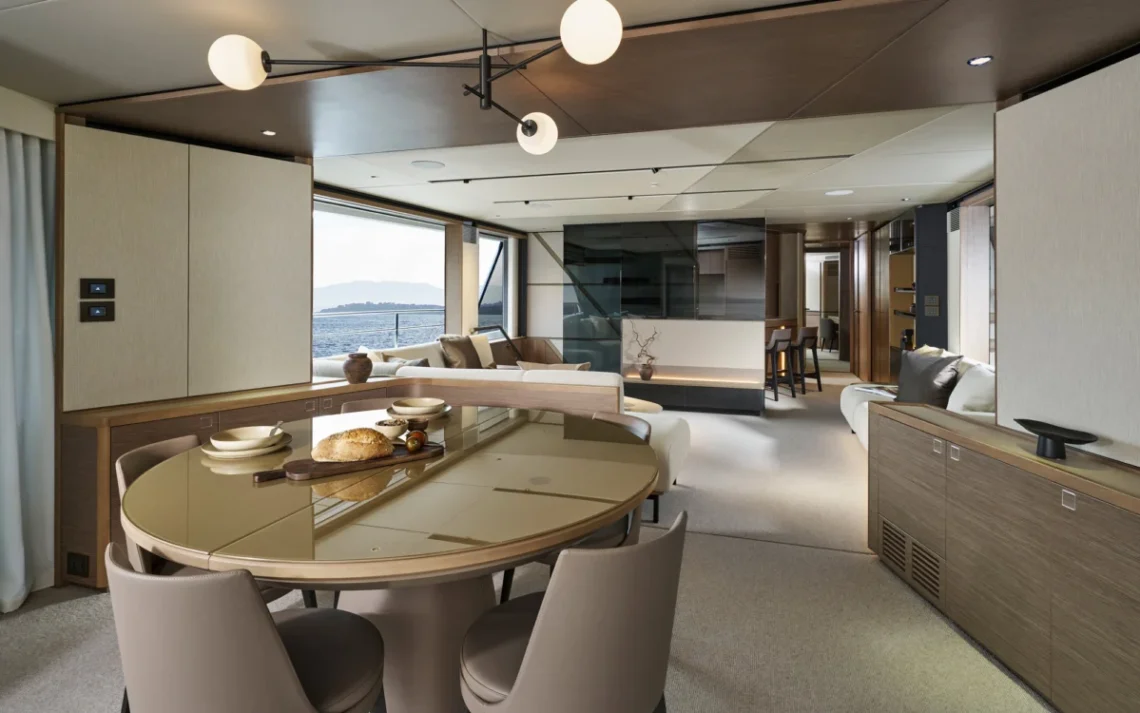
The transition from the outdoor cockpit to the interior salon is governed by stunning, custom-engineered curved glass patio doors. When open, they merge the cockpit with the formal indoor dining area—which comfortably seats 10 guests—into a singular, continuous entertaining venue. Even when sealed against the elements, the curved glass preserves an unbroken visual link to the ocean.
Further forward, the Super Flybridge architecture removes the traditional main-deck helm station entirely. This layout frees up immense volume, allowing for:
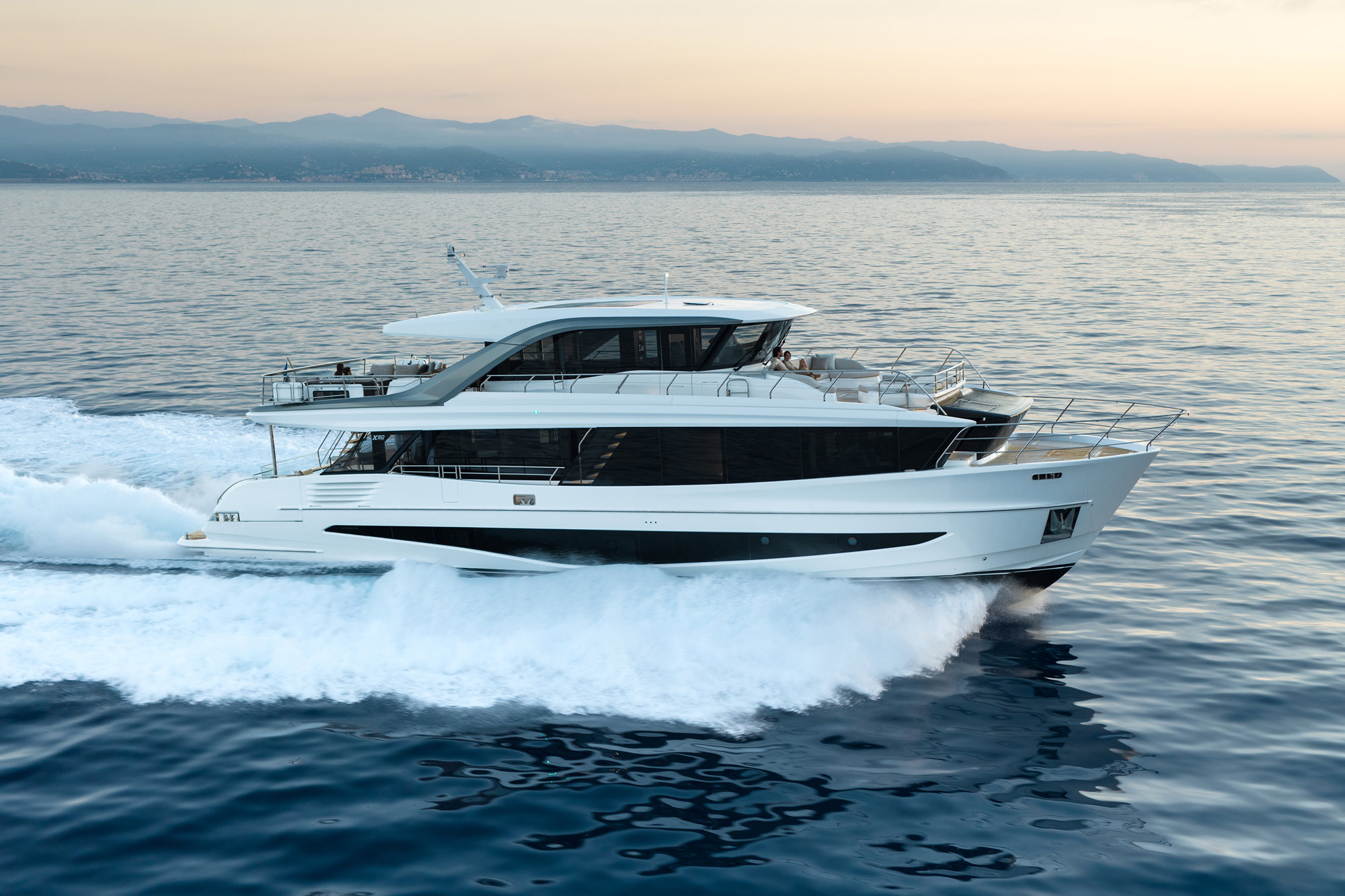
- A Single-Level Main Deck: Spanning seamlessly from the forward lounge spaces all the way through to the private owner’s suite.
- Flexible Galley Configurations: Owners can choose between an open-plan culinary space that engages guests or a fully enclosed galley configuration for crew-managed service.
- The Forward Master Stateroom: Boasts panoramic wrap-around glazing and features an industry-first optional gullwing door, offering the owner private, direct access straight out onto the foredeck terrace.
Lower Deck Accommodations
Below deck, the standard layout provides three exceptionally appointed, en-suite guest staterooms, each finished in bespoke veneers and fine textiles. For owners requiring higher guest capacities or multi-generational cruising flexibility, an alternative five-cabin configuration is readily available.
Official Responses: What Leadership and Designers Are Saying
The introduction of a flagship-caliber vessel like the X90 draws immense pride from the executive suites and design houses responsible for its creation.
Andy Lawrence, Director of Design at Princess Yachts, highlighted the distinct philosophy guiding the project:
"The X90 was conceived to push the boundaries of spatial geometry on a 90-foot platform. We wanted to challenge the traditional boundaries between indoor luxury and the wild elements of the sea. By introducing architectural elements like curved glass patio doors, fold-down bulwarks, and the gullwing owner’s deck access, we have given our clients a floating sanctuary that feels vastly larger than its length overall suggests."
Speaking on the technical breakthroughs achieved beneath the waterline, a lead naval architect from Bernard Olesinski Limited emphasized the hydrodynamic engineering:
"Designing a high-volume yacht always presents a classic engineering trade-off: more volume traditionally equals more drag. With the X90, our collaboration centered around the new Hybrid Progressive-Planing hull. By refining the entry angles, dynamic lift surfaces, and weight distribution, we managed to slash power requirements by around 10 percent above 16 knots relative to comparable legacy models like the Y85. This is a monumental efficiency win for owners who demand both immense interior space and spirited, responsive cruising speeds."
Commercial representatives from Princess Yachts noted the overwhelming positive reception from current yacht owners during private viewings at Cannes, citing high demand for the optional five-cabin layout and the forward master suite terrace.
Implications: What the X90 Means for the Luxury Yacht Market
The debut of the Princess X90 carries profound implications for the global superyacht and semi-custom production markets.
Redefining Mid-Range Superyachts
For decades, buyers seeking multi-deck living, expansive interior volumes, and true superyacht amenities were forced to look well past the 100-foot threshold. The X90 proves that a 90-footer can deliver the functional square footage and entertainment versatility previously reserved for much larger vessels. By leveraging the Super Flybridge concept down into the mid-range sector, Princess is setting a new benchmark for space optimization.
The Shift Toward Efficiency and Flexibility
As environmental scrutiny and operational costs weigh increasingly on yacht owners, efficiency is no longer an afterthought—it is a core selling point. The 10 percent reduction in power requirements achieved by the X90’s Hybrid Progressive-Planing hull demonstrates that shipyards can successfully combine high-volume interior luxury with responsible hull performance. This technological stride reassures owners that they can enjoy palatial onboard spaces without exponential spikes in fuel consumption.
Extended Cruising and Self-Sufficiency
With its hybrid hull efficiency, massive fuel and water storage capabilities, customizable cabin layouts (up to five staterooms), and seamless indoor-outdoor living zones, the X90 is explicitly tailored for the modern trend of extended cruising. Owners are increasingly looking to spend weeks—if not months—unplugged and living aboard their vessels. The X90 provides the domestic comforts, structural durability, and autonomy required for global coastal exploration.
In summary, the Princess X90 is much more than a successful boat show debut. It is a defining statement from a storied British builder, illustrating how thoughtful naval architecture, daring aesthetic design, and user-centric interior planning can converge to shape the future of luxury yachting.