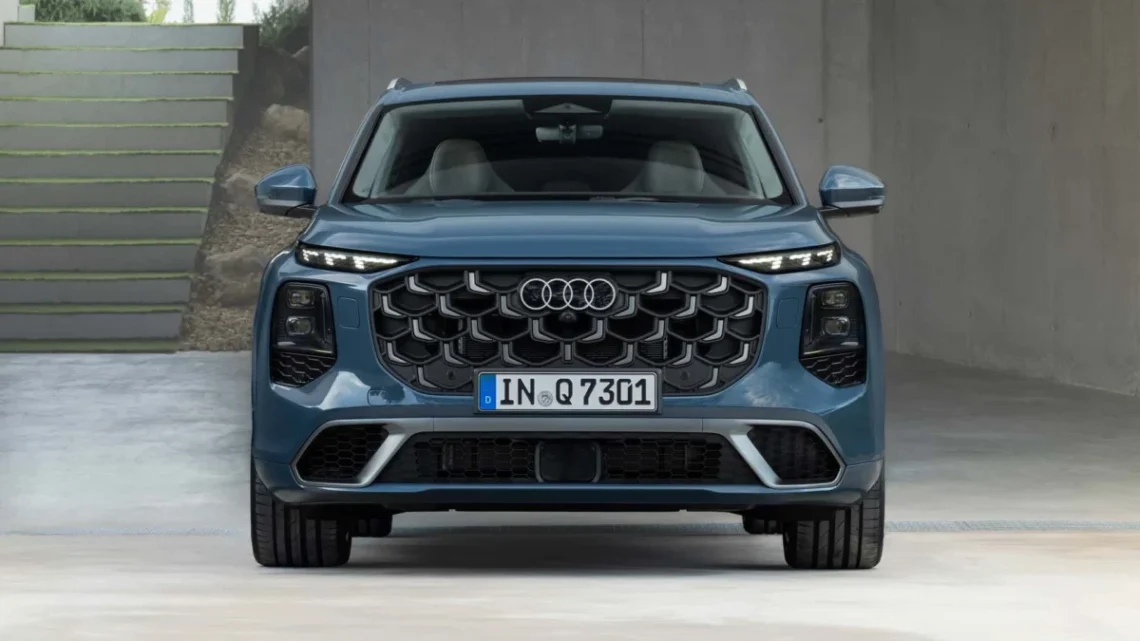
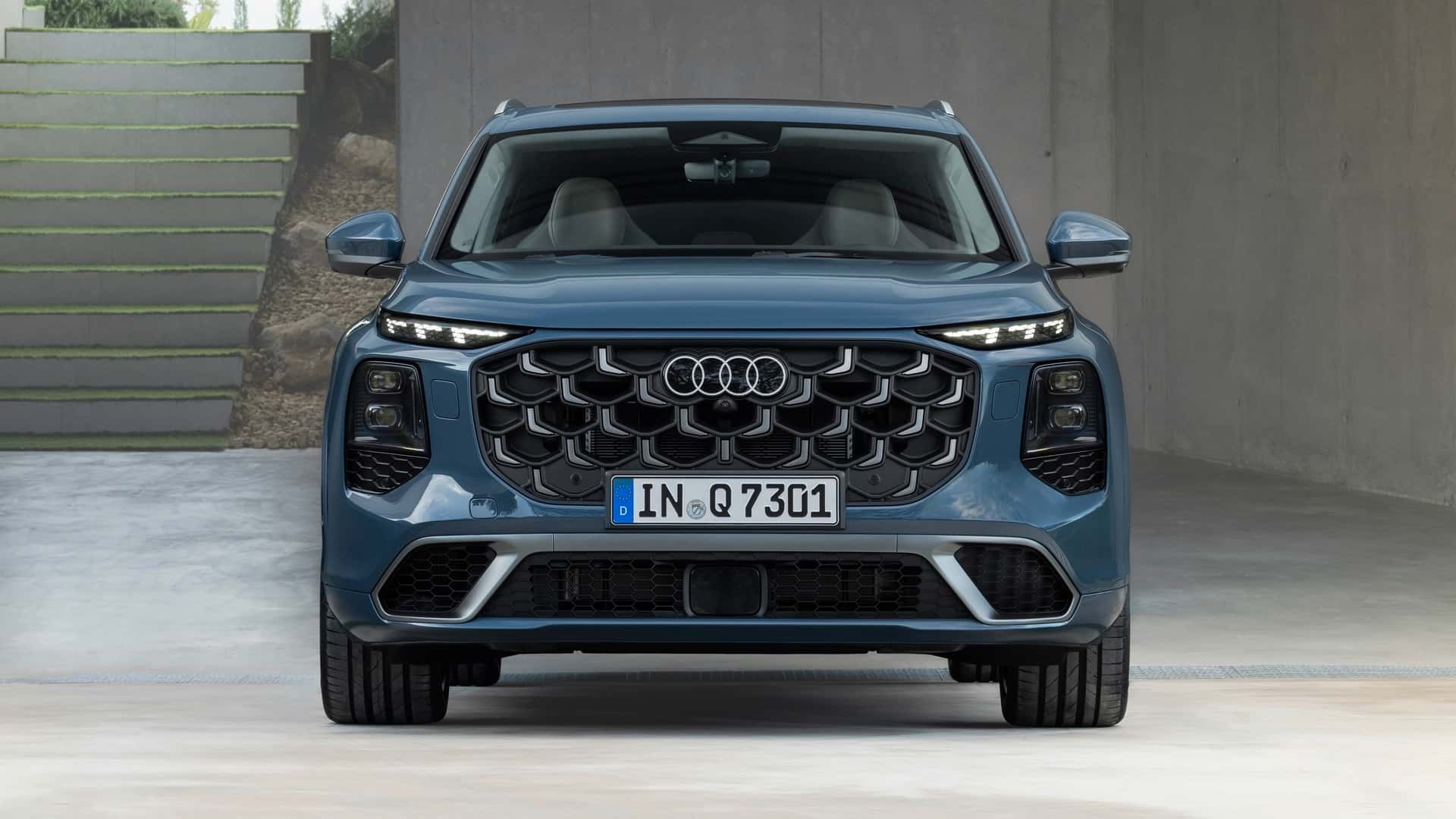
Audi has officially pulled the curtain back on the 2027 iteration of its flagship mid-size SUV, the Q7. Representing a significant mid-cycle refresh rather than a complete ground-up redesign, the 2027 model nevertheless introduces a suite of comprehensive enhancements. From refined exterior aesthetics that align with the brand’s latest design language to significant mechanical optimizations and the integration of cutting-edge infotainment technology, Audi is positioning the Q7 to remain a formidable contender in the cutthroat luxury SUV segment.
As the model prepares for its U.S. market arrival in the fourth quarter of this year, prospective buyers will find a vehicle that is sharper, faster, and more technologically capable than its predecessor. However, these improvements come with a financial caveat: the 2027 Q7 will carry a price premium of $3,300 over the outgoing 2026 model, signaling Audi’s confidence in the added value provided by this latest evolution.
Main Facts: Performance and Pricing Strategy
The 2027 Audi Q7 is set to hit showroom floors with a starting MSRP of $70,900. This increase from the previous $67,600 baseline reflects both inflationary pressures and the inclusion of more robust standard features.
Under the hood, the entry-level powertrain remains a potent twin-turbocharged 2.9-liter V6. While the displacement may be familiar, the output has been massaged to produce a commendable 429 horsepower and 442 pound-feet of torque. The real-world impact of this engineering refinement is most evident in the SUV’s acceleration; the 2027 model achieves a zero-to-60-mph sprint in just 4.8 seconds. This represents a substantial 0.7-second improvement over the previous iteration, a margin that is rarely seen in standard mid-cycle updates and underscores the efficiency of the revised powertrain mapping.
For enthusiasts demanding even higher performance, the SQ7 variant returns with a focus on raw power. Powered by a twin-turbocharged 4.0-liter V8, the SQ7 churns out 591 hp and 590 lb-ft of torque. This beastly configuration allows the performance SUV to reach 60 mph in a blistering 3.7 seconds—a 0.3-second reduction in time compared to the previous model. This performance-oriented trim will start at $98,700, representing a $4,900 increase over its predecessor.
A Chronology of the Q7 Evolution
To understand the gravity of the 2027 update, one must look at the trajectory of the Q7 lineage. Since its debut, the Q7 has served as the anchor of Audi’s SUV family, bridging the gap between the compact Q5 and the flagship three-row Q9-sized aspirations.
- The Early Years (2006–2015): The original Q7 set the tone as a massive, road-dominating luxury hauler, establishing Audi’s presence in the segment.
- The Second Generation (2016–2020): Audi shifted toward a more nimble, tech-heavy approach, shedding weight and introducing the "Virtual Cockpit" interface that redefined luxury cabin experiences.
- The Facelift Era (2021–2026): Audi focused on refining the exterior lines and integrating mild-hybrid assistance into the V6 and V8 engines to improve efficiency without sacrificing power.
- The 2027 Refresh: This current cycle represents the pinnacle of internal combustion refinement for the platform. By focusing on software-defined features and chassis tuning, Audi is effectively "future-proofing" the Q7 to maintain its relevance in a market rapidly shifting toward electrification.
Comparative Market Landscape: Q7 vs. The German Trio
The luxury mid-size SUV market is arguably the most competitive segment in the automotive world. Audi, BMW, and Mercedes-Benz have long engaged in a "three-way war" for supremacy. The 2027 Q7 finds itself in a unique position within this triangle.
The BMW X5 Factor
The BMW X5 is perhaps the Q7’s most direct rival. The 2027 X5, starting at $69,800, is priced slightly more aggressively than the Audi. Equipped with a 394-hp turbocharged 3.0-liter straight-six, the X5 offers a driver-centric experience that often appeals to those who prioritize road-handling dynamics over raw, boxy utility. However, the Q7 holds a strategic advantage: interior volume. While the X5 is often configured as a two-row vehicle, the Q7’s standard three-row configuration provides a level of versatility that many families find indispensable.
The Mercedes-Benz GLE
Mercedes-Benz has taken a different approach with the GLE. While the 2027 GLE is not a fully new model, it has received significant updates. The entry-level GLE 350, utilizing a 2.0-liter four-cylinder engine, offers a lower barrier to entry for the brand, starting significantly cheaper than the Q7. However, once a buyer opts for the more comparable GLE 450—which features a 375-hp 3.0-liter inline-six—the price jumps to $72,250, actually surpassing the Audi.
This creates a distinct "price ladder" for consumers:
- Mercedes-Benz GLE (Base): Value-oriented, lower performance.
- BMW X5: Performance-focused, competitive pricing.
- Audi Q7: Feature-rich, standard three-row utility, premium mid-range pricing.
Official Perspectives and Industry Implications
Audi’s product strategy for the 2027 Q7 is clear: focus on quality over quantity. Industry analysts note that Audi has been refining its interior philosophy, moving away from an over-reliance on massive, distracting screens and back toward a balance of haptic, tactile controls and intuitive digital interfaces.
"Audi is in a transitionary phase," notes one industry insider. "They aren’t just updating engines; they are recalibrating what a premium German cabin should feel like. By focusing on material quality and better ergonomics, they are betting that customers will choose the ‘tactile’ luxury of the Q7 over the ‘screen-heavy’ environments found in other luxury manufacturers."
The implication of this strategy is significant for the broader market. If the 2027 Q7 succeeds, it will prove that there is still a massive appetite for refined, high-performance internal combustion engines, even as the world pivots toward electric vehicles. The decision to keep the V8 in the SQ7 lineup is a direct nod to brand loyalists who demand the visceral experience of a high-displacement engine.
The Verdict: Why the 2027 Q7 Matters
The 2027 Audi Q7 is not just a facelift; it is a declaration of intent. By tightening the performance gaps—making the standard V6 faster and the V8 more responsive—Audi is ensuring that the Q7 remains the default choice for the discerning buyer who refuses to compromise on utility.
The $3,300 price increase, while noticeable, is largely justified by the suite of upgrades. In an era where many manufacturers are cutting costs by simplifying interiors or downsizing engines, Audi’s commitment to a more sophisticated, powerful, and practical SUV is refreshing.
As the Q7 prepares to arrive at dealerships, the question for consumers is no longer whether it is "good enough" to compete with the X5 or the GLE. The question is whether those competitors can offer the same level of balanced, three-row luxury that the Audi has perfected. For now, the German trio remains locked in a stalemate of excellence, but the 2027 Q7 has certainly gained the high ground in the battle for the family-oriented luxury buyer.
Ultimately, the success of the 2027 Q7 will be decided on the pavement. Whether it is the punchy acceleration of the base model or the thunderous capability of the SQ7, Audi has provided a compelling package. It is now up to the market to decide if this evolution in luxury is exactly what the doctor ordered for the modern, high-end family transport sector.
Technical Data Summary
| Feature | 2027 Audi Q7 (Base) | 2027 SQ7 (Performance) |
|---|---|---|
| Engine | 2.9L Twin-Turbo V6 | 4.0L Twin-Turbo V8 |
| Horsepower | 429 hp | 591 hp |
| Torque | 442 lb-ft | 590 lb-ft |
| 0-60 mph | 4.8 Seconds | 3.7 Seconds |
| Starting Price | $70,900 | $98,700 |
This article is intended for informational purposes based on current product announcements. Official regional pricing and feature availability may vary at the time of delivery.