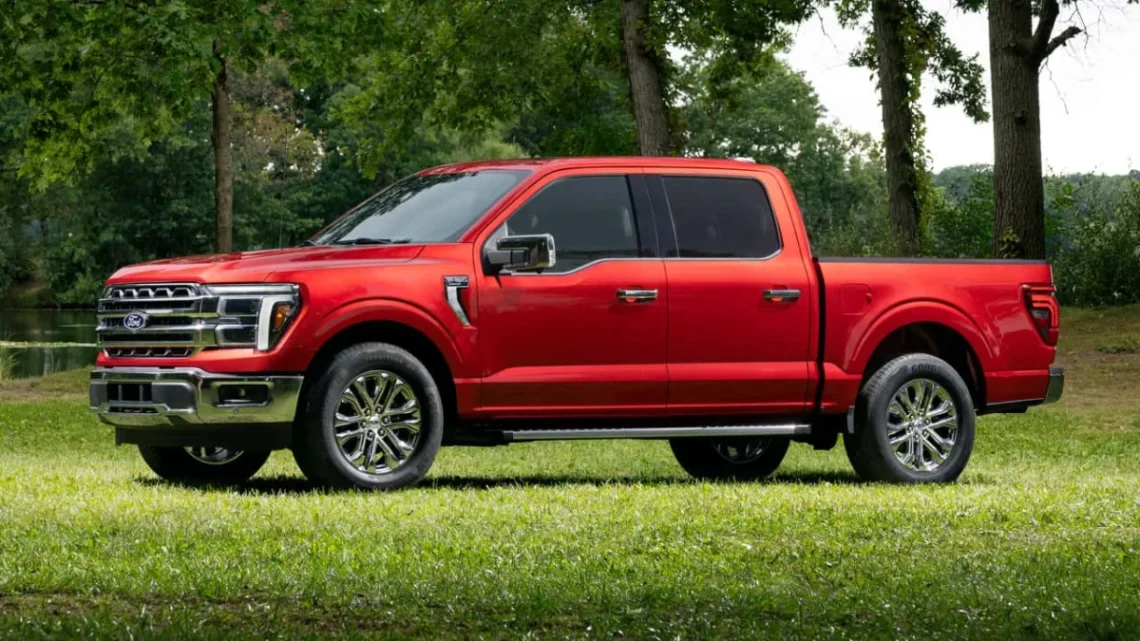
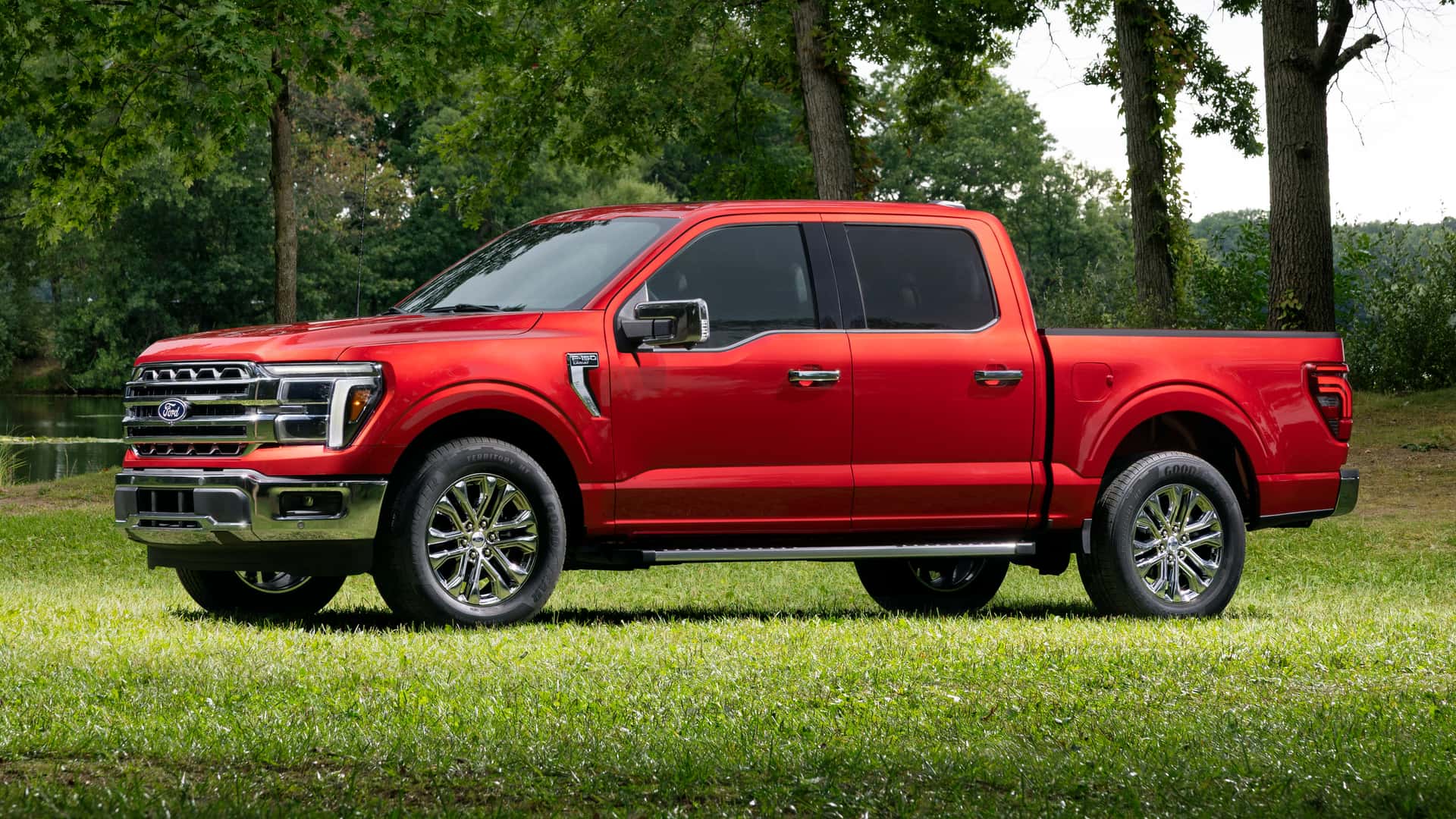
DETROIT — When jurors for the prestigious North American Car, Truck and Utility Vehicle of the Year (NACTOY) awards gather this coming October to rigorously evaluate the leading contenders for the 2027 crown, one notable heavyweight will be entirely absent from the paddock. For the first time in recent memory, not a single truck bearing the Blue Oval will be eligible to compete.
The Ford F-150, alongside every other pickup in the broader Ford stable, has been shut out of the initial competitive field. This sudden absence marks a striking departure from Ford’s dominant run of high-profile category wins earlier in the decade. Instead of defending territory, the American automotive giant must watch from the sidelines as an eclectic, highly polarized group of four diverse trucks vies for one of the industry’s most coveted accolades.
The 2027 NACTOY truck contenders represent a fascinating cross-section of where the modern automotive market stands—and where it might be heading. Ranging from a bare-bones, utility-first electric runabout to a supercharged, six-figure gasoline powerhouse, this year’s shortlist underscores a profound fragmentation in what buyers expect from a modern pickup truck.
Main Facts: The 2027 NACTOY Truck Contenders
The battle for the 2027 North American Truck of the Year award has been narrowed down to a distinct quartet of vehicles. These four contenders emerged from an initial pool of 56 eligible vehicles, ultimately landing among the 25 "Best of 2027" contenders selected across all categories.
The four trucks competing for the truck-specific title are:
- The Slate Truck: An ultra-minimalist, all-electric pickup starting at an accessible $24,950, featuring stark interior appointments like manual crank windows and the deliberate omission of a factory audio system.
- The Ram 1500 TRX SRT: Stellantis’s high-performance halo truck, commanding roughly $103,000 and powered by a ferocious supercharged 6.2-liter Hemi V8 pumping out 777 horsepower.
- The Chevrolet Silverado 1500: General Motors’ dependable half-ton stalwart, updated to maintain its competitive edge against modern EV disruptors.
- The GMC Sierra 1500: General Motors’ upscale alternative to the Silverado, sharing mechanical underpinnings while targeting a more premium consumer base.
While NACTOY intends to invite all 25 overall "Best of 2027" contenders to its official October comparison event, the organization has cautioned that vehicle availability remains fluid. Some early-stage models may face logistical hurdles that prevent them from being fully drivable on the track, injecting an element of unpredictability into the evaluation process.
Chronology: How Ford Lost Its Grip on the NACTOY Calendar
To understand why Ford is completely absent from the 2027 NACTOY truck ballot, one must examine both the strict criteria governing the awards and the timeline of Ford’s recent product cadence.
The NACTOY Rulebook
To qualify for any NACTOY award cycle, a vehicle must be either entirely new or "substantially changed" from the previous model year. Minor cosmetic refreshes or carryover models are strictly prohibited from entry. This ensures that the awards continuously highlight genuine innovation and fresh engineering rather than celebrating stagnant legacy designs.
Ford’s Recent Dominance and Sudden Gap
Ford’s history with NACTOY in the 2020s has been nothing short of stellar:
- 2023: The Ford F-150 Lightning secured the North American Truck of the Year title, showcasing the viability of mass-market electrification.
- Subsequent Years: Ford maintained a tight grip on the trophy stand, taking home annual category wins with heavy hitters like the heavy-duty Super Duty lineup, the midsize Ranger, and the compact unibody Maverick.
However, the calendar caught up with the brand’s flagship offering. The current, fourteenth-generation Ford F-150 originally launched for the 2021 model year. As the vehicle enters its mature phase, it no longer qualifies as "substantially changed" under NACTOY’s stringent guidelines for 2027. Furthermore, with no other fresh truck models or major architecture shifts ready for the current cycle, Ford found itself with an administrative blind spot that resulted in zero entries.
Complicating matters further on the electrification front, Ford halted production of the current battery-electric F-150 Lightning in December 2025 as part of a sweeping internal pivot to reshape its long-term EV pickup strategy. While the company has confirmed that a next-generation extended-range Lightning is slated for later in the decade, exact timing for a fully redesigned 15th-generation F-150 has yet to be formally detailed.
Supporting Data: A Tale of Two Extremes
The four trucks selected by NACTOY jurors for 2027 highlight a widening chasm in automotive philosophy. Rarely do evaluators face a category where vehicles occupying such radically different universes compete for the exact same trophy.
At the Budget-Friendly Horizon: The Slate Truck
At one end of the spectrum sits the Slate Truck. Designed to strip away modern automotive bloat, the Slate electric pickup challenges the industry’s trend toward increasingly expensive, technology-heavy vehicles. With a baseline price of $24,950, it offers a purely utilitarian driving experience, utilizing traditional crank windows, simplified seating, and no standard factory audio system.
Despite its early-stage rollout—where pre-production models are being built and initial orders are being accepted—the Slate represents a bold philosophical counter-weight to the rest of the market. It tests whether simplicity and affordability can sway automotive journalists accustomed to luxury appointments.
At the High-Performance Pinnacle: Ram 1500 TRX SRT
At the polar opposite end of the spectrum is the Ram 1500 TRX SRT. Stellantis is pricing this uncompromising apex predator at approximately $103,000. Under the hood lies a supercharged 6.2-liter Hemi V8 engine generating an earth-shattering 777 horsepower. It is a loud, unapologetic celebration of internal combustion excess, built for high-speed off-road domination rather than hyper-miling or cost-conscious fleet management.
The Traditionalists: Chevrolet Silverado and GMC Sierra
Occupying the vital middle ground are General Motors’ perennial heavyweights: the Chevrolet Silverado 1500 and the GMC Sierra 1500. Both trucks successfully navigated NACTOY’s eligibility requirements by introducing substantial engineering and stylistic updates for the cycle. By refining their traditional half-ton formulas, GM aims to prove that internal combustion and traditional hybrid architectures still hold immense practical value against incoming market disruptions.
Official Responses and Industry Context
The absence of Ford from the 2027 race has sent ripples through the automotive community, shifting the strategic spotlight onto its competitors. While corporate representatives from Ford acknowledge that the gap is purely an artifact of product timing rather than an indictment of vehicle quality, industry analysts point out that the vacuum creates an unprecedented marketing opportunity.
For rivals like General Motors and Stellantis, the absence of the reigning champion removes a massive psychological hurdle from the competition floor. It allows marketing teams to campaign aggressively without the looming shadow of the Blue Oval’s perennial favorite.
Concurrently, the inclusion of upstarts like Slate alongside legacy giants mirrors broader anxieties and transitions shaking up the global automotive landscape. As industry leaders—such as Hyundai’s leadership warning about the rapid evolution of global EV competitors, and shifting trade policies regarding international manufacturing plants—grapple with market volatility, awards programs like NACTOY serve as vital barometers for consumer preferences.
Implications: Where Are Work and Play Trucks Headed?
For fleet managers, retail buyers, and automotive enthusiasts closely watching the 2027 race, the core narrative of this year’s competition boils down to timing and intent.
Whichever vehicle ultimately claims the trophy in Detroit will not merely win a piece of hardware; it will validate a specific philosophy for the future of the pickup truck:
- The Economic Reality: If the Slate Truck performs well or wins, it could signal a pent-up consumer demand for back-to-basics, affordable utility vehicles in an era where average transaction prices for new cars have skyrocketed.
- The Endurance of Excess: A victory for the Ram 1500 TRX SRT would demonstrate that high-performance, unapologetic V8 internal combustion engines still command immense emotional appeal, even as regulatory pressures push the industry toward electrification.
- The Pragmatic Middle: If GM’s updated Silverado or Sierra takes the crown, it reinforces the enduring strength of the traditional half-ton formula—proving that iterative, continuous improvement of a proven platform remains a winning strategy for American truck buyers.
Meanwhile, Ford’s temporary sideline absence is expected to be short-lived. With a redesigned next-generation F-150 and an upcoming extended-range Lightning on the horizon for later in the decade, the Blue Oval will undoubtedly return to the NACTOY stage.
As Motor1’s editorial team notes, however, the verdict rendered this October will offer a critical glimpse into the psyche of automotive journalists—and hint heavily at whether the next decade of American work and play trucks belongs to ultra-cheap electrification, hyper-powered muscle, or refined tradition.