By Maria Doulton | 09 July 2026
To truly grasp the mercurial genius of Gabrielle "Coco" Chanel, one does not necessarily need the exhaustive historical account found in the 368 pages of Justine Picardie’s definitive biography. Instead, one can simply observe the jewellery she left behind—a lexicon of personal mythologies and stylistic rebellion. The 2026 Signes & Symbols High Jewellery Collection is not merely a display of precious stones; it is a profound exploration of a visionary who treated the rigid conventions of high jewellery with the same subversive, tactile freedom she applied to her revolutionary dressmaking.
The Mercurial Vision: A Legacy of Rule-Breaking
In the world of couture, Gabrielle Chanel famously eschewed the traditional "pedestrian" approach of sketching designs on paper. Instead, she worked with shears in hand—often with a cigarette clamped between her lips—sculpting fabric directly onto the body. This intuitive, kinetic approach defined her entire creative output.
When she turned her attention to jewellery, she brought this same iconoclastic spirit to the medium. She famously invented, borrowed, and mashed up styles, playing havoc with established volumes. She was a pioneer of the "high-low" aesthetic, pairing talismanic symbols with costume jewellery, and allowing ancient motifs to rub shoulders with modern, geometric forms. As she famously remarked, "My jewellery represents an idea," effectively shielding herself from the need to provide explanations or adhere to the stifling expectations of her time. The 2026 Signes & Symbols collection serves as a direct homage to this philosophy, distilling her life’s most cherished motifs into a masterclass of contemporary high jewellery.
Chronology: From the Rue Cambon to the 2026 Atelier
The journey of the Signes & Symbols collection traces a long arc from the early 20th century to the present day:
- 1910s-1930s: Gabrielle Chanel begins building her personal archive of signs—the camellia, the star, the comet, and the lion—which reflect her astrological leanings and personal history.
- 1932: The debut of the Bijoux de Diamants exhibition, the only high jewellery collection Chanel designed in her lifetime, which cemented the comet and star as house signatures.
- 2020s: The house of Chanel begins a multi-year effort to modernize its archival symbols, moving away from literal interpretation toward abstract, emotive design.
- July 2026: The official launch of Signes & Symbols, a collection that synthesizes the heritage of the past with the technical prowess of 21st-century stone-cutting and multi-functional engineering.
The Architecture of the Collection
The 2026 collection is structured into four distinct pillars, each exploring a facet of Mademoiselle’s personality through the lens of high jewellery.
I. Symboles: The Reimagined Classics
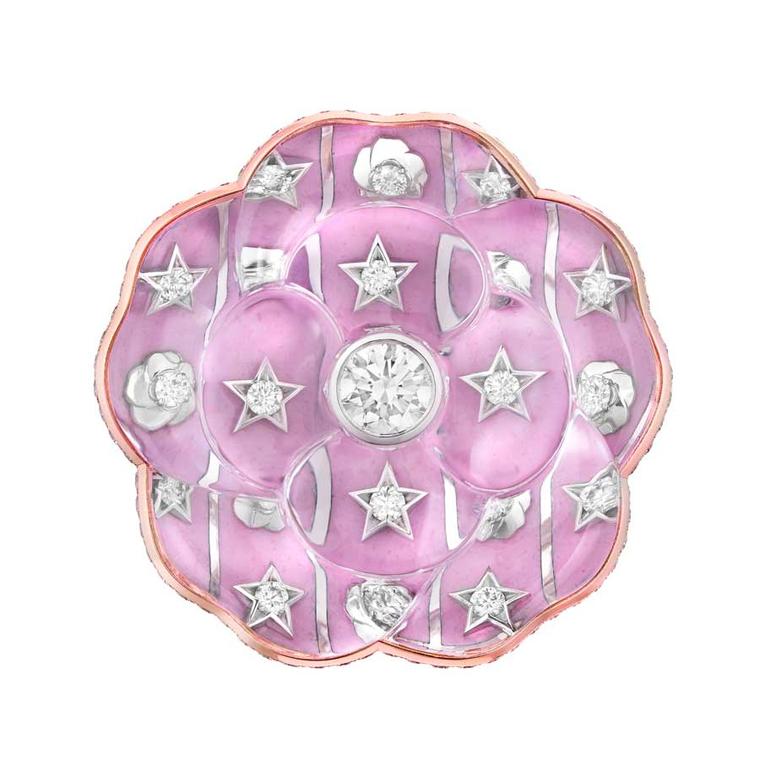
The Symboles range focuses on the house’s most recognizable flora and celestial bodies. The Symbole Camélia rose brooch stands as a centerpiece of this category, rendering the signature flower in white and rose gold. Adorned with diamonds, rock crystal, and enamel, it centers on a 1.58-carat round brilliant-cut diamond (E color, VVS2 clarity). The design’s versatility—convertible from a brooch to a pendant—echoes Chanel’s own demand for functional elegance.
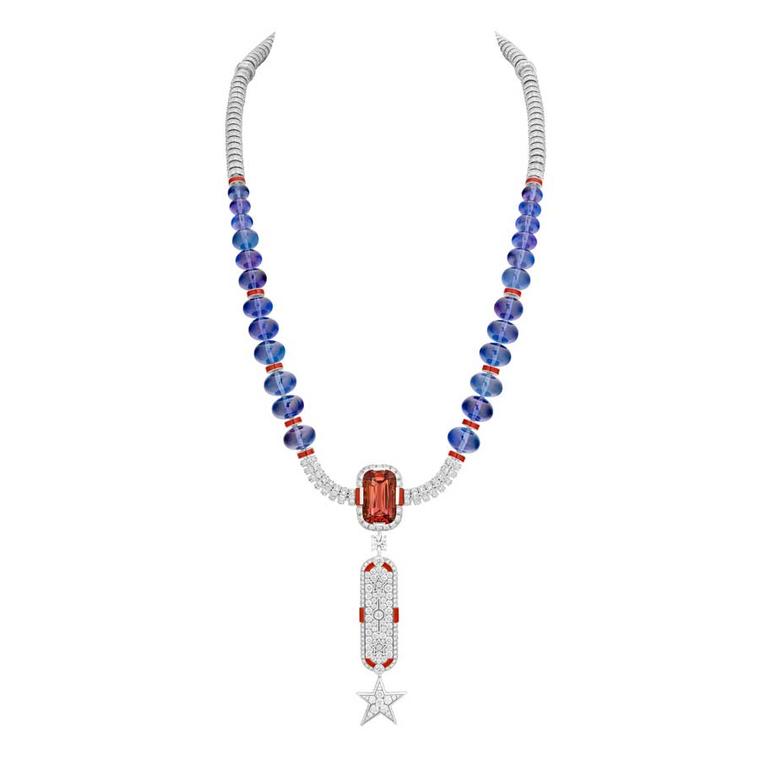
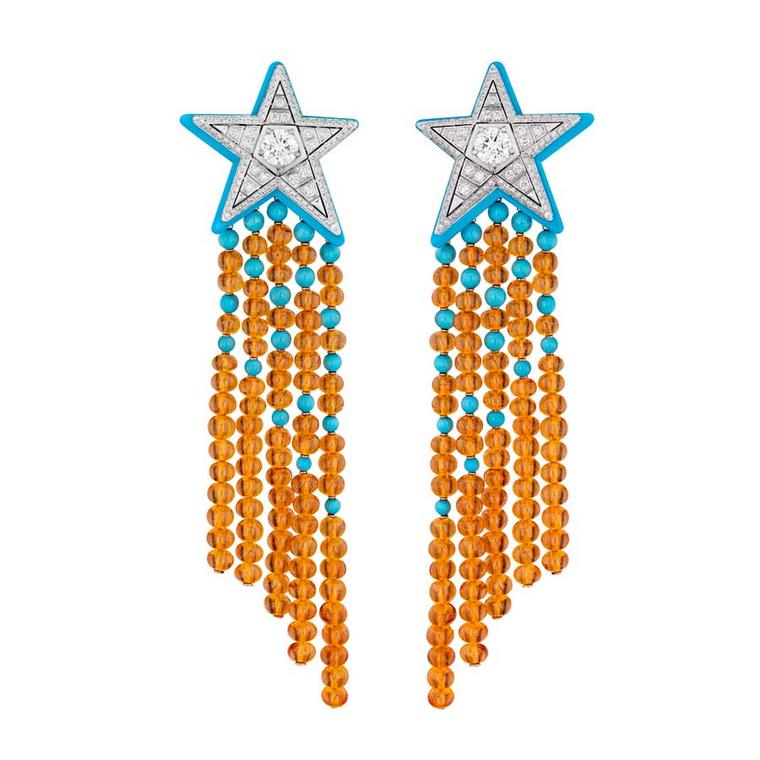
The Symbole Étoile necklace shifts the palette toward warmth, utilizing tanzanite beads, Imperial topaz, and spessartite garnets. At its heart sits a 26.21-carat cushion-cut Imperial topaz. The modularity here is key; the piece can be worn in varying lengths, with detached sections transforming into bracelets—a practical nod to the needs of the modern, nomadic woman.
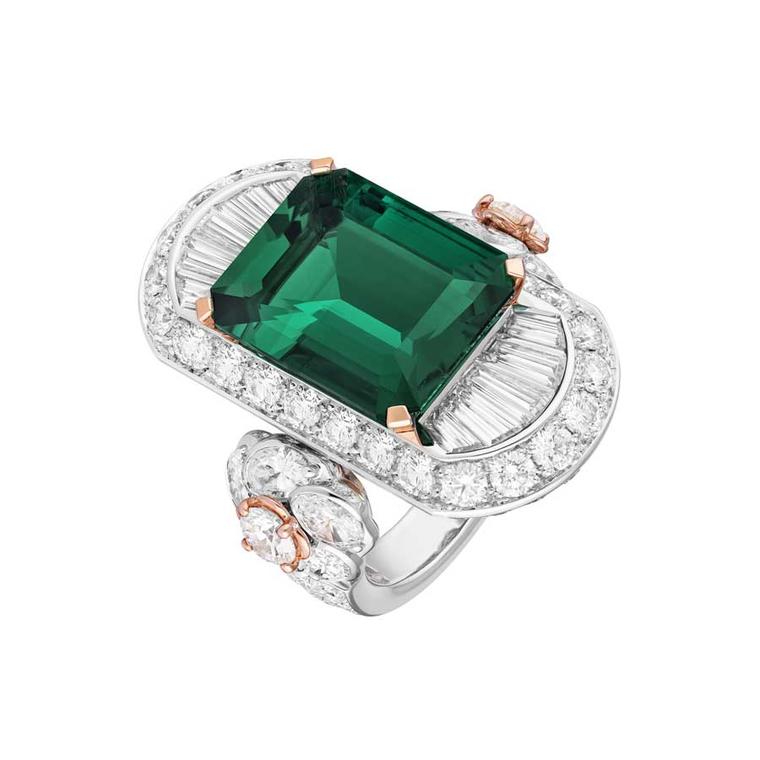
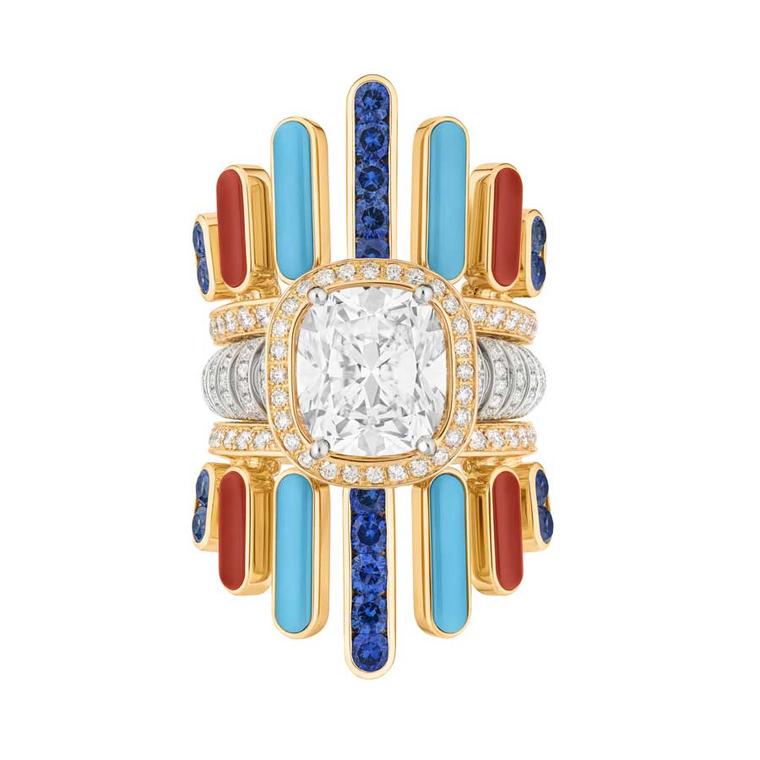
Perhaps most daring is the Symbole Emblématique ring. It pushes the boundaries of materiality by mixing hard stones—turquoise and carnelian—with traditional sapphires and diamonds. The crown jewel is a 5.05-carat cushion-cut diamond (D color, internally flawless, Type IIA). Like a secret kept by the wearer, the ring separates into two distinct pieces, offering a duality that is quintessentially Chanel.
II. Talismans: The Graphic Language
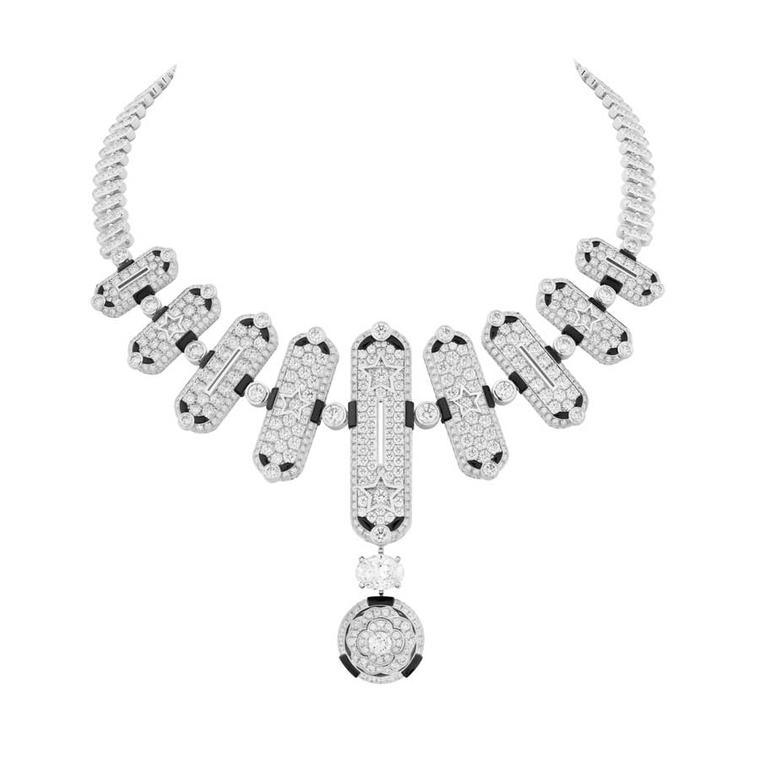
While many pieces in the collection lean into color, the Talisman line returns to the brand’s most stark, graphic roots. The Talisman Graphique necklace is a study in monochromatic tension, utilizing white gold, diamonds, and onyx. The design is intentionally spare, allowing the technical precision of the 3.05-carat D-flawless oval-cut diamond to command full attention.
III. Lions: The Guardian of the Zodiac
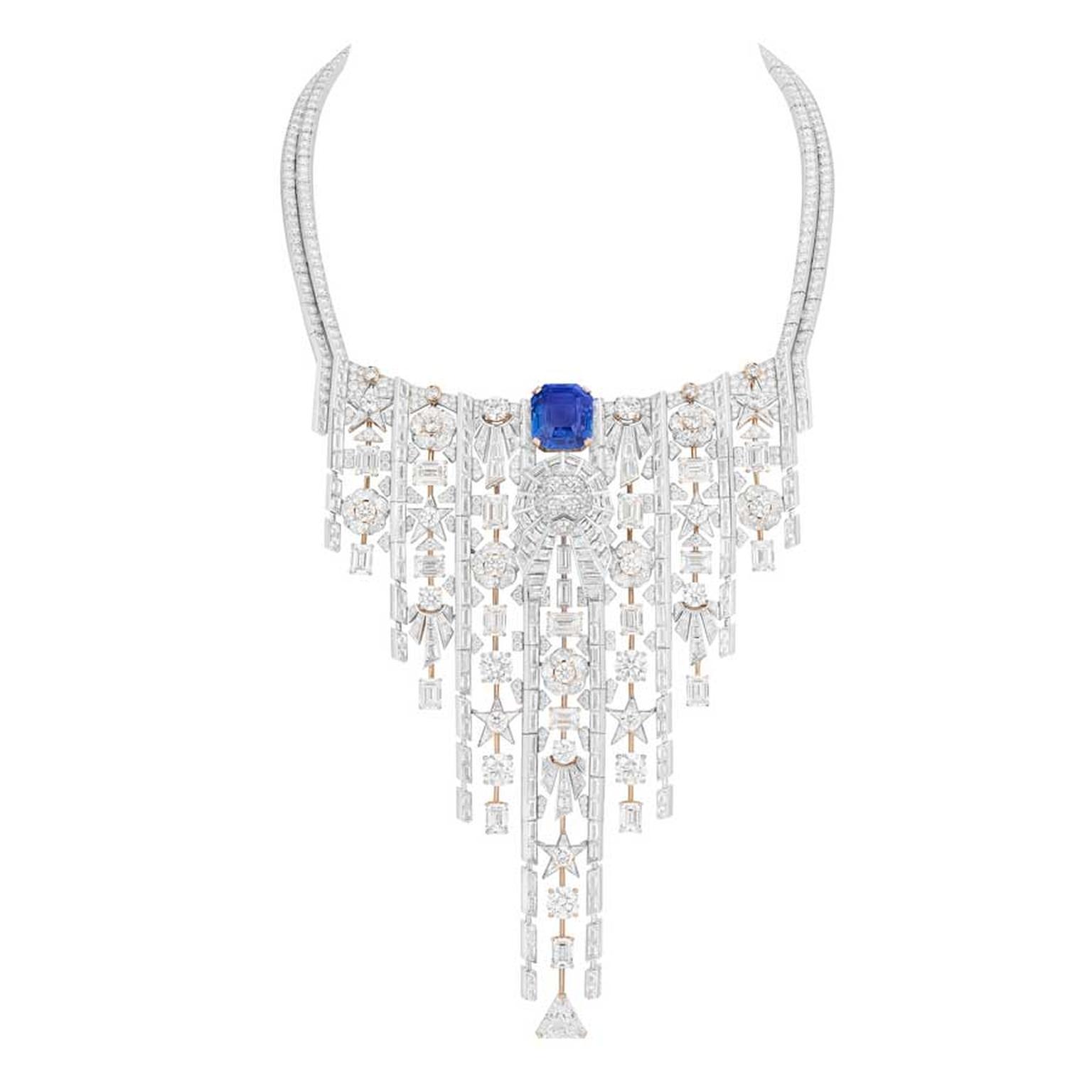
As a Leo, Gabrielle Chanel viewed the lion as both a protector and an emblem of her own strength. In the Lion Puissant necklace, the house achieves a feat of "invisible" setting, where a myriad of diamond cuts are assembled to create the illusion of a seamless, icy flow of light. It is anchored by a 10.25-carat D-flawless cushion-cut diamond and eight emerald-cut diamonds totaling over 8 carats.
Conversely, the Lion Magistral necklace pivots to warmth, using rose and yellow gold as a canvas for a series of resting lions, set against a stunning 6.21-carat cushion-cut emerald.
IV. Imprimés: Fabric as Inspiration
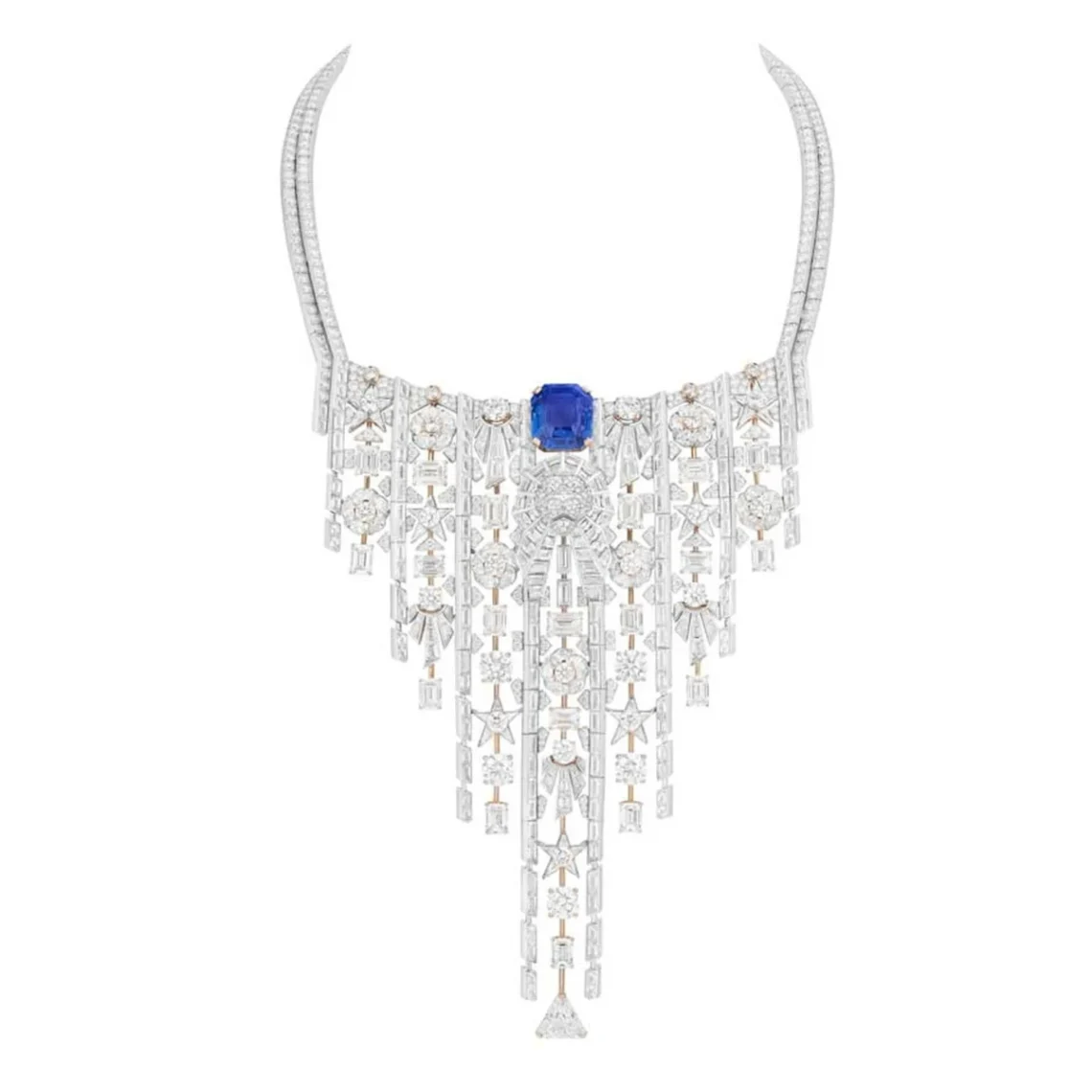
The Imprimés category treats jewelry as if it were a printed textile motif. The Imprimé Plastron necklace is perhaps the most exuberant piece in the collection, featuring a constellation of stars, camellias, and comets set with yellow sapphires and over 12 carats of diamonds. It is a triumphant, kaleidoscopic summary of the collection’s core themes.
Technical Specifications and Materiality
The collection relies on a sophisticated mix of traditional and rare materials. Data provided by the maison highlights the following material diversity:
- Gemstones: Emphasis on D-color/internally flawless diamonds, cushion-cut emeralds, and rare Type IIA diamonds.
- Metals: A deliberate blend of white gold, yellow gold, rose gold, and platinum to provide both structural integrity and aesthetic warmth.
- Hard Stones: The liberal use of turquoise, carnelian, and onyx adds a textural, artisanal layer that differentiates this collection from the cold, clinical look of traditional high jewellery.
Implications for the Industry
The launch of Signes & Symbols signals a broader shift in the high jewellery market. Consumers are increasingly moving away from "safe," investment-only pieces toward jewels that offer emotional resonance and modularity. By integrating the concepts of "transformability" (the ability to break down necklaces into bracelets or brooches), Chanel is addressing the modern demand for functional luxury.
Furthermore, the collection reaffirms that the "Chanel look" is not stagnant. By blending historical symbols—the camellia and the comet—with non-traditional stones like carnelian and turquoise, the house is successfully bridging the gap between historical reverence and the avant-garde sensibilities of a younger, high-net-worth demographic.
Official Stance and Philosophy
While the house of Chanel keeps its exact production figures private, the intent behind the collection is clear. In various press briefings, creative leads have noted that the collection is designed to be "lived in." By eschewing the stiff, formal settings of the mid-20th century, the 2026 collection invites the wearer to be an active participant in the design. It is not meant to be kept in a vault; it is meant to be worn with the same casual, "joie de vivre" that Mademoiselle Chanel herself possessed.
As the industry continues to grapple with the tension between tradition and modernity, Chanel’s Signes & Symbols serves as a benchmark. It proves that when a brand remains true to the "idea" rather than the "convention," the result is not just jewellery, but a wearable, precious legacy.