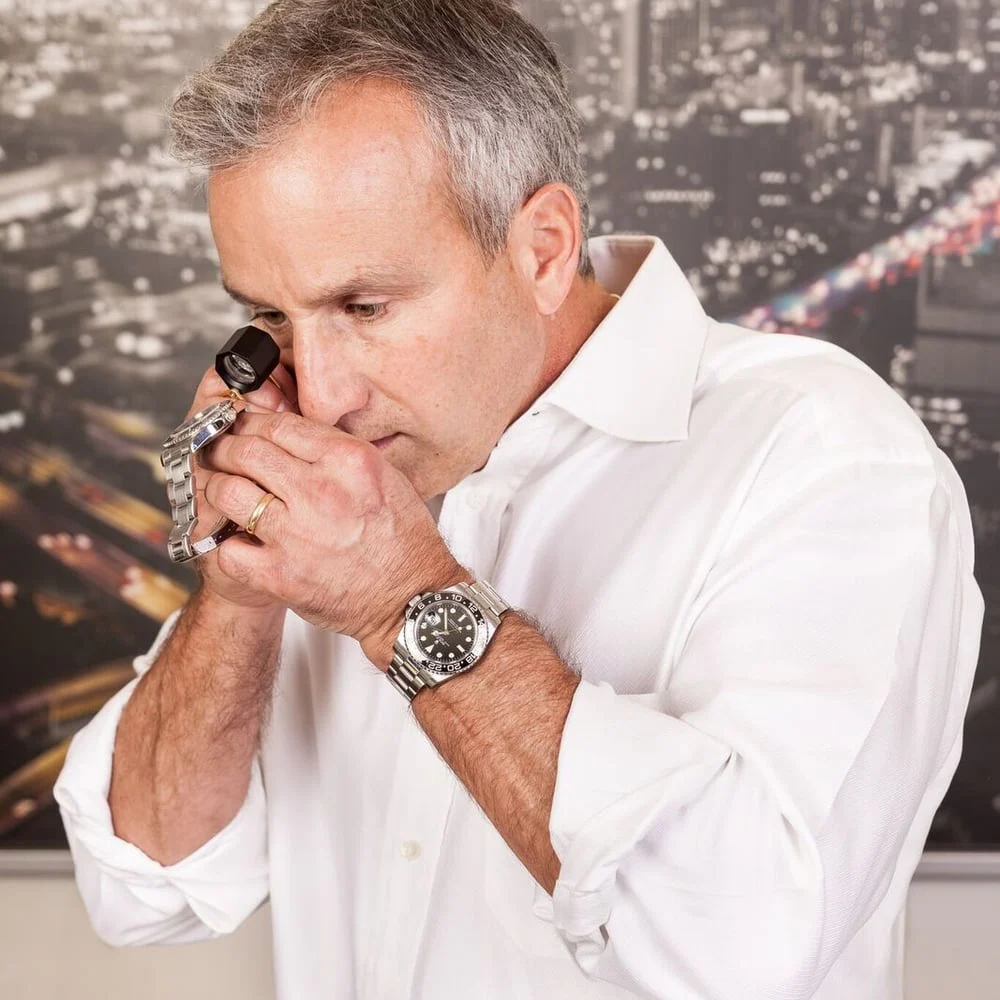
In June 2017, the prospect of purchasing a pre-owned Rolex online was, for many enthusiasts, a high-stakes gamble. The luxury watch industry was defined by an air of mystery and a traditionalist reliance on brick-and-mortar authorized dealers. Yet, amidst this skepticism, Paul Altieri—the visionary behind Bob’s Watches—was quietly revolutionizing the space. By introducing the radical concept of publishing both buy and sell prices for every model, he effectively treated the vintage watch market like a stock exchange.
Nearly a decade later, the landscape has undergone a seismic shift. The "grey market" has been institutionalized, and the very brands that once shunned the digital frontier have become its biggest players. This is the story of how the secondary market evolved from a fringe necessity into a pillar of the luxury economy.
The Genesis of Transparency: The 2017 Landscape
Back in 2017, the luxury watch industry remained famously opaque. Paul Altieri, who acquired the Bob’s Watches domain in 2010, stood as a disruptor. Based in Huntington Beach, California, his platform generated $21 million in revenue in 2016, with projections suggesting a meteoric rise to $30 million by the end of 2017.

When asked about the secret to his success, Altieri pointed to a fundamental failure of the traditional industry: the lack of accessible, honest pricing. "Before I got into the business, pricing on the internet was, I don’t want to say dishonest, but very non-transparent," Altieri stated. By democratizing price discovery, he created a marketplace where consumers felt empowered rather than exploited.
At the time, the industry was still grappling with the role of the internet. Many brands viewed e-commerce as a threat to their "Greta Garbo" allure—a strategy of intentional silence and exclusivity. Altieri, however, saw the inevitability of the digital transition, predicting that the brands that ignored the web would eventually be forced to reckon with it.
A Chronology of Institutionalization
The transformation of the pre-owned market followed a predictable, albeit slow, trajectory toward professionalization.

- 2017–2019: The "Wild West" era. Independent dealers like Bob’s Watches dominate the space, building trust through authentication and price transparency. Luxury brands continue to monitor the market but maintain a policy of non-engagement with the secondary sector.
- 2020–2021: The pandemic-era explosion. As global supply chains falter and interest in luxury assets spikes, prices for pre-owned Rolexes hit record highs. The secondary market proves more resilient than the primary market.
- December 2022: The Watershed Moment. Rolex officially launches its "Certified Pre-Owned" (CPO) program in partnership with Bucherer and Tourneau. This marks the first time the manufacturer officially validates and warranties its own vintage and used inventory.
- 2023: Rolex acquires Bucherer. This vertical integration signals a total shift; the brand is no longer just manufacturing watches—it is controlling the entire lifecycle of its products.
- 2026–2027: The Billion-Dollar Horizon. The CPO program expands to over 167 retailers, including giants like Harrods and The 1916 Company. Sales in the first nine months of 2026 reach $550 million, with projections to surpass $1 billion by 2027.
Supporting Data: The Scale of the Shift
The sheer volume of capital flowing through the secondary market is staggering. In the first half of 2026 alone, Rolex watches changed hands to the tune of $4.3 billion. To put this in perspective, this figure is nearly three times the secondary market volume of Patek Philippe, underscoring Rolex’s status as the "absolute ruler" of the pre-owned space.
The rise of official channels has also fundamentally altered consumer behavior. Sales of "unworn" grey market watches—those sold by unauthorized dealers—fell by 25% as consumers gravitated toward the safety of the official Rolex CPO seal. While buyers now pay a premium of approximately 23% for the peace of mind offered by the two-year guarantee and official authentication, this is a significant decrease from the nearly 40% premium observed when the program first launched.
For Bob’s Watches, the market shift has not been an end, but an acceleration. Now a business exceeding $30 million in annual revenue with a target of $100 million, the company continues to trade on the very transparency Altieri pioneered in 2017.

Official Responses and Strategic Shifts
For years, the "big houses" maintained that they were engineers and craftsmen, not retailers. They viewed the consumer-facing side of the business as a burden best left to authorized dealers. However, the sheer growth of the pre-owned market proved that consumers were not just buying time; they were buying assets.
When Rolex launched its CPO program, it effectively co-opted the business model that Altieri had proven viable. By providing a two-year international guarantee, Rolex neutralized the "leap of faith" associated with buying pre-owned. The brand’s transition from a "mysterious" entity to an active participant in the secondary market highlights a broader industry acknowledgment: the secondary market is not an alternative to the primary market—it is an essential extension of it.
The Implications: Why the Internet Changed Everything
The digital transition has had profound implications for both the collector and the manufacturer.

1. The Death of the Middleman
Altieri’s 2017 assertion remains true today: the removal of unnecessary intermediaries allows for more efficient pricing. By sourcing directly from consumers, platforms like Bob’s Watches cut out the layers of dealers that historically inflated prices and obscured market value.
2. Main Street vs. The Web
One of the lingering questions of the 2017 interview remains relevant: what is the cost of this digital convenience? Altieri acknowledged that "every dollar spent online is a dollar not spent on Main Street." The erosion of the traditional boutique experience has been a side effect of the sector’s digital maturity.
3. The Future of Exclusivity
While brands like Hermès and Louis Vuitton have long used supply constraints to drive desire, Rolex has historically operated on a model of massive, high-quality production. The secondary market has allowed Rolex to maintain this production volume while simultaneously managing the "exclusivity" of the most sought-after models, such as the Daytona or the GMT-Master II. By controlling the CPO market, the brand can now dictate the "market value" of its vintage pieces, further cementing its position as the ultimate store of value in the watch world.

Conclusion: A Market Matured
Looking back at the 2017 interview, it is clear that Paul Altieri was not merely predicting a trend; he was describing a structural inevitability. The "tipping point" he foresaw arrived with the force of a tidal wave.
Today, the secondary watch market is no longer a fringe curiosity for enthusiasts—it is a sophisticated, high-stakes financial landscape. As the industry moves toward 2027 and the expected $1 billion milestone for the Rolex CPO program, one thing is certain: the era of the "leap of faith" is over. In its place is a new, transparent reality where the value of time is measured not just in hours and minutes, but in the verified, data-driven reliability of the marketplace itself.
The internet did not destroy the watch industry; it forced it to grow up, and in doing so, it created a more secure, more transparent, and more valuable experience for the next generation of collectors.