In the world of yachting, the line between "traditional aesthetic" and "high-performance engineering" is often sharply drawn. On one side, enthusiasts clamor for the warm, soul-stirring elegance of mid-century New England design. On the other, owners demand the speed, efficiency, and ease-of-use that only 21st-century technology can provide. Maine-based boatbuilder Lyman-Morse has long bridged this divide, but with the unveiling of the new Hood 42 LM, the yard has arguably perfected the balance.
Designed in collaboration with the renowned C.W. Hood Yacht Design, the Hood 42 LM is more than just a new model; it is a profound statement on the longevity of the Downeast legacy. By marrying the time-honored cold-molded wood construction technique with a high-performance propulsion package, Lyman-Morse has delivered a vessel that feels as though it belongs in a classic maritime gallery while performing like a modern interceptor.
Main Facts: A Convergence of Heritage and Innovation
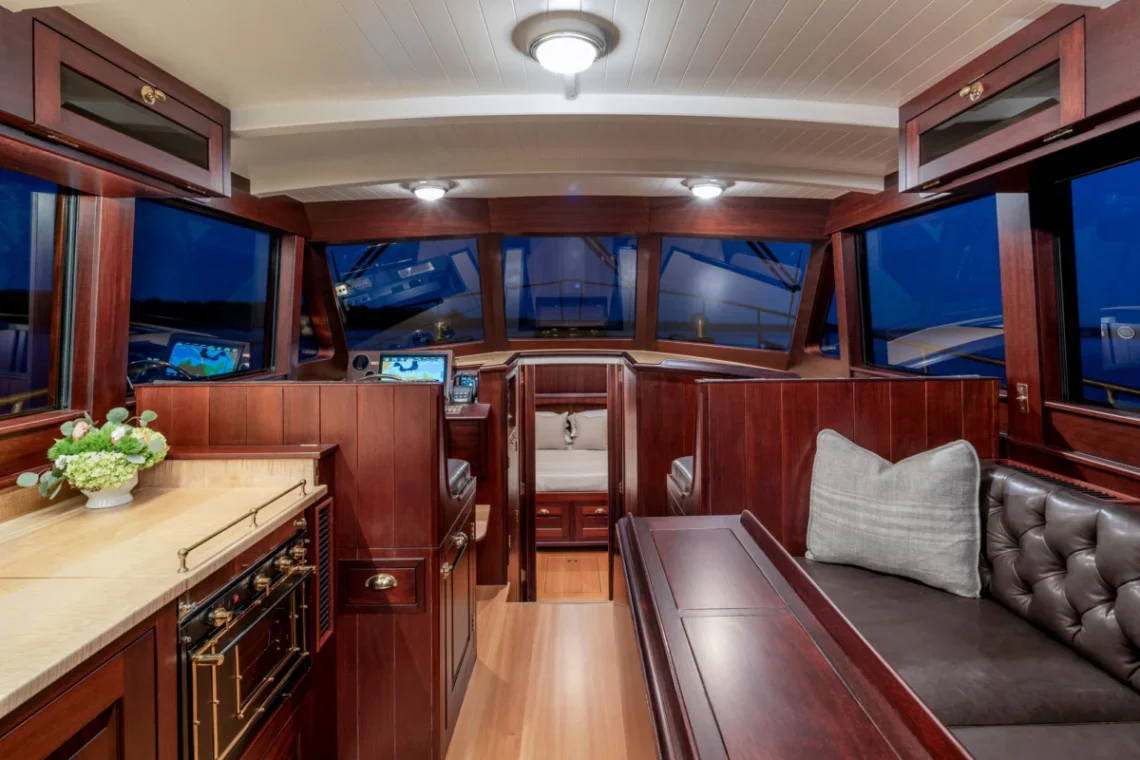
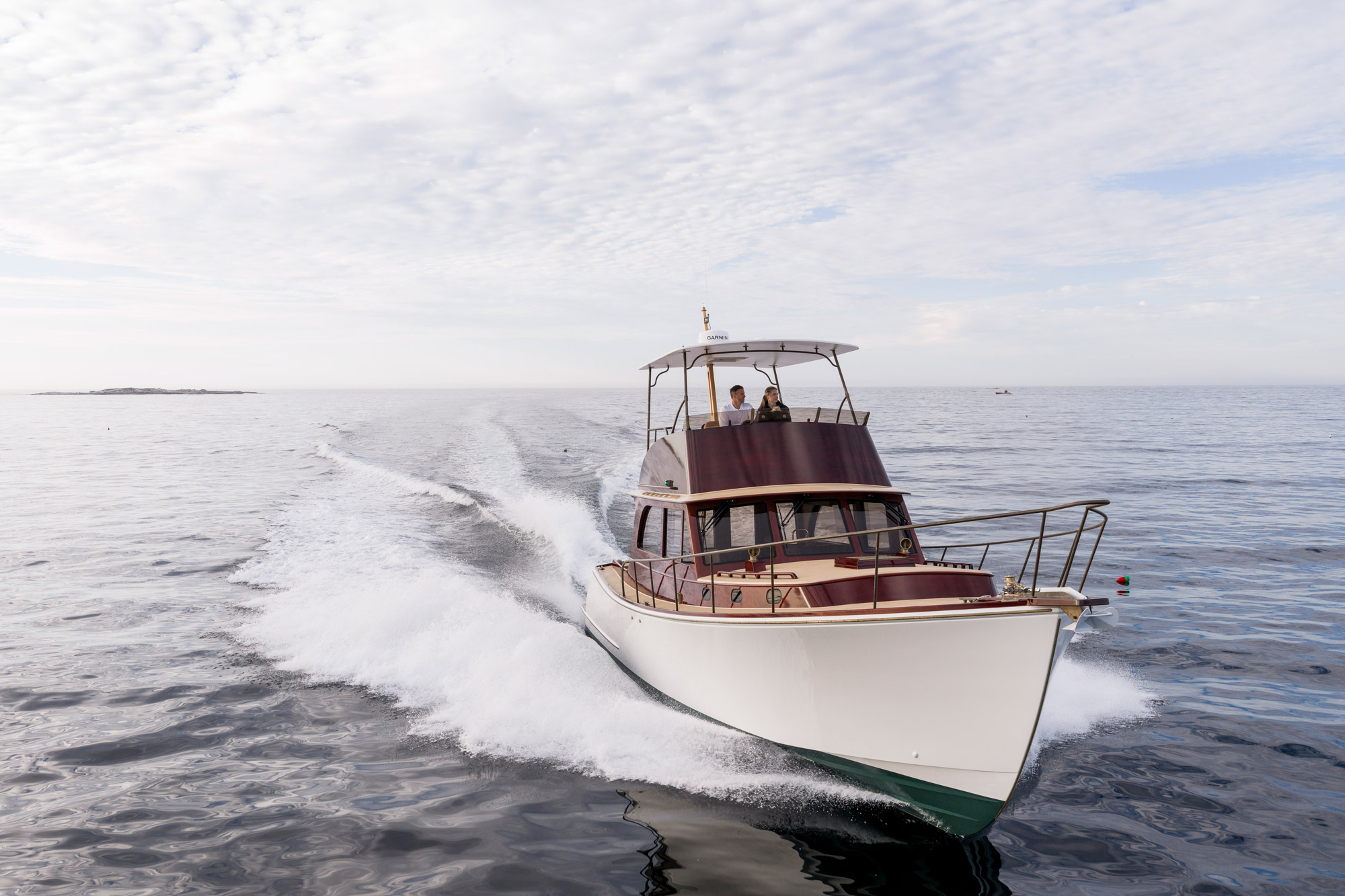
The Hood 42 LM is a 42-foot cruiser that immediately commands attention with its quintessential Downeast silhouette. It features the signature graceful sheerline that has defined New England yachting for generations, punctuated by meticulously varnished mahogany house sides and gleaming bronze accents. However, beneath this polished, nostalgic veneer lies a structure engineered for the future.
Lyman-Morse has utilized its proprietary cold-molded wood-composite process to construct the hull. This method involves layering Douglas fir and Western red cedar, reinforced with advanced composite laminates. The result is a hull that is significantly lighter and more rigid than traditional solid fiberglass or wood counterparts. This rigidity isn’t just for strength; it is a critical component in the vessel’s acoustic dampening, providing the silent, vibration-free ride that sophisticated owners demand.
Propulsion is handled by twin Volvo Penta D6 480 hp diesel engines paired with DPI drives. This setup offers more than just raw power; it integrates seamlessly with Volvo’s joystick maneuvering system, making docking this 42-foot cruiser as stress-free as handling a much smaller day boat. With this configuration, the Hood 42 LM achieves impressive cruising speeds in the mid-30-knot range, ensuring that long coastal passages are completed in comfort and record time.
Chronology: A Half-Century of Maine Craftsmanship
The arrival of the Hood 42 LM is the culmination of nearly 50 years of boatbuilding experience at Lyman-Morse. To understand the significance of this vessel, one must look at the trajectory of the yard itself.
The Foundation
Lyman-Morse established its reputation in the 1970s and 80s as a premier custom boatbuilder in Thomaston, Maine. Unlike mass-production yards that focus on volume, Lyman-Morse built its identity on the "one-off" project—the custom yacht tailored to the specific whims and requirements of a single owner. This ethos fostered a culture of extreme precision and material mastery.
The Evolution of the Hood Series
The Hood partnership is a natural extension of this heritage. The Hood Series began with the 35-footer and the 57-footer, both of which set the stage for a design language that refuses to compromise on aesthetics.
- Initial Concept: The 42-foot project was envisioned as the "Goldilocks" size—large enough for extended coastal cruising and live-aboard comfort, but manageable for an owner-operator.
- Development Phase: Over the past two years, the team at C.W. Hood Yacht Design and the engineers at Lyman-Morse worked to refine the hull form to optimize the weight-to-performance ratio offered by the cold-molded build.
- The Launch of Hull No. 1: In mid-2026, the first vessel hit the water. It served as a proof-of-concept for the versatility of the platform, demonstrating that the hull could accommodate various interior layouts and configurations.
- Looking Ahead: As the 42 LM makes its debut, the yard is already looking toward the horizon with a 46-footer currently under construction, signaling the continued expansion of this successful design family.
Supporting Data: Engineering Excellence
What sets the Hood 42 LM apart from other Downeast cruisers on the market is the obsessive attention to detail regarding weight distribution and material science.
Material Composition
The cold-molded process is labor-intensive compared to standard resin-transfer molding, but the benefits are tangible. The combination of Douglas fir and Western red cedar acts as a natural shock absorber. When the yacht strikes a chop at 30 knots, the wood-composite structure dissipates energy rather than reverberating it through the cabin. This results in a "soft" feel that is rarely found in pure fiberglass vessels.
Systems Integration
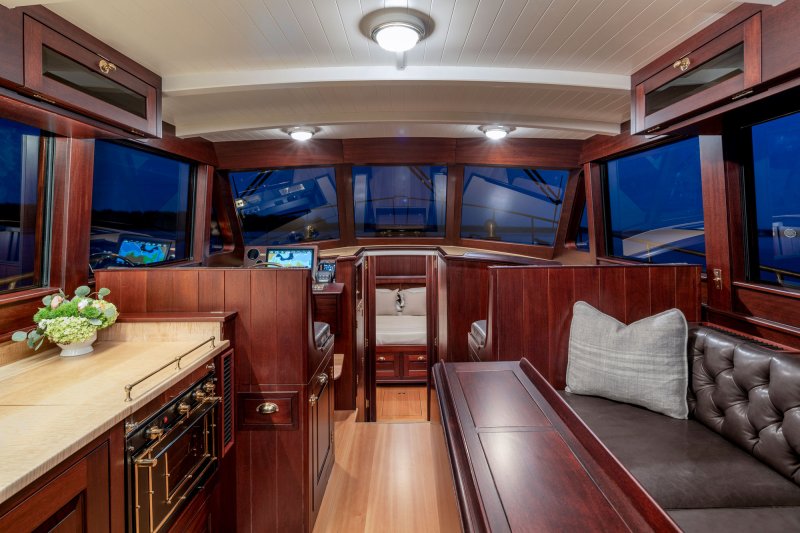
The technological suite aboard the Hood 42 LM is hidden in plain sight. For the owner of Hull No. 1, the helm is a masterclass in clean design. All electronics are concealed behind custom panels, preventing the "cockpit clutter" that plagues many modern yachts. Notable technical specifications include:
- Carbon-fiber construction: Used in key structural areas like the companionway door, which is then veneered in wood to maintain the classic aesthetic.
- Electrically operated salon windows: A modern convenience that allows for instant transition between an enclosed, climate-controlled space and an open-air cockpit environment.
- Custom Bronze Hardware: Every piece of hardware is bespoke, cast or machined specifically for the vessel, ensuring that the touchpoints reflect the craftsmanship of the hull itself.
Official Responses: The Builder’s Vision
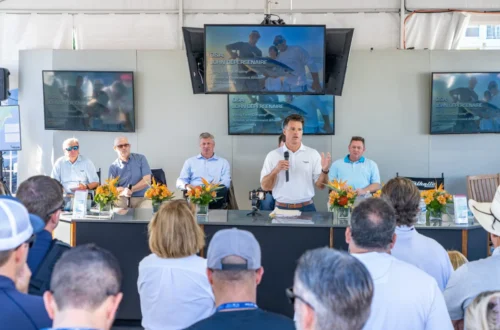
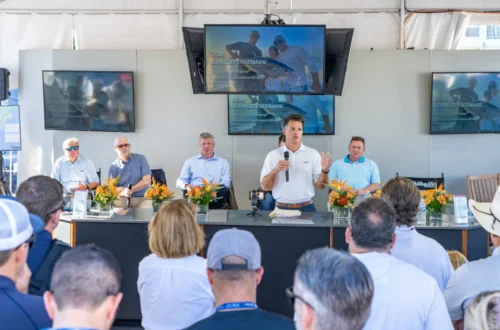
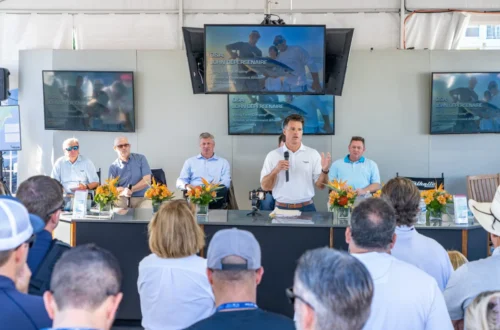
Speaking on the launch, the leadership at Lyman-Morse emphasized that the Hood 42 LM is not intended to compete with "disposable" yachts. It is a vessel designed to be handed down through generations.
"Our goal with the Hood 42 LM was to create a yacht that respects the history of the Maine coast while utilizing the tools of the modern era," noted a company spokesperson. "When an owner steps aboard, they see the varnish, they feel the bronze, and they experience the warmth of the wood. But when they push the throttles forward and engage the joystick, they realize this is a high-tech machine. We aren’t just building boats; we are building heirlooms that happen to do 35 knots."
The design team at C.W. Hood added that the flexibility of the platform was a primary design requirement. "We know that every sailor has a different vision of how they want to use their boat. Some want a sedan-style cruiser for day trips, while others want a flybridge for visibility during long offshore runs. The Hood 42 LM is designed to accommodate both, without losing the soul of the original design."
Implications: A New Standard for the "Downeast" Category
The success of the Hood 42 LM carries significant implications for the future of the yachting industry. As buyers become increasingly weary of the "plastic fantastic" look of many modern production cruisers, there is a clear shift in the market toward vessels with personality, craftsmanship, and soul.
1. The Resurgence of Cold-Molding
By proving that cold-molded construction can be efficient and competitive with modern composite manufacturing, Lyman-Morse is setting a trend. We are likely to see other boutique builders return to wood-composite techniques, as the demand for unique, high-performance, and environmentally conscious builds increases.
2. The Customization Trend
The Hood 42 LM proves that a semi-custom approach—where the hull is standardized but the interior and configuration are highly flexible—is the winning business model for the 2020s. Buyers no longer want to pick from a list of three "packages." They want to influence the layout, the wood species, and the hardware details.
3. Future-Proofing the Classic Look
Finally, this vessel provides a roadmap for how classic design can survive in an era of stringent efficiency requirements. By updating the propulsion and using lightweight materials, the Hood 42 LM maintains the beautiful lines of a 1950s workboat while offering the range and reliability of a modern long-range cruiser.
Conclusion: The Newport Debut
As the maritime industry prepares for the Newport International Boat Show this September, the Hood 42 LM stands as one of the most anticipated arrivals. It represents a rare moment in yachting where the past and the future meet in perfect harmony. Whether it is anchored in a quiet Maine cove or carving through the swells off the coast of Rhode Island, this vessel is a testament to the fact that, in the right hands, tradition is not a static state—it is a living, evolving craft.
For those who value the scent of varnish, the weight of custom bronze, and the surge of twin diesels, the Hood 42 LM is not just a boat; it is a promise that the golden age of yachting hasn’t ended—it has simply upgraded its engines.