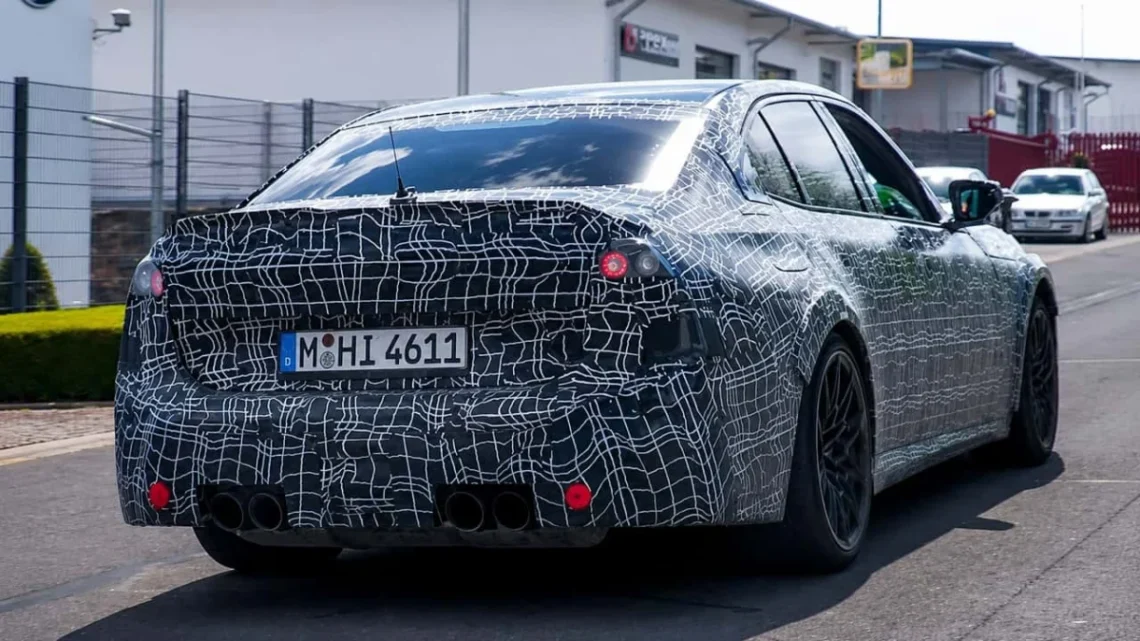
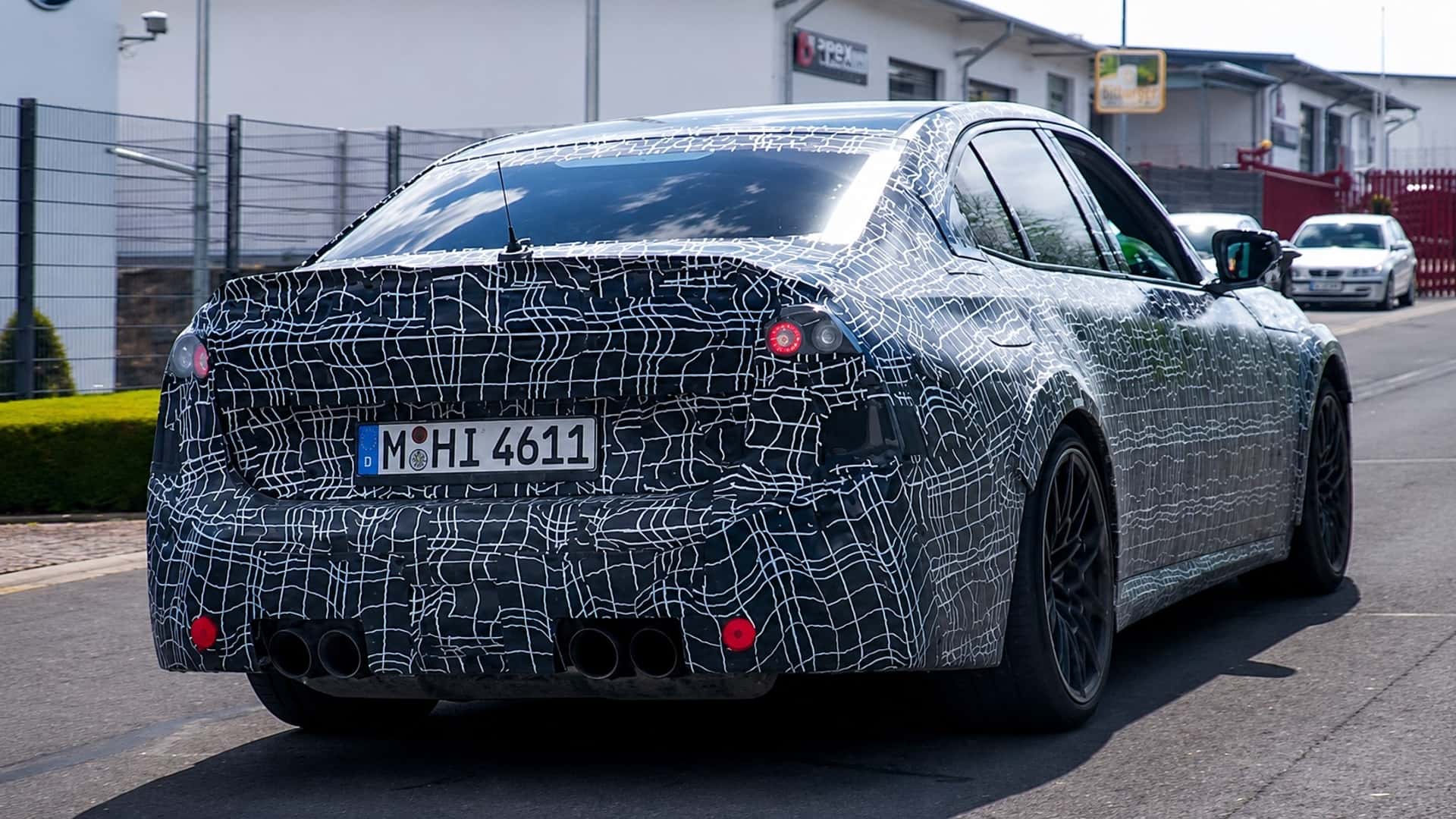
While the automotive industry’s spotlight is increasingly fixed on the blinding glow of electric vehicle (EV) development, BMW is quietly ensuring that its most iconic performance badge remains rooted in traditional combustion technology. Recent footage captured at the legendary Nürburgring Nordschleife by Carspotter Jeroen has provided the most compelling evidence to date: a successor to the current-generation M3, powered by a combustion engine, is actively undergoing development.
Despite the overwhelming noise surrounding the brand’s forthcoming "Neue Klasse" electric models, BMW is making it abundantly clear that the internal combustion engine (ICE) still has a significant role to play in the future of the M division.
Main Facts: The Evolution of an Icon
The prototype caught testing in Germany confirms that BMW is not abandoning its loyal enthusiast base. The vehicle, heavily masked in camouflage, exhibits the unmistakable proportions of a high-performance M sports sedan. Key design indicators, such as aggressive, flared fenders, point to a "full-fat" M model rather than a mid-tier M Performance variant.
Contrary to widespread industry rumors suggesting a potential shift toward V6 architectures—a configuration BMW has famously avoided in mass production—M CEO Frank van Meel has reaffirmed the brand’s dedication to the inline-six layout. This new engine is expected to be a highly refined evolution of the existing 3.0-liter twin-turbocharged powerplant, potentially incorporating advanced pre-chamber ignition technology and mild-hybrid assistance to navigate the increasingly rigorous global emissions standards, including the Euro 7 mandates.
Chronology of Development
The road to the next M3 is a long one, with the anticipated reveal unlikely to occur before 2028. To understand the timeline, one must look at the current cycle of the 3 Series. The existing "G80" M3 generation remains in its prime, with production expected to continue through 2027.
- 2024–2025: Initial development and mule testing at the Nürburgring. The focus remains on chassis dynamics and the integration of new powertrain components.
- 2026–2027: Anticipated debut of the non-M "M350" (or similar nomenclature), serving as the high-performance bridge between the standard 3 Series and the full-blown M3.
- 2028 and Beyond: Expected global launch of the next-generation combustion-powered M3, likely co-existing with the high-performance electric M3 variants.
BMW’s strategy is essentially twofold: the "Neue Klasse" platform will house the electric future, while a refined version of the CLAR architecture—or a derivative—will likely support the final generation of the combustion-powered M3.
Supporting Data: Engineering for the Future
The decision to stick with the inline-six is a strategic move to preserve the characteristic sound and power delivery that defined the M3’s legacy. However, the engineering challenges are immense. To remain competitive and compliant, the next M3 will need to balance raw output with efficiency.
Technical Specifications and Rumors:
- Powertrain: A new-generation 3.0-liter inline-six twin-turbo.
- Hybridization: Likely adoption of 48V mild-hybrid technology to bolster torque and reduce CO2 output.
- Drivetrain: Rumors suggest a move toward an exclusive all-wheel-drive (xDrive) setup paired with an automatic transmission, signaling a potential departure from the manual gearbox for the next generation.
- Materials: Extensive use of weight-saving materials, including a flax-based natural fiber composite roof, as an alternative to traditional carbon fiber.
The prototype’s exterior design suggests a synthesis of classic BMW aesthetics and the future language teased by the M Concept Neue Klasse. While the production car will likely tone down the concept’s extreme aerodynamic profile, signature elements like the double-yellow headlights and stacked cube-shaped bumper lighting are confirmed to be part of the future M design DNA.
Official Responses and Strategic Intent
BMW has been remarkably transparent regarding its multi-pathway strategy. By refusing to commit exclusively to EVs, the company is hedging against shifting consumer demand and regulatory volatility.
Mike Reichelt, Head of the Neue Klasse project, has gone on record stating that the new M3 will feature a "new type of six-cylinder engine," effectively shutting down speculation about a switch to a V6. Furthermore, the company has clarified that the new M3 will not be a plug-in hybrid (PHEV) in the vein of the current M5. The added weight and complexity of a large battery-electric system were deemed unsuitable for the dynamic agility expected of the M3.
This approach acknowledges the "purist" market. As Frank van Meel has noted, the M division’s goal is not just to chase numbers, but to maintain the "emotional" connection between driver and machine.
Implications for the Market
The implications of this dual-pathway strategy are profound. By keeping the combustion engine alive, BMW is essentially buying time for its customer base to transition to electrification at their own pace.
The "Last of its Kind" Factor
There is a growing sentiment that this upcoming generation could be the final iteration of the 3 Series to offer a six-cylinder engine. With the European Union’s target of a 90 percent reduction in CO2 emissions by 2035, the window for high-performance internal combustion is narrowing. This reality is already driving collector interest, as enthusiasts view the current and upcoming models as the final chapters of a storied performance era.
The Touring Possibility
One of the most exciting rumors circulating involves the potential expansion of the M3 Touring (wagon) lineup. While the current G81 M3 Touring is a massive success in Europe, it remains unavailable in the North American market. With the development of a combustion-powered 3 Series Touring alongside the electric i3 Touring, there is renewed hope that BMW might finally bring the long-roof M3 to the United States.
Conclusion: A Balanced Future
BMW’s commitment to the combustion-powered M3 is a calculated victory for automotive enthusiasts. While the electric M3 will undoubtedly provide blistering acceleration and cutting-edge technology, the existence of a parallel combustion model ensures that the tactile, visceral experience of an inline-six engine will endure for at least one more generation.
As we look toward 2028, the industry will be watching this test mule closely. It represents more than just a new car; it represents the survival of a legacy in an era of rapid transition. Whether through new ignition technologies, advanced mild-hybrid integration, or clever material science, BMW is determined to prove that the M3 can remain relevant, compliant, and—above all—exciting, regardless of how the world chooses to power its vehicles.
For the performance sedan enthusiast, the wait until 2028 may feel like an eternity, but the evidence is now undeniable: the heart of the M3 is still beating, and it is firing on all six cylinders.