Introduction: The Sky Awaits, One Certified Flight at a Time
For nearly a decade, the promise of urban air mobility (UAM) has hovered on the horizon like a futuristic mirage. Promoted by concept art depicting a Blade Runner-esque skyline crowded with sleek, quiet flying machines, the dream of beating city gridlock by taking to the skies has captured the public imagination. Today, that vision is finally transitioning from speculative PowerPoint presentations and glossy press releases to the tangible reality of commercial aviation.
While travelers should not expect a dense, unregulated matrix of autonomous flying cars populating metropolitan airspace overnight, the first limited commercial services are slated to launch this year. Frontrunners like California-based Joby Aviation are poised to usher in a new era of transportation, with initial operations likely taking off in Dubai or the United States.
Yet, this revolution will not unfold in a chaotic rush. Instead, it will progress methodically—one carefully certified flight, one regulatory hurdle, and one vertiport at a time. As the sector matures, it stands to transform not just how we commute, but the very architectural and economic landscape of the modern city.
1. Main Facts: The Current State of the eVTOL Revolution
The foundation of the modern urban air mobility movement rests on a specific class of aircraft: electric vertical takeoff and landing (eVTOL) vehicles. These scaled-up, multi-rotor craft function essentially as heavy-duty, zero-emission drones capable of vertical lift. By utilizing electric propulsion, eVTOLs drastically reduce the acoustic footprint traditionally associated with helicopters, making them viable for densely populated urban environments without causing debilitating noise pollution.
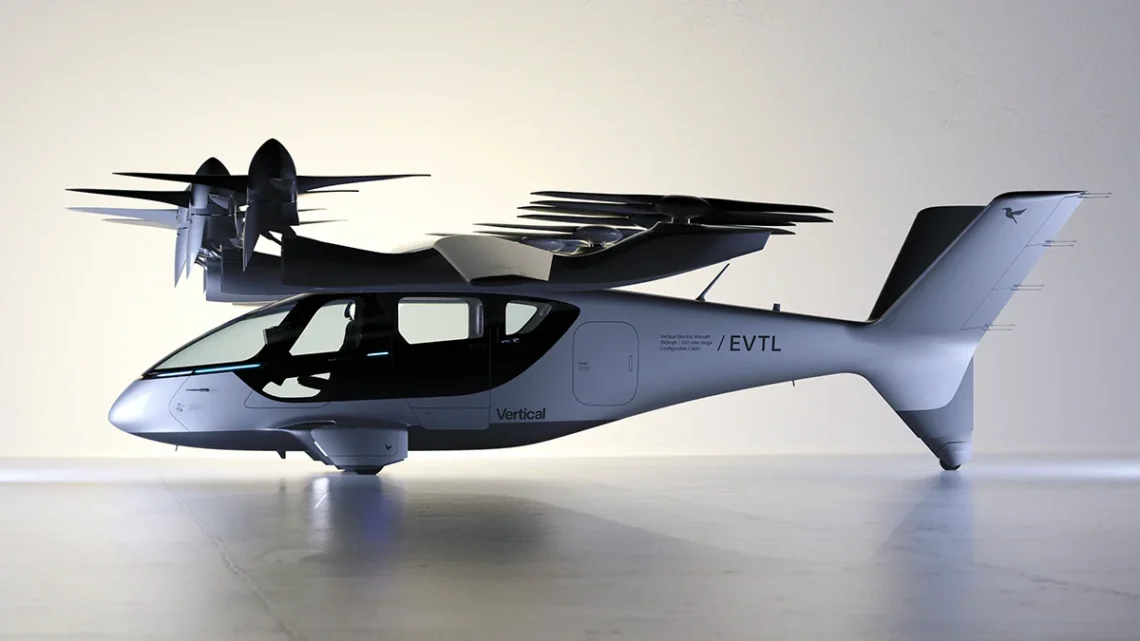
As of this year, the global landscape of advanced air mobility has narrowed from a chaotic gold rush of over a thousand speculative concepts down to a handful of heavily capitalized, technologically mature contenders. In the United States and Europe, companies such as Joby Aviation, Archer Aviation, Wisk Aero, Eve Air Mobility, Beta Technologies, and Vertical Aerospace have emerged as the vanguard of the industry.
Key highlights of the current operational reality include:
- The Launch Timeline: Limited commercial passenger services are scheduled to begin this year, marking the official commercial debut of the asset class.
- Geographic Pioneers: Initial deployments are expected in select international and domestic hubs, with Dubai and U.S. testing grounds leading the charge.
- The Regulatory Catalyst: The introduction of the eVTOL Integration Pilot Program (eIPP) has created a structured testing framework, bridging the gap between experimental flight testing and commercial type certification.
- Initial Routes: Operations will focus strictly on high-density, short-duration urban hops and airport-to-city-center transfers, rather than long-haul regional travel.
2. Chronology: A Decade of Ambition, Disruption, and Survival
The journey from a blank page to commercial readiness has been marked by rapid innovation, high-profile failures, and strategic consolidation.

2016: The Blueprint
The modern eVTOL boom can trace its roots directly to a white paper published in 2016 by Uber Elevate. The document outlined a sweeping vision for on-demand urban air transportation powered by quiet, zero-emission vertical flight. By promising inexpensive, app-booked air taxi services that could soar above traffic, Uber catalyzed a massive design boom. Traditional aerospace giants and agile tech startups alike rushed to draft blueprints.
2022–2024: The Great Sorting
By the early 2020s, enthusiasm peaked. Databases like evtol.news documented more than 1,200 distinct eVTOL proposals, with many developers boldly predicting commercial passenger flights by 2025 or 2026.
However, the harsh economic realities of aviation development quickly took a toll. Most proposed aircraft never made it past the initial press-release phase. Others secured venture capital funding, burned through millions in R&D and flight-testing costs, and quietly disappeared. Even ride-hailing giant Uber ultimately exited the direct manufacturing business, selling its Elevate division to Joby Aviation in a strategic consolidation that signaled the sector was maturing past the hype cycle.
June 2025: The Regulatory Turning Point
The sector’s recent surge in visibility and operational viability is largely attributed to the eVTOL Integration Pilot Program (eIPP). Established via a presidential executive order in June 2025, the eIPP was designed to accelerate the safe deployment of advanced air mobility vehicles. The program permits companies with flight-ready aircraft to conduct structured demonstration and trial flights at designated participating sites, gathering invaluable operational data while running parallel to the rigorous Federal Aviation Administration (FAA) type certification process.
2026 and Beyond: Commercial Realization
Today, the surviving companies are no longer selling a dream; they are manufacturing certified hardware. With final FAA type certification expected for frontrunners within the next 24 months, the industry is entering its operational deployment phase.
3. Supporting Data & Market Projections: From Niche Luxury to Mass Transit
While the long-term vision for electric air taxis is democratized urban transit, market analysts emphasize that adoption will follow a classic technological adoption curve.
The Economics of Early Adoption
Initially, operating an electric air taxi fleet will be capital-intensive, and aircraft production volumes will be low. Consequently, early adopters will predominantly be high-net-worth individuals and corporate travelers willing to pay a premium for time savings.

- Sergio Cecutta, managing partner at aviation consultancy SMG Consulting, notes: "The technology may be initially reserved to higher earners. Like other technologies, the price will eventually come down as manufacturing scales."
Certification and Market Scale Milestones
SMG Consulting tracks regulatory and supply-chain metrics closely, projecting a multi-decade growth trajectory for the sector:
- Next 2 Years: Joby Aviation is widely considered the frontrunner for FAA type certification, with commercial clearance anticipated before the end of the decade’s midpoint. Other major manufacturers are expected to secure parallel certifications shortly thereafter.
- Mid-2030s: Production supply is projected to finally catch up to surging global demand, bringing down per-seat operational costs and broadening consumer accessibility.
- By 2050: Industry analysts forecast a staggering $1 trillion global market for urban air mobility, fundamentally rewriting the logistics of human transport.
4. Official Responses: What Industry Leaders Are Saying
Navigating the intersection of aviation regulation, public safety, and commercial enterprise requires close alignment between regulators, manufacturers, and infrastructure developers. Industry leaders emphasize that collaboration is the key to unlocking the skies.
-
Mike Hirschberg, a veteran aviation consultant and former head of the Vertical Flight Society—an organization that championed the aspirational eVTOL world over a decade ago—offers a pragmatic view of the immediate future:
"People will see them, at least the ones that are that far advanced, flying in different places around the country within the year."
-
Eric Allison, Chief Product Officer at Joby Aviation, highlights the immense value of the newly established eIPP framework in building operational trust:
"I think you’ll see more momentum building as we drive toward carrying passengers and starting to really exercise these aircraft under the eIPP. We’re embracing that opportunity. I think it’ll help people understand how these aircraft work [in practice], which then also helps all the other work that has to happen for type certification to play out even faster."
-
Megha Bhatia, Chief Commercial Officer at Eve Air Mobility, points out that the true genius of the eVTOL is not long-distance travel, but solving hyper-local bottlenecks:

"We’re looking at what problem the eVTOL solves. It’s being able to carry out the last-mile mission or short urban hops."
5. Implications: How Urban Air Taxis Will Transform Travel
For the everyday traveler, the initial utility of eVTOLs will not be cross-country trips, but the elimination of the most painful segment of modern travel: the airport commute and cross-town gridlock.
The Use Case: Mastering the "Last Mile"
Initial commercial routes will focus on high-friction transit corridors lasting just minutes. Instead of enduring a grueling 90-minute to two-hour car ride through traffic, passengers will utilize short urban hops from an international airport to a downtown heliport or a newly constructed vertiport positioned on a city’s periphery.
Prime initial use cases include:
- New York City: Transporting travelers seamlessly from JFK International Airport directly to Midtown Manhattan heliports.
- South Florida: Connecting Miami International Airport (MIA) with downtown Miami or Miami Beach.
- Southern California: Cutting across the notorious Los Angeles traffic corridor from LAX to Malibu.
- Major Events & Cultural Hubs: Providing expedited arrivals for high-profile gatherings such as The Masters, the Kentucky Derby, and Formula 1 Grand Prix races, where traditional ground transit routinely collapses under the weight of event traffic.
Architectural and Urban Planning Shifts
Beyond travel times, the integration of eVTOLs will require a silent revolution in civil engineering. Cities will need to adapt:
- Vertiports: Real estate developers and city planners are already designing specialized rooftop hubs equipped with high-speed megawatt charging stations, passenger lounges, and automated luggage handling systems.
- Airspace Management: Unmanned Traffic Management (UTM) systems are being engineered to manage low-altitude urban corridors safely, integrating autonomous flight paths with commercial air traffic control.
Conclusion: A Quiet Revolution
The arrival of the first commercial passenger-carrying eVTOL flights this year will mark the culmination of a decade of intense engineering, capital investment, and regulatory scrutiny. While the sci-fi dream of millions of flying cars darting through urban canyons is still a generation away, the foundational stones of a trillion-dollar industry are being laid today. The air taxi is no longer a promise of tomorrow—it is the reality of right now.