The diamond industry is currently undergoing its most profound transformation in history. As of late 2026, the traditional distinction between a "natural" diamond and a "lab-grown" alternative has collapsed into a marketplace defined by radical price transparency, the shuttering of historic mines, and a fundamental shift in what consumers actually value.
Lab-grown diamonds have officially captured more than half of global diamond jewellery sales by value, marking a paradigm shift that many industry incumbents once dismissed as a transient trend. With natural diamond mining operations downsizing and prices for manufactured stones sliding toward commodity-level pricing, the sector is no longer just about the carbon atom—it is about the narrative, the brand, and the ethics of ownership.
A Chronology of Disruption: From Scientific Curiosity to Market Dominance
Seven years ago, the entry of lab-grown diamonds into engagement ring showcases was met with skepticism. The primary debate was ontological: was a stone synthesized in a reactor in Surat or Singapore truly a "diamond"?
That question has been decisively settled by science and the market alike. According to Dr. Ulrika D’Haenens-Johansson, senior manager of diamond research at the Gemological Institute of America (GIA), lab-grown diamonds now account for more than 50% of global diamond jewellery sales by value and over half of all engagement rings sold in the United States by volume.
The industry’s initial attempt to frame lab-grown stones as a "passing fad" has failed. Instead, the "synthetic" versus "natural" binary has evolved into a complex three-way market split between high-end luxury heritage, tech-forward lab-grown design, and the increasingly popular vintage sector.
The Economics of Abundance: Why Prices Are Collapsing
The economics of a manufactured product are inherently unforgiving. Once the scientific barrier to entry was breached and production scaled, the cost of manufacturing diamonds began a steep, relentless decline.
In the early days of the transition, De Beers attempted to contain the threat through its "Lightbox" strategy—offering fashion-grade lab-grown jewellery at prices significantly below cost to discourage competitors. It proved to be a harbinger of the market’s future. In that era, a high-quality 1-carat mined diamond hovered around £10,000, with lab-grown variants selling at a modest 25% discount.
Today, the gap has widened into a chasm. A 1-carat, E-colour/VVS lab-grown diamond now retails for between £800 and £2,000 ($1,000–$2,500), while an equivalent mined stone commands between £4,500 and £8,500 ($5,700–$10,800). Lab-grown stones are, on average, 80% cheaper than their mined counterparts.
Dr. D’Haenens-Johansson notes that roughly 95% of lab-grown output now falls into the D-to-F colour and flawless-to-VVS2 clarity bands. Essentially, the grading vocabulary developed by the GIA in the 1940s—designed to measure the scarcity of natural, imperfect stones—has lost much of its utility. When every manufactured stone is near-perfect, the "premium" label loses its meaning.
Official Responses: The Battle of the Brands
Marty Hurwitz, executive director of the Grown Diamond Trade Organization (GDTO), views this volatility not as a crisis, but as a maturation. "The strongest companies will not depend indefinitely on earning extraordinary margins from a loose stone," Hurwitz stated in a recent interview with JCK.
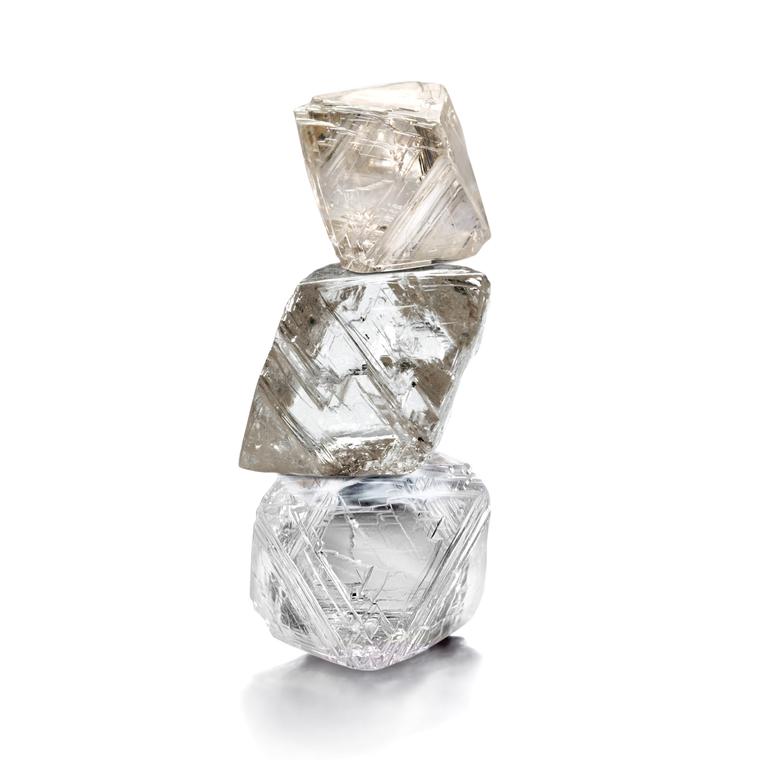
His outlook for the industry is pragmatic: lab-grown diamonds will become the default for mass-market engagement jewellery, while natural diamonds will retreat into an exclusive, highly branded luxury category. This is already visible on the ground; London’s Hatton Garden, a historic hub of the diamond trade, reports that 70% of its current engagement ring sales are lab-grown.
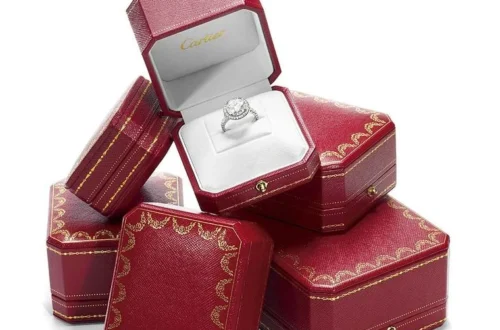
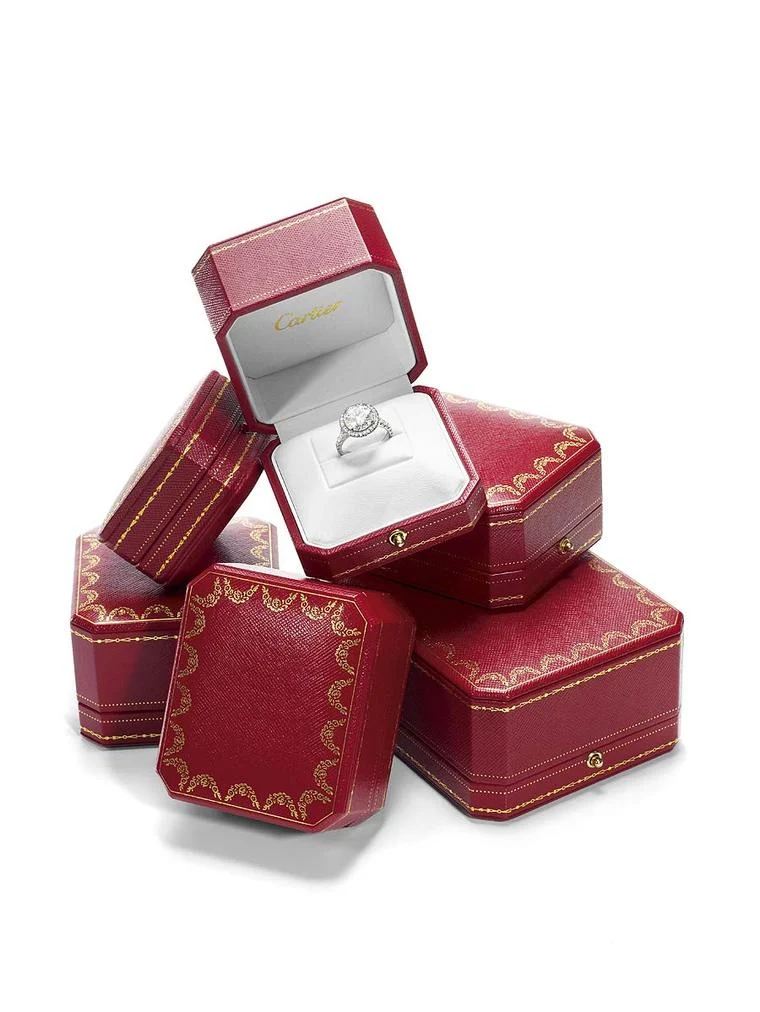
However, the natural diamond industry is fighting back. The World Jewellery Federation (CIBJO) is lobbying for the classification of lab-grown stones as "synthetic" to create a stronger psychological distance between the two categories. Meanwhile, major luxury houses like Cartier and Tiffany & Co. are doubling down on the prestige of the "natural" label, using rigorous, transparent sourcing as a shield against the influx of affordable, factory-produced stones.
The Mining Crisis: Scarcity as a Strategy
If the lab-grown sector is grappling with the challenges of oversupply, the mined diamond industry is responding with a strategy of managed contraction.
The mid-2026 industry reports are sobering. Rio Tinto’s Diavik mine in Canada’s Northwest Territories ceased production in March after 23 years and 150 million carats of output. The neighbouring Ekati mine filed for insolvency earlier in the year. Alrosa, the world’s largest producer by volume, reported losses of $129 million in the first half of 2026, with CEO Pavel Marinychev describing the sector as being in its "deepest crisis in history."
Even in Botswana, where diamonds provide one-third of the national revenue, export earnings have dropped by nearly 30%. While mining giant Debswana is attempting to stabilize output at 18 million carats—up from a recent low but still well below the 24-million-carat pre-downturn levels—the industry is clearly shrinking.
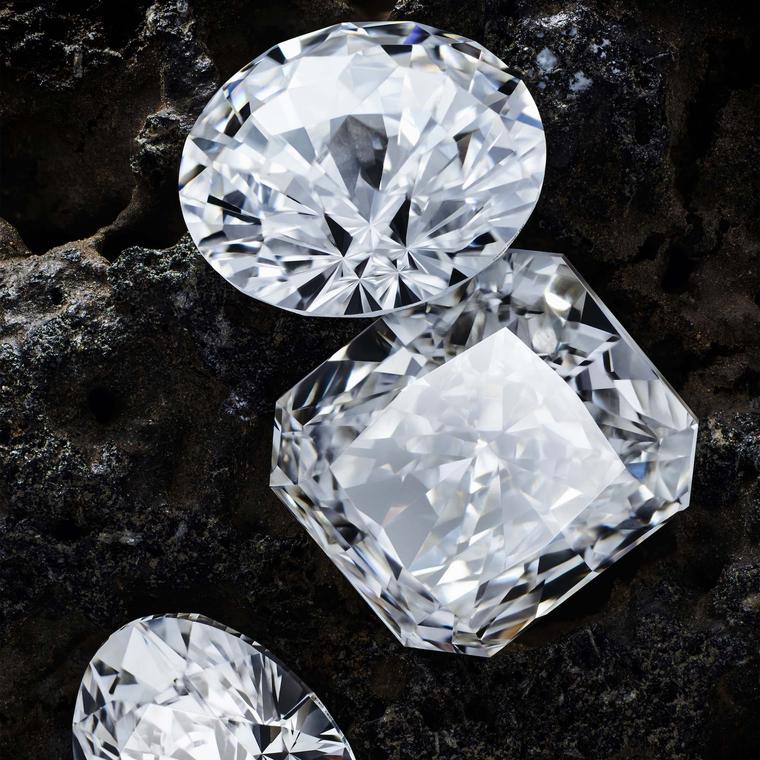
Analyst Paul Zimnisky suggests this "discipline" is finally putting a floor under rough diamond prices. For the first time since March 2025, the polished diamond index has seen positive movement, suggesting that if production cuts continue, the current market surplus could turn into a supply shortage by 2027 or 2028.
The "Third Way": The Rise of Vintage
Amidst this conflict, a quiet beneficiary has emerged: the vintage jewellery market. As buyers grow weary of the "lab versus natural" debate, they are turning to the past.
Nick Withington, CEO of the British jeweller William May, notes that Google searches for vintage jewellery have increased tenfold year-on-year. For many consumers, an Art Deco engagement ring offers a "third way" that bypasses the ethical and economic debates of the modern market. Vintage pieces possess proven craftsmanship, distinct character, and a carbon footprint of zero, as no new ore is being extracted. It is an investment in history rather than a gamble on the depreciating value of a mass-produced modern stone.
Implications for the Future: What You Need to Know
For the contemporary buyer, the landscape has never been more confusing—or more opportunistic. The "diamond" is no longer a monolith; it is a choice between three distinct value propositions:
- The Lab-Grown Choice: If your priority is size, brilliance, and value for money, the lab-grown diamond is the rational, modern choice. Do not buy these with the expectation of resale value; buy them for the design, the aesthetic, and the immediate satisfaction of the piece.
- The Natural Choice: If you choose a natural diamond, you are buying into a narrative of rarity, geological history, and long-term brand heritage. Buy for provenance and exceptional quality. Understand that you are paying for the "story" and the scarcity, as the "middle-of-the-road" 1-carat stone is increasingly difficult to justify in an age of high-quality, low-cost alternatives.
- The Vintage Choice: For the buyer seeking sustainability, uniqueness, and artistic merit, the vintage market is currently the most compelling sector. It avoids the factory-floor commoditization of modern diamonds and the environmental cost of new mines.
Ultimately, the power of the diamond is shifting away from the stone itself and toward the house that sells it. Whether it is a lab-grown house like Astrea London—which is successfully targeting new demographics with high-design, high-value pieces—or a legacy heritage house emphasizing its "natural" supply chain, the future belongs to those who can sell a dream that the consumer finds meaningful. The material no longer confers value on its own; in 2026, value must be earned through transparency, design, and a coherent, honest story.