Published on August 23, 2026
The future of urban transportation is no longer a distant sci-fi projection; it is rapidly taking physical form on rooftops, testing grounds, and purpose-built terminals across the globe. While the past decade of Advanced Air Mobility (AAM) was defined by aerodynamic designs, battery chemistry breakthroughs, and regulatory certification hurdles for electric vertical takeoff and landing (eVTOL) aircraft, the battleground has shifted. Today, the defining question of the electric aviation revolution is no longer just how we will fly, but where we will land.
As aerospace startups transition from prototype testing to commercial launch, the global race for ground infrastructure has officially accelerated. From mega-terminals in the Middle East to retrofitted helipads in Southern California and state-backed testing facilities in the United States, the blueprint for the skies of tomorrow is being anchored firmly to the earth.
Main Facts: The Groundwork of the Electric Aviation Revolution
The infrastructure supporting the AAM sector represents a multi-billion-dollar puzzle, requiring coordination between municipal governments, real estate developers, aviation authorities, and fleet operators.
The most monumental milestone in this domain occurred in July 2026, when Dubai officially opened the world’s first purpose-built eVTOL vertiport. Developed collaboratively by Skyports Infrastructure and Dubai’s Roads and Transport Authority (RTA), the facility spans an impressive 33,400 square feet. It is not merely a landing pad, but a fully integrated transit hub featuring a modern passenger terminal, flight operations control rooms, two dedicated takeoff-and-landing pads, and Joby Aviation’s Global Electric Aviation Charging System.
Engineered for high-volume urban transit, Dubai’s flagship vertiport is designed to handle an astonishing 170,000 passengers and 42,000 aircraft movements annually. It stands as a testament to the Emirati city’s aggressive bet on the future of urban flight, with plans for three additional vertiports already underway to form a comprehensive city-wide network.
However, building multi-million-dollar mega-terminals from scratch is not the only path forward. Across the globe, industry leaders are employing a two-track strategy: constructing greenfield mega-hubs where capital and municipal backing allow, while simultaneously retrofitting existing helicopter infrastructure for brownfield integration. This dual approach aims to slash time-to-market, reduce initial capital expenditure, and capture the early-adopter luxury and commuter markets hungry for relief from urban gridlock.
Chronology of AAM Infrastructure Development
To understand how the industry reached this pivotal juncture in 2026, it is helpful to trace the rapid evolution of the AAM infrastructure timeline over the past several years:
- 2020–2022 (The Design Phase): Focus centers almost entirely on eVTOL vehicle design, battery density, and initial flight testing. Infrastructure discussions are largely theoretical, confined to academic papers and regulatory whitepapers by the Federal Aviation Administration (FAA) and the European Union Aviation Safety Agency (EASA).
- 2023–2024 (Regulatory Frameworks & Testbeds): Early partnerships form between infrastructure developers like Skyports and urban transit authorities. Specialized testbeds emerge, such as Florida’s SunTrax testing campus, which begins constructing dedicated vertiport environments to evaluate ground-handling procedures and noise footprints.
- 2025 (The Retrofit Wave): Industry executives realize that building new greenfield vertiports in dense urban cores is hindered by lengthy zoning approvals and real estate costs. Attention shifts rapidly toward upgrading existing heliports with heavy-duty electric charging grids. Real estate developers begin integrating air-taxi infrastructure into luxury residential blueprints.
- July 2026 (The Dubai Milestone): Dubai opens the world’s first purpose-built, commercial-grade eVTOL vertiport, setting a global benchmark for what high-capacity urban air mobility hubs will look like.
- August 2026 and Beyond (Network Expansion): Government entities ramp up national airspace integration efforts—exemplified by the FAA and Department of Transportation (DOT) breaking ground on an AAM research facility in Oklahoma City. Real estate projects, such as Park Elm Residences in Los Angeles, begin marketing on-site vertiports as the ultimate luxury amenity.
Supporting Data and Economic Realities
The economic viability of electric air taxis hinges heavily on passenger throughput, operational turnaround times, and the strategic placement of vertiports in zones characterized by severe transportation "friction."

Industry experts point to high-density urban centers—such as Manhattan and Los Angeles—as well as congested resort regions like the South of France, as prime markets. In these areas, severe road congestion and challenging geographic terrain create a high tolerance for premium pricing among affluent travelers looking to bypass ground traffic.
- Capacity Metrics: Dubai’s flagship vertiport is engineered for a throughput of 170,000 passengers and 42,000 annual aircraft movements, illustrating the industrial scale required for future mass transit.
- Infrastructure Investment Costs: While retrofitting existing helipads with electric chargers requires a fraction of the capital of a greenfield development, purpose-built terminals featuring private lounges, security clearance checkpoints, and baggage-handling systems demand significant long-term real estate investments.
- State and Federal Backing: In the United States, states like Florida have already established multiple vertiports at specialized testing grounds like SunTrax, laying the groundwork for intrastate networks connecting major metropolitan hubs. Meanwhile, federal agencies are investing heavily in air traffic management research to ensure safe integration.
Official Responses and Industry Perspectives
The transition from concept to concrete has elicited strong reactions from aviation executives, real estate visionaries, and regulatory bodies alike.
Rob Wiesenthal, founder and CEO of Blade Air Mobility, has been a vocal proponent of pragmatism in infrastructure rollout. According to Wiesenthal, attempting to build brand-new, purpose-built vertiports in every city from day one is inefficient. Instead, he views upgrading select, existing heliports with robust electric charging systems as the absolute quickest route to market launch.
"People are looking for not just a condo," explains Jordana Yechiel, director of residential design at Reuben Brothers, highlighting the lifestyle shift accompanying these developments. "They’re looking for a lifestyle."
This sentiment is reflected in high-end real estate projects like the Park Elm Residences at Century Plaza in Los Angeles. Rather than treating aviation as an external transit mode, developers are aggressively pulling it into the residential ecosystem. By converting an existing on-site heliport into a Joby-compatible vertiport complete with a dedicated Blade lounge, properties are redefining luxury living. High-net-worth buyers can step out of their penthouse, clear private security on-site, and board an electric aircraft without ever stepping foot on a congested Los Angeles freeway.
On the regulatory and governmental side, safety and airspace integration remain paramount. The collaboration between the FAA, the DOT, and research centers in Oklahoma City underscores the government’s commitment to ensuring that the influx of thousands of autonomous and piloted eVTOL aircraft does not overwhelm existing commercial and general aviation traffic corridors.
Implications for the Future of Urban Mobility
As the dust settles on early vehicle certification races, the long-term implications of the infrastructure bottleneck are becoming crystal clear.
- Real Estate Transformation: Premium real estate will increasingly be valued by its proximity to—or direct integration with—AAM infrastructure. Commercial office spaces, luxury hotels, and high-end residential towers that feature approved landing zones and charging capabilities will enjoy a distinct competitive advantage.
- Zoning and Municipal Policy: City planners face unprecedented pressure to draft zoning laws that accommodate low-altitude noise, visual pollution mitigation, and safe pedestrian flow around vertiports. Municipalities that proactively embrace vertiport zoning will likely become early economic beneficiaries of the green aviation boom.
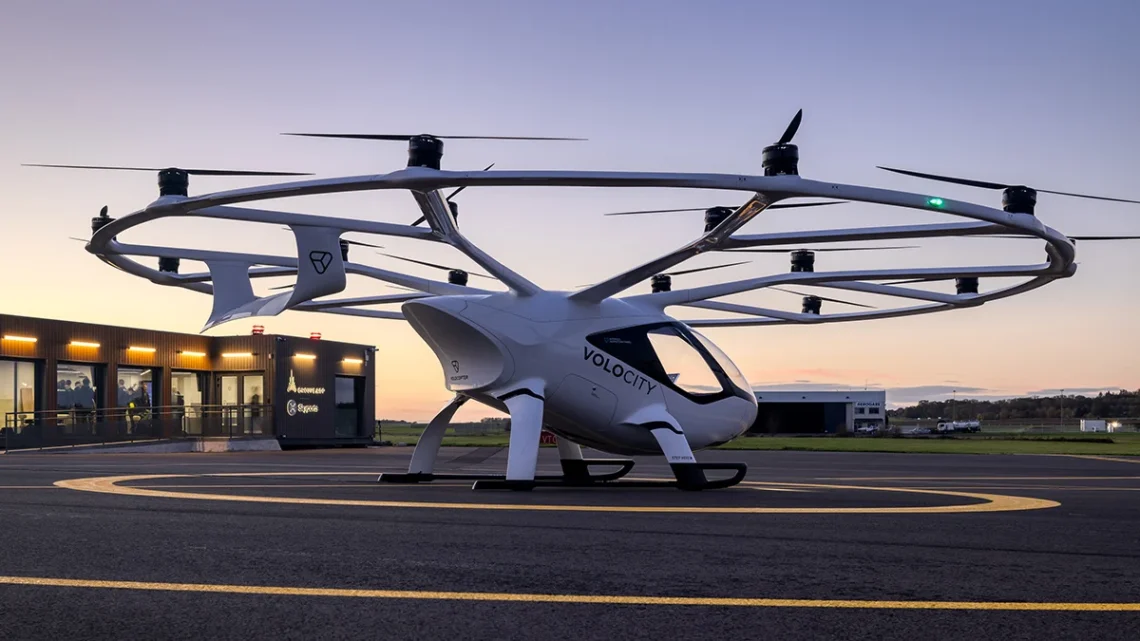
- The New Competitive Frontier: As battery technology and aircraft designs mature across multiple competing manufacturers (such as Joby, Volocopter, and Archer), the aircraft itself risks becoming a commodity. The true competitive advantage—and the ultimate driver of market share—will belong to the companies and networks that control the best real estate and the most strategically located landing spots.
Ultimately, the sky may be wide open, but the future of electric aviation will be decided entirely on the ground.