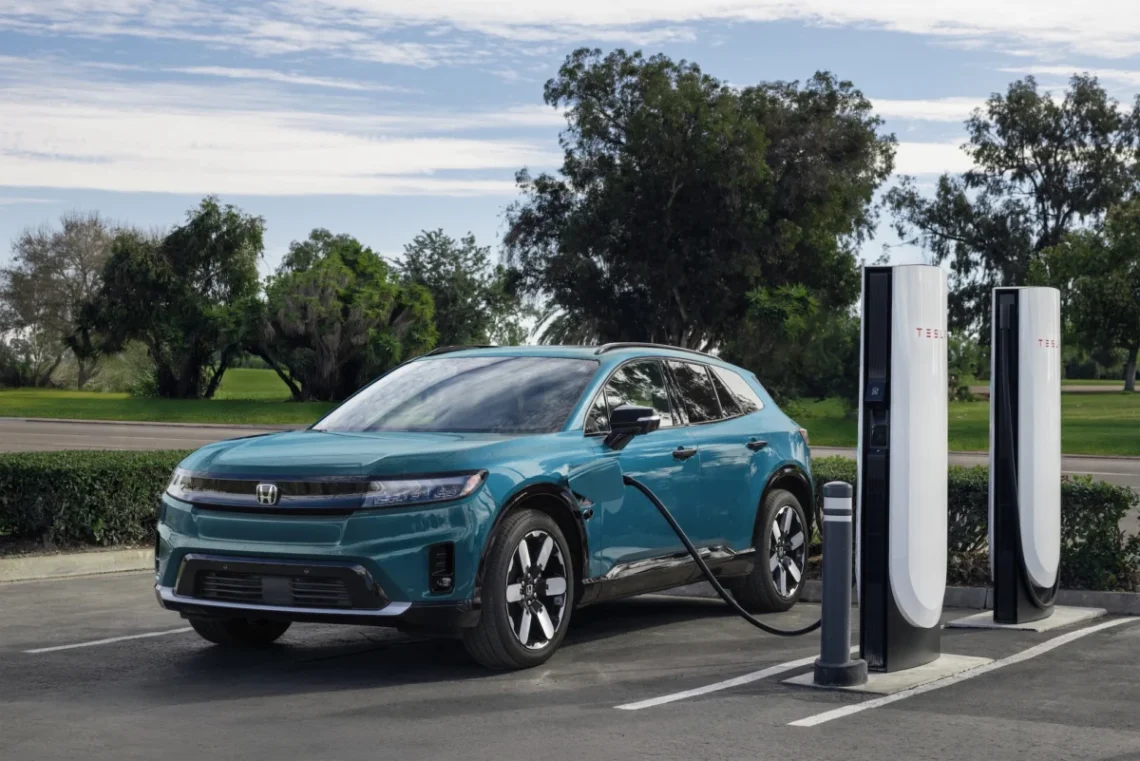
The landscape of the American automotive industry is undergoing a seismic shift. For years, the narrative in Detroit, Tokyo, and Seoul was one of an inevitable, electrified future. Today, that narrative has been replaced by a cautious—and in many cases, aggressive—retreat. The official confirmation that the Honda Prologue is being discontinued serves as the latest milestone in a growing trend of automakers pulling the plug on electric vehicle (EV) models in the United States.
As the last all-electric vehicle exits Honda’s U.S. portfolio, the move highlights a broader, uncomfortable reality: the American EV market is bifurcating from the rest of the world. While global markets continue to embrace electrification, the U.S. is experiencing a period of intense contraction, driven by shifting federal incentives, geopolitical tensions, and a fundamental reassessment of consumer demand.
The Factors Behind the Withdrawal
The demise of the Honda Prologue is not an isolated event; it is a symptom of a systemic "winnowing" occurring across the industry. Several key drivers have coalesced to create this environment:

- The Expiration of Federal Incentives: The sunsetting of the $7,500 federal tax credit in late 2025 acted as a massive vacuum, sucking momentum out of the EV sector. For many price-sensitive consumers, the credit was the primary bridge to affordability.
- Regulatory and Geopolitical Friction: Tariffs and trade policies regarding "connected vehicle technology" have created a minefield for manufacturers, particularly those with deep supply chain ties to China.
- The Pivot to Hybridization: As the "EV hype cycle" cools, many automakers are pivoting back to their bread-and-butter: internal combustion engines and hybrid vehicles, which offer higher margins and face less resistance from the average American buyer.
- Strategic Realignment: Companies are increasingly prioritizing autonomous systems, robotics, and AI over the commoditized EV market, viewing the latter as a low-margin, high-competition environment.
The Data: A Market in Search of Equilibrium
According to data released by Kelley Blue Book and Cox Automotive, the second quarter of 2026 saw 247,226 EVs sold in the United States, accounting for approximately 5.8% of the total automotive market. While this represents a modest recovery from the first quarter of 2026, the year-over-year comparison is sobering. EV sales in Q2 2026 were 20.5% lower than in the same period in 2025, a year that was already struggling under the weight of the expiring tax credit.
This decline is not just a statistical blip; it reflects a contraction in choice. As models are discontinued without direct replacements, the "barrier to entry" for potential EV buyers rises, creating a negative feedback loop that manufacturers are currently unwilling to break.
Chronology of an Industry Pivot
The following list outlines the significant departures from the U.S. EV market during 2026—a year that will likely be remembered as the "Great Correction."

Afeela: The "Vaporware" Casualty
Perhaps the most notable absence is the Afeela. Born from a high-profile joint venture between Sony and Honda, the project was announced at CES 2020 as the "Vision S." Despite a massive marketing blitz and a presence at major tech events like TechCrunch Disrupt, the Afeela never reached the assembly line. In March 2026, the venture was officially shuttered, marking a quiet end to one of the most ambitious tech-meets-auto experiments of the decade.
Honda and Acura: The "Series 0" Abandonment
Honda’s retreat has been particularly aggressive. Beyond the Prologue, the company canceled its entire "0 Series" lineup—including the much-anticipated Saloon and Space-Hub concepts—in March 2026. The company cited intense Chinese competition and U.S. tariff structures as the primary reasons for abandoning its high-tech EV hub in Ohio.
Hyundai: Navigating the Tariff Wall
Hyundai has been a success story in the U.S. EV market, but even they are feeling the pressure. The company announced in March 2026 that it would cease sales of the Ioniq 6 in the U.S. market. Because the Ioniq 6 is manufactured in South Korea, it became a prime target for import costs. Hyundai continues to prioritize its Georgia-based production for the Ioniq 5 and Ioniq 9, signaling that local manufacturing is the only viable path forward.

Nissan: The End of the Ariya
Nissan, an early pioneer of the mass-market EV with the Leaf, has decided not to produce a 2026 model year for the Ariya SUV. The vehicle, which was meant to be the flagship of Nissan’s modern electric era, has been quietly sidelined as the company shifts its focus.
Polestar: Caught in the Crosshairs
Polestar, the Swedish brand backed by China’s Geely, faces a unique challenge. Recent U.S. administration policies targeting "Chinese-connected vehicle technology" have effectively barred the brand from selling new models in the U.S. without specific, difficult-to-obtain authorization. While the company will continue to service existing vehicles, its future in the American market remains in significant doubt.
Tesla: From Cars to Robots
Tesla’s decision to kill the Model S and Model X in early 2026 represents a philosophical shift. CEO Elon Musk has publicly stated that the company’s future lies in AI, autonomy, and humanoid robotics (the Optimus program). By clearing the assembly lines at the Fremont, California plant, Tesla is essentially betting that the era of the high-end electric sedan is over, favoring the "Cybercab" and future autonomous platforms.

Volkswagen: The Return to the SUV
Volkswagen’s retreat from the ID.4 is a strategic pivot to its more profitable gas-powered SUV lineup, such as the Atlas. While the iconic ID. Buzz is currently on hiatus, the company’s focus has shifted to testing autonomous microbuses for robotaxi services in Los Angeles, signaling a move toward "Mobility as a Service" rather than individual vehicle ownership.
Volvo: Focusing on the Premium Tier
Volvo has curtailed its entry-level EV ambitions, pulling the EX30 and EX30 Cross Country from the U.S. market. The company has opted to focus on the higher-margin EX60 and EX90, suggesting that for foreign automakers, the U.S. market is only viable if the vehicles are positioned as premium luxury goods.
Implications for the American Consumer
The primary implication of these withdrawals is a reduction in diversity within the EV market. As automakers consolidate their offerings to only the most profitable models, the "affordable EV" (a vehicle priced under $35,000) is rapidly disappearing.

Furthermore, this trend suggests that the American automotive industry is becoming increasingly isolated. While Europe and China continue to refine their EV ecosystems through competition and government mandates, the U.S. is effectively retreating into a legacy-tech shell. This creates a risk of long-term obsolescence, as domestic automakers may lose the competitive edge required to innovate in the global, electrified economy of the 2030s.
The Road Ahead: Is a Recovery Possible?
Despite the gloom, the market is not dead. Companies like Rivian, with its upcoming R2 platform, are still attempting to capture the middle-market buyer. However, the recovery will likely be slow and uneven.
For the U.S. market to stabilize, several things must happen:

- Infrastructure Maturity: The charging network must reach a level of reliability that matches the convenience of gas stations.
- Manufacturing Localization: To circumvent tariffs and trade wars, companies must commit to full-scale, localized manufacturing in North America.
- Technological Maturity: The pivot toward autonomous technology must eventually translate into tangible, consumer-facing benefits that justify the high cost of development.
In the final analysis, the death of the Honda Prologue and the mass departure of these models serve as a "reset button." The industry is shedding its over-optimistic projections and preparing for a much harder, more pragmatic path. For the consumer, this means fewer choices today, but perhaps a more sustainable, albeit different, landscape tomorrow. The question remains whether American automakers can pivot quickly enough to avoid being left behind as the rest of the world drives into the electric future.