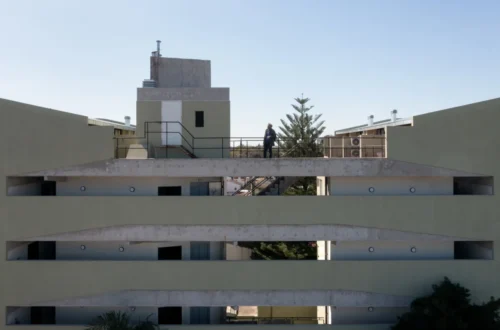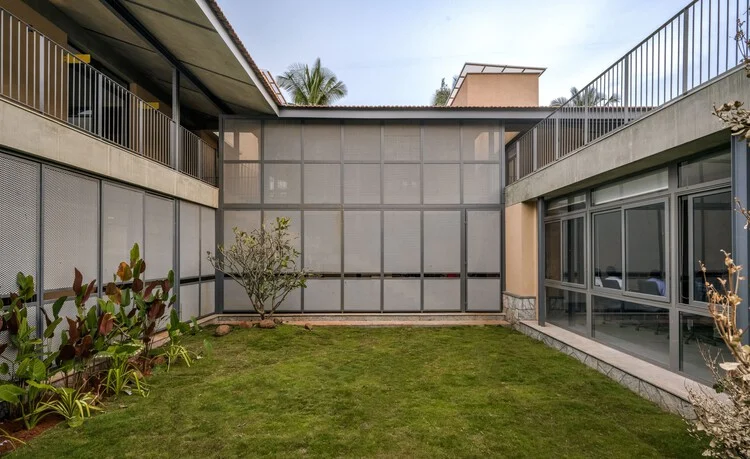
By Architectural Review Desk
Published: November 2026
Main Facts
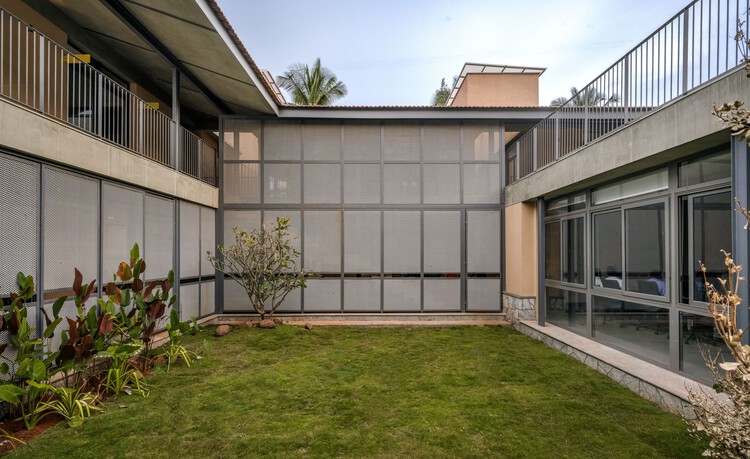
In an era where public safety infrastructure is historically synonymous with imposing facades, high concrete walls, and psychological intimidation, a radical new project on the outskirts of Bangalore is rewriting the rules of civic design. The "Police Station for the People," conceived and executed by the multidisciplinary architecture firm STUDIO MOTLEY, is a masterclass in community-centric institutional architecture.
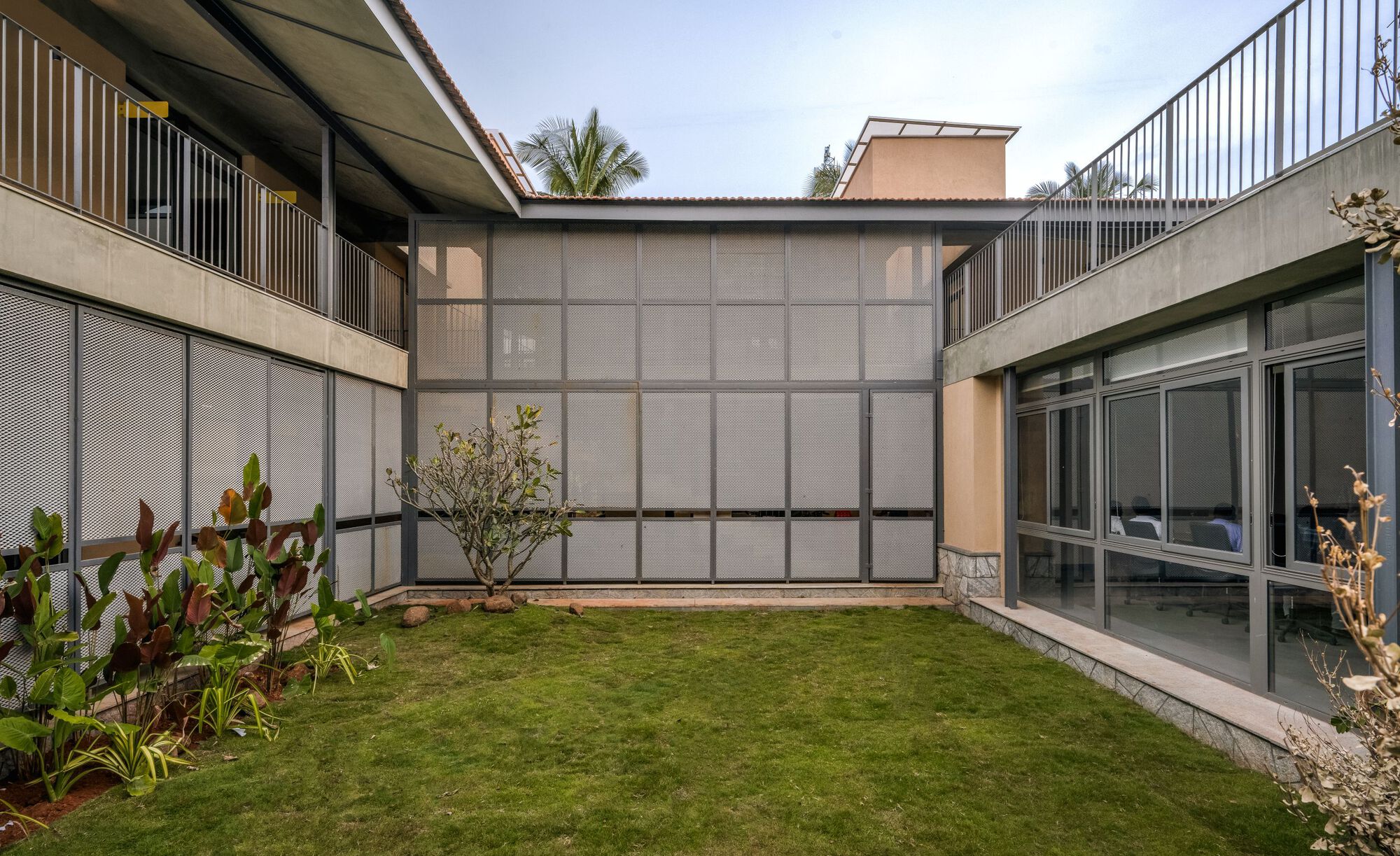
Located in Devanahalli—a historically rich, 500-year-old town on the periphery of India’s Silicon Valley—the project breaks away from traditional law enforcement typologies. Commissioned with a deceptively simple yet profoundly challenging brief by the local Additional Commissioner—"Build us a Police Station that people don’t find intimidating"—the architects set out to humanize a building type traditionally feared and avoided by the general public.
Spanning an innovative spatial layout that blends raw concrete, warm timber, interior courtyards, and accessible garden landscapes, STUDIO MOTLEY has successfully transformed a place of bureaucratic authority into a welcoming, transparent public hub. Captured through the lens of MKG Studio, the structure utilizes natural light, porous boundaries, and human-scaled interiors to foster a sense of trust, openness, and accessibility between law enforcement officers and the citizens they protect.
Chronology: From Concept to Completion
The journey of the Devanahalli Police Station from an ambitious municipal idea to a built reality reflects a careful, phased progression of design thinking, community analysis, and architectural execution.
- The Initial Vision (Early Conception): The project originated from a progressive directive issued by the Additional Commissioner of Police. Recognizing a growing disconnect between law enforcement agencies and the civilian population, the leadership sought an architectural intervention that could bridge the psychological gap. The leadership approached STUDIO MOTLEY with a clear mandate: dismantle the visual language of fear associated with police stations.
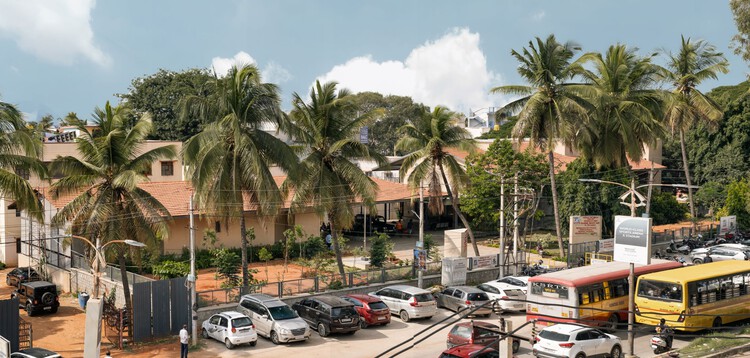
- Site Selection and Contextual Analysis (Devanahalli): STUDIO MOTLEY selected a strategic site in Devanahalli. Known for its rich historical background—dating back over five centuries and best known as the birthplace of Tipu Sultan—the town presents a unique mix of ancient heritage and rapid modern expansion due to its proximity to the Kempegowda International Airport. The architects spent months studying the local climate, vernacular building traditions, and the daily movements of the townspeople to ensure the building would fit seamlessly into the urban fabric.
- Design Development and Prototyping: Moving away from the fortress-like blueprints typical of civic structures, the design team developed a layout centered around transparency and natural ventilation. Incorporating transitional thresholds, interior gardens, and accessible public waiting zones, the blueprints were refined to balance strict security requirements with an open, welcoming aesthetic.
- Construction and Materiality: Ground was broken using a restrained material palette dominated by board-marked concrete, natural wood finishes, and lush greenery. The construction phase prioritized sustainable building practices, maximizing passive cooling strategies suited to South India’s semi-arid climate.
- Completion and Public Unveiling (November 2026): The completed station opened its doors, drawing immediate international acclaim from urban planners, sociologists, and architectural critics for successfully reimagining the role of municipal buildings in contemporary democratic societies.
Supporting Data and Architectural Breakdown
To understand how STUDIO MOTLEY achieved such a radical transformation, one must examine the specific spatial, material, and environmental metrics of the project.
Spatial Organization and Porosity
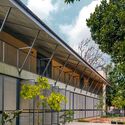
Traditional police stations rely on a panoptic, hierarchical layout that segregates the public into tightly controlled, often hostile holding or waiting areas. In contrast, STUDIO MOTLEY’s design implements a decentralized spatial strategy:
- The Welcome Threshold: Rather than confronting visitors with high metal gates and guarded checkpoints, the entrance features a transitional landscape buffer that gently guides citizens inward.
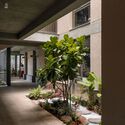
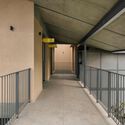
- Courtyards as Light Wells: Multiple internal courtyards punctuate the floor plan. These gardens not only flood the administrative and holding areas with natural daylight and cross-ventilation—drastically reducing mechanical cooling loads—but also serve as psychological decompression zones for both officers and civilians.
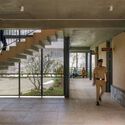
- Human Scale: Ceiling heights, corridor widths, and communal gathering spaces were calibrated to evoke the feel of a community center or a municipal library rather than a punitive institution.
Materiality and Craftsmanship
The tactile experience of the Devanahalli Police Station plays a crucial role in lowering visitor anxiety:
- Raw Concrete and Warm Wood: The structural skeleton utilizes exposed, board-marked concrete that offers an honest, durable, and low-maintenance finish. This industrial rigor is softened by extensive use of sustainably sourced timber for handrails, ceiling accents, and furniture.
- Biophilic Design: Integrated greenery acts as a living buffer. Planters and interior gardens soften the hard architectural lines, filtering air and introducing a calming natural element into high-stress environments.
Official Responses and Stakeholder Perspectives
The project has generated significant dialogue within both municipal governance circles and architectural communities, challenging long-held assumptions about how public security spaces should be designed.
The Visionary Mandate
Reflecting on the initial conversation that sparked the project, the commissioning Additional Commissioner noted:
"For decades, the architecture of law enforcement has communicated dominance and separation. We realized that if we want communities to actively engage with the police, to report crimes without fear, and to view officers as public servants rather than overlords, the physical environment must reflect that ethos. We didn’t want a bunker; we wanted a civic anchor."
The Architect’s Perspective
Speaking on behalf of STUDIO MOTLEY, the lead design team emphasized the delicate balancing act required to design a secure facility that remains visually and psychologically accessible:
"Designing a police station is a profound test of empathy. Security is non-negotiable, but oppression is a choice of design. By introducing courtyards, natural light, and porous public zones, we proved that safety and hospitality are not mutually exclusive. This building listens before it speaks."
Implications for Future Civic Architecture
The completion of the Devanahalli Police Station marks a potential turning point for institutional design across South Asia and beyond. Its success carries several broad implications:
1. Rehumanizing Public Institutions
For too long, government buildings—ranging from tax offices to police stations—have been designed to intimidate the populace. The STUDIO MOTLEY project demonstrates that public buildings can project dignity and order through craftsmanship and spatial clarity rather than through intimidation and fortification.
2. Climate-Responsive Civic Spaces
By integrating traditional South Indian courtyard typologies into a modern governmental facility, the project sets a benchmark for sustainable public architecture. The heavy reliance on passive cooling, natural daylighting, and local landscaping drastically lowers the carbon footprint of the building compared to glass-and-steel high-rises that demand intensive HVAC systems.

3. Fostering Community Trust Through Design
Architecture possesses a silent psychology. When citizens enter a space that feels open, light-filled, and respectful of human dignity, their baseline anxiety decreases. In the context of law enforcement, this spatial openness encourages greater civic participation, smoother reporting processes, and a healthier relationship between the community and the state.
As cities continue to expand globally, the "Police Station for the People" stands as a powerful reminder that the best architecture does not merely shelter functions—it elevates human behavior, reshapes social dynamics, and builds enduring trust.