
By Koffi Alle | July 17, 2026
WASHINGTON, DC – In a move that signals a seismic shift in Africa’s economic trajectory, Nigerian industrialist and continent-topping billionaire Aliko Dangote is reportedly in advanced negotiations to replicate the success of his landmark Lekki refinery project. Following the operational triumph of his mega-refinery in Nigeria, Dangote is now setting his sights on East Africa, seeking to establish a second massive industrial hub that would mirror the model of domestic value addition that has redefined Nigeria’s energy landscape.
This potential expansion is not merely a corporate milestone; it represents a strategic departure from the traditional colonial-era economic model, where African nations exported raw commodities only to re-import finished, high-cost goods. By championing local refinement and regional integration, the Dangote model is positioning itself as a blueprint for Africa’s industrialization.
The Genesis of a Mega-Refinery: Main Facts and Current Status
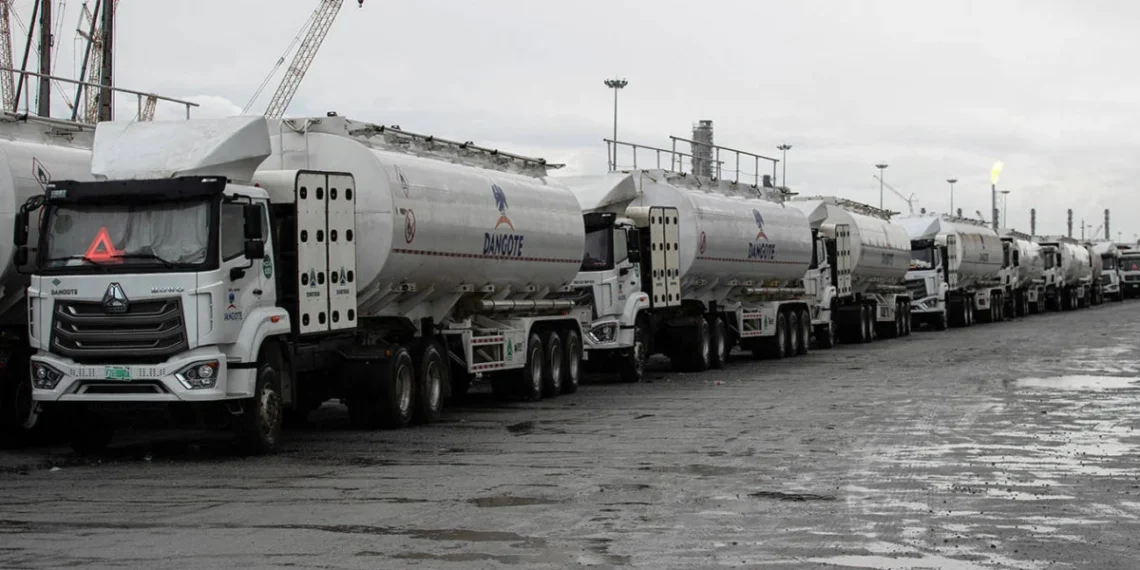
The Dangote Refinery in Lekki, Lagos, has transformed from a ambitious concept into a foundational pillar of the Nigerian economy. Boasting a massive single-train crude-processing capacity of 700,000 barrels per day (bpd), the facility stands as the largest of its kind in the world. Since becoming fully operational in 2024, the refinery has effectively recalibrated the internal supply chain of petroleum products, including diesel, gasoline, and aviation jet fuel.
For decades, Nigeria—despite being one of the world’s leading oil producers—was paradoxically reliant on imported petroleum due to the decay of its state-owned refining infrastructure. The Lekki facility has effectively closed this gap, fostering energy security and insulating the national economy from the extreme volatility of international fuel markets.
Now, the focus shifts to East Africa. Sources close to the negotiations suggest that Dangote is engaging with a consortium of East African governments to identify a strategic location that would serve as a logistical gateway to the Indian Ocean and the broader East African Community (EAC) market.
Chronology: A Trajectory of Industrial Ambition
The path to the current East African negotiations is paved with a decade of meticulous planning and overcoming formidable systemic hurdles:
- 2013–2016 (Conceptualization & Planning): Aliko Dangote announces the ambitious plan to build a private refinery. Critics initially dubbed the project “unfeasible” due to the scale of capital expenditure required and the historical failure of public sector refineries in Nigeria.
- 2017–2021 (Construction & Engineering Marvels): Construction begins in the Lekki Free Trade Zone. The project faces multiple delays, including global supply chain disruptions during the COVID-19 pandemic and complex logistical hurdles in transporting heavy-duty equipment to the site.
- 2023 (Mechanical Completion): The refinery achieves mechanical completion. Global energy experts turn their eyes to Nigeria as the facility prepares for the complex commissioning phase.
- 2024 (Operational Launch): The facility begins full-scale refining, marking the first time in over two decades that Nigeria has produced high-grade petroleum products at such a massive, consistent scale.
- 2025 (Regional Strategy): Dangote begins touring East African capitals, including Nairobi, Dar es Salaam, and Kampala, to explore the feasibility of a second refinery designed to serve the landlocked nations of the Great Lakes region.
- July 2026 (The Announcement): Formal talks are confirmed as the industrialist seeks to leverage the African Continental Free Trade Area (AfCFTA) framework to facilitate regional cooperation.
Supporting Data: Why Value Addition Matters
The economic logic underpinning the Dangote model is backed by compelling data. Africa possesses roughly 10% of the world’s oil reserves, yet the continent imports over 80% of its refined fuel requirements. This "value-addition gap" costs African economies billions in foreign exchange annually and leaves them vulnerable to currency devaluation and imported inflation.
Key Economic Indicators:
- Capacity: 700,000 bpd (Lekki facility).
- Energy Security: The refinery serves as a hedge against the price volatility that has historically crippled African manufacturing.
- Trade Balance: By shifting from a raw-material exporter to a refined-product manufacturer, Nigeria has seen a marked improvement in its trade balance, reducing the strain on the Naira.
- Job Creation: The project has created over 30,000 direct jobs during the construction phase and sustains thousands of downstream positions in logistics, maintenance, and retail.
The proposed East African project is expected to follow a similar pattern, potentially targeting a throughput of 200,000 to 400,000 bpd, optimized to serve the growing infrastructure and transport needs of the EAC, which currently struggles with long, expensive supply lines from the coast to the interior.
Official Responses and Stakeholder Sentiment
The reaction from African policymakers has been overwhelmingly positive, though marked by the caution required for such massive cross-border investments.
The East African Perspective:
Government officials in the region have expressed keen interest in the potential for “Industrial Cooperation Agreements.” A spokesperson for an EAC trade ministry noted, “The challenge has always been the high cost of energy. If we can refine crude regionally, we cut transport costs by 30-40%. Mr. Dangote’s proposal aligns with our regional integration goals under the AfCFTA.”
The Private Sector View:
Economists are praising the move as a shift from “extractivism to industrialization.” Dr. Elena Mbeki, a regional trade analyst, remarked: “What Dangote is doing is essentially building an industrial ecosystem. It is not just about the refinery; it is about the pipelines, the ports, and the ancillary industries that sprout around such a massive investment. This is the definition of sovereign economic development.”
Corporate Stance:
Representatives from the Dangote Group have maintained a disciplined silence on the specifics of the contracts, emphasizing that the focus remains on "creating shared value." In a recent briefing, a company executive stated: "Our strategy is simple: Africa must stop exporting jobs and start importing finished goods. We have proven that the model works in the West; it is time to replicate that success in the East."
Implications: The Road Ahead for African Industrialization
The potential expansion into East Africa is not without its risks. The success of this venture depends on several critical factors:
1. Political Stability and Regulatory Harmonization
Unlike a single-country project, a multi-nation East African refinery requires a high degree of regulatory alignment. Nations will need to harmonize tax codes, cross-border energy tariffs, and environmental regulations to ensure the refinery can operate as a single, cohesive entity across borders.
2. Infrastructure Connectivity
The refinery will be useless without a robust pipeline network. The investment will necessitate a massive upgrade in regional rail and pipeline infrastructure, which is already a focus of several East African development banks.
3. The AfCFTA Catalyst
The African Continental Free Trade Area (AfCFTA) provides the legal framework that makes this project viable. Without the reduction of trade barriers, the project would be hampered by prohibitive tariffs. Dangote’s move is, in many ways, the first real-world test of whether the AfCFTA can facilitate large-scale, cross-border industrial integration.
4. Energy Transition Paradox
While the world pushes for a green transition, the reality for East Africa is that current economic growth is still heavily tethered to hydrocarbon-based transport and energy. Dangote’s project must account for the long-term shift toward renewables. Analysts suggest that the facility is being designed with "future-proofing" in mind, allowing for the eventual integration of petrochemical production—which will remain essential for plastics, fertilizers, and pharmaceuticals—rather than relying solely on combustible fuels.
Conclusion: A Paradigm Shift in Leadership
The narrative of Aliko Dangote’s expansion is more than a story of corporate growth; it is a narrative about the maturation of African leadership. For too long, the continent has operated under a business model defined by external interests. By investing in the continent’s own natural resources, refining them locally, and selling them within regional markets, Dangote is effectively redefining what it means to be a global African industrialist.
If the East African project succeeds, it will prove that the "Dangote Model" is not a fluke of the Nigerian market, but a scalable framework for the entire continent. African leaders should look closely at this strategy: it is not just about building refineries; it is about building the infrastructure of sovereignty. As the negotiations proceed, the world will be watching to see if East Africa can rise to the occasion and provide the environment necessary for this industrial revolution to take root.
In the final analysis, the success of Africa in the 21st century will not be measured by its ability to export raw oil, but by its ability to power its own cities, fuel its own transport, and build a self-sustaining industrial base that serves its own people first. Aliko Dangote is providing the engine for that transformation—the rest is up to the architects of regional policy.