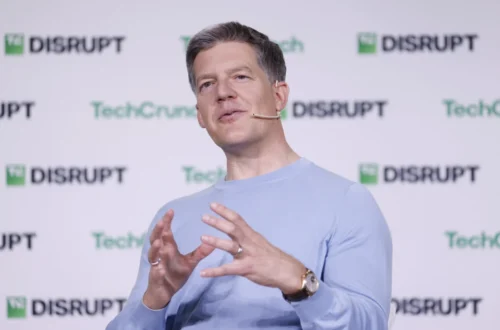

In late May, during the hum of a vibrant tech festival in Athens, Neil Rimer—the co-founder of the powerhouse venture firm Index Ventures—articulated a sentiment that has since echoed through the boardrooms of Sand Hill Road. Discussing the unprecedented accumulation of capital surrounding the artificial intelligence boom, Rimer offered a stark prophecy: “I have a strong sense that there will be some sort of a redistribution. It’ll either be voluntary or it’ll be involuntary, but it’ll happen, and I hope it’s voluntary.”
Coming from a career investor who helped architect the modern digital economy, the statement was startling. Rimer, who stepped back from day-to-day operations at Index in 2021, represents a rare breed of venture capitalist—one who balances a ruthless eye for returns with a deepening concern for the social fabric of the industry he helped build. As AI creates a new class of trillionaires, the tension between private wealth and public benefit is reaching a boiling point.
The Evolution of a Silicon Valley Outsider
Neil Rimer’s trajectory is unique. While many of his peers lean into the uniform of the tech elite—the Patagonia vests and high-end knitwear—Rimer often arrives in rumpled button-downs, favoring his family’s roots in Greece over the polished aesthetics of Menlo Park. His track record, however, is unimpeachable. Since founding Index Ventures, he has overseen the deployment of $15 billion in capital. Recent exits, including the IPO of design software giant Figma and Google’s acquisition of cybersecurity firm Wiz, have reportedly netted his firm roughly $9 billion.
Despite this success, Rimer has spent his post-investing years pivoting toward civil society. He has chaired the board of Human Rights Watch and mentored emerging entrepreneurs through Endeavor Greece. In 2021, he and his family donated $13 million to McGill University to establish an Institute for Indigenous Research and Knowledges. Yet, his recent warnings about wealth redistribution suggest he is watching his own industry drift into dangerous waters, where the "voluntary" altruism of the past is being replaced by a combative, defensive stance against taxation and regulation.
The Erosion of the Philanthropic Social Contract
The current moment for charity is, to be charitable, bleak. The Giving Pledge, launched in 2010 by Bill Gates and Warren Buffett to encourage billionaires to donate half their fortunes, was once the gold standard of Silicon Valley morality. It has effectively sputtered into irrelevance. After an initial surge of 113 signatories in its first five years, interest plummeted. By 2024, only four families signed the pledge.
This decline is not merely a lack of interest; it reflects a fundamental shift in philosophy. As noted in recent reports, figures like Elon Musk—the world’s first trillionaire—have explicitly framed their business operations as a form of "philanthropy," effectively arguing that wealth creation itself is the highest service to humanity.
Supporting data from the Stanford Social Innovation Review paints a concerning picture of the broader landscape. While American charitable giving reached a nominal record of $592.5 billion in 2024, the number of individual donors has declined for five consecutive years. Participation among affluent households—those most capable of filling the gap—has slipped from 90% in 2017 to just 81% in 2024. Even within Index Ventures’ own portfolio, including high-profile AI firms like Anthropic, the trend holds. Financial planners working with newly wealthy tech employees report that while there is an interest in effective altruism, the overwhelming priority remains angel investing and launching new ventures rather than traditional philanthropy.
Chronology of a Regulatory Backlash
The absence of voluntary, large-scale giving has invited the "involuntary" path Rimer warned about. The tension between Silicon Valley and government regulators has moved from ideological debate to concrete legislative action:
- 2025–2026: AI-driven wealth reaches critical mass. Forbes identifies 45 new AI billionaires in 2026, collectively worth $2.9 trillion.
- March 2026: The New York Times reports on the collapse of the Giving Pledge, highlighting a growing cultural divide between the tech elite and public interests.
- Summer 2026: California moves forward with a proposed 5% one-time wealth tax on billionaires. In anticipation, tech titans like Sergey Brin and Larry Page relocate to South Florida.
- June 2026: OpenAI signals plans for a 2027 IPO, with analysts speculating the timeline is accelerated to avoid the proposed wealth tax, which would calculate net worth based on assets as of year-end.
- July 2026: OpenAI publicly discusses offering the federal government a 5% equity stake—a move the company frames as sharing AI’s upside but which critics view as a tactical maneuver to purchase political immunity.
The Historical Precedent: Gilded Age Parallels
Is the current wealth gap truly unprecedented? Economists and historians suggest we are witnessing a return to Gilded Age extremes. While the top 1% of U.S. households held 31.7% of the nation’s wealth as of late 2025—a record since the Federal Reserve began tracking in 1989—the concentration at the very top is even more severe. Economist Gabriel Zucman notes that in 1910, the four largest fortunes in America equaled 4% of GDP. Today, the 19 wealthiest households command a staggering 14% of GDP.
This is where Rimer’s two-path theory becomes prescient. In the late 19th century, Andrew Carnegie’s "The Gospel of Wealth" served as the blueprint for voluntary philanthropy, urging the rich to divest during their lifetimes. When that failed to satisfy the public’s desire for equity, it triggered the "soak-the-rich" tax policies of the 1930s under Franklin Roosevelt, spurred by the populist rise of Huey Long.
History shows that when voluntary redistribution is ignored, forced redistribution follows. The current legislative efforts in California and the federal government’s interest in equity stakes are the modern equivalents of the tax hikes that followed the first Gilded Age.
Implications: The Moral Crisis of Tech
For Rimer, the issue is not just economic; it is moral. He often contrasts his current reality with his time at Stanford in 1984, when Apple was a beacon of progress and tech founders were viewed as heroes. Today, he observes a shift in the cultural zeitgeist: his own children speak of tech giants with the same skepticism once reserved for tobacco companies or military contractors.
The implication is clear: the industry has lost its "moral center." By prioritizing the defense of capital over the welfare of the society that enables their success, tech leaders are inviting an era of adversarial regulation.
As the industry prepares for the massive wealth events associated with the impending IPOs of Anthropic and OpenAI—which together could grant employees the purchasing power to buy nearly a third of all homes in the San Francisco metro area—the window for "voluntary" action is closing.
Rimer’s message to his peers is a final warning: The "easy way" involves reinvesting in the social contract through intentional, large-scale philanthropy. The "hard way" involves a series of punitive legislative battles that will likely leave the industry with less autonomy and a permanently damaged reputation. Rimer is betting that Silicon Valley will eventually realize that if they do not choose to give, history will choose for them.
The question remains whether the current generation of tech giants, focused on the rapid scale of artificial intelligence, can look beyond their own balance sheets long enough to see the storm gathering on the horizon. If they fail to act, they may find that the government, which they have long tried to keep off their cap tables, will eventually force its way onto the board.