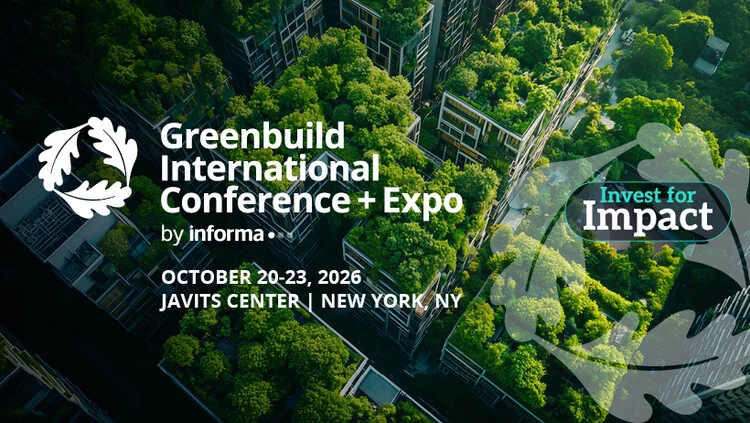
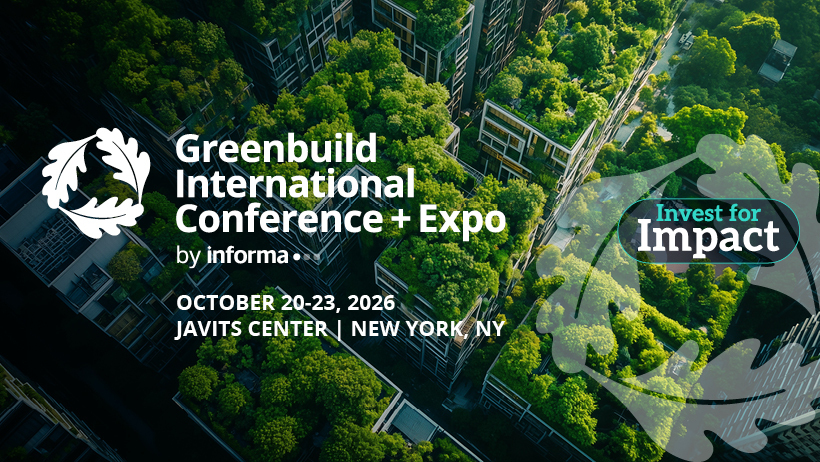
The global architectural community and the sustainable construction industry are bracing for a landmark event as the Greenbuild International Conference + Expo prepares to return to the East Coast. Scheduled for October 20–23, 2026, at the iconic Javits Center in New York City, the event is poised to be the most significant gathering of green building professionals in the decade. As the world moves closer to critical 2030 climate milestones, Greenbuild 2026 represents a nexus of innovation, policy, and practice, aimed at revolutionizing how buildings and cities serve both the planet and their inhabitants.
Main Facts: A Global Hub for Decarbonization and Resilience
Greenbuild remains the largest annual event dedicated to green building professionals worldwide. Managed by Informa Connect and spearheaded by the U.S. Green Building Council (USGBC), the conference serves as the primary stage for the evolution of the LEED (Leadership in Energy and Environmental Design) rating system and other pioneering sustainability frameworks.
Event Specifics and Venue Significance
The selection of the Javits Center in New York City is not merely a logistical choice but a symbolic one. The Javits Center itself has undergone a massive sustainability transformation, featuring a 6.75-acre green roof that serves as a sanctuary for wildlife and a laboratory for urban agriculture. By hosting the 2026 expo, the venue will act as a "living case study" for the thousands of architects, engineers, and urban planners in attendance.
The 2026 program is expected to focus on four pillars:
- Carbon Neutrality: Strategies for achieving net-zero operational and embodied carbon.
- Resilience: Designing structures that can withstand the increasing frequency of extreme weather events.
- Health and Equity: Ensuring that the benefits of green buildings—clean air, natural light, and toxic-free materials—are accessible to all socioeconomic tiers.
- Circular Economy: Transitioning from "take-make-waste" construction to a closed-loop system of material reuse.
Chronology: The Evolution of a Movement
To understand the weight of the 2026 conference, one must look at the trajectory of the Greenbuild movement since its inception at the turn of the millennium.
2002–2010: The Formative Years
The first Greenbuild was held in 2002 in Austin, Texas. At the time, "green building" was a niche interest, often dismissed as an expensive luxury. Over the following decade, the conference moved through cities like Chicago and Phoenix, mirroring the rapid adoption of LEED standards. By 2010, the event had solidified its status as the premier venue for launching new environmental technologies.
2011–2019: Global Expansion and Policy Integration
During this period, Greenbuild expanded its footprint globally, launching editions in China, India, and Europe. The focus shifted from simple energy efficiency to a more holistic view of "human-centric design." The 2019 event in Atlanta emphasized the intersection of social equity and environmentalism, a theme that has since become central to the organization’s mission.
2020–2025: Crisis and Adaptation
The COVID-19 pandemic forced the event into virtual and hybrid formats, emphasizing the critical link between the built environment and public health. As the conference returned to in-person formats in cities like San Francisco and Philadelphia, the urgency of the climate crisis became the primary driver of the agenda. The 2026 New York City event is viewed as the "Grand Return" to a major global financial and cultural capital, coinciding with a period where green building is no longer an option but a regulatory requirement in many jurisdictions.
Supporting Data: The High Stakes of the Built Environment
The necessity of Greenbuild 2026 is underscored by sobering statistics regarding the construction industry’s impact on the planet. According to the International Energy Agency (IEA) and the UN Environment Programme:
- Carbon Footprint: The built environment is responsible for nearly 40% of global energy-related carbon emissions. Of this, 28% comes from building operations, while 11% is attributed to "embodied carbon"—the emissions generated during the manufacturing and transportation of construction materials like steel and concrete.
- Urbanization Trends: By 2050, it is projected that 68% of the world’s population will live in urban areas. This requires the construction of the equivalent of a "New York City" every month for the next 40 years.
- Economic Impact: The green building market is expected to grow at a Compound Annual Growth Rate (CAGR) of over 10% through 2030. In the United States alone, green building contributes over $300 billion to the GDP and supports millions of jobs.
New York City’s Local Context
New York City serves as an ideal laboratory for the 2026 expo due to its aggressive legislative environment. Local Law 97, part of the Climate Mobilization Act, requires most buildings over 25,000 square feet to meet strict energy efficiency and greenhouse gas emissions limits by 2024, with significantly stricter limits coming into play by 2030. For many attendees, the 2026 conference will be a search for the technical solutions needed to comply with these pioneering laws.
Official Responses: Voices from the Vanguard
The announcement of the 2026 dates has drawn enthusiastic responses from industry leaders and policymakers who view the event as a catalyst for legislative and design breakthroughs.
The U.S. Green Building Council (USGBC) released a statement emphasizing the role of community:
"Greenbuild has always been about more than just buildings; it is about the people inside them and the communities they form. Bringing the 2026 expo to New York City allows us to showcase how one of the world’s most complex urban environments is tackling the climate challenge head-on. We are not just sharing ideas; we are sourcing the solutions that will define the next century of human habitation."
Architectural Experts and Urban Planners have also weighed in on the significance of the East Coast location. Industry analysts suggest that the 2026 event will likely see a surge in participation from the financial sector, as ESG (Environmental, Social, and Governance) investing becomes the standard for real estate development.
"New York is the financial capital of the world," says Sarah Jenkins, a senior sustainable design consultant. "By holding Greenbuild here in 2026, we are bridging the gap between the people who design the buildings and the people who fund them. That alignment is the only way we achieve scale."
Implications: What Greenbuild 2026 Means for the Future
The repercussions of the 2026 conference will likely be felt long after the doors of the Javits Center close. The event serves as a bellwether for several shifts in the global architectural landscape.
1. The Decarbonization of the Supply Chain
One of the most anticipated aspects of the 2026 expo is the "Green Material Pavilion." With the industry’s focus shifting toward embodied carbon, the event will likely showcase breakthroughs in "green" steel, carbon-sequestering concrete, and mass timber. These innovations are essential for meeting the requirements of the Paris Agreement.
2. The Integration of AI and Smart Tech
By 2026, Artificial Intelligence (AI) is expected to be fully integrated into building management systems. The conference will likely feature demonstrations of AI-driven energy optimization, where buildings can predict weather patterns and adjust their consumption in real-time, effectively turning skyscrapers into giant batteries for the urban grid.

3. A Focus on Social Equity and "Just Transition"
The 2026 agenda is expected to dive deep into the "Just Transition"—ensuring that the move to a green economy does not leave marginalized communities behind. Discussions will likely center on affordable green housing, the mitigation of "urban heat islands" in low-income neighborhoods, and the creation of green-collar jobs within the construction sector.
4. Global Policy Alignment
As delegates from around the world converge on New York, Greenbuild 2026 will serve as an informal summit for international building codes. The "solutions" sourced at the Javits Center will likely find their way into the regulatory frameworks of emerging economies in Southeast Asia and Africa, where the need for sustainable infrastructure is most acute.
Conclusion: A Milestone on the Road to 2030
The Greenbuild International Conference + Expo 2026 represents a critical checkpoint in the global race against climate change. By bringing together the brightest minds in architecture, technology, and policy in the heart of New York City, the event promises to turn abstract sustainability goals into tangible realities.
As the industry looks toward October 2026, the focus remains clear: improving the resilience of our cities, the sustainability of our materials, and the quality of life for every individual who steps inside a building. In the halls of the Javits Center, the blueprint for the future of the built environment will be drawn, debated, and ultimately, delivered.
This report was compiled based on official announcements from Greenbuild and the U.S. Green Building Council. For those looking to participate, contribute, or attend, the Greenbuild 2026 portal offers comprehensive resources for registration and session submissions.