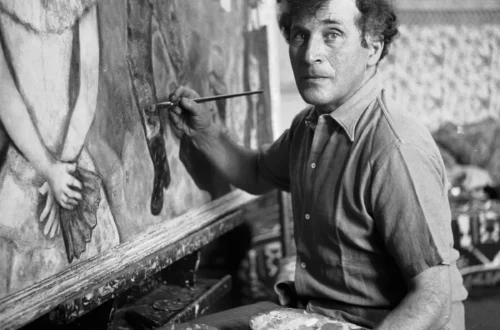
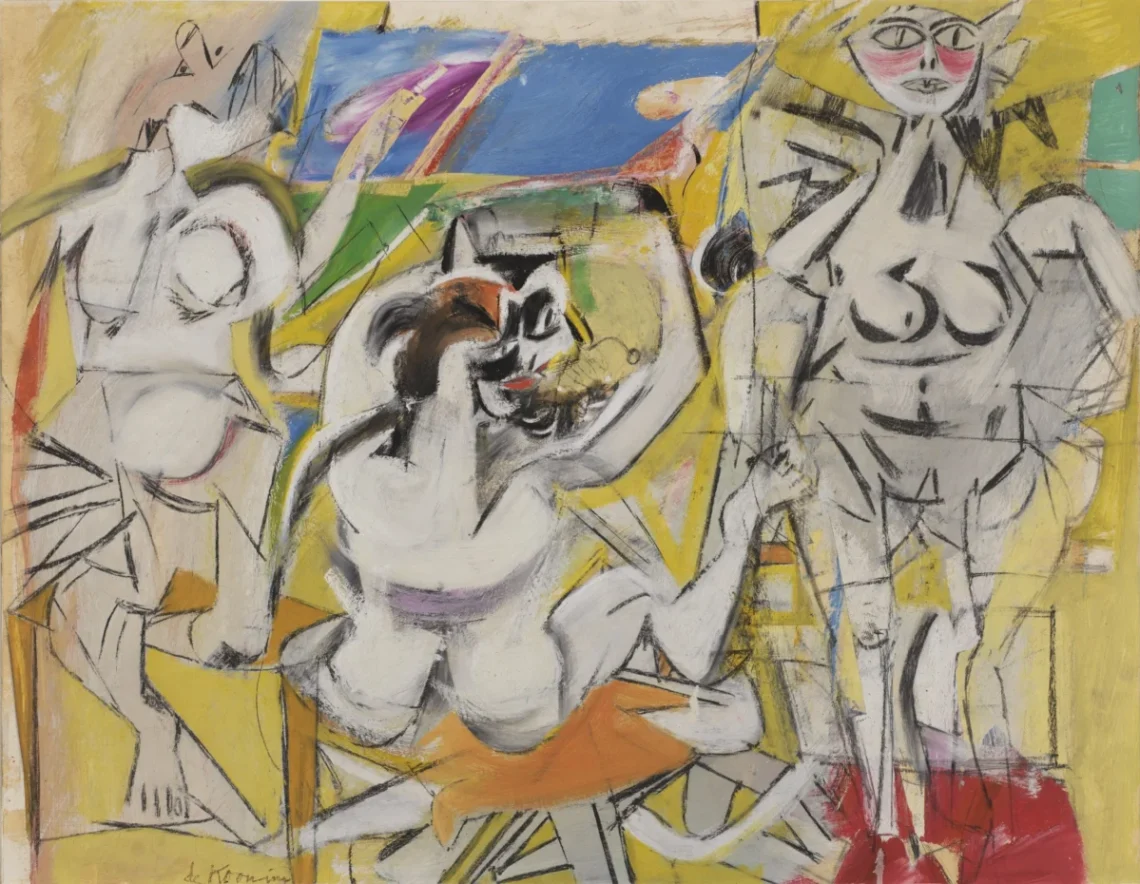
The art world is currently gripped by a profound, renewed fascination with the legacy of Willem de Kooning. Nearly three decades after his passing in 1997, the Dutch-American Abstract Expressionist is undergoing a scholarly and commercial renaissance. Following the widespread critical acclaim for a focused drawing exhibition at the Art Institute of Chicago, the momentum is shifting toward his native Netherlands, where the Rijksmuseum is preparing for what promises to be the most significant European survey of the artist’s work in four decades.
Opening this October, the exhibition—titled "Willem de Kooning at Work"—will assemble more than 120 works, marking a monumental homecoming for the artist who left Rotterdam as a stowaway a century ago. This exhibition is not merely a retrospective; it is a profound re-examination of the creative engine that powered one of the 20th century’s most volatile and influential artistic minds.
A Legacy of Lines: The Centrality of Drawing
For many, de Kooning is defined by his muscular, aggressive application of paint and his controversial, abstracted depictions of women. However, "Willem de Kooning at Work" seeks to dismantle the common misconception that drawing was merely a preparatory step in his process. Instead, the curators argue that drawing served as the very foundation of his practice—a constant, rhythmic compulsion that anchored his 65-year career.
The exhibition promises to bridge the gap between his intimate works on paper and his sprawling, monumental canvases. Among the highlights is the Art Institute’s seminal Excavation (1950), a masterwork of complex, layered abstraction that exemplifies his ability to balance chaos with structural rigor. Visitors will gain rare insight into his experimental techniques, including sketches executed with his eyes closed—a practice that allowed him to bypass the analytical mind in favor of pure, instinctual gesture.
By displaying these works, the Rijksmuseum aims to highlight the recurring themes of fluidity and fragmentation that define his oeuvre. The inclusion of major loans, such as the Museum of Modern Art’s Woman I (1950–52) and the Whitney Museum’s Woman and Bicycle (1952–53), is particularly bold. By placing these high-modernist icons within the Rijksmuseum’s prestigious Gallery of Honor—a space traditionally reserved for the Old Masters like Rembrandt and Vermeer—the institution is making a declarative statement: de Kooning’s work possesses the same historical weight and formal mastery as the titans of the Dutch Golden Age.
From Rotterdam to the New York School: A Chronology
To understand the man behind the canvas, one must trace the trajectory of his transatlantic journey. Born in 1904 in Rotterdam, de Kooning’s early life was defined by a rigorous dedication to craft. He spent his formative years attending night classes at the Rotterdam Academy of Fine Arts and Applied Sciences while apprenticing at a local commercial design firm. These years instilled in him a lifelong respect for the "blue-collar" aspect of art—the idea that painting was a job, a discipline, and a physical labor.

In 1926, at the age of 22, de Kooning took a fateful risk. He stowed away on a cargo ship bound for the United States, arriving in New York with little more than his ambition. His early years in the city were a far cry from the high-society art world; he supported himself as a house painter, a commercial illustrator, and a designer of department store window displays. This period of artistic "survival" was essential in shaping his style, as he synthesized the commercial speed of urban life with the formal traditions of European art.
His breakthrough did not come overnight. It was not until the late 1940s, at the age of 44, that he held his first solo exhibition. By then, he had firmly established himself as a central architect of the New York School, alongside luminaries such as Jackson Pollock, Lee Krasner, and Mark Rothko. While his peers often pursued pure, non-representational abstraction, de Kooning famously refused to abandon the figure entirely, leading to a decades-long struggle that defined his most famous series. He spent the final chapters of his life in East Hampton, eventually passing away in 1997 at the age of 92, leaving behind an artistic vocabulary that continues to challenge contemporary painters.
The Rotterdam Connection: Fenix and the Centenary
The commemoration of de Kooning’s life extends beyond the hallowed halls of the Rijksmuseum. In his birthplace of Rotterdam, the newly inaugurated Fenix museum—dedicated to the history of migration—is playing a pivotal role in the celebrations.
Recognizing that the 100th anniversary of his departure from the Netherlands is a milestone of both national and art-historical significance, Fenix has organized a site-specific tribute. Beginning July 18, the museum will display three of de Kooning’s monumental bronze sculptures on the quay directly in front of the building. These works, including the rugged, gestural Untitled (Clamdigger) (c. 1970), offer a physical presence that speaks to the artist’s migration and the "sculptural" quality of his painting. By placing these works on the waterfront where he once stood as a young man, the city is effectively welcoming its most famous emigrant home.
Market Analysis: The Escalating Value of Abstract Expressionism
The current "de Kooning fever" is not confined to museum galleries; it is mirrored by a ferocious appetite in the global art market. According to the Artnet Price Database, interest in his work has reached an all-time high, with four of his top ten auction prices being set within the last five years alone.
The record for his work was established in 2018 when Woman as Landscape (1954–55) fetched $68.9 million at a Christie’s New York auction. This figure, while staggering, is viewed by many market analysts as a reflection of his enduring "blue-chip" status. Unlike more transient contemporary artists, de Kooning’s market is bolstered by the scarcity of high-quality works in private hands and the constant validation provided by major retrospective exhibitions, such as last year’s expansive show at Gagosian in New York, curated by High Line Art director Cecilia Alemani.

The market’s intensity is, in part, a response to the way he bridges the gap between the mid-century avant-garde and contemporary concerns. Collectors are increasingly seeking works that offer both historical significance and an aesthetic energy that feels vital today. As institutional focus grows, the supply of available works continues to tighten, further fueling the competitive nature of his auction presence.
Implications for Future Scholarship
The resurgence of interest in de Kooning carries significant implications for art history. For years, the narrative surrounding the New York School was dominated by the myth of the "heroic" individual artist. Today, scholars are moving toward a more nuanced understanding of his process, examining the influences of his European training, his commercial background, and his complicated relationship with gender and the female form.
The Rijksmuseum’s exhibition, in particular, is poised to reshape the discourse. By emphasizing the "working" artist—the person who drew, erased, and redrew—the exhibition humanizes a figure who has often been reduced to a caricature of the hard-drinking, gestural painter.
Furthermore, the integration of de Kooning into the Rijksmuseum’s Gallery of Honor suggests a shift in how we perceive the canon. It signals that the "New York School" is no longer a separate, isolated chapter of art history, but an integral part of a continuum that stretches back to the Dutch Masters. This cross-pollination of historical periods is likely to drive further research into the technical links between Old Master drawing techniques and the rapid-fire, intuitive methods of the 20th-century avant-garde.
As we look toward October, it is clear that de Kooning is not merely a subject of historical study. He is a living presence in the art world, his lines and colors continuing to push, pull, and redefine the boundaries of what is possible on a flat surface. Whether through the lens of the auction block or the scholarly gaze of the museum curator, the titan of the New York School is proving that his work—like the man himself—is impossible to contain.