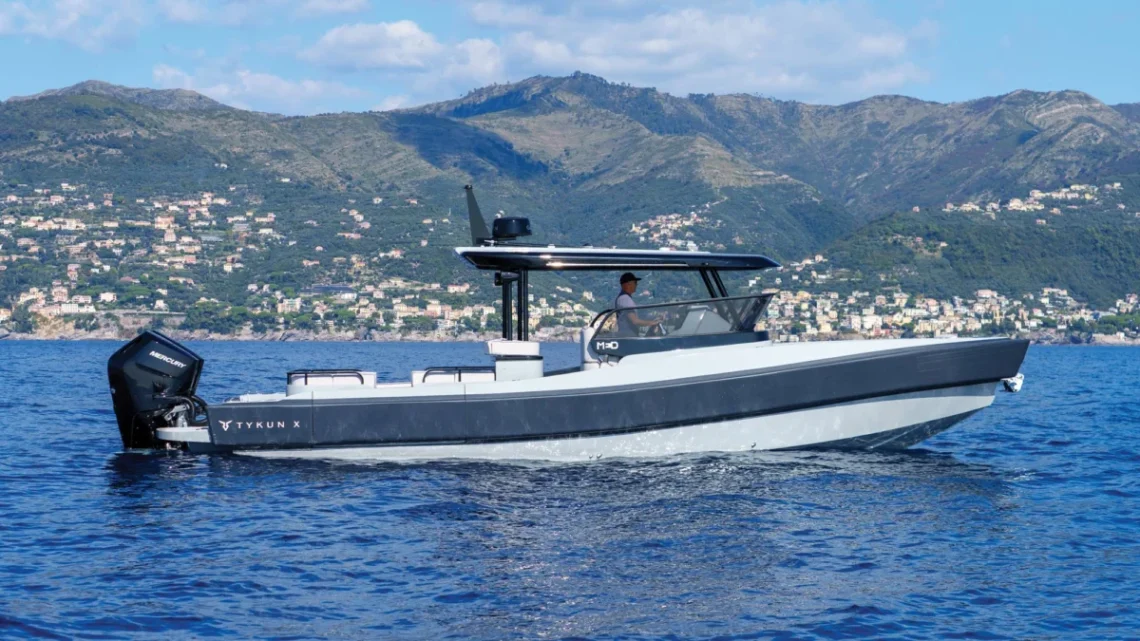
In the upper echelons of the superyacht sector, the definition of a "tender" has undergone a radical metamorphosis. No longer viewed merely as a utilitarian shuttle designed to transport guests from a pristine anchorage to a bustling marina, the modern luxury tender is a high-performance vessel in its own right—capable of offshore voyages, extreme speeds, and supreme comfort. Entering this competitive arena with a formidable combination of engineering prowess and uncompromising design is the Tykun X.
Boasting a military-derived aluminum hull, a sophisticated twin-stepped design, a rigid carbon-fiber hardtop, and an innovative optional hydrogen fuel cell propulsion system, the Tykun X is engineered to shatter expectations. Capable of achieving cruising speeds between 25 and 40 knots and topping out north of 50 knots, this vessel bridges the gap between adrenaline-fueled offshore performance and refined superyacht luxury.
Main Facts: Engineering Excellence Meets Tactical Heritage
At its core, the Tykun X is a fully customizable aluminum craft that seamlessly blends heavy-duty marine architecture with modern yachting aesthetics. Designed for owners who refuse to compromise on speed, safety, or style, the vessel’s key specifications highlight a commitment to top-tier marine engineering:
- Hull Architecture: A high-efficiency, twin-stepped aluminum hull engineered to reduce drag, improve fuel efficiency, and deliver exceptional stability in heavy seas.
- Superstructure: A lightweight yet ultra-rigid carbon-fiber hardtop that lowers the vessel’s center of gravity while providing robust overhead protection.
- Performance: Designed for brisk cruising between 25 and 40 knots, with peak velocities exceeding 50 knots depending on the chosen propulsion package.
- Propulsion Versatility: Offers four distinct dual-outboard traditional power configurations, alongside an avant-garde, zero-emission hydrogen fuel cell drive option.
- Deck Versatility: Hydraulic fold-down bulwarks that expand the beam at anchor, transforming the cockpit into an expansive social platform.
- Accommodation: Surprisingly versatile belowdecks layout featuring an enclosed head and a comfortable V-berth, making spontaneous overnight excursions entirely viable.
Chronology: The Evolution of the Tykun X Concept
The journey from a blank sheet of paper to a high-speed, wave-conquering reality reflects a meticulous development cycle driven by feedback from experienced yacht owners, naval architects, and tactical marine engineers.
Phase 1: Conceptualization and Military Adaptation
The genesis of the Tykun X lay in a desire to harness the rugged, indestructible nature of military patrol craft and refine it for the luxury yacht market. Naval architects recognized that while military craft offered peerless structural integrity and sea-keeping abilities, they severely lacked the creature comforts expected by modern yacht owners. Conversely, luxury tenders often lacked the structural robustness required to handle truly punishing sea states. The Tykun X was conceived to bridge this divide, utilizing marine-grade aluminum not only for its durability but also for its recyclability and strength-to-weight ratio.
Phase 2: Hydrodynamic Optimization and Tank Testing
With the structural philosophy established, engineers focused heavily on the vessel’s underwater profile. The implementation of a twin-stepped hull was not a casual aesthetic choice; it was the result of extensive computational fluid dynamics (CFD) modeling and scale-model tank testing. By introducing air ventilation beneath the hull running surface, the design team successfully minimized wetted surface area, drastically reducing hydrodynamic drag and increasing top-end speed without sacrificing low-speed handling or cornering grip.
Phase 3: Material Integration and Weight Reduction
To offset the heavy-duty nature of the aluminum hull, the engineering team turned to aerospace-grade composite manufacturing. The integration of a carbon-fiber hardtop serves a dual purpose: it shields the helm and cockpit seating from the elements while strategically shedding top-weight. This optimization keeps the vessel’s center of gravity exceptionally low, directly contributing to its remarkable stability during high-speed maneuvers.
Phase 4: Propulsion Diversification and Hydrogen Integration
Recognizing that the future of marine propulsion must embrace sustainability without sacrificing performance, Tykun developed a multi-faceted drivetrain strategy. While traditionalists can select from four high-output dual-outboard configurations, forward-thinking environmentalists can opt for a cutting-edge hydrogen fuel cell drive. This phase marked a significant milestone in alternative-energy integration for vessels of this size class.
Phase 5: Global Debut and Sea Trials
Following rigorous prototype testing in demanding northern waters, the Tykun X officially entered production. Sea trials demonstrated that the vessel could comfortably exceed 50 knots while maintaining a remarkably dry, stable ride—cementing its status as a premier multi-role luxury tender.
Supporting Data: Performance Metrics and Specifications
To truly understand the capabilities of the Tykun X, one must examine the hard data governing its performance, design flexibility, and onboard amenities.
Performance and Drivetrain Matrix
- Cruising Speed: 25 to 40 knots (optimized for efficient passage-making and guest comfort)
- Top Speed: 50+ knots (configuration dependent)
- Propulsion Options:
- Configuration A: Twin high-performance gasoline outboards (Standard high-speed)
- Configuration B: Twin heavy-duty diesel outboards (Extended range)
- Configuration C: Twin ultra-high-output performance outboards (Max speed focus)
- Configuration D: Eco-tuned dual outboards (Efficiency focus)
- Configuration E: Advanced Hydrogen Fuel Cell Drive (Zero-emission alternative)
Structural and Spatial Metrics
- Hull Material: Marine-grade aluminum alloy
- Hardtop Material: Infused carbon fiber
- Cockpit Transformation: Fold-down hydraulic bulwarks (significantly increases beam area at rest)
- Interior Amenities: Fully enclosed belowdecks head (marine toilet, sink) and a plush V-berth suitable for two adults.
Official Responses and Industry Perspectives
The announcement and subsequent sea trials of the Tykun X have generated considerable discussion among yacht brokers, naval architects, and seasoned captains.
According to lead design consultants associated with the Tykun project, the primary objective was never simply to build a fast boat, but to build a reassuringly capable one. "When owners purchase a tender of this caliber, they are investing in a Swiss Army knife for their mothership," noted a senior project engineer during the vessel’s technical briefing. "It needs to pull double duty as a high-speed airport transfer vehicle, an aggressive wakeboarding platform, a dive boat, and—when weather turns foul—a secure refuge that brings guests home safely and dry."
Industry analysts have also praised the inclusion of the hydrogen fuel cell option. While traditional combustion engines remain the default choice for the majority of buyers seeking immediate, high-octane thrills, the availability of a hydrogen drivetrain signals that Tykun is positioning its portfolio for tightening global emissions regulations and a generational shift toward sustainable yachting technologies.
Captain Sarah Jenkins, a veteran superyacht skipper with over twenty years of offshore experience, weighed in on the vessel’s layout: "The inclusion of a proper head and a V-berth belowdecks changes the game for a tender of this footprint. Too many builders sacrifice interior volume in the name of aggressive styling. Tykun managed to retain sleek, aggressive lines while carving out enough volume for guests to escape a sudden squall or catch a nap on an extended excursion."
Implications: What the Tykun X Means for the Future of Yachting
The arrival of the Tykun X carries broader implications for the superyacht tender market, influencing design trends, environmental standards, and owner expectations.
1. The Blurring Lines Between Tenders and Chase Boats
Historically, owners maintained a clear hierarchy: the yacht was for living, and the tender was for quick chores. Vessels like the Tykun X blur these boundaries entirely. With a top speed exceeding 50 knots, offshore-capable aluminum construction, and overnighting capabilities, the Tykun X effectively functions as a pocket explorer yacht. Owners are increasingly utilizing such tenders for independent weekend excursions away from the primary vessel, expanding their cruising range and freedom of exploration.
2. Pushing the Envelope in Alternative Propulsion
The marine industry has faced mounting pressure to decarbonize, yet high-performance segments have historically resisted alternative fuels due to weight and energy-density constraints. By offering an optional hydrogen fuel cell drive, Tykun is helping to normalize zero-emission technology in high-speed craft. As hydrogen infrastructure develops globally and fuel cell efficiency improves, the groundwork laid by the Tykun X will likely serve as a blueprint for larger chase boats and production yachts.
3. Tactical Durability in Luxury Segments
The adoption of military-level DNA—specifically rugged aluminum construction combined with advanced aerodynamic composites—highlights a growing consumer demand for indestructible luxury. Yacht owners who cruise remote, unchartered, or unpredictable waters (such as the Pacific Northwest, Patagonia, or the high latitudes) are increasingly prioritizing structural safety over delicate fiberglass finishes. The Tykun X proves that industrial-grade toughness can be packaged with uncompromising luxury and striking visual appeal.
Picture This: The Tykun X in Action
To truly appreciate the engineering philosophy behind the Tykun X, consider a real-world operational scenario:
There’s a king tide and strong winds churning up whitecaps on the Strait of Juan de Fuca. The atmosphere onboard the mothership is restless; the guests want to cruise from Port Townsend, Washington, across the open water to Victoria, British Columbia, for traditional afternoon tea at the historic Fairmont Empress Hotel.
A lesser tender would be forced to remain docked, its owner reluctant to subject guests to a punishing, wet, and uncomfortable crossing. But with the Tykun X, the calculus is entirely different. You gather passports, step down into the deeply protected cockpit, and fire up the twin powerplants. Thanks to the twin-stepped aluminum hull slicing effortlessly through the lumpy seas and the carbon-fiber hardtop deflecting sea spray, the vessel maintains a steady, high-speed trajectory without a shudder.
The crossing is swift, comfortable, and remarkably dry. As you tie up at the Victoria inner harbor marina, step ashore, and walk up to the hotel, your guests emerge refreshed rather than battered—a testament to the fact that extreme performance and absolute comfort can, in fact, coexist.
Conclusion
The Tykun X represents a significant milestone in the evolution of modern marine craft. By synthesizing military-grade aluminum durability with state-of-the-art hydrodynamic design, carbon-fiber weight-saving measures, and forward-looking hydrogen propulsion technology, Tykun has delivered a vessel that defies easy categorization. Whether specified for high-octane weekend thrills, secure all-weather offshore transits, or sustainable zero-emission cruising, the Tykun X stands ready to exceed the demands of the most discerning yachtsmen.
For those looking to take the next step in acquiring or customizing their own Tykun X, further technical specifications and direct contact channels can be explored via tykun.eu.