When mass-market automakers issue a safety recall, the numbers are usually staggering. Headlines routinely trumpet notices affecting hundreds of thousands—sometimes millions—of vehicles, citing everything from faulty airbag inflators to malfunctioning infotainment software. Even among high-end luxury and sports car manufacturers, production volumes usually mean recalls involve at least a few dozen or a few hundred chassis.
Then there is Koenigsegg, the Swedish boutique manufacturer synonymous with uncompromising engineering, astronomical horsepower figures, and ultra-exclusive production runs. When Koenigsegg initiates a recall, the sheer scale of the operation shrinks to a level that feels almost surreal.
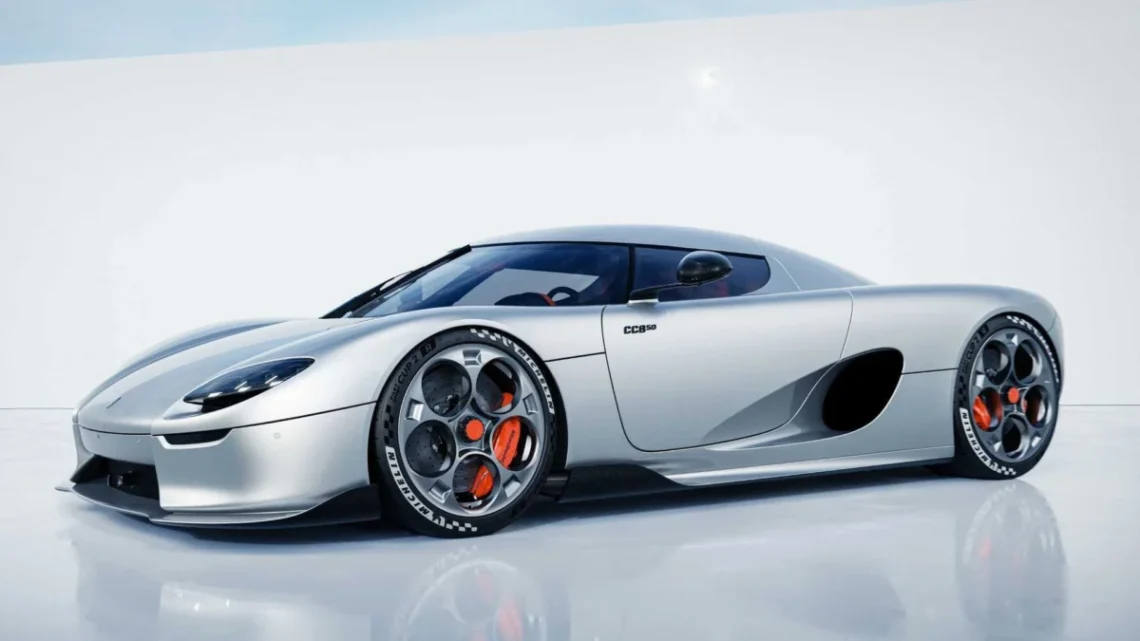
In the latest chapter of bureaucratic automotive oversight, the National Highway Traffic Safety Administration (NHTSA) has announced a safety recall for the Koenigsegg CC850. The total number of vehicles affected by this action in the United States? Exactly seven.
Every single 2025–2026 model year CC850 slated for US roads has been swept up in the campaign. While mass-market giants grapple with logistical nightmares spanning continents, Koenigsegg’s service department can likely resolve this nationwide crisis over a single afternoon with a laptop. However, beneath the novelty of a seven-car recall lies a fascinating look into the intersection of cutting-edge hypercar technology, government safety mandates, and a rather embarrassing moment of human error.
Main Facts: The Koenigsegg CC850 Parking Brake "Defect"
According to official documents filed with the NHTSA, the recall stems from a potential malfunction within the electronic parking brake system of the Koenigsegg CC850. Under specific, narrow operational conditions, the vehicle’s electronic parking brake may fail to engage securely when commanded.
To understand the gravity—and the oddity—of the situation, one must first look at the CC850 itself. Unveiled to celebrate the 20th anniversary of Koenigsegg’s first production car (the CC8S) and the birthday of company founder Christian von Koenigsegg, the CC850 is a masterclass in automotive engineering. It features a twin-turbocharged 5.0-liter V8 engine pumping out a mind-boggling 1,385 horsepower on E85 fuel.
More famously, the CC850 utilizes a revolutionary transmission called the Engage Shift System (ESS). It functions as both a true manual transmission—complete with a gated shifter and a physical clutch pedal—and a fully automatic transmission at the flick of a wrist. It is a mechanical marvel designed to give purists the tactile feedback of a traditional stick-shift while retaining the blistering speed of a modern dual-clutch or multi-clutch automatic.
However, the complexity of managing a multi-mode, four-figure-horsepower hypercar occasionally introduces edge cases that regulatory bodies must address. In the case of the CC850 recall, the system’s software logic under unique driver inputs prompted federal regulators to step in.
Chronology: How a Rolling Hypercar Triggered a Federal Investigation
Every safety recall has a genesis, and the story behind NHTSA Recall Campaign 26V-694 is uniquely colorful.
The issue did not come to light through routine endurance testing at Koenigsegg’s Ängelholm facility, nor was it flagged during automated component stress tests. Instead, it was discovered in the wild by a real-world owner experiencing a very specific sequence of events.
According to the official chronology outlined in federal filings:
- The Incident: An owner of a new Koenigsegg CC850 started the vehicle, selected reverse gear with the engine running, and subsequently attempted to engage the electronic parking brake before stepping out of the cabin.
- The Failure: Due to the vehicle’s state and the active gear selection, the electronic parking brake failed to hold the car. Left unattended on an incline while still in gear, the multi-million-dollar hypercar promptly rolled away.
- The Discovery: Fortunately, the runaway vehicle incident resulted in no injuries or structural damage, but it prompted the owner—or the dealer—to report the anomaly.
- The Investigation: Koenigsegg engineers reviewed the telemetry and software logic surrounding the parking brake actuation protocols when the vehicle’s transmission is engaged. They determined that under specific operating sequences, the electronic parking brake override parameters could prevent the brake from locking down as intended.
- The Regulatory Filing: Rather than treating the event as an isolated incident of driver error, Koenigsegg proactively worked with the NHTSA to formalize a safety recall, resulting in the official filing covering all seven US-market vehicles for the 2025–2026 model years.
Supporting Data: The Exclusivity of Koenigsegg Recalls
To contextualize Koenigsegg’s latest safety campaign, it helps to examine the mathematics of boutique hypercar manufacturing.
Mass-market manufacturers often calculate recall impact percentages relative to millions of units produced annually. For Koenigsegg, percentages are calculated out of single digits.
| Metric | Koenigsegg CC850 (US Market) | Average Mass-Market Recall |
|---|---|---|
| Total Units Affected | 7 vehicles | 100,000+ vehicles |
| Production Volume | Strictly limited (initially 70 worldwide, expanded to 110 due to demand) | Mass production lines |
| Remediation Method | Over-the-air (OTA) software update or direct technician visit | Dealership appointments, physical parts replacement |
| Primary System Involved | Electronic Parking Brake (Software logic) | Airbags, powertrain, structural components, electrical harnesses |
The CC850 was originally limited to a production run of just 50 units worldwide to commemorate Christian von Koenigsegg’s 50th birthday. Due to overwhelming demand from collectors globally, the Swedish automaker increased that number to 70 units. Even with the expansion, seeing a CC850 in public—let alone behind the wheel—is an exceptionally rare privilege.
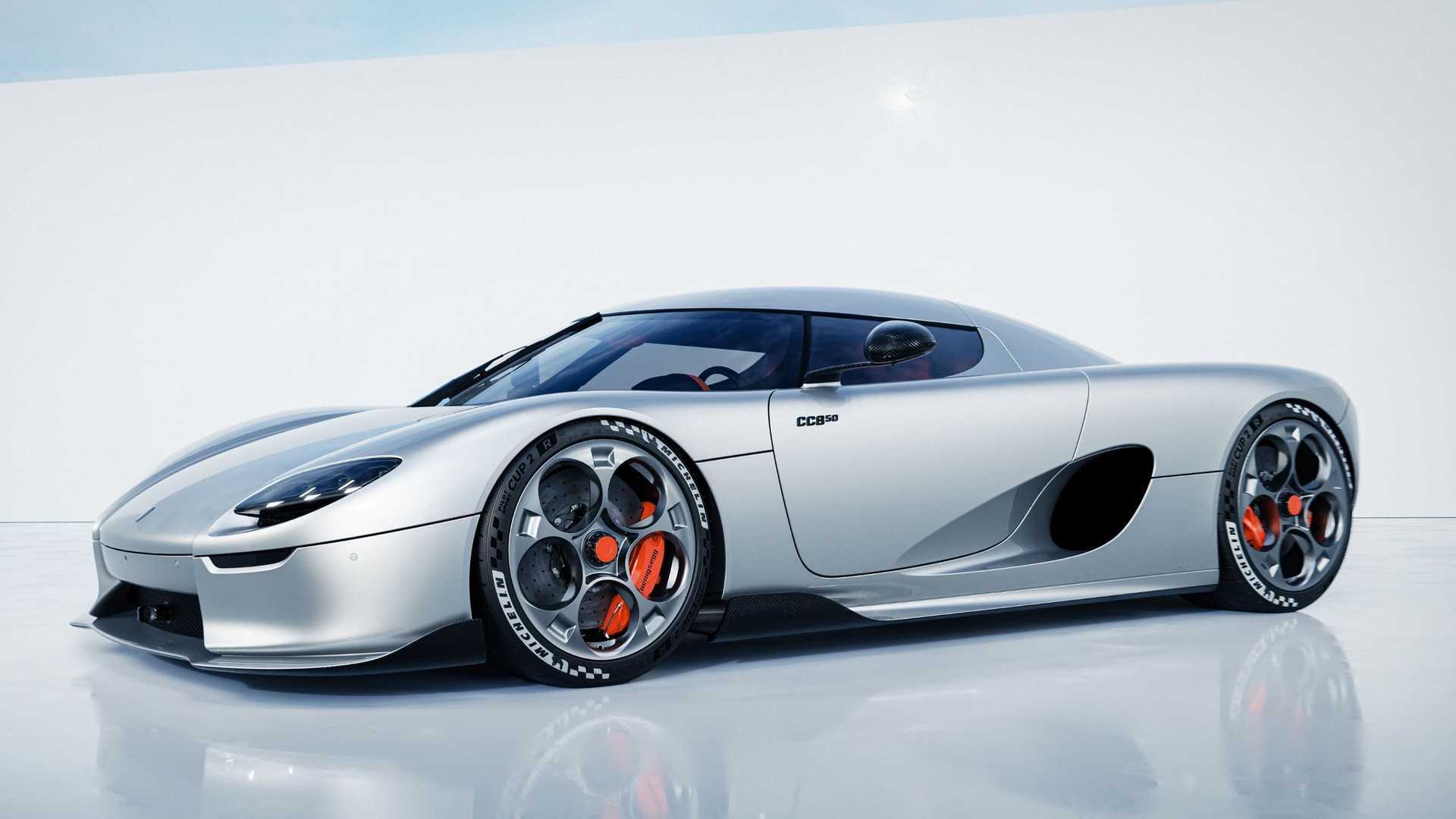
Consequently, recalling all seven US-allocated examples means that 100% of the domestic CC850 population is cataloged in the federal recall database. Yet, because of Koenigsegg’s advanced digital infrastructure, fixing the problem requires none of the logistical nightmares typical of major automotive recalls.
Official Responses and the Fix: Over-the-Air Precision
When dealing with high-performance hypercars, customer experience is paramount. Owners paying upwards of $3 million for a vehicle expect white-glove treatment, and Koenigsegg’s response to the parking brake issue reflects that philosophy.
The Remedy
Koenigsegg has developed a revised parking brake control software calibration. This updated software alters the logic parameters governing how the electronic parking brake interacts with the transmission state, ensuring that the brake engages reliably regardless of whether the vehicle is left in gear, reverse, or neutral when the driver exits.
Delivery Mechanism
True to modern automotive standards, the fix can be deployed in one of two ways:
- Over-the-Air (OTA) Update: Owners can receive the software patch directly via the car’s built-in cellular data connection, downloading and installing the fix from the comfort of their own climate-controlled garages.
- Authorized Service Center: For owners who prefer a hands-on approach or want verification from a factory-trained technician, Koenigsegg’s network of specialized service partners can flash the module manually.
As is standard protocol for all safety-related campaigns governed by the NHTSA, the software update will be performed completely free of charge to the owners.
Implications: Software Complexity, Regulatory Nuance, and User Error
While the official paperwork labels the issue a "parking brake defect," the incident has sparked widespread debate among automotive enthusiasts and mechanical engineers alike regarding the fine line between hardware failure, software logic, and good old-fashioned driver responsibility.
1. The Human Element in High-Performance Machines
Automotive commentators and industry analysts have been quick to point out the irony of the situation. Leaving any vehicle—let alone a 1,385-horsepower rear-wheel-drive hypercar—running, in gear, and unattended on an incline is generally considered counter to basic driving safety protocols. In a traditional manual car, stepping out while the transmission is engaged without securing the handbrake will invariably result in movement.
Yet, modern drivers have grown accustomed to fail-safes. In contemporary luxury cars and supercars, automated parking brake engagement, electronic gear selection, and intelligent "Park" functions often protect drivers from their own oversights. When those safety nets fail to catch a unique procedural sequence, federal regulators mandate a formal correction.
2. The Burden of Compliance for Boutique Manufacturers
For a company like Koenigsegg, navigating NHTSA regulations presents unique challenges. Designing hypercars that push the absolute boundaries of physics means dealing with complex, proprietary systems that do not fit neatly into standardized regulatory boxes.
While legacy automakers maintain sprawling legal and compliance departments dedicated entirely to managing federal recalls, boutique operations must shoulder the exact same administrative burdens while maintaining hyper-focused engineering teams. Every recall, regardless of whether it affects seven cars or seven hundred thousand, requires precise documentation, coordination with federal safety officers, and formal notification letters sent via certified mail to every registered owner.
3. The Triumphs of Modern OTA Infrastructure
Ten years ago, a recall involving a software logic error in a parking brake system would have required transporting seven multi-million-dollar hypercars across the United States via enclosed trailers to authorized service centers. Today, thanks to advanced telematics and OTA capabilities, the issue can be neutralized while the vehicle sits parked in a collector’s garage.
This technological evolution highlights how modern hypercar manufacturers balance old-world craftsmanship with cutting-edge digital architecture. Koenigsegg may build cars that celebrate the analog engagement of a manual gated shifter, but under the skin, they are rolling supercomputers capable of instantaneous remote maintenance.
Conclusion: A Footnote in Koenigsegg History
Ultimately, the Koenigsegg CC850 parking brake recall will go down in automotive trivia as one of the most exclusive safety campaigns in history. For the seven US owners, the inconvenience amounts to little more than clicking "accept" on a software update or exchanging pleasantries with a specialized technician.
As Koenigsegg continues to push the boundaries of internal combustion, alternative fuels, and transmission engineering, minor software adjustments are an inevitable part of refining rolling works of art. The CC850 remains an engineering masterpiece—one that will undoubtedly continue to turn heads, break records, and occasionally remind its drivers to double-check that they’ve put the car in park before stepping out.