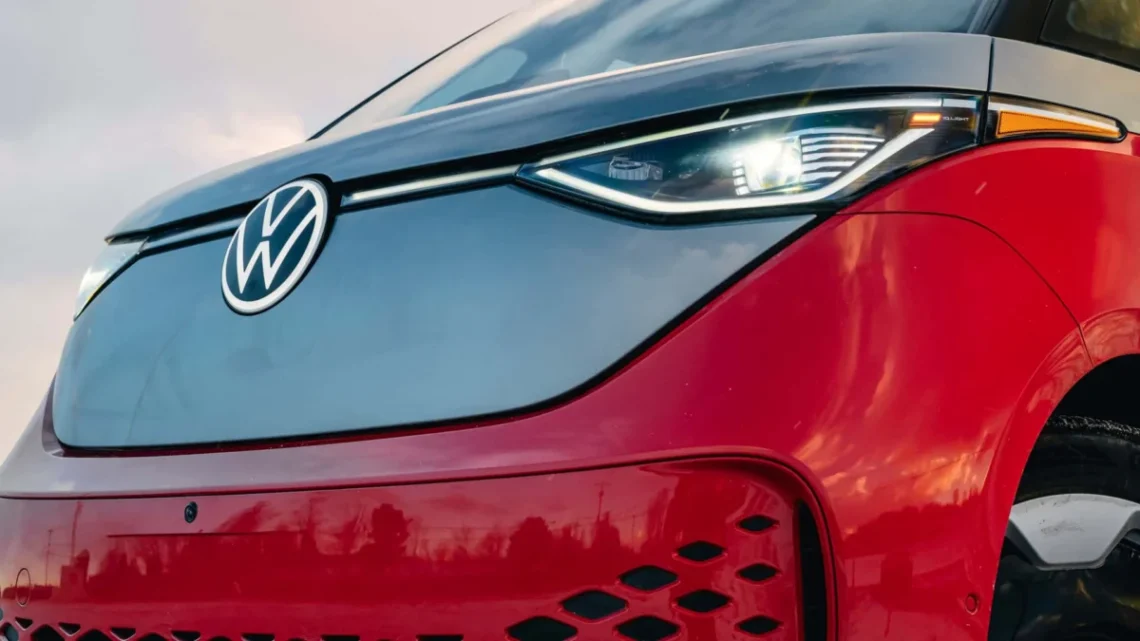
The Volkswagen ID. Buzz, a modern, electric reincarnation of the iconic Type 2 "Microbus," occupies a unique space in the automotive landscape. As the Volkswagen Group navigates the volatile transition to an all-electric future, the ID. Buzz serves as both a halo vehicle for the brand’s heritage and a litmus test for its modular platform strategy. While 2025 saw the van achieve a commendable 60,700 global deliveries—doubling its performance from the previous year—its journey in the United States has been marked by hesitation, logistical hurdles, and a temporary retreat.
The Global Performance Landscape
In the grand hierarchy of the Volkswagen Group’s electric vehicle portfolio, the ID. Buzz secured the eighth position in sales volume for 2025. This achievement is significant, proving that the vehicle’s "retro-flavored" aesthetic possesses genuine market gravity. In Europe, where compact, versatile urban haulers are a staple, the ID. Buzz and its cargo-oriented sibling have thrived, cementing their status as reliable workhorses and family movers.
However, the North American market has told a different story. With only 6,140 units sold in the U.S. throughout the year, the vehicle failed to meet the aggressive expectations set by regional executives. This disconnect between the enthusiastic reception in Europe and the lukewarm demand in the States has prompted a strategic reset. Volkswagen has officially announced the cancellation of the 2026 model year for the U.S. market, opting to clear existing 2025 inventory before reintroducing the vehicle in 2027.
Chronology of a Strategic Pivot
The decision to pull the ID. Buzz from the U.S. lineup for a one-year hiatus is not merely a reaction to low sales figures; it is a calculated pause.
- 2025: The ID. Buzz sees robust growth globally, doubling its year-over-year sales. In the U.S., however, the market responds to the vehicle with caution, citing a high barrier to entry.
- Late 2025/Early 2026: VW management conducts a "careful assessment" of the U.S. electric vehicle market, noting the broader industry trend of "weak adoption" and cooling EV demand.
- Mid-2026: Official confirmation arrives that the 2026 model year will be skipped entirely.
- 2027: The anticipated return of the ID. Buzz, featuring refined options, improved user interfaces, and a fresh push to capture the American lifestyle segment.
The Factors Behind the U.S. Struggle
Several critical factors contributed to the ID. Buzz’s sluggish start in the American market. The most immediate is the combination of range and price. With a starting MSRP of $61,545, the ID. Buzz sits in a premium bracket that demands high performance. However, the rear-wheel-drive configuration offers a modest 234-mile EPA-estimated range. For American consumers, who frequently navigate vast geographic distances, 234 miles creates a psychological barrier—"range anxiety"—that the current infrastructure and charging speeds struggle to mitigate.
Furthermore, the vehicle’s reliance on the MEB (Modular Electric Drive Matrix) platform, while efficient for manufacturing, dictated the vehicle’s architecture in a way that limited flexibility. Unlike traditional American minivans that offer a variety of powertrain options to suit different needs, the ID. Buzz was strictly battery-electric, leaving no room for consumers who desired the "bus" aesthetic but were not yet ready to commit to a full EV lifestyle.
The "What If": The EREV That Never Was
Behind the scenes, Volkswagen engineers were well aware of the limitations. In a revealing interview with the Australian publication GoAuto, Stefan Mecha, the head of Volkswagen Commercial Vehicles, confirmed that the company had seriously investigated the potential for a Range-Extender Electric Vehicle (EREV) version of the ID. Buzz.
An EREV, which utilizes a small gasoline engine as an onboard generator to charge the battery while driving, would have effectively eliminated range anxiety. However, the engineering team hit a wall—literally. The MEB platform, which powers over 20 vehicles across the VW Group and even some Ford models like the Explorer and Capri, was developed as a dedicated BEV (Battery Electric Vehicle) architecture. The short front overhang of the ID. Buzz design left insufficient packaging space to integrate a combustion engine generator. The structural DNA of the MEB platform was simply too rigid to allow for the conversion.

Official Responses and Strategic Shifts
Volkswagen has been careful not to blame the product’s failure on the vehicle itself. Instead, the company points to a broader "strategic assessment of current EV market conditions." This narrative suggests that while the product is strong, the environment in the United States is currently unconducive to a high-priced, mid-range EV minivan.
Yet, Volkswagen is not abandoning the EREV concept entirely. The group has launched the ID. Era 9X in China, a six-seat SUV that successfully utilizes a 1.5-liter gas engine as a generator. Furthermore, the newly formed Scout brand—a subsidiary of Volkswagen—is slated to bring EREV technology to the U.S. with its upcoming Traveler SUV and Terra pickup truck. These vehicles are expected to serve as the blueprint for how Volkswagen plans to bridge the gap between internal combustion and full electrification in the North American market.
Looking further ahead, the development of the Scalable Systems Platform (SSP) represents the next frontier for the group. Unlike the current MEB, the SSP is being engineered to accommodate both pure electric setups and range-extending combustion generators. Expected to debut in an Audi model around 2028, this platform will eventually replace the company’s disparate existing architectures, providing a more versatile foundation for future products.
Implications for the Future
The story of the ID. Buzz is a microcosm of the modern automotive industry’s "Goldilocks" problem: finding the balance between cutting-edge technology and market readiness. For the 2027 model year, Volkswagen is attempting to sweeten the deal. The revamped model will introduce new color palettes, updated wheel designs, and—most importantly—the return of physical buttons on the steering wheel, a move driven by customer feedback demanding a more tactile, less distracting user interface.
Additionally, the introduction of a "Tourer" version—complete with a fold-out mattress, integrated window blinds, and outdoor camping equipment—aims to position the ID. Buzz as a lifestyle-focused adventure vehicle rather than just a daily commuter. This pivot recognizes that the U.S. buyer, especially in the van segment, is often driven by the "dream" of road-tripping rather than pure utilitarian logic.
However, challenges remain. The decision to persist with a North American Charging System (NACS) adapter rather than integrating a native NACS port at the factory level could potentially deter buyers who prioritize the seamlessness of native charging connectivity.
Final Analysis
The ID. Buzz is a testament to the fact that emotional resonance—the "cool factor" of the classic Microbus—can only take a vehicle so far in a price-sensitive, range-conscious market. The failure to integrate a range-extending powertrain due to platform constraints was a missed opportunity, but it served as a catalyst for a more robust group-wide strategy.
Volkswagen is essentially hitting the "pause" button to recalibrate. The 2027 return will be the true test: can a refreshed, lifestyle-oriented version of this electric icon overcome the hurdles of price and range? If the sales numbers from the rest of the world are any indication, the demand is there. The question for Volkswagen is whether it can bridge the gap between its European design philosophy and the unique realities of the American road. The hiatus is not an admission of defeat; it is a tactical retreat designed to ensure that when the Buzz returns, it is finally hitting on all cylinders—electric or otherwise.