

At the prestigious 10th anniversary edition of GemGenève, the global epicentre for the jewellery and gemstone trade, a seismic shift in the narrative of contemporary design took hold. Amidst the high-stakes world of international gem dealing and luxury craftsmanship, the Jewellery and Gemstone Association of Africa (JGAA) took center stage to unveil the winners of its "Design Dynamic" competition.
This initiative, which serves as a clarion call to designers across the African continent and its vast global diaspora, challenged participants to reinterpret the future of jewellery through the lens of four pillars: birdlife, movement, colour, and symbolism. The result was not merely a collection of sketches, but a profound cultural manifesto that showcased the intellectual and technical depth of African artistry.

The Genesis of a Movement: JGAA’s Mission
Founded in 2024 by the visionary Longo Mulaisho-Zinsner, the JGAA was established to act as a vital conduit for the African jewellery sector. In an industry historically dominated by European and North American heritage houses, the JGAA’s mission is to catalyze the growth, professional visibility, and international integration of African designers.
"Our vision is to see a truly dynamic African jewellery and gemstone industry—one that reflects the diversity, creativity, and brilliance already alive within it," Mulaisho-Zinsner remarked during the presentation. "Design Dynamic is an intentional act of visibility. Each open call reveals new voices and new ways of seeing Africa through design. We aren’t just looking for aesthetic excellence; we are looking for the storytellers who can bridge the gap between ancient heritage and modern luxury."
The competition, hosted on the world-class platform of GemGenève, serves as a bridge, bringing emerging talent from cities like Mbabane, Johannesburg, and Cairo to the doorstep of the global trade elite.
Chronology of the Competition: From Concept to Geneva
The journey of the 2026 Design Dynamic finalists was one of rigorous evolution:
- Q1 2026 (The Open Call): The JGAA launched the global competition, inviting submissions across three distinct technical disciplines: Computer Assisted Design (CAD), The Art of Gouache, and Hand Rendered Design.
- Q2 2026 (Selection and Mentorship): A panel of industry experts evaluated entries based on narrative cohesion, cultural significance, and technical feasibility.
- May 2026 (The Unveiling): The winners were flown to Geneva, Switzerland, to present their work at the 10th anniversary of GemGenève, placing their portfolios directly in front of buyers, manufacturers, and press.
- Post-Geneva 2026 (The Production Phase): In partnership with sponsors like Moyo by Piat and Maison Piat, the winning designs are now transitioning from two-dimensional renderings into tangible, high-end fine jewellery.
The Three Pillars of Design: Technical Brilliance
The competition was segmented into three categories to reflect the diverse technical skill sets required in the modern industry.
Computer Assisted Design (CAD): The Digital Frontier
The CAD category proved that technology is the perfect partner for the complexity of nature.
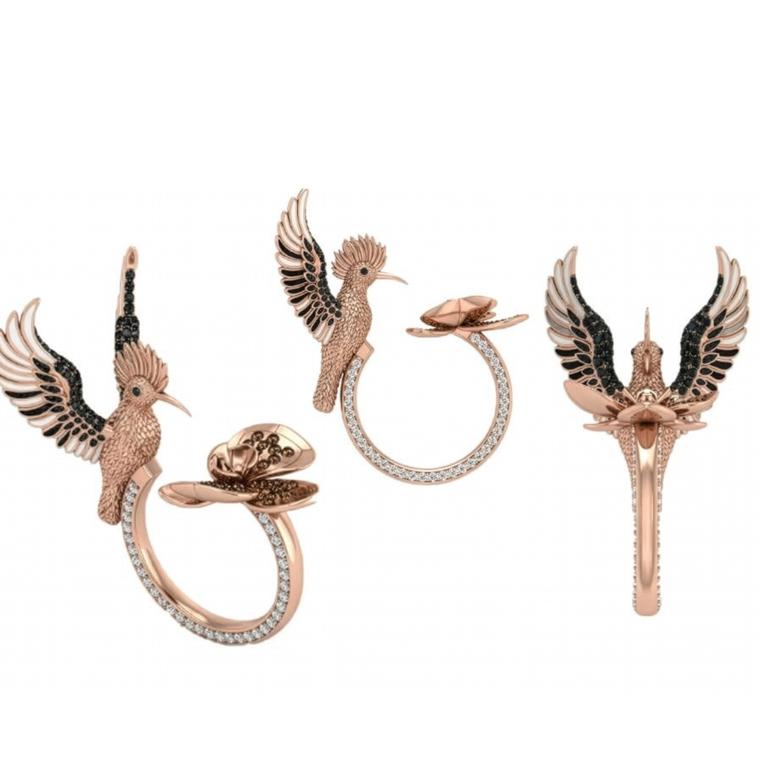
- Nomonde Zwane (Eswatini): Drawing from her personal history and the folklore of the Hoopoe (uMzolozolo), Zwane created a piece that transcends mere ornament. By linking the bird’s fan-shaped crest to memories of her late grandparents, she successfully translated spiritual connection into a wearable, structural form.
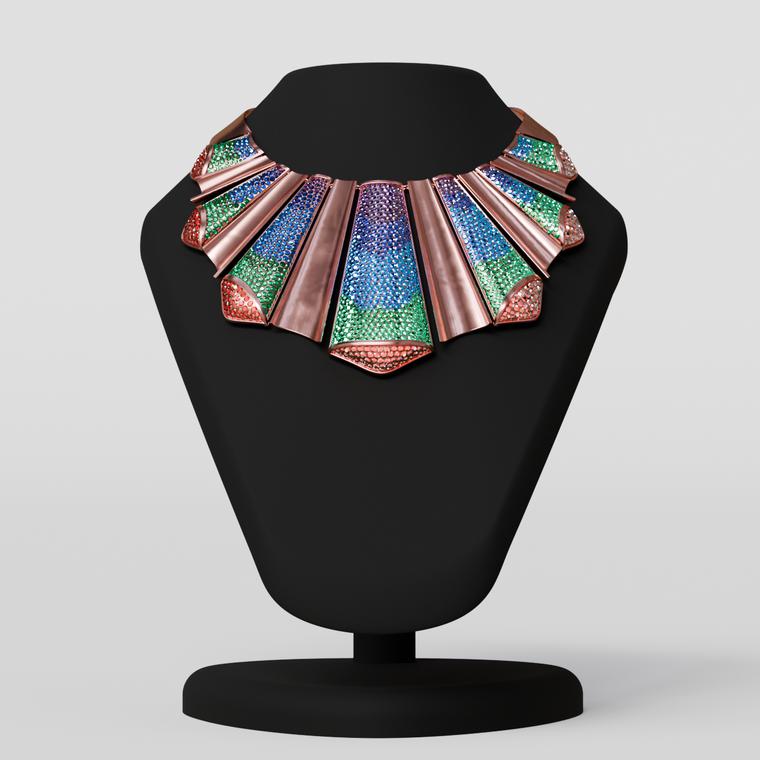
- Eduardo Moreno Nery Vieira (Brazil): Representing the African diaspora, Vieira highlighted the cultural osmosis between Africa and Brazil. His necklace, inspired by the Purple-crested Turaco, utilized articulated, kinetic geometry to mimic the bird’s sudden flashes of crimson and iridescent green, proving that digital tools can capture the ephemeral beauty of flight.
The Art of Gouache: Painting the Natural World
In an age of rapid-fire digital output, the JGAA intentionally championed the "old school" mastery of gouache.
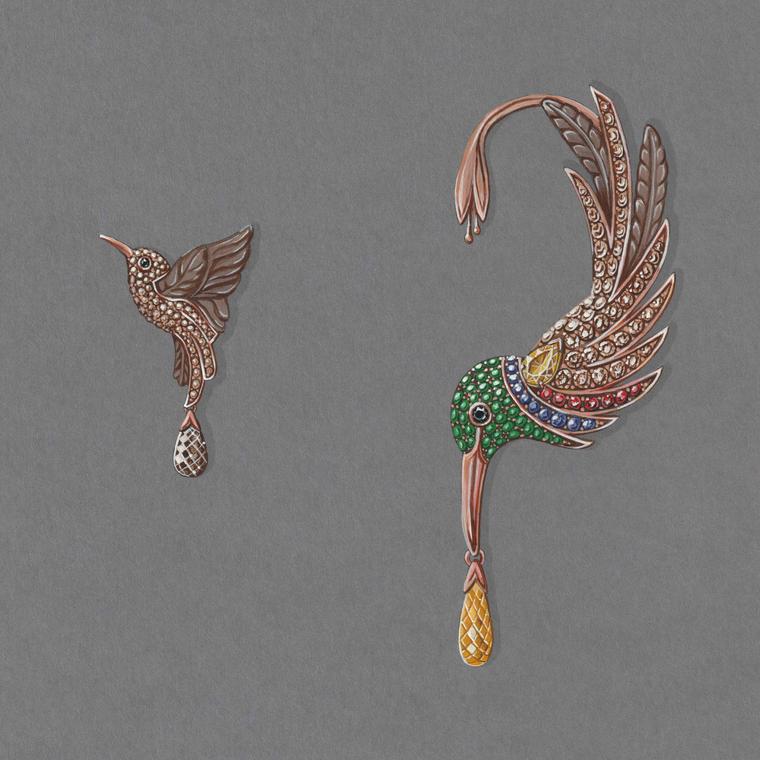
- Cathy Lennox (South Africa): Lennox’s asymmetrical concept for the Southern Double-Collared Sunbird masterfully balanced the male and female forms. By integrating a citrine drop, she added a tactile element of nectar-rich sustenance, showcasing a deep understanding of botanical and ornithological synergy.
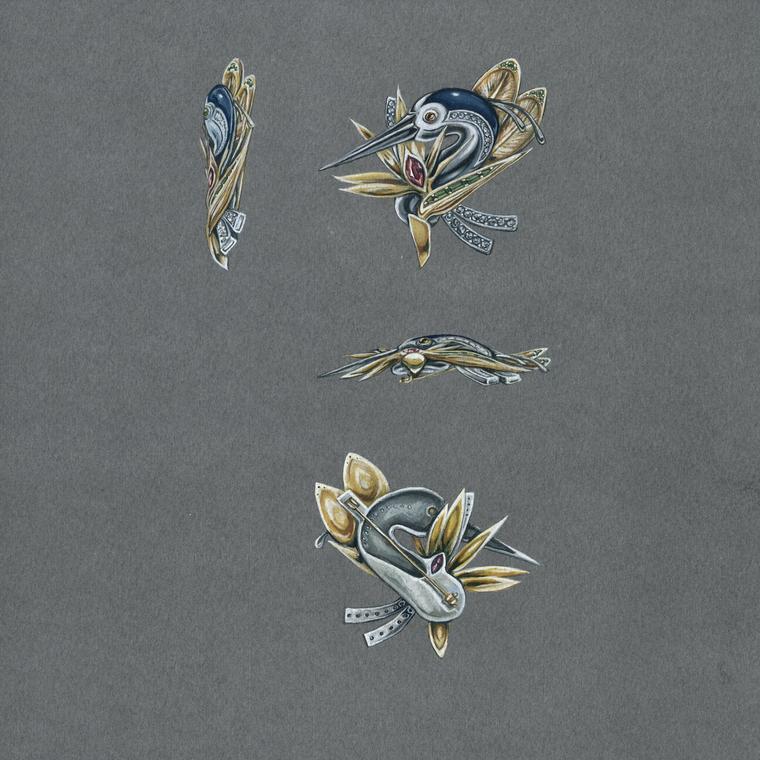
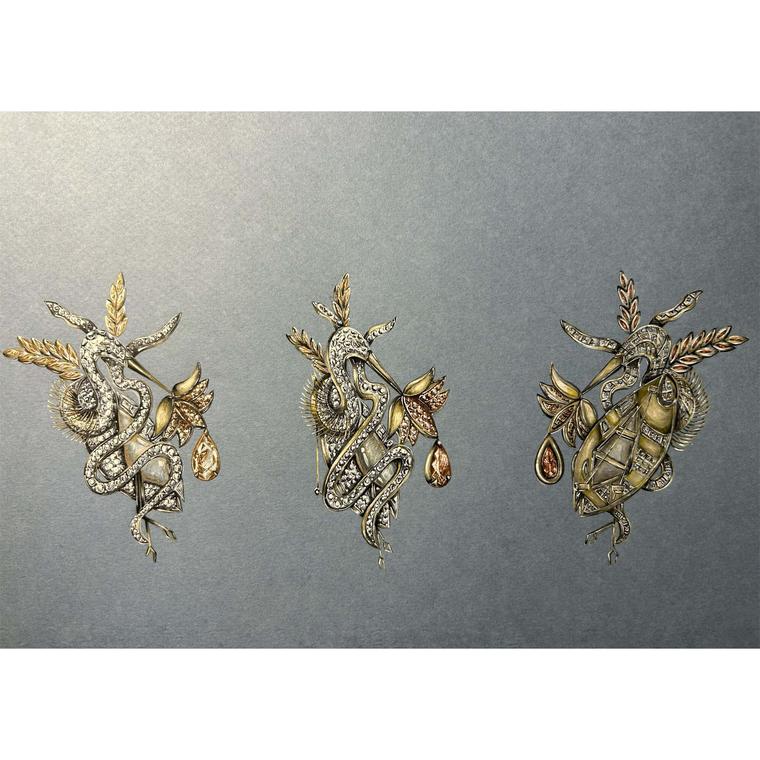
- Jana Lützeler (South Africa): Lützeler’s work centered on the Grey Heron within the Cape Floral Kingdom. Her composition, which pairs the bird with the strelitzia flower, serves as a love letter to the biodiversity of South Africa, utilizing gouache to map out complex layering and texture.
- Nada Basta (Egypt): A specialist in the medium, Basta’s "Guardian of the Nile" utilized carnelian, quartz, and moonstone in her rendering to ground the heron in the historic geography of Luxor and Aswan, creating a direct dialogue between the bird and the lifeblood of Egyptian civilization.
Hand Rendered Design: The Power of the Human Touch
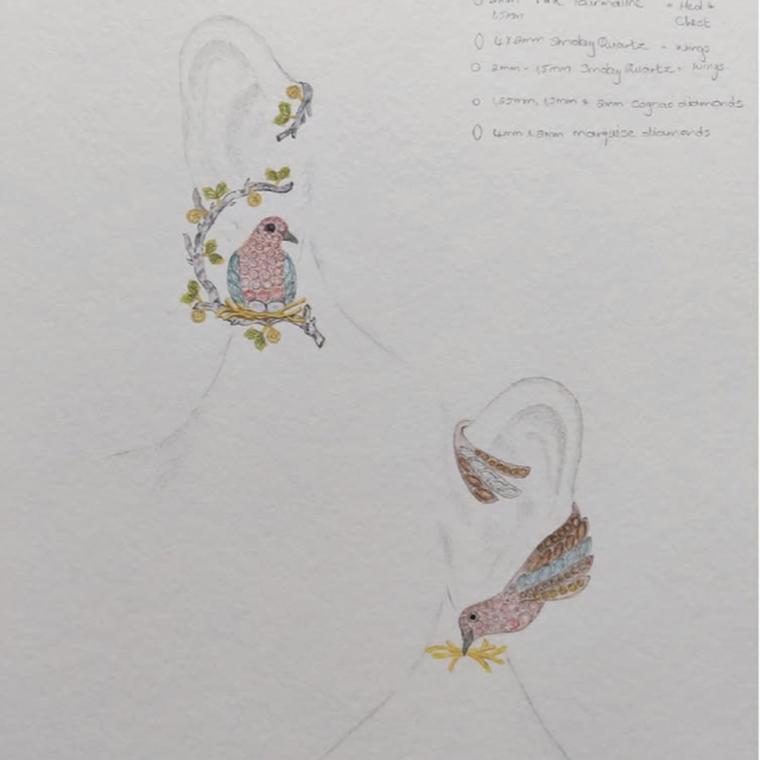
- Lenate de Villiers (South Africa): De Villiers looked to the Karoo for inspiration, using the Laughing Dove to represent Ubuntu (humanity toward others). Her hand-rendered earrings focus on the duality of rest and flight, emphasizing the resilience inherent in nature.
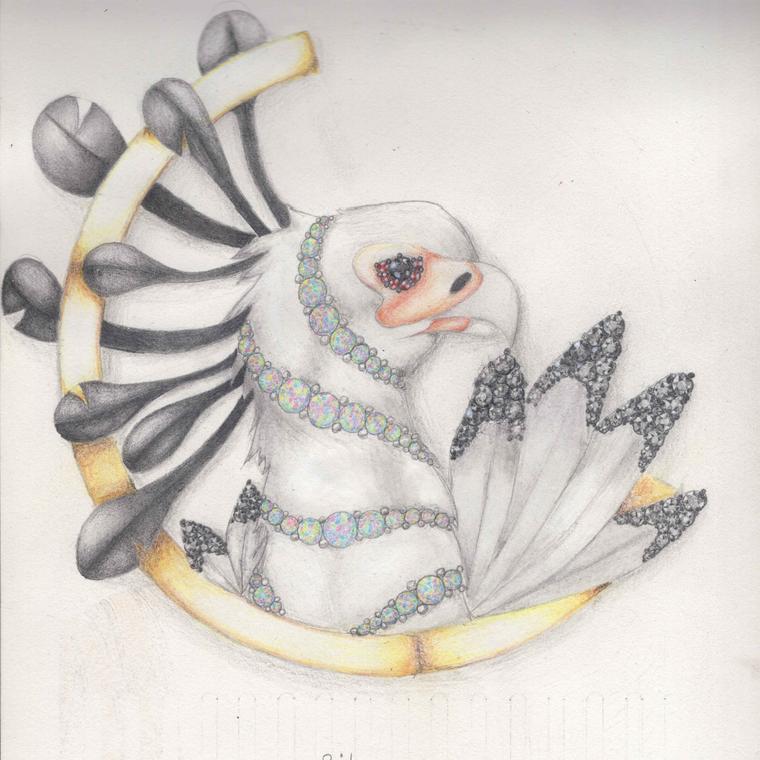
- Marna Potgieter (South Africa): At just 19 years old, Potgieter demonstrated a mature grasp of bold, symbolic design. Her Secretary Bird concept—utilizing buffalo horn, black onyx, and opals—creates a visual language of fearlessness and freedom, framing the bird of prey within an "incomplete" golden circle.
Supporting Data: Why This Matters for the Industry
The significance of the Design Dynamic competition extends beyond the art itself. It addresses a persistent gap in the jewellery market: the lack of formal, structured platforms for African designers to access global gemstone supply chains.
The partnership with Moyo by Piat and Maison Piat is the critical lynchpin here. By providing the gemstones for these projects, the JGAA is solving the "resource access" dilemma that often hinders emerging designers. Furthermore, the selection of birdlife as a theme serves as a subtle, powerful nod to ecological conservation—a growing priority for the luxury sector as it shifts toward more ethical and transparent sourcing practices.
Official Responses and Industry Outlook
Industry analysts at GemGenève noted a palpable change in the tone of the fair during the presentation. Dealers who typically focus on raw stone metrics were seen engaging with the narrative-heavy designs of the finalists.
"The JGAA is doing the heavy lifting of cultural infrastructure," said one industry observer. "They are proving that African design is not a trend, but a sophisticated, research-led discipline that holds its own on the world’s most critical stage."
The JGAA leadership emphasized that the competition is designed to be a career-accelerator. By moving the winning concepts into production, the association is ensuring that these young designers gain the manufacturing experience required to scale their brands internationally.
Implications: A New Era of African Luxury
The implications of the 2026 Design Dynamic competition are twofold:
- For the Global Market: The industry is forced to reckon with a more diverse definition of "luxury." The inclusion of materials like buffalo horn alongside precious gems and the infusion of African folklore into high-jewellery narratives signals a shift toward a more inclusive, globally-aware market.
- For African Designers: The JGAA has provided a blueprint for success. By combining rigorous technical training (CAD and Gouache) with deep storytelling, designers are finding that their local ecosystems and personal histories are their greatest assets.
As the winning pieces move into production, the eyes of the industry remain fixed on the JGAA. The success of this competition at the 10th anniversary of GemGenève confirms that the future of the industry is no longer solely written in the capitals of Europe. It is being written in the studios of Johannesburg, Mbabane, and Cairo—and it is, quite literally, taking flight.
The "Design Dynamic" initiative has set a high bar, not just for the quality of the jewellery, but for the sustainability of the careers it intends to build. As these designers step onto the global stage, they carry with them the heritage of a continent and the technical precision of a new generation, ready to redefine the global landscape of fine jewellery.