Toyota is currently operating in a golden age of performance engineering. Under the guidance of Chairman Akio Toyoda, the brand has pivoted from producing reliable, utilitarian commuter cars to becoming one of the most prolific manufacturers of enthusiast-focused machinery. From the GR Yaris to the GR Corolla and the GR86, the Gazoo Racing (GR) sub-brand has proven that Toyota is committed to the driver. Now, a tantalizing new mystery has emerged from the hallowed tarmac of Fuji Speedway, suggesting that the most ambitious project yet—a mid-engined, all-wheel-drive sports car—is no longer just a rumor.
The Fuji Speedway Sighting
The automotive world caught fire this week following a brief, grainy clip posted to social media platform X (formerly Twitter) by user @You_SuiKoyoAZ. The footage captures a low-slung, aggressive prototype pushing hard through the corners of the Fuji Speedway. While the video is only a few seconds long, it provides enough auditory and visual evidence to confirm that Toyota is deep into the testing phase of a high-performance vehicle.
The most distinct feature of the clip is the exhaust note. It carries a guttural, "burbly" tone characteristic of a high-output turbocharged engine, accompanied by the distinct, mechanical gear changes that strongly suggest a manual transmission. This detail alone has sent ripples of excitement through the enthusiast community, as it implies that Toyota is prioritizing the tactile, analog experience that modern sports cars are increasingly abandoning.
A Chronology of Anticipation
The road to this sighting has been paved with years of speculation. To understand the gravity of this prototype, we must look at the timeline of Toyota’s recent performance development:
- 2021–2022: Rumors begin circulating regarding a successor to the legendary MR2. Enthusiasts theorized that Toyota would look to its historical back catalog to fill a gap in the sub-Supra market.
- 2023: Toyota begins testing a mysterious, heavily camouflaged vehicle on rally stages. Unlike the traditional asphalt-focused testing, this rally-prepped mule suggested the car might feature an advanced all-wheel-drive system capable of handling loose surfaces.
- Early 2024: Industry insiders report that Toyota is looking to elevate Gazoo Racing from a sub-brand to a semi-autonomous performance division, similar to how BMW handles M or Mercedes-Benz handles AMG.
- Late 2024: The Fuji Speedway footage emerges. This prototype appears significantly more "production-ready" than the rally mules seen previously. It features coherent body lines, a two-door coupe silhouette, and sophisticated lighting elements that align with Toyota’s current design language.
Supporting Data: Engineering the Future
While official technical specifications remain under lock and key, the industry consensus is beginning to coalesce around a specific hardware configuration.
The Powertrain
At the heart of the project is expected to be a new, high-performance 2.0-liter turbocharged four-cylinder engine. This power plant is reportedly being developed to produce roughly 400 horsepower in its base configuration. However, sources suggest that a more extreme, limited-edition variant—utilizing a larger turbocharger and potentially a mild-hybrid electrical assist—could push output toward the 600-horsepower mark. This level of power would firmly place the vehicle in competition with high-end European sports cars.
The Drivetrain
The inclusion of an all-wheel-drive system is perhaps the most significant departure from the classic MR2 platform, which was strictly rear-wheel drive. By adopting an AWD layout, Toyota is signaling that this car is intended to be a multi-surface weapon. Whether it revives the "Celica" nameplate or adopts the "MR2" badge, the car is clearly designed to leverage the rally-bred expertise gained from the GR Yaris and GR Corolla programs.
Design Language
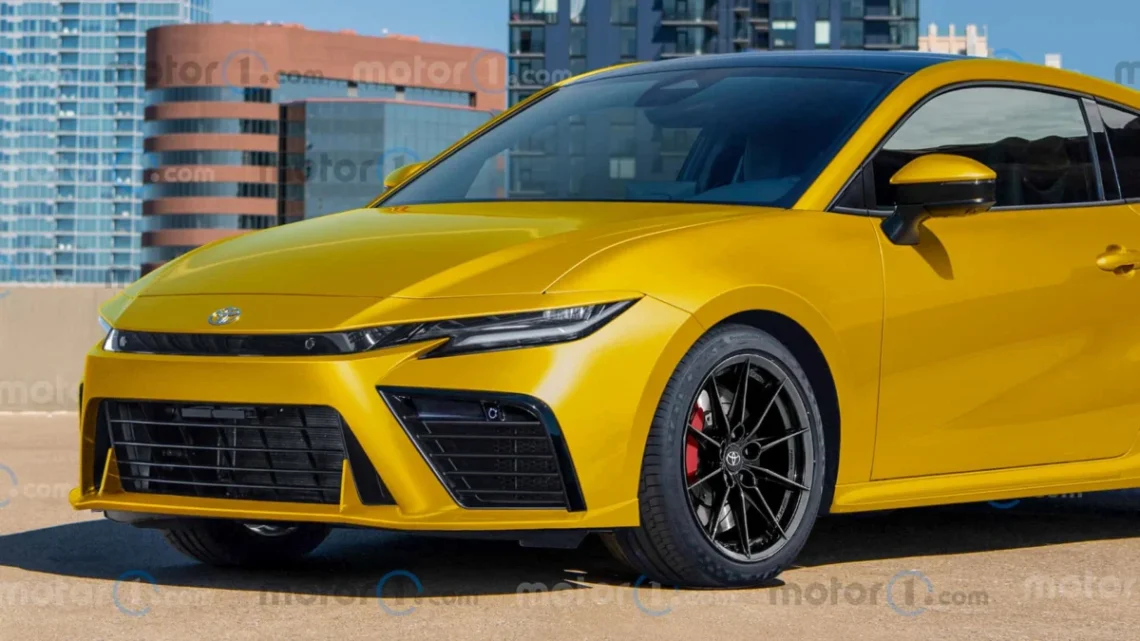
Visually, the prototype features slim, downturned LED headlights that mirror the aggressive "hammerhead" front fascia found on the new Prius and Crown. The inclusion of a large hood vent suggests that significant cooling is required, likely for an intercooler or a complex heat-management system for the mid-mounted engine. The taillights are also distinct, reflecting the current trend of thin, full-width light bars that define the modern Toyota aesthetic.
Official Responses and Corporate Strategy
Toyota has remained characteristically tight-lipped regarding specific model names or release dates. However, the company has not denied the existence of the project. In fact, executives have repeatedly hinted that the company is "not done" with sports cars.
The strategy appears to be a two-pronged approach. First, Toyota wants to cement its reputation as a leader in performance, ensuring that even as the industry shifts toward electrification, the "Joy of Driving" remains a core corporate value. Second, there is a clear push to establish Gazoo Racing as a standalone entity. By separating the GR brand, Toyota can iterate faster and cater to a more niche, performance-hungry demographic without diluting the mass-market appeal of its mainstream lineup.
Implications for the Industry
If this prototype enters production—with a projected debut potentially as early as 2027—it could represent the ultimate swan song for internal combustion.
- Market Positioning: A 400+ horsepower, AWD, manual-transmission sports car would be a unicorn in the current market. Most competitors have moved to dual-clutch transmissions and heavy battery-electric platforms. If Toyota delivers a lightweight, mechanical, and powerful machine, it will instantly become a collector’s item.
- The Rally Connection: If the car is indeed being developed with WRC (World Rally Championship) specs in mind, it suggests that Toyota is looking to dominate the rally stage once more. This would create a direct link between the track, the rally stage, and the showroom floor.
- The "GR" Brand Expansion: The success of this vehicle will determine the trajectory of the Gazoo Racing brand. If the market reception is as positive as the early social media buzz suggests, it will embolden Toyota to invest in further bespoke performance chassis rather than relying on shared platforms with other manufacturers (like the Supra-BMW collaboration).
Conclusion: A New Era?
The automotive community is understandably cautious. We have seen many "rumored" sports cars disappear into the void of corporate boardrooms. However, the sight of a prototype testing at Fuji—the spiritual home of Toyota’s racing heritage—carries weight.
Whether this car eventually bears the Celica badge, paying homage to a rally-dominating icon of the 90s, or the MR2 badge, representing the pinnacle of mid-engine handling, the result seems clear: Toyota is not interested in merely keeping up with the industry. They are interested in setting the pace.
For the enthusiasts who have waited years for a high-performance, manual-transmission machine that blends the best of rally technology with everyday usability, 2027 cannot come soon enough. If the sounds and the silhouettes from Fuji are any indication, the wait will be well worth it. Toyota is once again proving that when it comes to performance, they are playing a game that very few other manufacturers can touch.