Main Facts: A Transatlantic Masterpiece of Independent Horology
In an era where luxury watchmaking is increasingly dominated by vertically integrated conglomerates, true cross-pollination between historic Swiss institutions and modern independent artisans remains a rare and thrilling spectacle. Zenith, a manufacture steeped in nearly a century and a half of relentless innovation, has once again transformed its esteemed G.F.J. collection into a collaborative canvas. Following its critically acclaimed debut edition featuring Japanese watchmaker Naoya Hida—which introduced a tranquil silver dial, hand-engraved typography, and blue urushi lacquer—Zenith now looks westward.
For its second "Double Signed" chapter, Zenith has partnered with California-based independent watchmaker J.N. Shapiro. The result is a breathtaking synthesis of traditional European movement architecture, contemporary Swiss re-engineering, and classic American decorative arts.
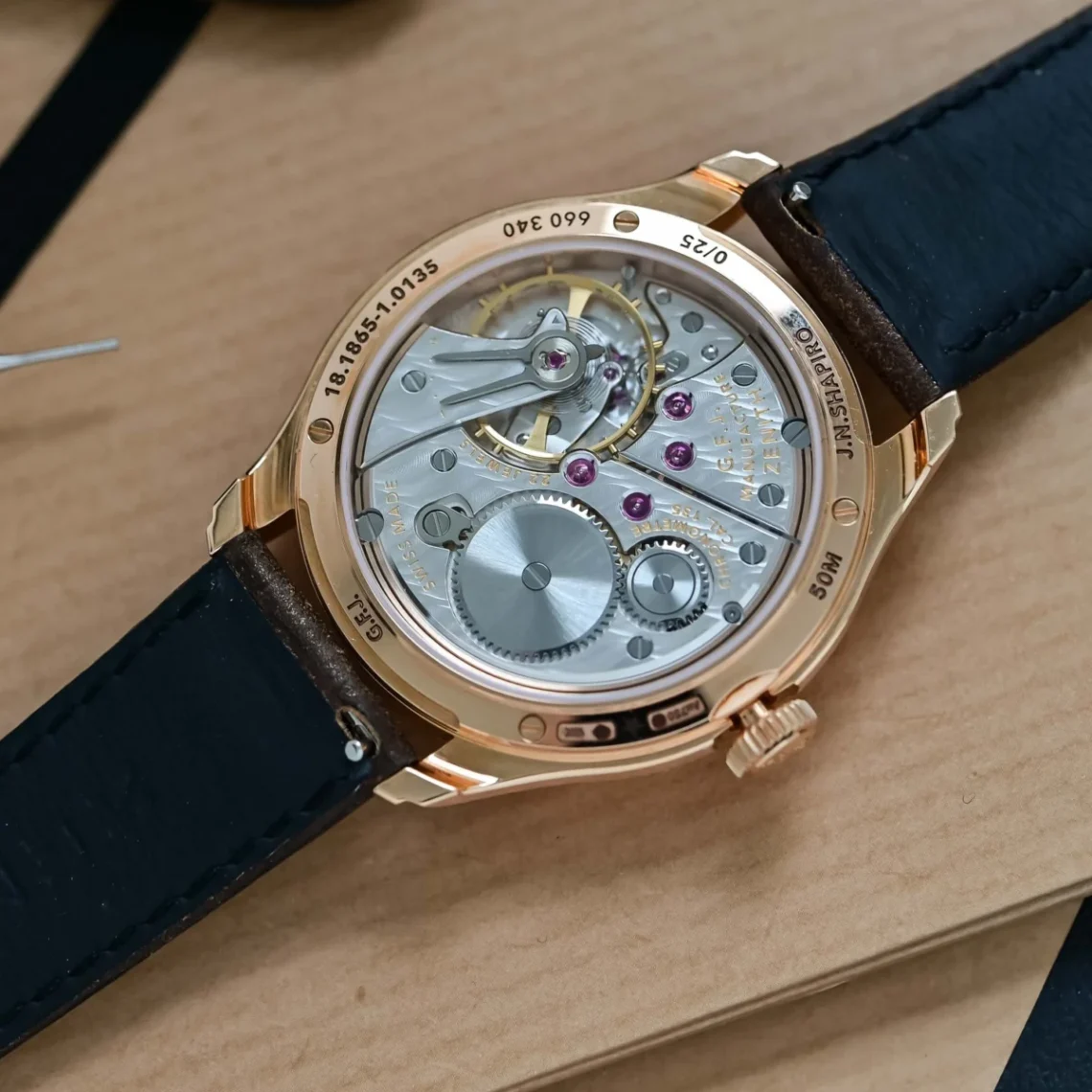
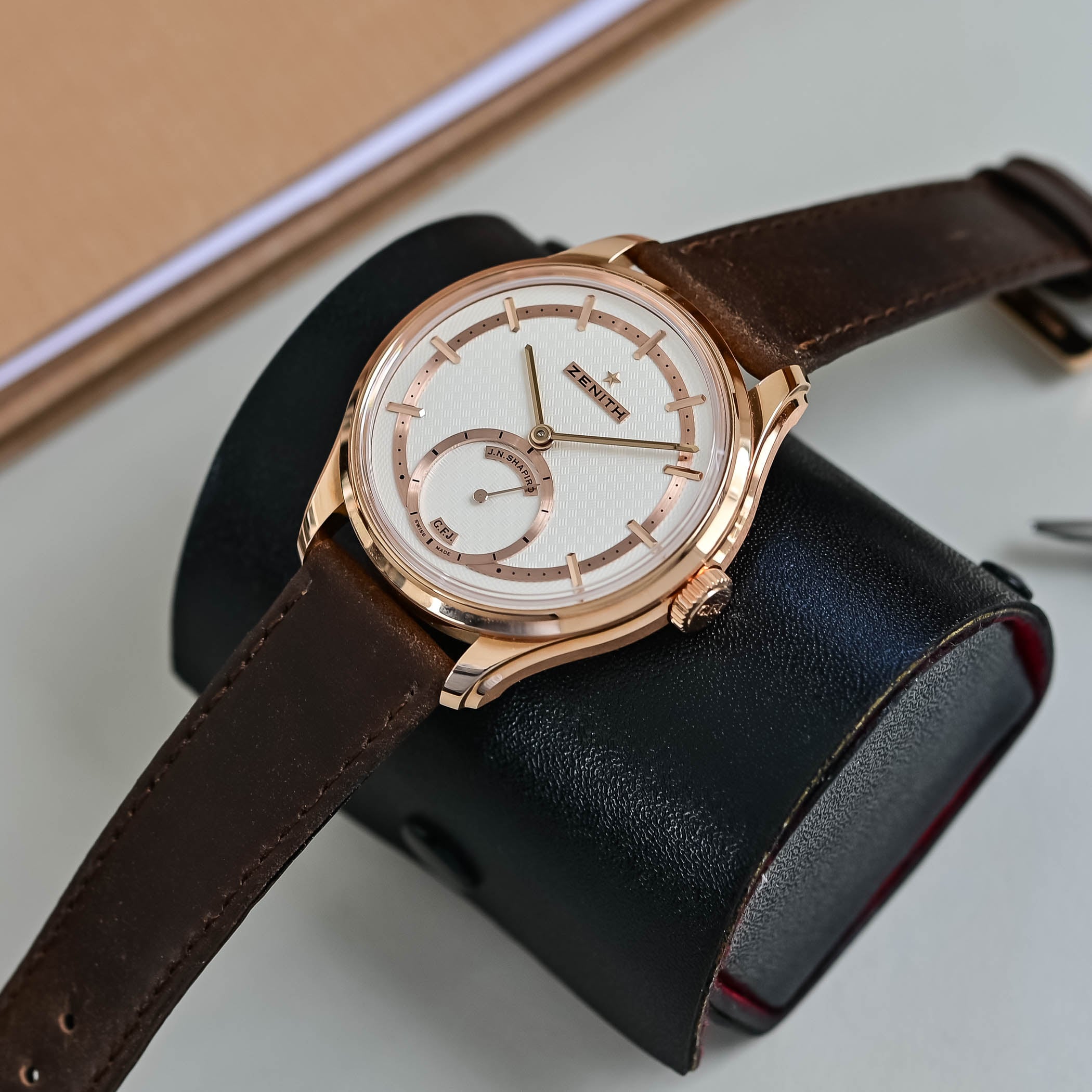
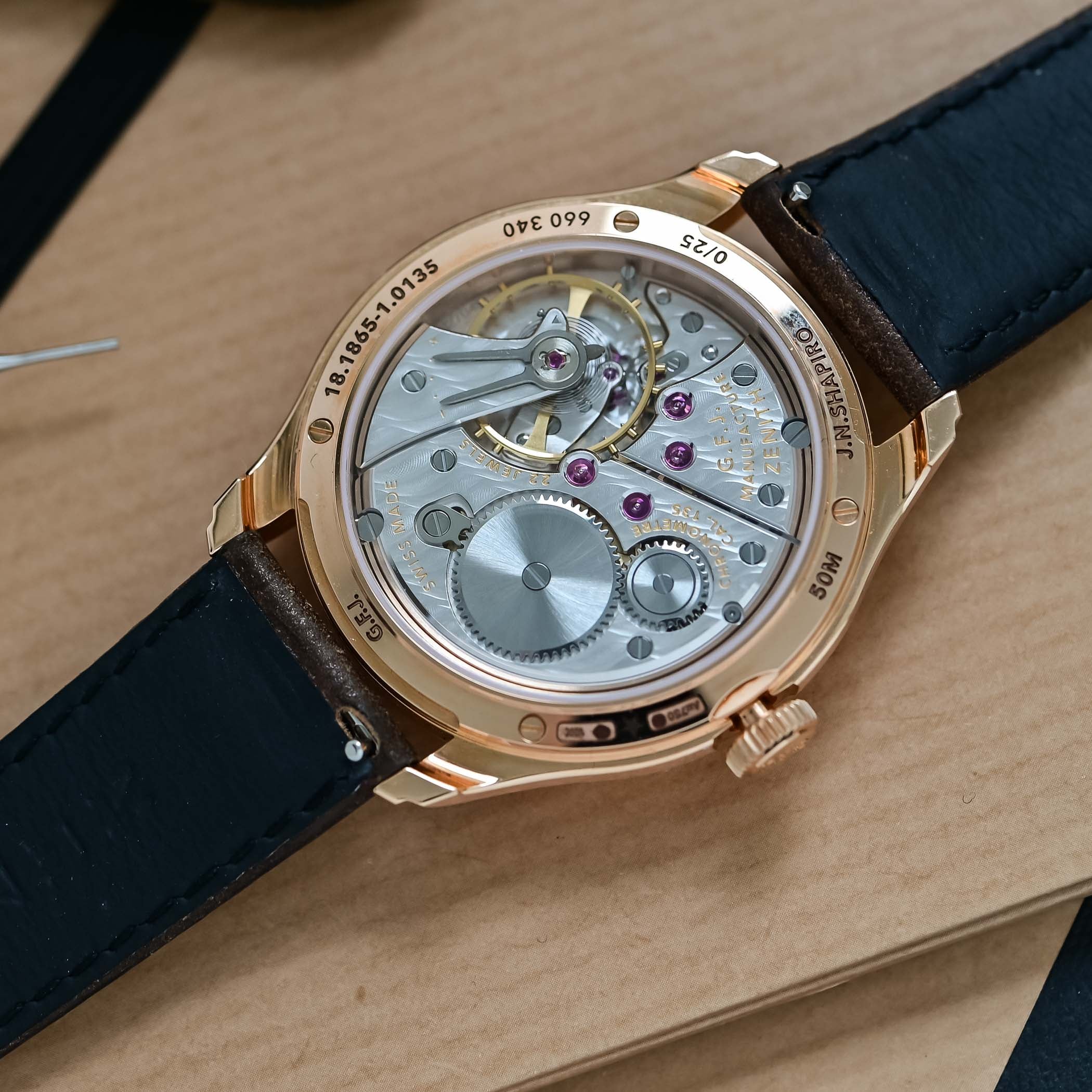
At its core, the new timekeeper is built around one of the most celebrated and historically significant movements in horological history: the Zenith Calibre 135. Housed in a warm, 18-karat rose gold case measuring 39.15mm in diameter, 10.5mm in thickness, and with a balanced 45.75mm lug-to-lug distance, the watch bridges the gap between vintage dress-watch proportions and modern wearability. Featuring a sapphire crystal up front and an exhibition caseback that proudly displays an extensively customized movement, the watch is water-resistant to 50 meters.
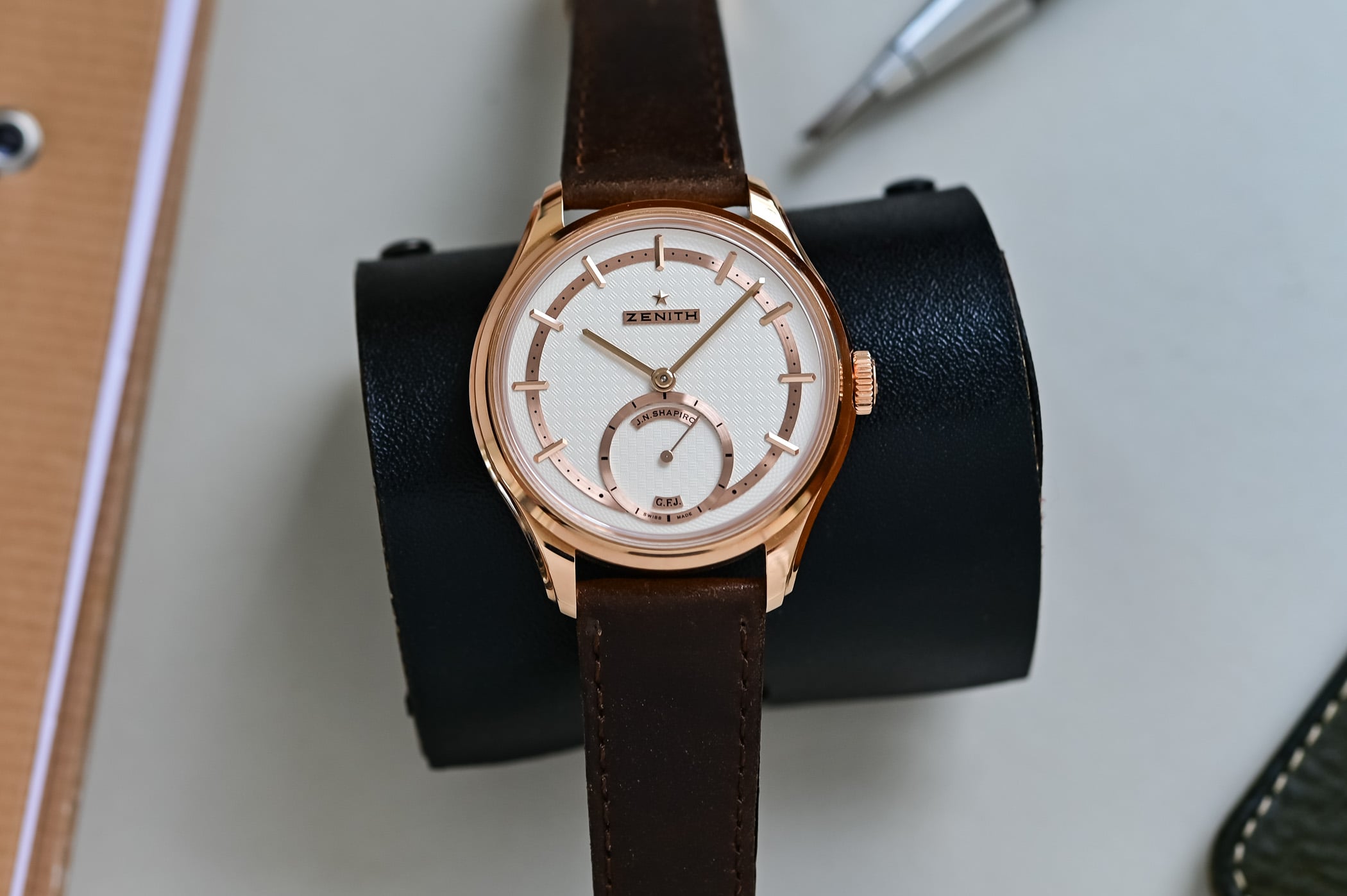
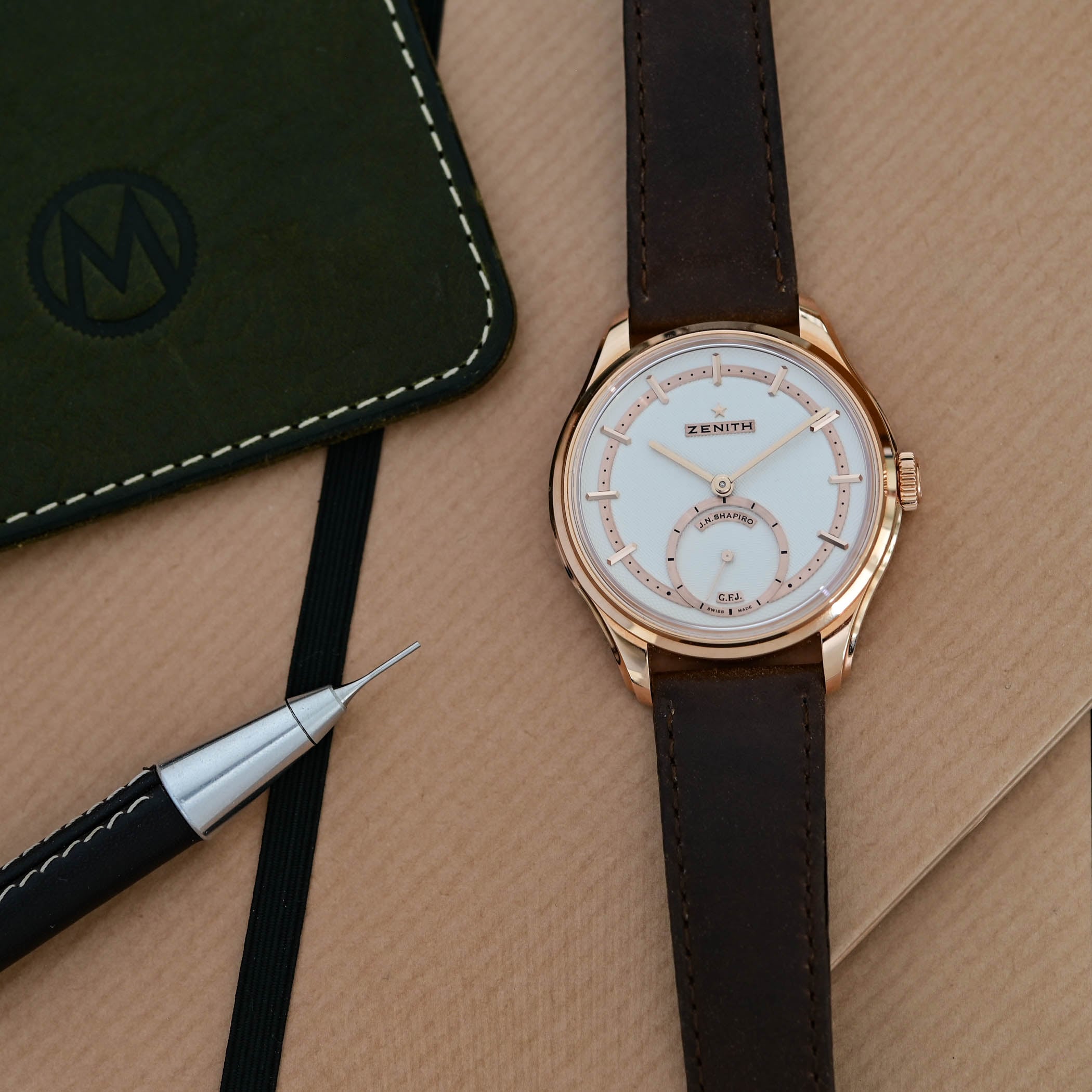
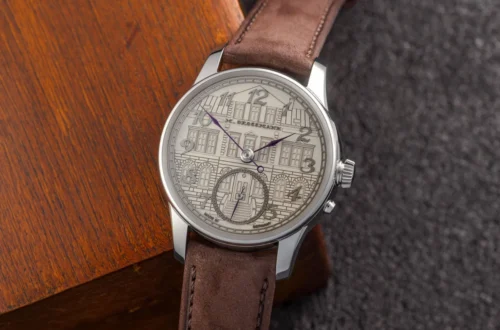
However, the true heartbeat of this limited edition lies in its unprecedented visual execution. The dial, entirely hand-cut in Shapiro’s Los Angeles atelier using vintage rose-engine and straight-line machines, showcases a dazzling array of guilloché patterns. Meanwhile, the hand-wound movement features rare American-style damaskeening on its bridges—a rare flourish for a Swiss-made chronometer. Limited to a strictly allocated run of just 25 pieces worldwide, the Zenith G.F.J. Calibre 135 Double Signed J.N. Shapiro is priced at CHF 68,900 and comes equipped with an interchangeable suite of premium leather straps, with an optional 18k rose gold bracelet available upon request.
Chronology: From Observatory Glory to the California Atelier
To fully appreciate the weight of this collaborative release, one must trace the evolutionary timeline of both the movement and the independent watchmaker tasked with reimagining it.
1948: Zenith watchmaker Ephrem Jobin develops the Calibre 135. Conceived specifically to conquer the cutthroat world of observatory chronometry competitions, the movement is built with a massive balance wheel and uncompromising precision capabilities.
1950–1954: The competition-grade Calibre 135-O dominates the Neuchâtel Observatory trials, capturing five consecutive first-place victories. It cements its status as a titan of mid-century chronometry.
2018: Joshua Shapiro, a former school principal and U.S. history teacher living in Los Angeles, founds J.N. Shapiro. Operating out of a home workshop, Shapiro meticulously teaches himself the lost art of operating antique rose-engine and straight-line machines.
The 2020s: Shapiro evolves from a solo craftsman into a legitimate independent watchmaking force, releasing proprietary calibres like the Calibre 26 and the Resurgence, a milestone timepiece dedicated to the revival of independent American mechanical watchmaking.
2025: Marking its 160th anniversary milestone build-up, Zenith resurrects and re-engineers the legendary Calibre 135 for the modern G.F.J. collection, preserving its structural integrity while integrating modern reliability, a 72-hour power reserve, and strict COSC chronometer certification.
Late 2026: Zenith unveils the second installment of its G.F.J. Double Signed series. Following the Naoya Hida collaboration, the brand partners with J.N. Shapiro, merging Swiss observatory heritage with California engine-turning and American-style movement decoration.
Supporting Data: Specifications and Technical Architecture
Feature
Specification Details
Model
Zenith G.F.J. Calibre 135 Double Signed J.N. Shapiro
COSC-certified chronometer (regulated to ±2 seconds per day)
Strap Options
Brown Cordovan leather, beige nubuck alligator, and black calf leather; fitted with an 18k rose gold G.F.J.-engraved pin buckle (solid 18k rose gold bracelet available upon request)
Availability
Strictly limited edition of 25 pieces worldwide
Retail Price
CHF 68,900
The Art of the California Dial
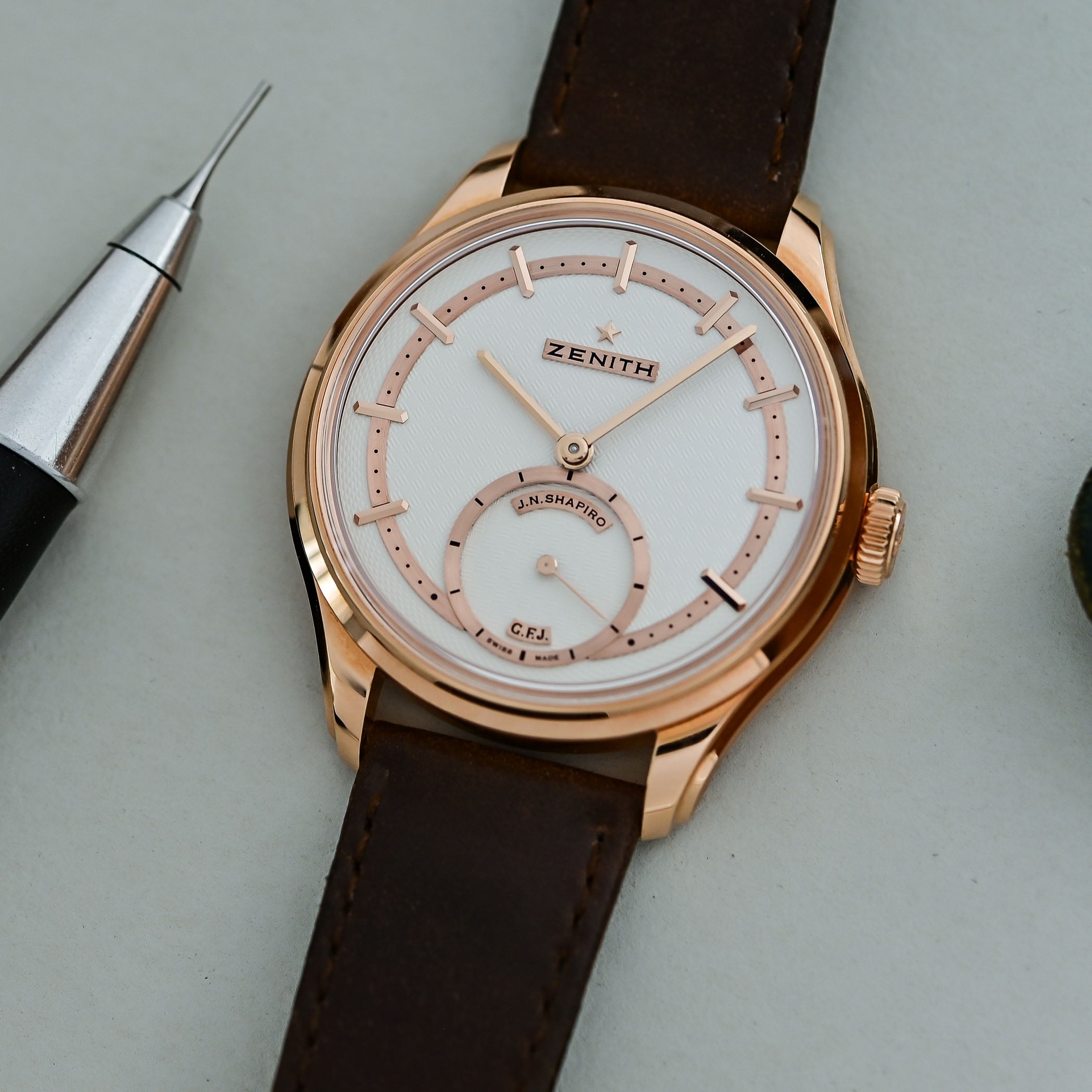
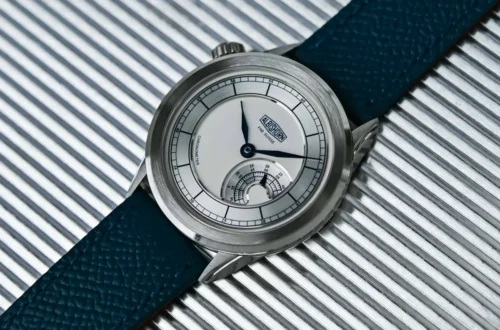
The dial of the J.N. Shapiro edition is a masterclass in texture and light play, setting a stark contrast to the minimalist aesthetic of the preceding Naoya Hida release. Shapiro employs three distinct engine-turned motifs on a solid silver base:
The Outer Track: Features a classic barleycorn (grain d’orge) pattern, casting a rhythmic, undulating reflection.
The Center Stage: Transitions into a tighter, more complex basketweave motif, introducing structural depth.
The Small Seconds Sub-Dial: Positioned gracefully at 6 o’clock, it highlights Shapiro’s proprietary "Infinity Weave"—a hypnotic variation of the basketweave where geometric forms nest within themselves.
Applied 18k rose gold framing rings separate these textural zones, matching the faceted hands and hour markers. A shared signature plaque bearing the Zenith and J.N. Shapiro names anchors the layout alongside the proud G.F.J. insignia.
The Movement: Observatory DNA Meets American Damaskeening
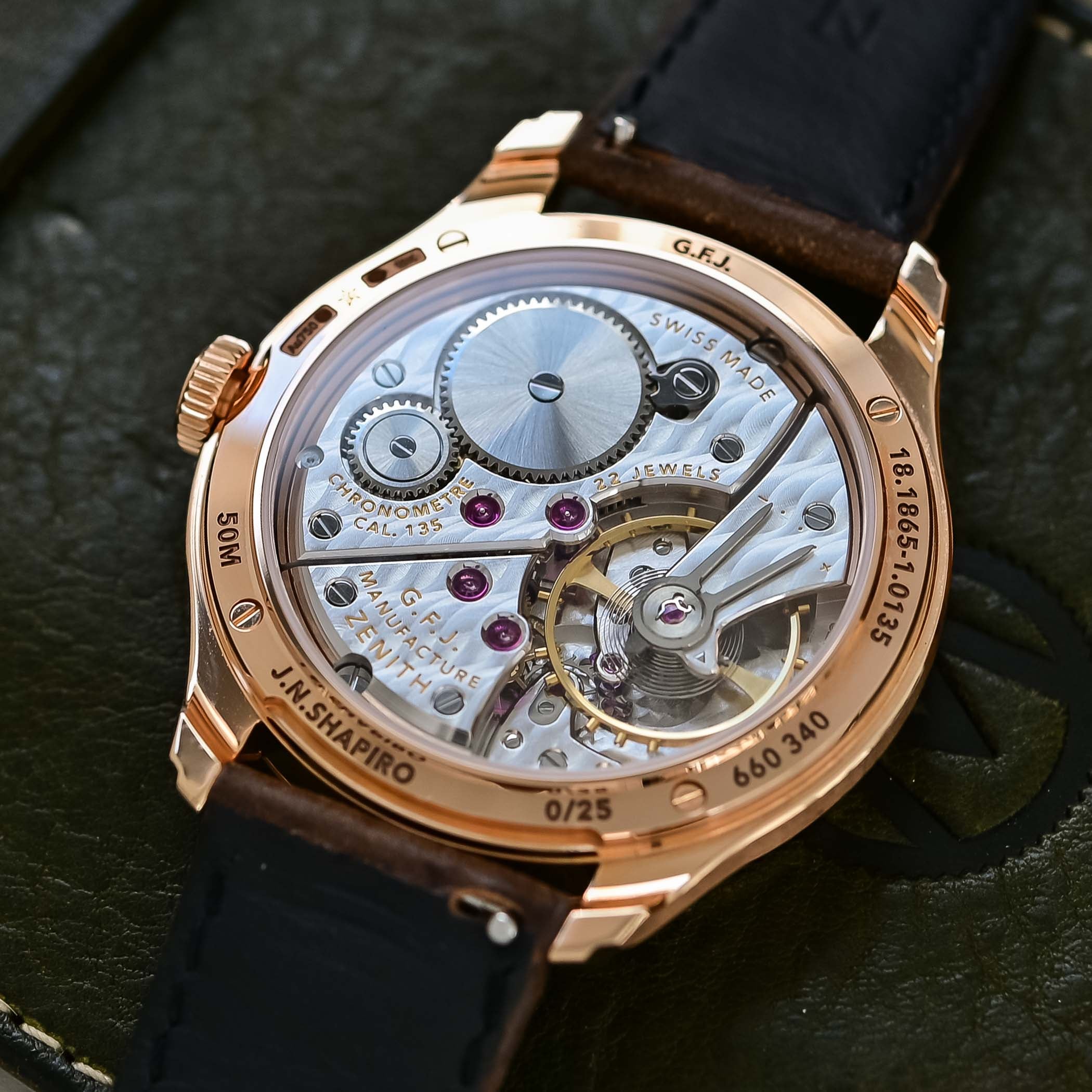
Beneath the sapphire glass lies the beating heart of the watch: the hand-wound Calibre 135. Operating at a traditional, hypnotic pace of 18,000 vph, it boasts a massive variable-inertia balance equipped with a Breguet overcoil, Charles Fleck’s signature double-arrow regulator, and a contemporary stop-seconds mechanism.
What elevates this specific execution is Shapiro’s intervention on the movement architecture itself. While traditional Swiss watches rely heavily on Côtes de Genève or perlage, Shapiro applies damaskeening—an ornamental finishing technique native to historic 19th- and early 20th-century American pocket watch manufacturing. By combining linear brushing and geometric engine-turning across the rhodium-plated bridges, Shapiro creates a captivating, wave-like mosaic that honors the transatlantic roots of independent horological artistry.
Official Responses and Industry Context
The collaborative ethos of the G.F.J. collection represents a strategic and philosophical evolution for Zenith. By handing over creative control of the dial and select movement finishes to avant-garde independent watchmakers, Zenith demonstrates a rare humility and an immense respect for artisan craft.
While brand executives have noted that the G.F.J. platform was conceived to honor the historic milestones of the manufacture, the decision to engage external independent creators has turned the line into a cultural bridge. For Joshua Shapiro, the partnership represents a monumental validation of his mission in Los Angeles:
"When I started out in a home garage teaching myself the intricacies of rose-engine turning, the goal was simply to keep traditional American guilloché alive," industry reports quote Shapiro reflecting on his craft. "To take those techniques—and the historic American tradition of damaskeening—and apply them directly to a legendary Swiss observatory movement like the Zenith Calibre 135 is a career-defining honor. It proves that the boundaries separating traditional Swiss heritage and modern American independent watchmaking are entirely permeable when united by a shared obsession with absolute craftsmanship."
Zenith’s leadership echoes this sentiment, emphasizing that the G.F.J. series is not merely about reviving the past, but about injecting contemporary creative vitality into historic mechanisms. By inviting Shapiro to imprint his signature style onto both sides of the watch, Zenith has transformed a museum-grade historical movement into a living, breathing dialogue between two distinct continents of watchmaking culture.
Implications: What the G.F.J. J.N. Shapiro Edition Means for Modern Watchmaking
The launch of the Zenith G.F.J. Calibre 135 Double Signed J.N. Shapiro carries profound implications for the upper echelons of the luxury watch market:
The Rise of the "Meta-Collaboration": For decades, watch brand collaborations typically meant slapping a co-branded logo onto a standard dial. Projects like the G.F.J. series elevate collaboration into true co-creation, where master artisans physically alter components within their respective domains (such as Shapiro cutting guilloché in California and applying damaskeening in Switzerland). This sets a new benchmark for what collectors should expect from high-end joint ventures.
Validation of Independent American Watchmaking: Joshua Shapiro’s involvement underscores a broader cultural shift in horology. For over a century, the flow of technique was strictly Eurocentric. By integrating American-style damaskeening and localized guilloché onto a pillar of Swiss chronometry, the watch signals that American independent watchmaking has firmly arrived on the global stage as an equal artistic partner.
Scarcity and Collector Appeal: With only 25 pieces slated for production at a price point of CHF 68,900, this watch is destined for elite collections. Yet, its true value extends beyond financial appreciation. It serves as a physical artifact of a rare moment in horological history—where a century-old Swiss observatory icon is reawakened through the soul of a Los Angeles artisan workshop, offering a masterclass in aesthetic harmony and mechanical pedigree.