
In the modern boardroom, "sustainability" has become a ubiquitous buzzword. From annual reports to glossy marketing campaigns, corporations are eager to signal their commitment to environmental, social, and governance (ESG) goals. Yet, beneath this veneer of progress lies a persistent, structural disconnect: while executives may nod in agreement during sustainability presentations, the capital required to turn those intentions into reality remains notoriously difficult to secure.
A recent analysis in the Harvard Business Review shed light on this phenomenon, highlighting a frustrating cycle where sustainability initiatives stall despite facing no overt internal opposition. The authors—including Ann Tracy, Chief Sustainability Officer (CSO) at Colgate-Palmolive, and Steven Goldbach, who leads Deloitte’s U.S. sustainability practice—argue that the failure is not one of intent, but of communication and value demonstration.
For those entrenched in the field, this is not merely a theoretical problem; it is a professional crisis. Sustainability, despite its rising prominence, continues to operate under a significant "credibility deficit" when compared to traditional corporate functions like finance, operations, or legal affairs.
The Current Landscape: A Hierarchy of Influence
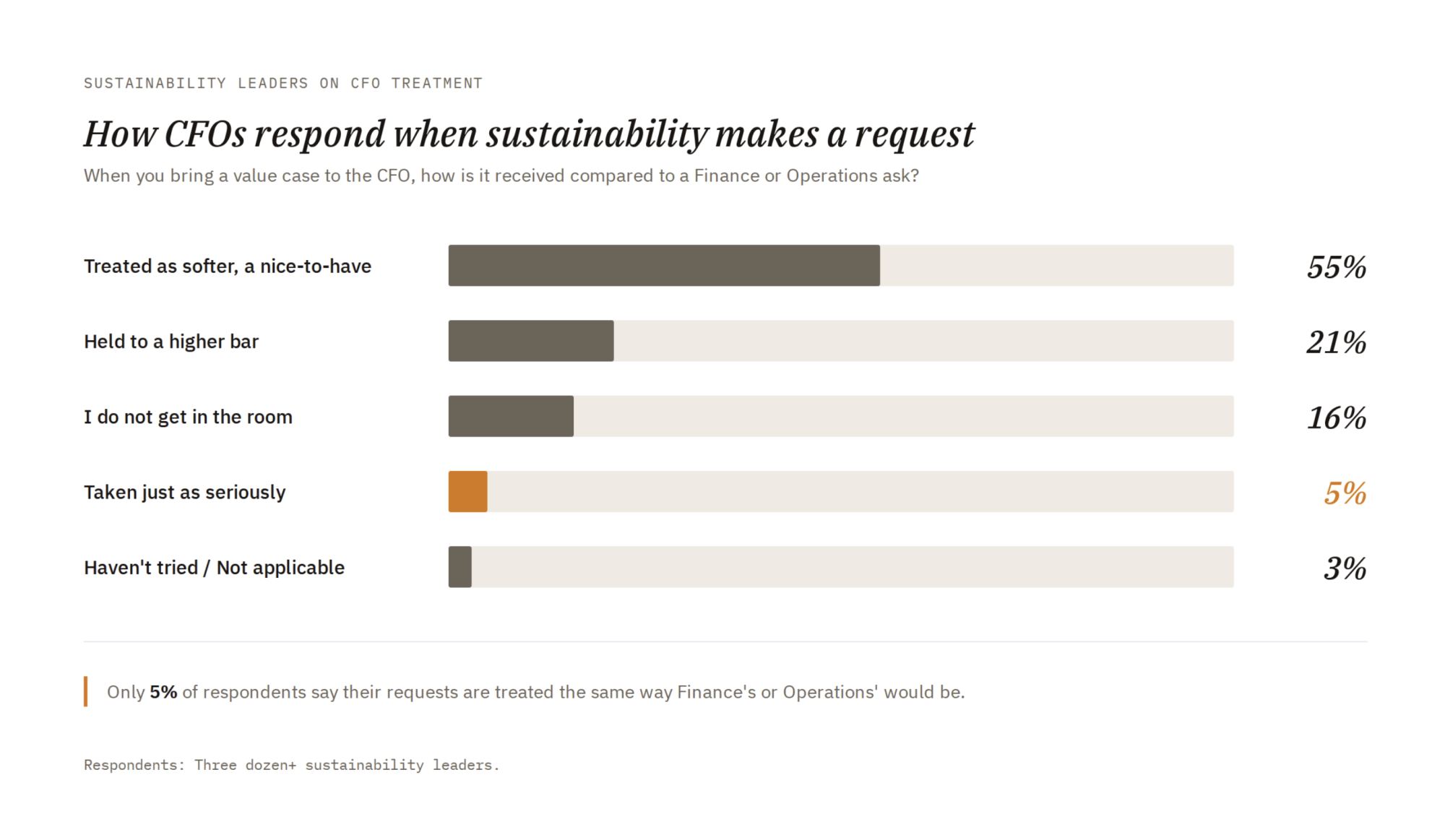
The struggle for legitimacy is grounded in cold, hard data. Over the past two months, a series of interviews with more than three dozen sustainability leaders across various industries revealed a sobering reality: sustainability requests are rarely treated with the same rigor or respect as those originating from operational departments.
Data Breakdown: The Perception of "Fluff"
The internal survey of these professionals painted a bleak picture of corporate hierarchy:
- 5% of respondents felt their investment requests were treated on par with other departments.
- 55% reported that their proposals were dismissed as "fluffy" or merely "nice-to-have."
- 21% felt their projects were held to a higher, more punitive standard of proof than other business investments.
- 16% of sustainability professionals stated they do not even have direct access to the CFO.
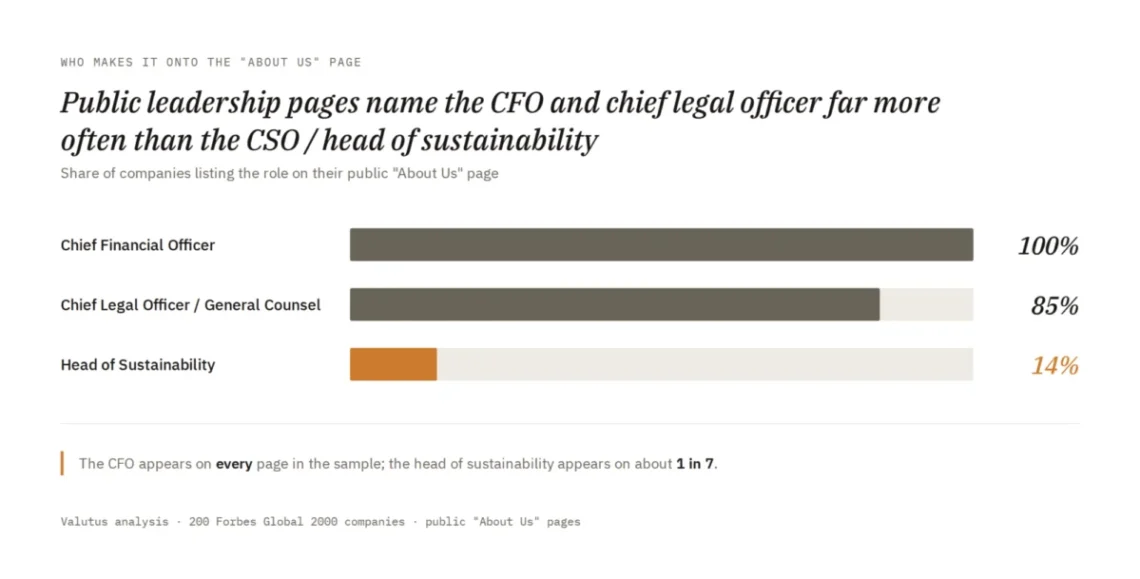
This lack of visibility is not merely a subjective feeling of exclusion. It is a structural reality. When researchers at Valutus conducted a review of 200 top global corporations, they examined the "About Us" or "Leadership" pages of company websites—the digital front porch of the modern enterprise. While 100% of these companies listed their CFOs and 85% featured their Chief Legal Officers, a mere 14% included their Head of Sustainability.

This discrepancy highlights a critical question: is sustainability being unfairly sidelined, or is it being lumped in with other non-revenue-generating functions? The data suggests the former. The legal department is arguably the ultimate "cost center"—it generates no direct revenue—yet it enjoys six times the representation at the executive level compared to sustainability.
Chronology of a Credibility Crisis
The evolution of this crisis did not happen overnight. It is the result of decades of misaligned expectations and the historical framing of sustainability as a charitable add-on rather than a core business strategy.
The "Nice-to-Have" Era (1990s–2010s)
For years, sustainability was synonymous with Corporate Social Responsibility (CSR). It was a department relegated to the marketing or public relations budget. Because it was treated as a philanthropic endeavor, the expectation was that it would cost money without providing a clear return on investment (ROI). This created a "charity bias" that persists in the minds of many long-tenured executives today.
The Professionalization Pivot (2015–2020)
As the Paris Agreement and subsequent regulatory pressures took hold, the role of the CSO began to emerge. However, the transition from "doing good" to "doing business" was uneven. Many sustainability leaders struggled to pivot their language from moral imperatives to financial metrics, leading to a decade of "vague advocacy" that failed to impress the finance department.
The Current Impasse (2021–Present)
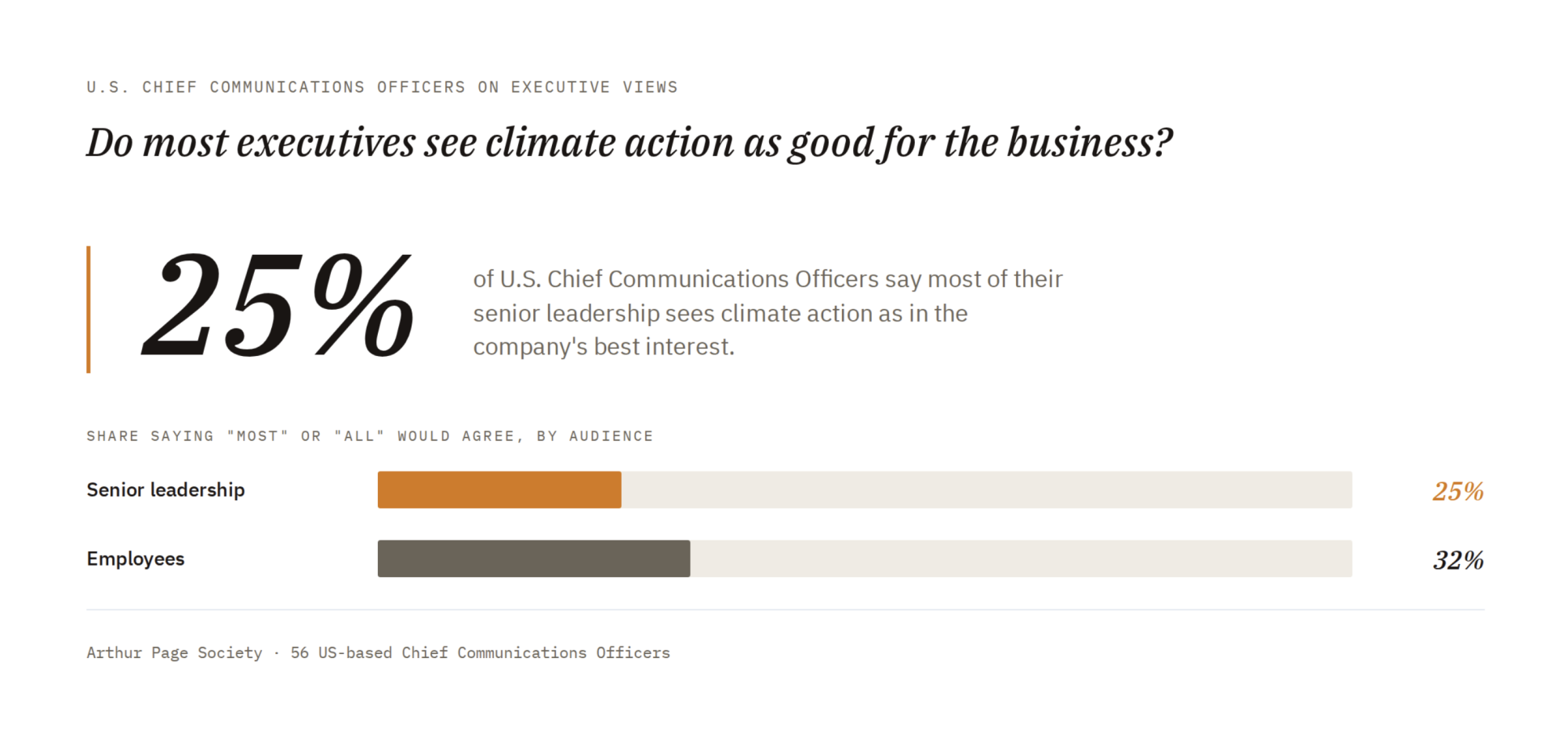
We have entered a period of heightened scrutiny. Investors and regulators now demand measurable outcomes, yet the institutional memory of sustainability as a "fluffy" project remains. When the Arthur Page Society surveyed 56 Chief Communications Officers regarding executive sentiment toward climate action, only 25% of those officers believed their executives viewed climate action as truly in the best interest of the firm.
The "Credibility Tax": Four Fatal Habits
If sustainability is to move from the periphery to the center of the corporate strategy, practitioners must undergo a rigorous self-audit. There are four common habits that continue to undermine the authority of sustainability leaders and deepen the credibility gap.
1. The Confusion of Intent vs. Action
One of the fastest ways to lose the trust of a CFO is to present consumer survey data as proof of market demand. When sustainability professionals cite reports claiming "consumers are willing to pay 9.7% more for sustainable goods," they are citing intent, not behavior. Finance departments, which deal in transactional reality, view this as "credibility kryptonite."
2. The Myth of the "Self-Deleting" Role
There is a dangerous tendency for sustainability professionals to frame their own roles as temporary, suggesting that "one day, we won’t need a CSO." This is a strategic error. No CFO or CTO would ever argue that their role is a temporary fix. By suggesting that sustainability is a project rather than a permanent function, leaders inadvertently signal that their expertise is transient.
3. Vague, Mealy-Mouthed Language
Generalizations are the enemy of investment. When a CSO says, "Sustainability increases resource efficiency," they are met with a blank stare. The CFO needs specifics. A more effective approach is to link sustainability to tangible business pain points. For example: "Rising climate-related weather volatility is disrupting our supply chain, leading to inventory shortages at peak times. Investing in supplier resilience is a direct mitigation strategy for these rising operational costs."
4. The Surrender of Measurement
The most damaging habit is the admission that sustainability benefits are "hard to measure." In the eyes of a traditional manager, if you cannot measure it, you cannot manage it. To suggest that a project’s benefits are intangible is to invite the finance department to value those benefits at zero.
Official Responses and Industry Implications
The academic and professional community is beginning to push back against the "unmeasurable" narrative. John Sterman, a management professor at MIT, has long championed the idea that when companies fail to quantify the benefits of sustainability—such as lower attrition rates, improved supplier reliability, or reduced insurance premiums—they are effectively assigning them a value of zero.
Consider the case of a $20 billion apparel retailer that recently analyzed the correlation between supplier wage practices and business outcomes. By moving beyond the "sustainability" label and into the "operational data," the firm found that suppliers with superior wage practices experienced significantly lower turnover and fewer work stoppages. The financial benefits were quantifiable and far outweighed the cost of the higher wages.
This case study serves as a blueprint for the future. Sustainability must be translated into the language of the business.
Strategic Implications: How to Bridge the Gap
To overcome the credibility tax, the path forward requires a shift in both strategy and tone:
- Integrate Financial Literacy: Sustainability leaders must learn to build a business case that mirrors the rigor of a capital expenditure request. This means focusing on risk reduction, cost avoidance, and competitive advantage.
- Demand a Seat at the Table: If you aren’t in the room with the CFO, the initiative is likely failing. Persistence in demanding a seat at the table—and bringing data that speaks their language—is the only way to shift the perception of the function.
- Adopt "Operational" Framing: Stop labeling projects as "sustainability initiatives." Label them as "operational resilience projects," "supply chain optimization," or "risk mitigation strategies."
The "credibility tax" is real, but it is not immutable. It is a barrier built on decades of miscommunication and a failure to speak the native language of the boardroom. By focusing on concrete metrics, abandoning the "charity" narrative, and positioning sustainability as a fundamental pillar of operational success, today’s leaders can finally move from the margins of the "About Us" page to the center of the strategic agenda. The nod of the head is no longer enough; it is time for the signature on the check.