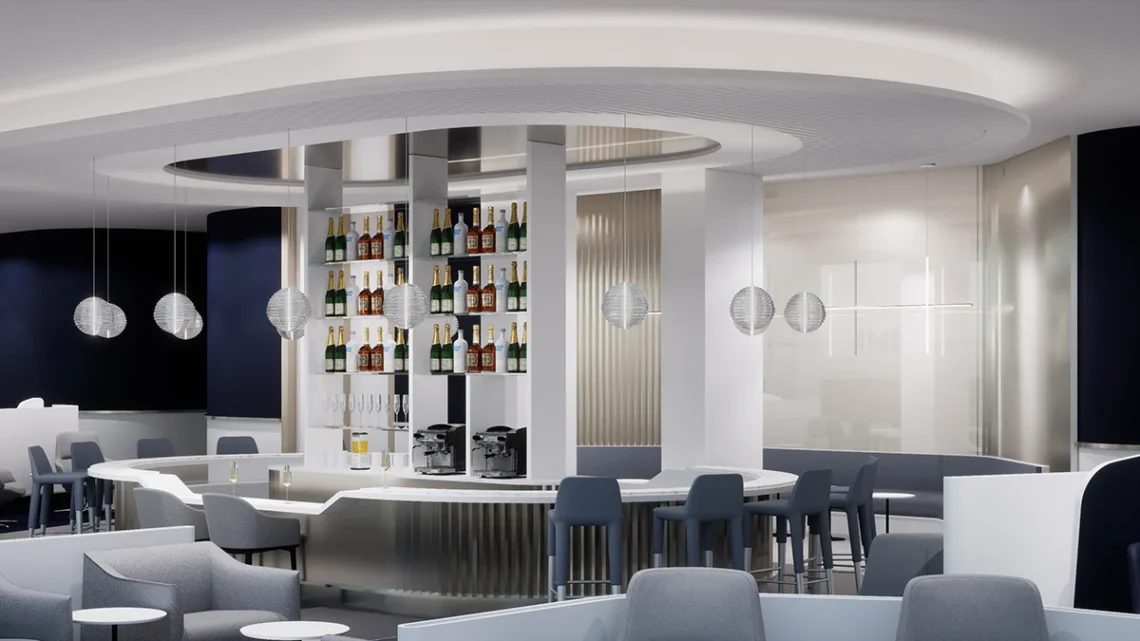
NEW YORK — In a move that underscores its enduring commitment to the North American market, Air France has announced plans to relocate to John F. Kennedy International Airport’s (JFK) highly anticipated New Terminal One in 2027. The French flag carrier will not merely change addresses; it is slated to unveil its largest international lounge outside of France, a sprawling, two-story sanctuary of French elegance, gastronomy, and design that will span more than 29,000 square feet.
The announcement coincides with a milestone year for the airline, which is currently celebrating eight decades of continuous service between France and New York. By anchoring itself within what is poised to become JFK’s premier international gateway, Air France is signaling a bold new era for premium transatlantic travel, fusing state-of-the-art airport infrastructure with its signature savoir-faire.
Main Facts: The Anatomy of Air France’s JFK Expansion
The centerpiece of Air France’s relocation is the monumental new lounge, designed to redefine airport hospitality for discerning travelers. Conceived by the airline’s internal design team in close collaboration with the renowned branding and architecture agency MARKS Brandimage, the facility will be a masterclass in modern luxury.
- Scale and Capacity: Spanning over 29,000 square feet across two distinct levels, the lounge will comfortably seat more than 400 guests at any given time, making it the largest international lounge in the carrier’s global network.
- Culinary Excellence: True to the airline’s heritage, food and beverage offerings will be a primary focus. The space will feature dedicated dining areas serving authentic French cuisine, complemented by sophisticated bars pouring curated selections of French wines and Champagne.
- Zoned Amenities: To cater to the diverse needs of modern jetsetters, the lounge will offer specialized zones dedicated to wellness, beauty treatments, relaxation, and productivity, all equipped with the latest technology and high-end amenities.
- Exclusive Enclaves: The facility will feature ultra-exclusive areas tailored for high-tier travelers. This includes a private, dedicated space for La Première (First Class) passengers featuring bespoke menus crafted by a to-be-announced renowned French chef, as well as a separate private area reserved for Flying Blue Ultimate members.
- Access Policy: Beyond La Première and Business Class customers, the lounge will welcome Flying Blue Elite Plus members, alongside eligible premium passengers traveling with SkyTeam alliance partners and joint-venture partner KLM.
Chronology: From Historic Roots to the 2027 Milestone
To fully appreciate the significance of Air France’s impending move to JFK’s New Terminal One, it is essential to trace the historical trajectory of the airline’s presence in New York, as well as the timeline of the airport’s multi-billion-dollar redevelopment.
1945–2024: Eight Decades in the Big Apple
Air France’s relationship with New York City predates the modern jet age. Commercial operations began shortly after the conclusion of World War II, establishing a vital cultural and economic bridge between Europe and the United States. Over the decades, New York evolved into arguably the single most important international market for the airline. Today, Air France operates up to six daily flights between Paris and JFK, bolstered by an additional three daily flights operated in close partnership with Delta Air Lines. This robust schedule requires a physical footprint at JFK capable of handling heavy passenger volumes without compromising on the luxury service standards expected of a legacy carrier.
2020–2027: The Rise of JFK’s New Terminal One
The New Terminal One project at JFK was conceived to replace the aging Terminal 1, the former Terminal 2, and the site of the demolished Terminal 3. Designed to rival the world’s finest aviation hubs—such as Singapore Changi and Doha Hamad—the project represents a massive private-public investment aimed at transforming the passenger experience at New York’s primary international gateway.
As construction phases progress toward a phased opening, anchor tenants have begun locking in their strategic positions. Air France’s transition from the existing, dated Terminal 1 to the ultra-modern New Terminal One is scheduled for completion in 2027, perfectly timed with the grand opening of its record-breaking flagship lounge.
Supporting Data: Infrastructure and Ecosystem
The scale of Air France’s new lounge can only be understood within the context of the massive infrastructure project housing it. The New Terminal One is engineered to be the largest and most technologically advanced terminal at JFK, fundamentally shifting the airport’s operational capacity.
The New Terminal One At a Glance
- Total Footprint: Upon final completion, the terminal will encompass more than 300,000 square feet of passenger-facing space.
- Gate Capacity: The facility will feature 23 wide-body aircraft gates, designed to accommodate high-capacity international aircraft efficiently.
- Lounge Ecosystem: The terminal will house a total of six world-class lounges. Four of these will be operated directly by major anchor and partner airlines—namely Korean Air, Qatar Airways, Turkish Airlines, and Air France. The remaining two spaces will be independently operated.
- Market Dominance: Air France secures the largest individual lounge footprint in the new terminal. This is a natural reflection of its status as one of the terminal’s primary anchor carriers, commanding substantial passenger volumes across its standalone flights and joint-venture operations with Delta Air Lines.
Official Responses: Perspectives from Airline Leadership
The strategic rationale behind the multi-million-dollar investment was articulated clearly by top executives, who emphasized that the move is not just about physical expansion, but about redefining the emotional connection between the brand and its passengers.

"New York is one of Air France’s most important and iconic markets, and this year we are especially proud to celebrate 80 years of serving New York," said Nicolas Henin, Air France’s Senior Vice President for North America, in an official statement.
Henin elaborated on how the infrastructure investment ties directly into the airline’s broader commercial strategy: "With our move to Terminal One and the opening of this new lounge, we are taking our premium travel experience to a new level, continuing to invest not only in the flight itself, but providing elegance in every moment of the journey."
Addressing the experiential ethos of the new space, Henin added, "We want our travelers to experience the best of Air France, with French hospitality, gastronomy, and savoir-faire at the heart of the experience, and this exceptional new lounge will be a true showcase of that ambition."
Implications: Setting a New Standard for Transatlantic Travel
Air France’s commitment to its upcoming JFK flagship lounge carries profound implications for the competitive landscape of transatlantic aviation, particularly concerning the hyper-lucrative premium travel sector.
1. Raising the Stakes in Airport Hospitality
For years, premium lounges at major U.S. hubs have occasionally struggled to keep pace with the hyper-luxurious standards set by carriers in the Middle East and Asia. By investing in a 29,000-square-foot facility equipped with high-end dining, wellness areas, and bespoke spaces for First Class and elite loyalty members, Air France is setting a formidable benchmark. Competitors operating out of the New Terminal One—such as Qatar Airways and Korean Air—will face heightened pressure to deliver equally compelling pre-flight experiences.
2. Deepening the SkyTeam Alliance Synergy
As a founding member of the SkyTeam alliance and a close joint-venture partner to Delta Air Lines, Air France’s massive lounge footprint will serve as a strategic asset for the alliance as a whole. Eligible business-class passengers and elite tier members flying on partner airlines will gain access to world-class facilities, thereby increasing the value proposition of the Flying Blue loyalty program and strengthening the collective market share of the SkyTeam partnership in the New York market.
3. The Evolution of La Première
The inclusion of an ultra-exclusive enclave for La Première passengers, complete with tailored menus curated by a renowned French chef, highlights the aviation industry’s broader post-pandemic pivot: the renaissance of ultra-first-class travel. While many airlines have downsized or eliminated first-class cabins in favor of enhanced business-class products, carriers like Air France are doubling down on hyper-personalized, ultra-exclusive ground and in-flight experiences for their highest-spending clientele.
Looking Ahead to 2027
As construction on JFK’s New Terminal One progresses, all eyes will be on the final execution of Air France’s ambitious design. For travelers accustomed to the congested and fragmented terminal conditions of the past, the promise of a seamless, light-filled, gastronomic sanctuary in 2027 offers a tantalizing glimpse into the future of international flight. Through this monumental investment, Air France is ensuring that for the next generation of transatlantic travelers, the journey truly begins long before the aircraft ever leaves the tarmac.