
Main Facts
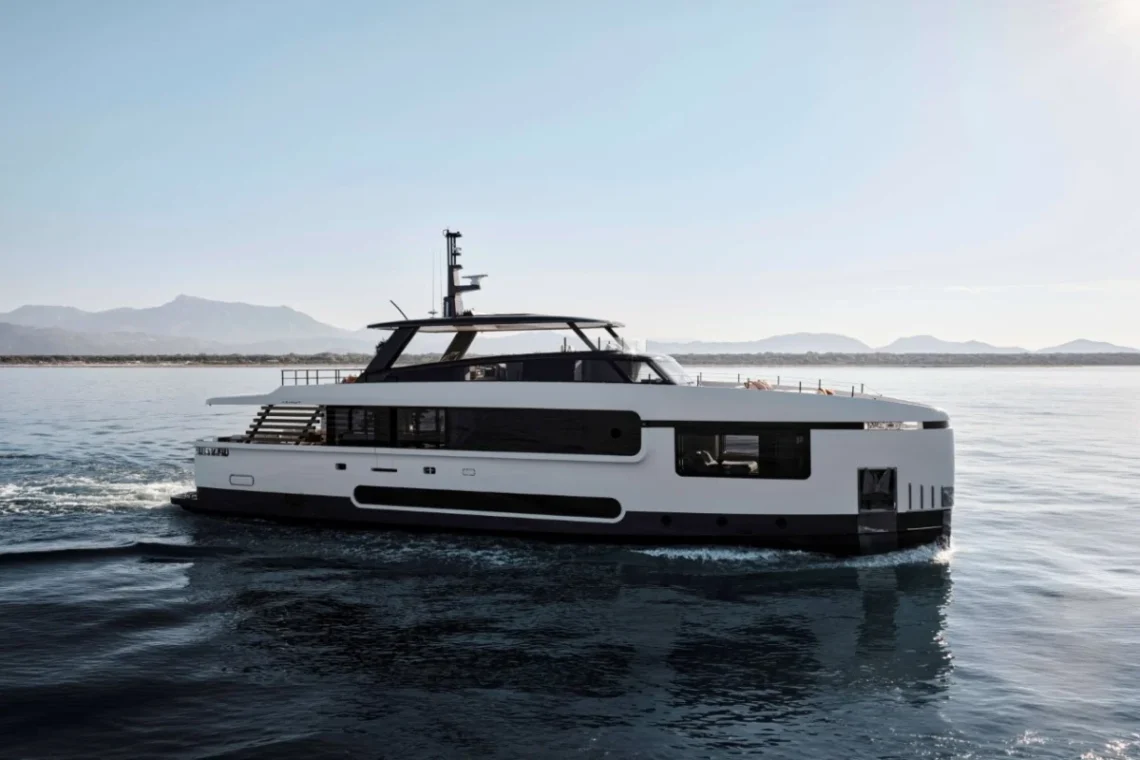
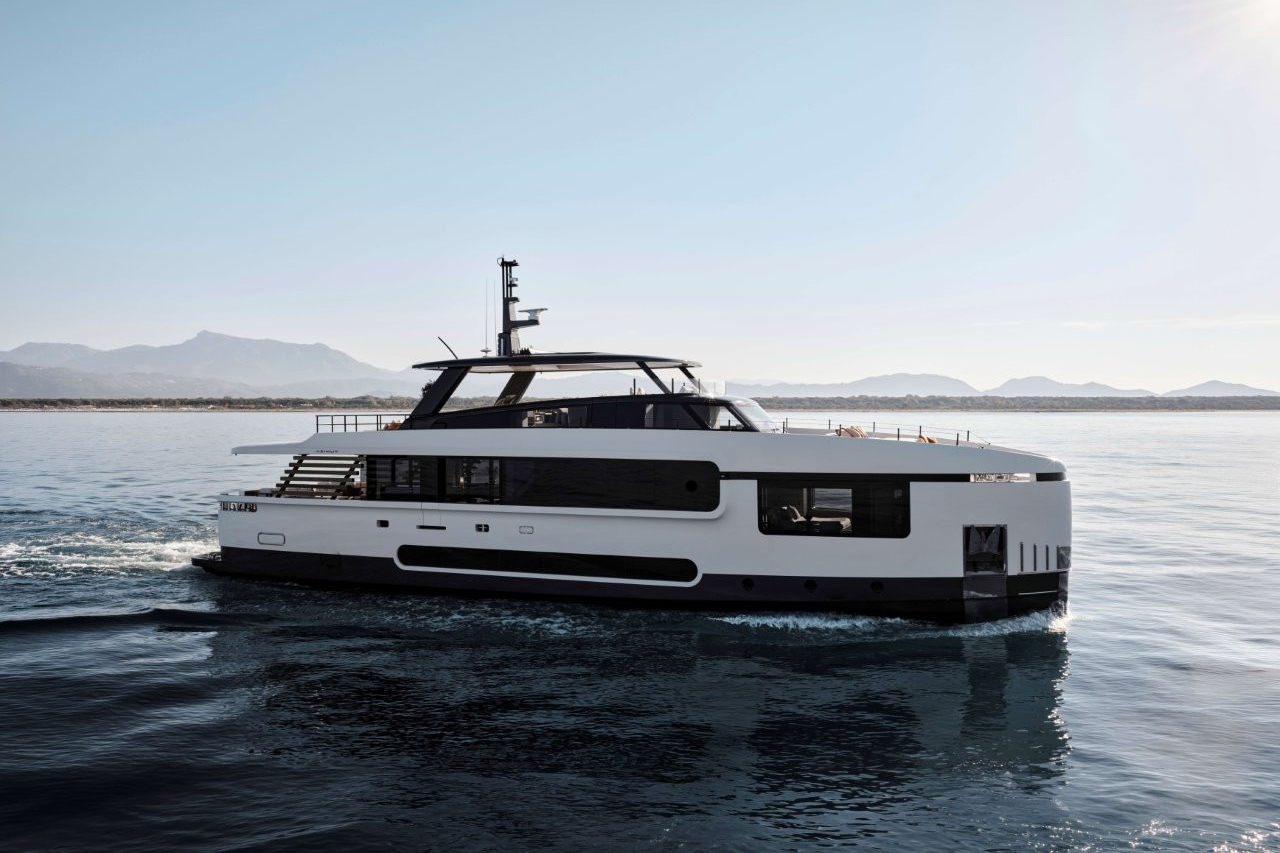
Azimut has officially pulled back the curtain on the Magellano 27M, marking a monumental milestone as the inaugural model in the third generation of its acclaimed Magellano crossover series. Measuring 88 feet and 7 inches (27 meters), this newly minted cruiser redefines the intersection of sculptural exterior styling and architectural interior design. Crafted for the discerning mariner who values both extended passage-making and refined luxury, the yacht is the collaborative product of Finnish exterior designer Jarkko Jämsén and renowned Italian architect Michele De Lucchi alongside AMDL Circle.
At its core, the Magellano 27M is engineered around Azimut’s proprietary Dual Mode hull, developed collaboratively by the Azimut|Benetti Group R&D Department and P.L. Ausonio Naval Architecture. Powered by twin 1,650-horsepower MAN V12 diesel engines, the vessel achieves a comfortable cruising speed of 16 to 18 knots and opens up to a top speed exceeding 24 knots. For long-range efficiency, throttling back to a displacement speed of 12 knots yields an impressive transoceanic range of approximately 1,000 nautical miles.
Sustainability and comfort sit at the heart of the project. Approximately 30 percent of the yacht’s superstructure is constructed from advanced carbon fiber, shedding unnecessary weight to boost hydrodynamic and thermodynamic performance. Furthermore, an optional Zero Emission Hotel Mode allows the yacht to rest at anchor completely silently, running its onboard hospitality systems via high-capacity lithium-iron-phosphate batteries without the need to engage the diesel generators.
Chronology: The Evolution of the Magellano Series
To fully appreciate the arrival of the Magellano 27M, one must look back at the strategic evolution that brought Azimut to this technological and aesthetic juncture.
The Genesis of Crossover Cruising
When Azimut first introduced the Magellano collection over a decade ago, the market was sharply divided. Yachts were largely categorized into two distinct buckets: high-speed planing vessels built for short coastal dashes, and heavy, slow displacement trawlers designed for transatlantic crossings. Azimut envisioned a third way—a crossover concept that blended the safety, efficiency, and volume of a traditional displacement yacht with the dynamic speed and stylish livability of a modern luxury cruiser.
Generations One and Two
The first two generations of the Magellano series proved that owners craved the freedom to chase horizons without sacrificing comfort or speed. These early models established the signature semi-displacement hull, protective vertical bows, and classic explorer-esque aesthetics. However, as luxury demographics shifted, the demand for greater indoor-outdoor fluidity, sustainable technologies, and avant-garde interior architecture grew increasingly urgent.
The Third-Generation Leap
The development of the third generation began several years ago with a mandate to reinvent the series from the keel up. Azimut commissioned Jarkko Jämsén to rethink the exterior silhouette, moving away from utilitarian trawler aesthetics toward a more dynamic, sculptural profile. Concurrently, Michele De Lucchi and AMDL Circle were brought on board to conceptualize an interior that treated wood not merely as a finish, but as a living, architectural medium. The culmination of this multi-year R&D and design cycle is the Magellano 27M—a yacht that bridges the gap between historical seafaring tradition and modern superyacht design language.
Supporting Data and Technical Specifications
A deep dive into the specifications of the Azimut Magellano 27M reveals a sophisticated engineering philosophy that balances brute performance with delicate eco-conscious innovations.
Dimensions and Capacity
- Length Overall (LOA): 88 feet, 7 inches (approx. 27 meters)
- Hull Type: Dual-mode, double-chine semi-displacement hull with a vertical bow
- Construction Materials: Infused carbon fiber and vinylester/polyester resin composites (accounting for roughly 30% of the surface area for significant weight reduction)
Propulsion and Performance
- Main Engines: Twin MAN V12 diesels, 1,650 hp each
- Cruising Speed: 16 to 18 knots
- Top Speed: Exceeding 24 knots
- Long-Range Speed: 12 knots
- Maximum Range at 12 knots: Approximately 1,000 nautical miles
Sustainability and Silent Operations
- Zero Emission Hotel Mode: Powered by advanced lithium-iron-phosphate (LiFePO4) battery banks, enabling emission-free and generator-free hotel loads (air conditioning, stabilization, stabilization systems, and appliances) while anchored.
- Acoustic Comfort: Enhanced by Azimut’s proprietary Silent Technology package, utilizing floating floors, sound-dampening bulkheads, and optimized exhaust routing to minimize decibel levels and structural vibrations throughout the guest areas.
Design Architecture
- Exterior Designer: Jarkko Jämsén
- Interior Designer: Michele De Lucchi and AMDL Circle
- Key Design Feature: A central architectural loggia on the main deck inspired by Mediterranean pergolas, featuring extensive glazing and exposed timber elements.
Official Responses and Design Philosophy
The unveiling of the Magellano 27M has generated substantial industry commentary, shedding light on the psychological and architectural philosophies that guided its creation.
Rethinking the Seascape Connection
According to Azimut’s design team, the primary objective of the Magellano 27M was to dissolve the traditional barriers separating guests from the marine environment. The main deck was purposely conceived as an uninterrupted, light-drenched living space.
"We wanted the interior to feel less like a floating hotel room and more like a cliffside Mediterranean villa where the sea is an ever-present canvas," representatives for the shipyard noted during the technical preview. This vision comes alive through the central architectural loggia, which acts as a sheltered buffer zone between the interior saloon and the open aft deck, framing the horizon like a living painting.
The Materiality of Architecture: Michele De Lucchi’s Vision
Architect Michele De Lucchi and his team at AMDL Circle approached the interior design with a deep reverence for natural materials, specifically wood. Eschewing the high-gloss, ultra-lacquered finishes common in modern yachting, the Magellano 27M relies on tactile, warm finishes.
"Wood has a memory, a warmth, and a texture that no synthetic material can replicate," De Lucchi’s studio emphasized. The interior showcases light oak, rich walnut details, and textured surfaces that invite human touch. Furthermore, the design incorporates subtle nods to international craftsmanship, such as Japanese Naguri hand-chiseled side tables and bedroom headboard walls upholstered in handwoven Hosoo textiles.
Sculptural Exterior Engineering
Jarkko Jämsén utilized clean, uncompromised surfaces and a vertical bow to give the yacht an authoritative yet graceful posture on the water. A signature structural "loop" traces the vessel’s profile, creating a dynamic tension between engineered precision and organic, sea-inspired curves.
"The profile is designed to catch the changing light of the ocean and sky," Jämsén explained. "It doesn’t scream for attention through aggressive lines; instead, it commands respect through its sculptural proportions and harmony with the elements."
Implications for the Luxury Yachting Industry
The introduction of the Azimut Magellano 27M carries profound implications for the upper echelons of the recreational marine market, signaling shifts in both consumer expectations and shipyard manufacturing priorities.
The Shift Toward Slow Luxury and Wellness
For decades, the luxury yachting paradigm was dominated by speed, horsepower, and aggressive styling. The Magellano 27M accelerates a broader cultural shift toward "slow luxury"—a design ethos that prioritizes mental well-being, mindfulness, and immersive natural experiences over raw velocity. By investing heavily in acoustic dampening, zero-emission anchor modes, and biophilic interior designs (such as exposed woods and organic textures), Azimut is catering to modern yacht owners who view their vessels as sanctuaries for disconnecting from the fast-paced modern world.
Technological Convergence in Efficiency
The integration of a Dual Mode hull with a 30 percent carbon fiber superstructure highlights a vital industry trend: the relentless pursuit of efficiency. As environmental regulations tighten globally and fuel costs fluctuate, even ultra-high-net-worth buyers are demanding vessels that consume fewer resources without compromising performance. The ability of the Magellano 27M to cruise efficiently at 12 knots for 1,000 miles while simultaneously offering silent, emissions-free lounging at anchor proves that eco-conscious engineering is no longer an afterthought, but a core selling point.
Redefining Crossover Versatility
Finally, the Magellano 27M sets a new benchmark for the crossover segment. By proving that a yacht can successfully merge the long-range capabilities of an explorer vessel with the artistic interior pedigree of a high-end architectural residence, Azimut has raised the bar for rival builders. As this third generation rolls out globally, it challenges the industry to look beyond traditional categorizations and embrace multidisciplinary design collaborations—uniting naval architects, industrial designers, and world-class interior architects to craft vessels that are as intellectually stimulating as they are seaworthy.