For half a century, the quiet, rose-scented lanes of St. Mary Mead have been the definitive habitat of Jane Marple. Agatha Christie’s legendary spinster, a woman who weaponized the mundane observations of village life to solve the most complex of homicides, has long been a fixture of the English countryside. While her male counterpart, the fastidious Hercule Poirot, has been whisked away on cinematic adventures from the Orient Express to the glittering banks of the Nile, Miss Marple remained a homebody—a testament to the idea that one does not need to travel far to understand the darkest impulses of the human heart.
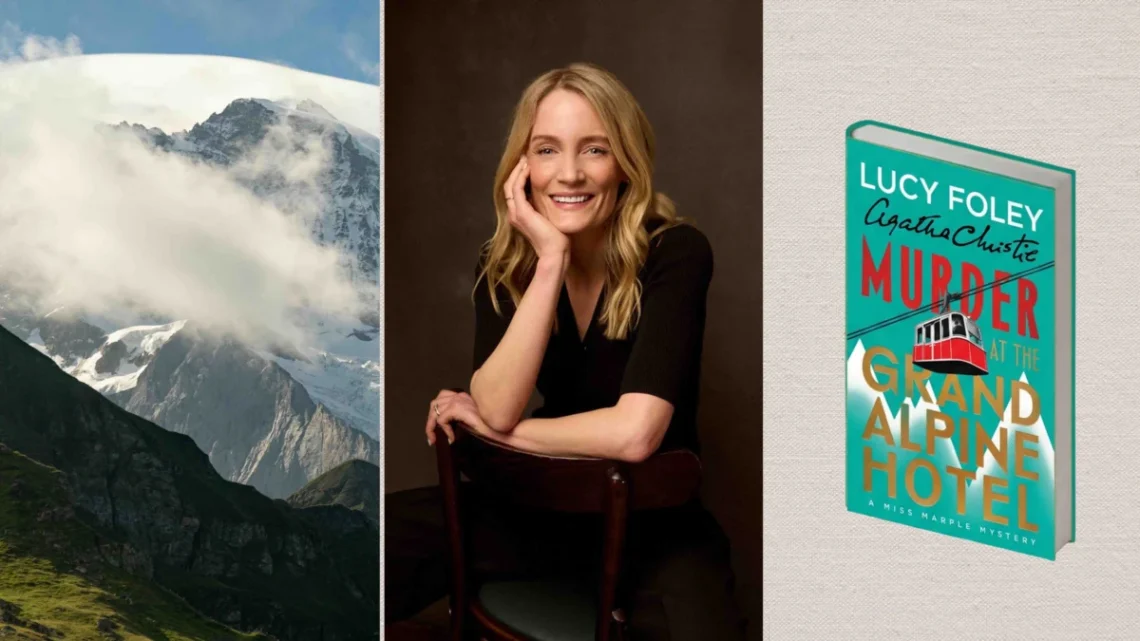
That silence has finally been broken. In Murder at the Grand Alpine Hotel, bestselling thriller author Lucy Foley has been tapped by the Christie estate to pen the first official Miss Marple mystery in five decades. The result is a bold, atmospheric departure that trades the vicarage tea service for the razor-sharp peaks of the Swiss Alps, placing the iconic sleuth in a high-stakes, mid-century environment that feels both classic and dangerously new.
The Genesis of a Snowy Whodunnit
The impetus for this ambitious project began with a simple creative question: What happens when the world’s most observant woman is removed from the familiar patterns of village life and dropped into a landscape of extreme beauty and hidden peril?
Lucy Foley, best known for her locked-room thrillers like The Guest List, was granted a unique mandate by the Christie estate. "They wanted my take on a Miss Marple book rather than a paint-by-numbers imitation," Foley explains. The author found herself wrestling with the temptation to keep the setting local, but the desire to honor the character—who rarely had the luxury of travel in the original canon—eventually won out.
"I felt for her because she only gets to go on one holiday in the original books," Foley notes. By transporting Marple to a 1950s Swiss ski chalet, Foley is not just changing the scenery; she is shifting the genre. The novel is consciously in dialogue with the "masculine" action thrillers of the era, the sort of rugged, mountain-set espionage tales penned by Ian Fleming or Eric Ambler. By placing two elderly women at the center of such a high-octane setting, Foley creates a fascinating subversion of power dynamics.
A Chronology of the Alpine Investigation
The development of the novel was rooted in an intensive, boots-on-the-ground research process. Foley’s journey into the heart of the Alps was designed to capture the specific texture of post-war Europe.
- The Scouting Phase: Foley traveled extensively across the French, Italian, and Swiss Alps. Her itinerary included Chamonix, Zermatt, and St. Moritz.
- Historical Immersion: The author focused heavily on the shift in how the Alps were perceived. Historically viewed by the Romantics as a place of terror, dragons, and bad spirits, the 1950s marked a transformation into a playground for the elite.
- Structural Development: The discovery of the Refuge du Montenvers above Chamonix provided the architectural blueprint for the "Grand Alpine Hotel." Foley recalls the eerie, atmospheric solitude of the location: "You take a little red train up there, and once the last train has gone for the day, it’s just you and the mountains."
- The Writing Process: Integrating the historical reality of the 1950s—including the post-war tensions and the lingering presence of former enemies—became the narrative backbone of the mystery.
Supporting Data: The Post-War European Landscape
The setting of the 1950s is crucial to the novel’s tension. The Alps, particularly in regions bordering France, Italy, and Switzerland, were physically and socially complex in the immediate aftermath of the Second World War.
Foley emphasizes the "porous" nature of mountain borders during the conflict, which provides a rich, dark history for the hotel’s guests. In the book, the hotel acts as a crucible where different nationalities—the British, who were still enduring strict food rationing and economic hardship, alongside the French and Italians—are forced into proximity.
The physical environment serves as a character in itself. The "ice-skating waiters" found in historical photographs of luxury hotels like the Kulm in St. Moritz were not merely a decorative choice; they represent the performative opulence that masks the underlying danger of the narrative. This juxtaposition of high-society glamour and the "terrifying" nature of the glacier—where a single misstep can lead to a crevasse—mirrors the mystery’s central theme: the thin line between civilization and savagery.
Official Perspectives: Foley on the "Marple Method"
When asked about the mechanics of the mystery, Foley points to the unique observational power of her protagonist. While Hercule Poirot often relies on logic, psychology, and the "little gray cells," Miss Marple relies on the universal constants of human nature.
"She is such a great reader of character," Foley observes. "She is always referring things back to her experience in St. Mary’s Mead because it’s this wonderful microcosm of everything that humanity can be."
Foley suggests that Marple’s genius lies in her ability to see through the masks people wear. In a hotel—a place defined by anonymity—this skill is particularly potent. As Foley notes, "People can come and check-in and become someone that perhaps they’re not at home." This makes the hotel the ultimate setting for a, as Christie famously described it, "obvious but not obvious" mystery.
Furthermore, Foley addresses the often-underestimated rage that drives Miss Marple. "Do we ever really see the true Marple?" she asks, pointing to moments in the original canon where the character is motivated by genuine anger or becomes a "figure of nemesis." This version of Marple is not merely a kindly old lady; she is a formidable force of justice.
The Implications: A New Era for the Franchise?
The release of Murder at the Grand Alpine Hotel signals a potential shift in how legacy characters are handled in contemporary publishing. By allowing a modern, high-profile mystery author to reimagine a classic icon in an entirely new setting, the Christie estate is effectively revitalizing the franchise for a new generation of readers who crave the "cozy" appeal of the original books but desire the pacing and environmental stakes of modern thrillers.
The implications for the literary landscape are significant. If this experiment proves successful, it suggests that the "Marple canon" is not a closed book but a flexible framework. When asked about the possibility of future installments, Foley remains coy, offering only a tantalizing "Easter egg" for fans: "Miss Marple hasn’t always lived in St. Mary’s Mead. We find out that in her youth she lived in a different country for a time, so I think I would take her back there."
As readers begin to unpack the secrets buried in the snow of the Grand Alpine Hotel, they are reminded that Miss Marple’s greatest strength has never been her location—it has been her unflinching, crystalline gaze into the darkness of the human soul. Whether she is in a village parlor or a Swiss ski lodge, the truth, as always, is waiting to be found.
Murder at the Grand Alpine Hotel is currently available through major retailers, including Bookshop.org and Amazon.