By Josep Borrell
July 17, 2026
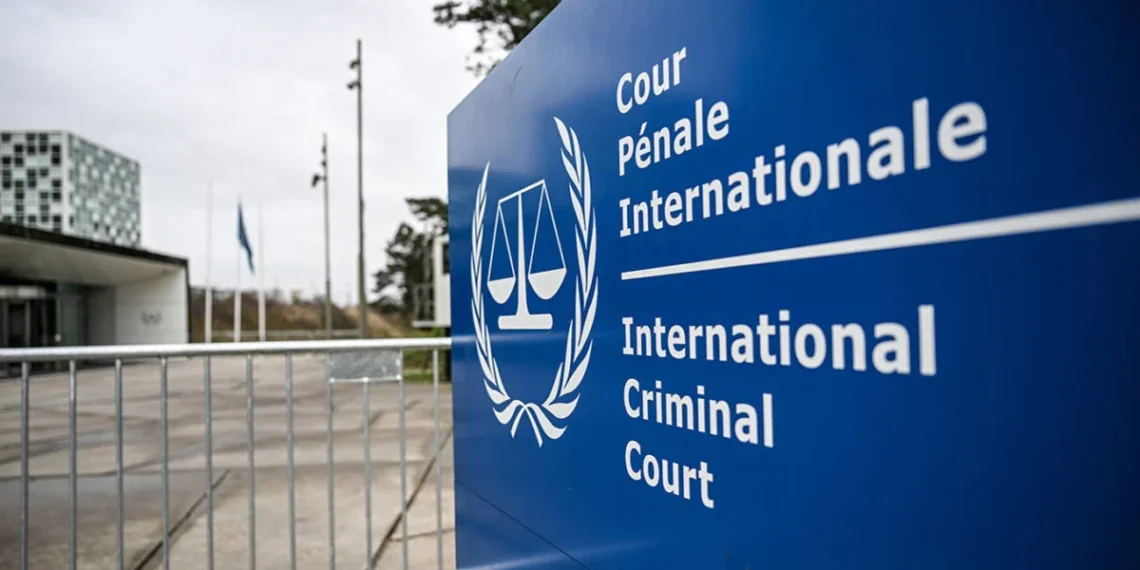
The International Criminal Court (ICC) stands at a precarious precipice. For decades, the institution has served as the final bastion of accountability for the world’s most heinous crimes—genocide, war crimes, and crimes against humanity. Yet, today, the Court finds itself under a coordinated, multi-front assault that threatens not just the tenure of its chief prosecutor, but the very principle of international judicial independence.
The current campaign to destabilize the Office of the Prosecutor (OTP) is not merely a diplomatic disagreement; it is a systemic effort to dismantle the Court’s authority. When the ICC’s chief prosecutor moved to secure arrest warrants for high-ranking Israeli officials, including Prime Minister Benjamin Netanyahu, the response from Washington was not a call for legal debate, but an imposition of punitive sanctions. Now, the threat has escalated from financial coercion to the potential removal of the prosecutor himself, masked under the thin veil of "procedural inquiry." If member states do not act decisively to safeguard the integrity of the Rome Statute, they may find that the era of international accountability has come to an abrupt and permanent end.
The Anatomy of the Crisis: Main Facts
The current friction centers on the OTP’s decision to pursue warrants against Israeli leadership regarding the conduct of the war in Gaza. The US government, citing a long-standing refusal to recognize the ICC’s jurisdiction over its allies, responded with severe sanctions targeting the prosecutor and senior staff.
These sanctions are not merely symbolic. They have frozen the assets of international civil servants, restricted their travel, and created a chilling effect on the Court’s investigative staff. The crisis has now shifted from the geopolitical arena to the internal mechanisms of the Assembly of States Parties (ASP). Allegations of misconduct, framed as "good-faith inquiries" into the management and professional conduct of the prosecutor, are being leveraged by powerful blocs to pressure him into resignation. This is a classic case of procedural sabotage: using the language of accountability to engineer a political execution.
A Chronology of Escalation
To understand the severity of this moment, one must trace the timeline of the current standoff:
- May 2024: The ICC Prosecutor formally requests arrest warrants for Israeli Prime Minister Benjamin Netanyahu and Defense Minister Yoav Gallant, alongside Hamas leaders, citing crimes against humanity.
- June 2024: The U.S. Congress, with bipartisan support, introduces the "Illegitimate Court Counteraction Act," proposing sanctions against any ICC official involved in investigating U.S. or allied citizens.
- January 2025: Sanctions are officially implemented, freezing the personal assets of the Prosecutor and his senior deputies, and banning them from entry into the United States.
- March 2025: Diplomatic pressure mounts as several European nations, under intense lobbying from Washington, begin to withhold budgetary contributions earmarked for the Gaza investigation.
- July 2026: A formal "independent review" is launched within the ICC framework. While ostensibly tasked with evaluating the Prosecutor’s management style, leaked memos suggest the inquiry is being steered toward identifying "procedural irregularities" that could serve as grounds for removal.
Supporting Data: The Erosion of Global Norms
The data on the Court’s current standing reveals a worrying trend of waning support among its signatories. While the Rome Statute has 124 signatories, the practical support for the Court is thinning:
- Budgetary Stagnation: Despite an increased caseload in Ukraine, Sudan, and Palestine, the Court’s budget has seen zero real-term growth for three consecutive years. In 2025, the budget was effectively cut by 4% due to inflation.
- Diplomatic Withdrawal: Since the initiation of the Gaza-related warrants, three member states have informally signaled their intent to "re-evaluate" their cooperation with the OTP, citing concerns over "political bias."
- The Chilling Effect: Since the implementation of U.S. sanctions, the OTP has reported a 30% increase in staff turnover. Many international lawyers, fearing the loss of their ability to travel to the U.S. or manage their personal assets, have declined to join the team.
This "brain drain" is exactly what the architects of the sabotage intended. By making the cost of pursuing justice personally and professionally ruinous, they have effectively paralyzed the Court’s ability to function.
Official Responses and the Clash of Rhetoric
The response to this crisis has been deeply polarized.
The U.S. Perspective: The U.S. State Department maintains that the ICC is acting outside its jurisdiction. Officials argue that because Israel is not a signatory to the Rome Statute, the Court has no right to exercise jurisdiction over its citizens. They describe the sanctions as a "defensive measure to protect the sovereign rights of democratic allies."
The ICC’s Stance: The OTP has remained firm, insisting that its mandate is universal. In a recent press release, the Prosecutor noted: "The law must be blind to the power of the parties involved. To grant exemptions to certain nations is to invite the collapse of the rule of law globally."
The Global South’s View: Many nations within the African and Latin American blocs have expressed outrage at what they term "judicial apartheid." They argue that the U.S. is applying a double standard: welcoming ICC investigations into Russian war crimes in Ukraine, while attempting to dismantle the Court when the spotlight turns toward their own geopolitical interests.
Implications: The Death of the Rome Statute?
If the Prosecutor is successfully removed, the implications for the international order will be catastrophic.
1. The Normalization of Impunity
Should the ICC succumb to political pressure, the message to every dictator and war criminal on earth will be clear: justice is optional, and the Court is a tool of the powerful, not a shield for the victims. The "procedural" removal of a prosecutor would serve as a precedent that the Court’s mandate can be revoked by a sufficient concentration of political force.
2. The End of Universal Jurisdiction
The Rome Statute was built on the promise of universal jurisdiction—the idea that some crimes are so grave they offend the conscience of all mankind. If this principle is discarded, we return to a Westphalian state of nature, where "might makes right" is the only governing principle. The collapse of the ICC would essentially signal the end of the post-WWII project to codify human rights into enforceable international law.
3. Institutional Fragmentation
Member states may begin to form regional, smaller, and less effective judicial bodies that are easier to control. This fragmentation would strip the international community of the ability to hold state actors accountable, leading to a proliferation of "shadow courts" that serve to legitimize, rather than penalize, state violence.
A Final Call to Action
Some institutional failures unfold not through dramatic scandals, but through the slow, methodical grinding of procedural gears. Acts of sabotage are rarely announced with fanfare; they are dressed up in the professional language of "good-faith inquiry" and "management accountability." By the time the public realizes that the independence of the ICC has been hollowed out, the damage will be irreversible.
We are at a point where the member states of the ICC must make a choice. They can choose to retreat, allowing the Court to be neutered by those who fear its reach, or they can stand firm. Standing firm requires more than just rhetoric; it requires the protection of the Prosecutor’s mandate, the rejection of politically motivated reviews, and a renewed commitment to funding the Court’s operations regardless of which nations the warrants name.
If we allow the ICC to become a puppet of geopolitical interests, we are not just failing the victims of war crimes in Gaza or elsewhere—we are abandoning the very concept of a rules-based international order. The window to save the Court is closing. If member states do not stand up for judicial independence now, they may never get another chance. The history of the 21st century will judge us not by the laws we wrote, but by whether we had the courage to enforce them when the cost of doing so became too high.