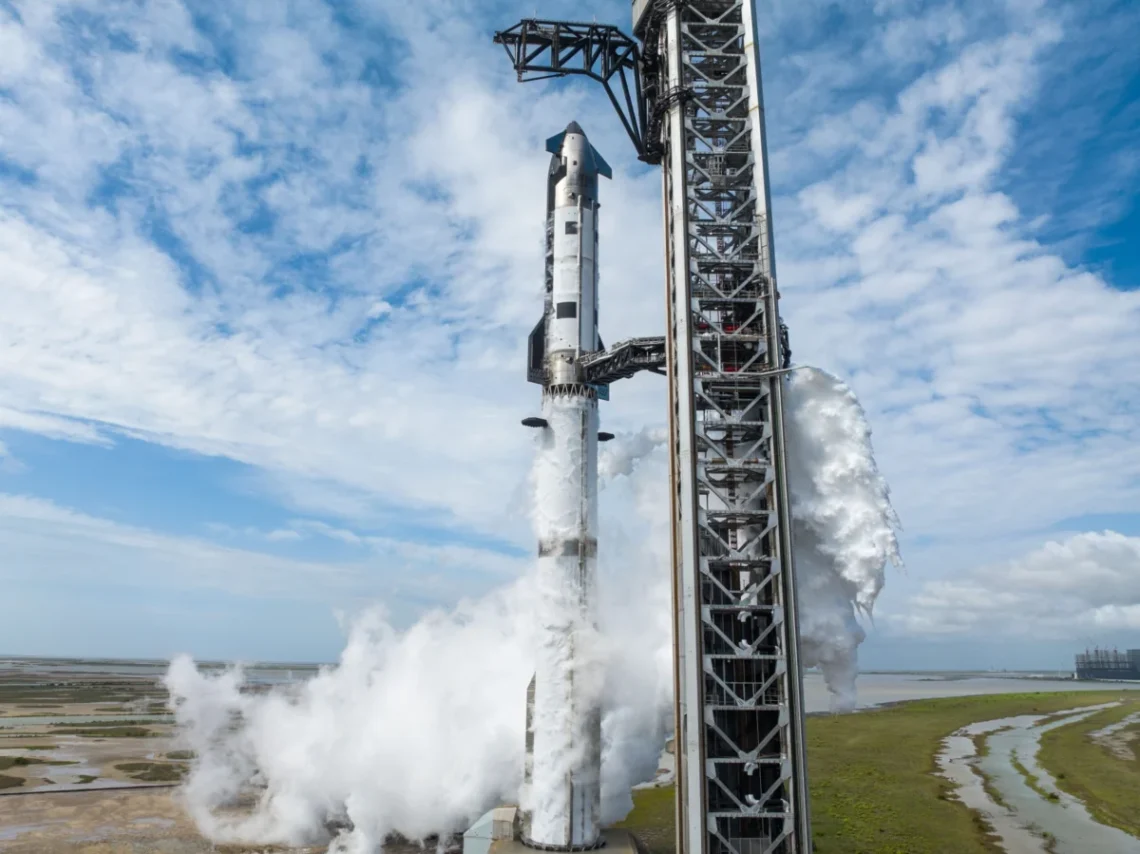
The Federal Aviation Administration (FAA) has officially cleared SpaceX to resume flight operations for its Starship prototype, marking a pivotal moment for the world’s most valuable aerospace company. Following a rigorous investigation into the failure of the Super Heavy booster during the May 22 test flight, regulators have greenlit a second attempt at launching the third-generation (V3) system, potentially as early as this Thursday, July 16.
This upcoming mission represents more than just a routine test flight; it serves as a litmus test for the company’s new life as a public entity. Since its record-shattering IPO on the Nasdaq on June 12—which saw its valuation soar to an eye-watering $2.6 trillion—investors have been watching closely to see if Elon Musk’s signature "fly, fail, fix" development methodology remains viable under the scrutiny of public shareholders.
The Path to the Pad: A Chronology of the V3 Program
The trajectory of the Starship V3 program has been defined by rapid iterative development. The May 22 mission was, by most metrics, a qualified success. The massive 407-foot rocket cleared the launchpad with nominal performance from the Super Heavy booster, effectively carrying the upper stage into space. Once in orbit, the vehicle successfully deployed 20 satellite simulators and two modified Starlink units designed to capture high-definition external footage of the craft.
However, the mission encountered a critical setback during the booster’s descent. The V3 booster, intended to perform a controlled splashdown in the Gulf of Mexico, failed to re-ignite its engines properly. Instead of executing a graceful landing, the vehicle plummeted into the ocean.
According to post-flight data analysis, the anomaly occurred precisely at the moment of stage separation. SpaceX reported that "slight differences in engine startup" on the ship caused the booster to rotate 90 degrees off-course. This deviation compromised the re-ignition sequence, leading to the total loss of the booster.
In the weeks following the incident, SpaceX engineers overhauled the engine startup sequence to ensure the booster maintains its orientation and corrected the "re-light reliability" protocols. The company remains committed to the principle that these "rapid unscheduled disassemblies"—as Musk famously characterizes them—are not signs of failure, but rather essential data points that accelerate the path to a fully reusable launch system.
Technical Post-Mortem: Root Causes and Remediation
The FAA’s investigation, released on Monday, provided a sobering technical look at the failure. Regulators identified two primary root causes: thermal stress on propulsion components during the initial ascent and "erroneous engine alarm system settings" that triggered prematurely or incorrectly during the descent phase.
SpaceX has responded with a comprehensive suite of hardware and software modifications. Beyond the adjustments to the booster’s rotation logic, the company has overhauled the engine alarm and abort systems. These changes are designed to provide more granular control during the high-stress transition from vacuum flight back into the thicker atmosphere.
Furthermore, the upper stage of the V3 Starship, while achieving its primary deployment goals in May, also suffered the loss of one of its three vacuum-optimized Raptor engines. The company confirmed that it has implemented "several hardware and operational modifications" to prevent similar engine performance degradation in future flights. The goal is clear: to ensure that every Raptor engine can survive the extreme thermal and vibrational environment of both launch and orbit.
The Payload: A New Era for Starlink
This second V3 test flight carries significant commercial weight. For the first time, Starship will carry a full batch of 20 third-generation Starlink satellites. Unlike the dummy simulators of the past, these V3 units are sophisticated instruments of the company’s core business model.
These satellites are engineered to integrate seamlessly into the existing constellation using high-capacity laser interlinks. SpaceX plans to test the capacity and latency improvements of these new units in real-world conditions. Interestingly, the mission profile includes a dramatic finale: approximately 20 minutes after deployment, the satellites are programmed to burn up in the atmosphere as part of a controlled test of their decommissioning process. Six of these units are outfitted with high-fidelity cameras, which will provide the public and SpaceX engineers with an unprecedented view of the Starship’s exterior during its maneuvers.
Financial and Strategic Implications
The stakes for this flight could not be higher. Following the June 12 IPO, SpaceX effectively solidified its position as a global economic titan. With nearly $86 billion raised, the company now commands a market valuation that has, at times, eclipsed that of Amazon.
However, being a public company changes the narrative. While the "fly, fail, fix" approach was acceptable for a private entity funded by venture capital and private contracts, public shareholders demand consistency and risk mitigation. The financial health of the company is intrinsically linked to the success of the Starship project. Currently, Starlink represents the only profitable segment of the business, and its growth is tethered to the launch cadence that only a fully reusable Starship can provide.
The strategic vision for Starship extends far beyond satellite internet. Musk’s long-term roadmap—often described as "galaxy-brained"—includes the development of space-based data centers, the creation of a lunar logistics network, and the ultimate goal of interplanetary colonization. None of these are feasible without a rocket that can be turned around and launched again with the frequency and cost-efficiency of an airline.
The Road Ahead
As the launch window approaches this Thursday, the aerospace industry is bracing for a critical data point. If the V3 Starship can successfully execute a soft landing and demonstrate that the engine issues are truly behind it, the path to commercial operation will be wide open.
If the flight succeeds, it will prove that SpaceX’s iterative development model can survive the transition to public-market scrutiny. If it fails, the company will face increased pressure from regulators and investors alike to slow down and adopt more traditional, conservative testing methods.
For now, the team at Starbase, Texas, is focused on the countdown. As SpaceX continues to push the boundaries of what is possible in heavy-lift rocketry, the global community looks to the skies, waiting to see if the next generation of Starship will write a new chapter in the history of human spaceflight—or end in another spectacular fireball.
Disclaimer: When you purchase through links in our articles, we may earn a small commission. This doesn’t affect our editorial independence.
About the Author
Sean O’Kane is a veteran reporter with a decade of experience covering the transportation, technology, and aerospace sectors. Having previously reported for Bloomberg News and The Verge, O’Kane has tracked the evolution of the electric vehicle market, the rise of the space race, and the complex business dynamics of companies like SpaceX and Tesla. He can be reached at [email protected] or via Signal at okane.01.