
By Kai Guo | July 17, 2026
For decades, the prevailing consensus in Western economic circles regarding China’s industrial rise was defined by a singular, persistent variable: the state subsidy. From the solar boom of the mid-2000s to the rapid proliferation of electric vehicles (EVs) in the 2020s, the narrative held that Beijing was "buying" its way to global dominance. However, as China continues to consolidate leadership in high-tech sectors—ranging from advanced robotics to artificial intelligence—the traditional subsidy-centric framework is increasingly proving insufficient.
While industrial policy remains a cornerstone of the Chinese economic model, the emergence of Chinese firms as global leaders in complex, capital-intensive industries suggests a deeper, more structural transformation. The reality of China’s competitive advantage is no longer merely a product of government transfers; it is the result of a dense, hyper-competitive domestic ecosystem that has evolved beyond the reach of simple state intervention.
The Core Thesis: Beyond Fiscal Injection
The recent report from the Organization for Economic Cooperation and Development (OECD) has provided renewed institutional weight to the argument that state support is the primary driver of Chinese industrial success. The "MAGIC" database of industrial subsidies highlights the sheer scale of government intervention, confirming what many observers have long suspected: China’s state apparatus is deeply embedded in its corporate landscape.
However, the "subsidy trap"—the tendency to attribute all success to government handouts—ignores the internal dynamics of Chinese firms. Today, firms like BYD, CATL, and various AI startups are operating in a market characterized by extreme domestic rivalry. In these sectors, the "Darwinian" pressure of the Chinese market often exceeds the intensity found in the United States or Europe. Companies that survive this internal crucible are forged with a degree of operational efficiency, supply chain integration, and iterative speed that subsidies alone cannot replicate.
Chronology: The Evolution of Industrial Policy
To understand the current state of affairs, one must view China’s industrial trajectory not as a static policy, but as a series of evolving strategic phases.
- 1990s – Early 2000s: The Infrastructure Foundation. China focused on building the "hardware" of industrialization. Subsidies were primarily directed at infrastructure, power grids, and basic steel/cement production to facilitate global trade.
- 2006 – 2012: The Green Pivot. The government identified renewable energy as a strategic imperative. This period saw the first massive wave of direct subsidies for solar and wind energy, which successfully lowered global prices but sparked international trade tensions.
- 2015 – 2020: The "Made in China 2025" Era. This phase shifted the focus toward "quality" and "self-reliance." The state moved away from broad-based subsidies toward targeted investments in robotics, AI, and biotechnology.
- 2021 – Present: The Ecosystem Strategy. Current policy prioritizes "New Productive Forces." Instead of merely throwing money at production, the state is facilitating "industrial clusters"—concentrated geographical zones where suppliers, researchers, and manufacturers operate in an integrated feedback loop.
Supporting Data: Dissecting the Competitive Edge
When analyzing the success of the Chinese EV sector, the data points to more than just capital injections. A comparative analysis reveals several factors that operate independently of fiscal support:
1. Supply Chain Density
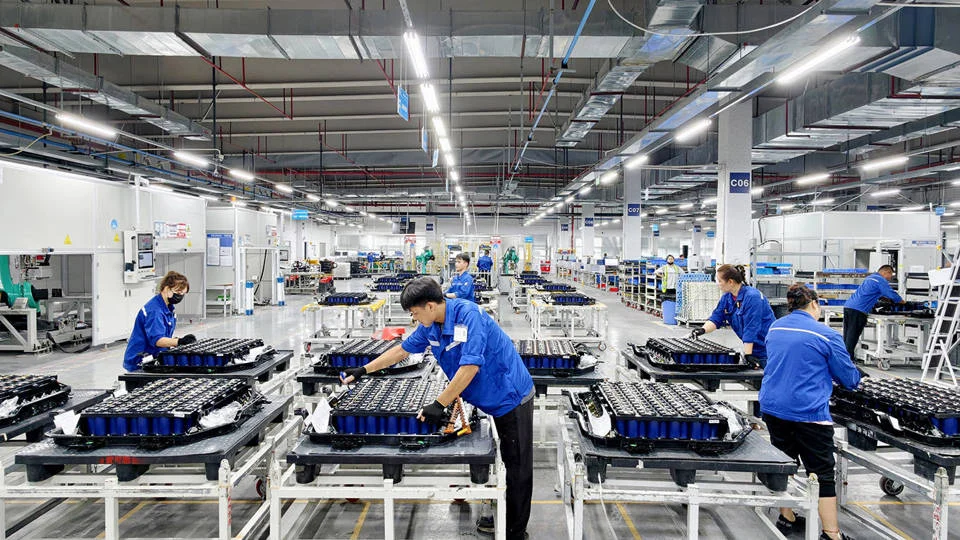
China currently accounts for nearly 80% of the world’s lithium-ion battery production capacity. This is not merely a result of grants; it is the result of vertical integration. A Chinese EV manufacturer can source raw materials, refined battery components, and software integration within a 200-mile radius. This "clustering effect" drastically reduces logistical costs and increases the speed of innovation.
2. The Iteration Cycle
In the Western automotive industry, product development cycles often span 5–7 years. In the Chinese EV market, the cycle has shrunk to 18–24 months. This rapid prototyping is supported by a massive pool of engineering talent and a consumer base that is highly receptive to early-stage technology, creating a feedback loop that accelerates product improvement.
3. Cost-Effective R&D
While Western firms often struggle with the "valley of death" between laboratory research and commercialization, Chinese firms benefit from a state-sponsored "bridge." Large-scale pilot projects, often funded by municipal governments, allow firms to scale technology from the lab to the factory floor far more cheaply and quickly than their Western counterparts.
Official Responses and Global Friction
The international reaction to China’s industrial surge has been sharp. The United States and the European Union have responded with a wave of "de-risking" policies, including the U.S. Inflation Reduction Act (IRA) and the EU’s countervailing duties on Chinese electric vehicles.
Beijing’s response has remained consistent: it frames these actions as a violation of WTO principles and a sign of Western "technological anxiety." Chinese officials argue that the West is attempting to stifle legitimate competition under the guise of "fair trade." In a recent statement, a spokesperson for the Ministry of Commerce noted that "the competitive advantage of Chinese enterprises is gained through continuous technological innovation and deep market participation, not through the distortion of trade."
However, beneath the diplomatic rhetoric, there is an acknowledgment within China that the subsidy model is becoming a liability. As international scrutiny intensifies, Beijing has begun to pivot away from direct cash subsidies toward "guidance funds." These funds act more like venture capital, requiring private-sector participation and demanding measurable commercial viability.
Implications: A New Era of Global Competition
The implications of this shift are profound for the global economy.
H3: The End of Comparative Advantage?
For decades, the Ricardian theory of comparative advantage suggested that countries should focus on what they produce most efficiently. China’s current trajectory challenges this. By leveraging a massive domestic market to subsidize the early stages of a technology, China effectively manufactures comparative advantage where it did not previously exist. This creates a "first-mover" scale that is nearly impossible for other nations to replicate without adopting similar protectionist measures.
H3: The Fragmentation of the Global Tech Order
As Western nations react with tariffs and supply chain restrictions, the global economy is increasingly fracturing into two distinct technological spheres. One sphere, centered around the Chinese ecosystem, prioritizes rapid scale and state-aligned industrial goals. The other, centered on Western markets, is moving toward a defensive posture, prioritizing security and resilience over the lowest possible cost.
H3: The Challenge for Multinational Corporations
For global firms, the lesson is clear: relying on the assumption that China’s growth is a "bubble" fueled by subsidies is a strategic error. Western companies must decide whether they are competing with Chinese firms on price—a battle they are increasingly likely to lose—or if they can pivot toward specialized niches where China’s "mass-production" model is less effective.
Conclusion: The Need for Nuanced Analysis
The OECD’s documentation of Chinese subsidies is valuable, but it is not the full story. To characterize the rise of Chinese industry solely as a state-funded endeavor is to underestimate the formidable capabilities of its private sector.
Chinese firms are now operating at the frontier of global innovation, not because they are subsidized, but because they have successfully navigated a domestic environment that demands extreme efficiency, rapid innovation, and deep supply chain integration. As the global community navigates this new industrial reality, the focus must shift from merely tallying subsidies to understanding the structural, cultural, and operational ecosystems that allow these firms to thrive.
The era of "China as a cheap assembly hub" is long over. The current reality is one of a sophisticated, highly competitive industrial powerhouse that is fundamentally reshaping the global economic order. Policymakers and business leaders who fail to account for this complexity—preferring the comfort of the "subsidy narrative"—do so at their own peril. The future of global trade will not be decided by who has the deepest pockets, but by who can most effectively integrate technology, talent, and scale into a coherent industrial machine.