
For two decades, the corporate world has operated under a quiet, almost comforting assumption: that the escalating frequency of climate disasters—the scorched earth of wildfires, the devastating surge of floods, and the unrelenting march of extreme weather—would eventually act as a "great awakening." The theory was that once the physical reality of the climate crisis became undeniable, corporate boards, political leaders, and the general public would snap to attention, collectively shifting gears to undertake the arduous but necessary work of mitigation and adaptation.
Katharine Hayhoe, one of the world’s most prominent atmospheric scientists and the chief scientist at The Nature Conservancy, believes it is time to retire this assumption. According to Hayhoe, the "catastrophe-driven" model of climate awareness is not just failing; it is actively counterproductive. In a recent appearance on the Two Steps Forward podcast, co-hosted by Joel Makower and Solitaire Townsend, Hayhoe dismantled the long-standing belief that fear is the ultimate catalyst for change, offering instead a roadmap for how businesses can move from paralysis to genuine progress.
The Broken Theory of Change: A Chronology of Disillusionment
To understand why the "fear-as-a-motivator" model is broken, one needs only to look at recent history. For years, environmental advocates, NGOs, and corporate sustainability officers have predicted that the sheer scale of climate events would force a societal shift.
The Canadian Case Study
Hayhoe points to her home country of Canada as a primary example of this failure. In 2023, Canada endured its most catastrophic wildfire season in recorded history. The smoke was so pervasive that it drifted across the continent, turning the skies of New York City an apocalyptic orange and forcing millions to confront the reality of a warming planet.
The conventional wisdom suggested that such a visceral, coast-to-coast crisis would transform the subsequent federal election into a referendum on climate policy. Yet, the political reality that followed nine months later defied these expectations. Instead of rallying behind aggressive climate action, voters shifted toward platforms that prioritized economic relief, including the removal of consumer carbon taxes.
Why the disconnect? Hayhoe argues that the scale of the disaster was so overwhelming that it triggered a psychological defense mechanism: detachment. When a problem feels insurmountable, individuals—and by extension, the corporations they lead—do not feel motivated to act; they feel powerless.
The Efficacy Problem: Why Urgency Is Not Enough
In corporate boardrooms, the climate conversation is almost exclusively dominated by the concept of "urgency." Sustainability reports are filled with dire statistics, temperature projections, and the escalating costs of inaction. However, Hayhoe suggests that sustainability teams are miscalculating the psychological levers required to move the needle.
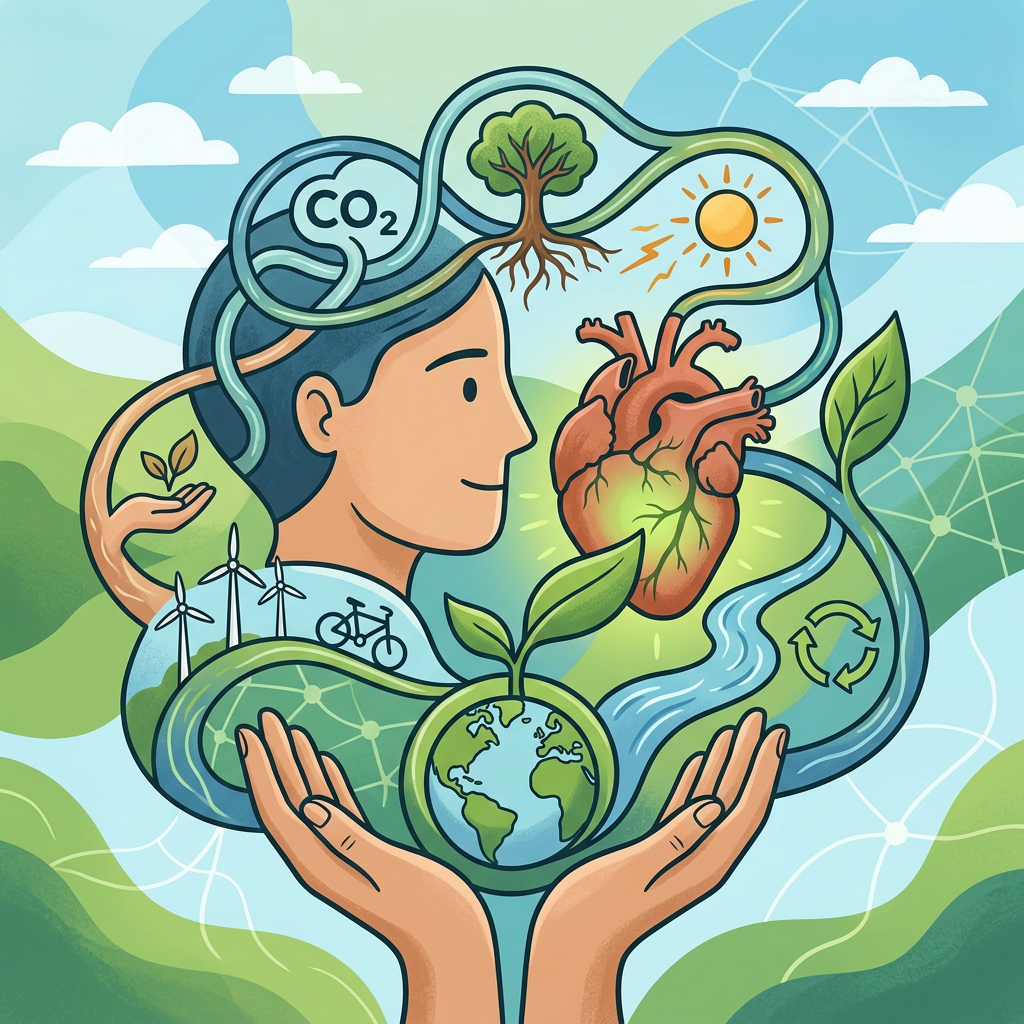
The Head, The Heart, and The Hands
Hayhoe posits that effective communication requires a tripartite approach:
- The Head: Addressing the facts and the science of what is happening.
- The Heart: Connecting these facts to values that people already hold.
- The Hands: Providing concrete, achievable actions that can be taken.
"Most corporate climate messaging starts and stops at the head," Hayhoe noted during the discussion. By piling on data that highlights the severity of the crisis without providing a pathway to success, companies are unintentionally creating a culture of doom. Without a clear sense of efficacy—the belief that an action will result in a meaningful outcome—employees and executives alike succumb to the "doom loop."
The Corrosive Nature of "Finger-Pointing"
This lack of efficacy is currently manifesting as a systemic bottleneck in global corporations. Hayhoe describes a pervasive "blame cycle" that prevents action:
- The Sustainability Officer claims they want to act, but lack the mandate from the CEO.
- The CEO claims their hands are tied by the Board of Directors.
- The Board insists that shareholders would revolt if the company prioritized climate over short-term returns.
This cycle is not merely a bureaucratic annoyance; it is corrosive. When executives deploy capital and effort toward climate targets only to see them slip, they begin to view climate action as a "failed project" rather than a strategic imperative. This erodes the internal belief that the climate crisis is winnable, which is exactly the point at which companies should be doubling down on their commitments.
Beyond Frameworks: A Bottom-Up Strategy
When asked what single lever a Fortune 500 CEO could pull to change the trajectory of their company’s climate performance, Hayhoe did not point to new renewable power-purchase agreements or updated science-based targets. Instead, she advocated for a radical shift in corporate culture: internal education and bottom-up inclusion.
Elevating Institutional Wisdom
Hayhoe suggests that the most valuable ideas for sustainability are often hidden in the daily routines of employees who have been on the job for years. She argues that CEOs should stop relying solely on top-down directives and frameworks. Instead, they should:
- Connect Climate to Daily Roles: Help employees see how their specific job function—be it logistics, finance, or HR—can contribute to the company’s climate goals.
- Create an Explicit Invitation for Ideas: Actively solicit bottom-up input from staff members who understand the operational realities of the company.
- Amplify Internal Thought Leadership: Elevate these employee-driven ideas to the level of company-wide strategy, validating the workforce’s contribution to the transition.
By shifting the focus from "compliance" to "contribution," companies can foster a sense of ownership that transcends the traditional fear-based model of engagement.
The Role of Trust and Identity
Hayhoe’s critique extends beyond the corporate world and into the scientific community itself. She has long argued that scientific literacy is a poor predictor of climate acceptance. Instead, identity is the primary filter through which individuals process climate data.
The Myth of Neutrality
In a 2024 paper co-authored with Christel van Eck and Lydia Messling, Hayhoe challenges the long-held tradition that scientists must maintain a facade of "neutrality" to be credible. She argues that this false objectivity actually diminishes trust. When scientists—or corporate leaders—are transparent about their values and why they care about the climate, they build deeper connections with their audience.
This is a lesson for the corporate sector: transparency about the "heart" of the issue is just as important as the data-driven "head." When a company explains that it is pursuing net-zero not just because of investor pressure, but because it aligns with its core values and long-term survival, it fosters a more resilient organizational identity.
Implications for the Future of ESG
The implications of Hayhoe’s insights for the Environmental, Social, and Governance (ESG) landscape are significant. As ESG faces increased political scrutiny and "anti-woke" backlash in several jurisdictions, the traditional, dry, data-heavy approach to sustainability is increasingly vulnerable.
If companies want to maintain their commitment to climate goals in a volatile political climate, they must pivot:
- Stop Relying on Fear: Disasters will continue, but using them as the primary marketing tool for sustainability will continue to result in paralysis.
- Focus on Wins: Celebrate small, tangible victories to build the collective sense of efficacy required for larger, systemic shifts.
- Humanize the Data: Move away from pure technical reporting and toward storytelling that connects to employee values.
A Long-Term Commitment
Hayhoe is putting these principles into action through her newsletter, Talking Climate, which focuses on training "trusted messengers" within communities. Her underlying message is one of endurance: the climate crisis is not a problem that will be solved in a single podcast episode, a single board meeting, or a single election cycle.
As the corporate world navigates an increasingly complex global environment, the challenge will be to maintain the "hope and healing" approach that Hayhoe champions. By moving away from the assumption that the world will be scared into action, and toward a strategy that empowers individuals to believe their contributions matter, companies may finally move from the stagnation of the last two decades into a more active, intentional future.
The path forward, as Hayhoe suggests, is not found in more frameworks or more catastrophic projections. It is found in the hands of the people already inside the organization, waiting for the permission to lead.
Joel Makower is the Chairman and Co-founder of Trellis Group. For more insights on the future of corporate sustainability, listen to the Two Steps Forward podcast at twostepsforwardpodcast.com.