For decades, the study of Indigenous architecture in Latin America has been relegated to the sidelines of "primitive" technology or "vernacular" curiosity. Western discourse typically focuses on the tangible—the specific way thatch is woven, the durability of certain hardwoods, or the thermal properties of mud. However, a growing movement within architectural theory, led by Indigenous thinkers and contemporary practitioners, argues that this material-centric approach is a form of colonial reductionism.
The core of Indigenous "architecture"—a term that itself struggles to translate across cultures—is not found in the permanence of structures, but in a complex cosmology that weaves together territory, body, memory, and spirit. In this worldview, the built environment is an extension of social organization and the forest itself. Unlike Western traditions, which often view architecture as a means to conquer or partition nature, Indigenous spatial practices are grounded in reciprocity.
Recent discoveries and theoretical shifts are forcing the global architectural community to "unlearn" extractive models of sustainability. From the ephemeral "hammock-hanging" spaces of the Yanomami to the sophisticated ancient artificial islands of the Amazon, these practices suggest that true sustainability is not a technical checklist but a relational state of being.
Chronology: From Ancestral Origins to the 2025 Rediscoveries
The evolution of these spatial worldviews follows a timeline that stretches back millennia, yet remains vibrantly contemporary:
Pre-Colonial Foundations and the "Long Memory"
For thousands of years, the Indigenous peoples of the Amazon and the Andes developed sophisticated methods of environmental management. These were not "buildings" in the static sense but systems of living. In the Amazon, "Terra Preta" (dark earth) and artificial mounds represented a long-term architectural project that enhanced biodiversity while providing habitation.
The Colonial Interruption
The arrival of European powers introduced an ontological barrier. Western architecture brought the concept of the "subject" (the human) vs. the "object" (the building/nature). For centuries, Indigenous spatial knowledge was suppressed, categorized as "precarious," or viewed as a resource to be exploited rather than a philosophy to be understood.
The Late 20th Century: Cosmological Recognition
In the 1980s and 90s, anthropologists and thinkers like Davi Kopenawa and Ailton Krenak began to articulate the Yanomami and Krenak worldviews to a global audience. Kopenawa’s work, particularly in The Falling Sky, established the concept of the forest as a living entity (urihi) where humans are not owners but participants.
March 2025: The Fonte Boa Revelation
A pivotal moment occurred in March 2025 in Fonte Boa, Amazonas. The fall of a centuries-old tree revealed funerary urns buried in the floodplain soil. Further investigation uncovered an ancient artificial island constructed from earth, ceramic fragments, and plant fibers. This discovery proved that Indigenous architecture had long mastered "amphibious" living, adapting to seasonal flood cycles through sophisticated earthworks rather than rigid barriers.
July 2026: The Rise of Transspecies Architecture
By 2026, the architectural community has increasingly embraced the concept of "Transspecies Architecture." This movement, highlighted in recent academic and professional journals, seeks to move beyond human-centric design, drawing heavily on the Indigenous premise that all entities—plants, animals, and spirits—possess agency in the construction of space.
Supporting Data: Materiality as a Relational Tool
To understand the depth of Indigenous spatiality, one must look at how materials are used as expressions of relationship rather than just building blocks.
The Yanomami "Place of the Hammock"
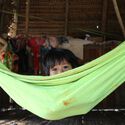
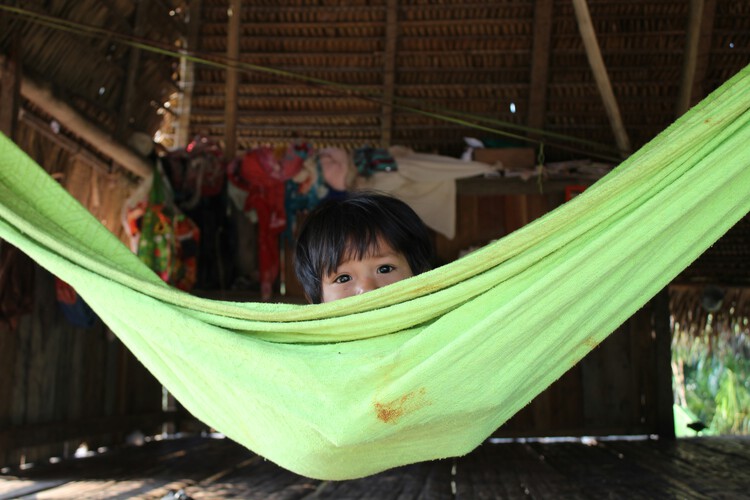
As researcher Thiago Benucci defines it, Yanomami architecture is "the place where hammocks are hung." It is a relational space, situated in time and territory, characterized by its ephemerality. The Yanomami do not seek to build monuments that outlast the forest; instead, their settlements are transient evidence of a permanent relationship with the urihi (forest-land). Data suggests that this approach results in a carbon footprint that is virtually non-existent, as materials return to the earth without leaving toxic traces.
The Tupinambá Earth Medicine
In Tupinambá culture, the earth is not a passive material. As Daniela Alarcon’s research notes, the earth used for construction is the same earth used for healing. A specific remedy for snakebites involves consuming clumps of earth from an anthill. This indicates that the "materiality" of a house is inseparable from its "vitality." The floor and walls of a dwelling are seen as part of a medicinal and spiritual landscape, not just a structural enclosure.
Archaeological Sophistication in the Amazon
The 2025 discovery at Lake Cochila revealed that ancient Amazonians used "engineered soil" to create islands. These structures included:
Ceramic-Fiber Composites: Used to stabilize earth against river erosion.
Multi-Purpose Sites: The island served as a habitation zone, a ritual space, and a cemetery, blending the domains of the living and the dead into a single architectural unit.
Official Perspectives: The Voices of Reform
The shift toward Indigenous worldviews in architecture is championed by key figures who argue for a fundamental decolonization of the discipline.
Davi Kopenawa: The Forest as Architecture
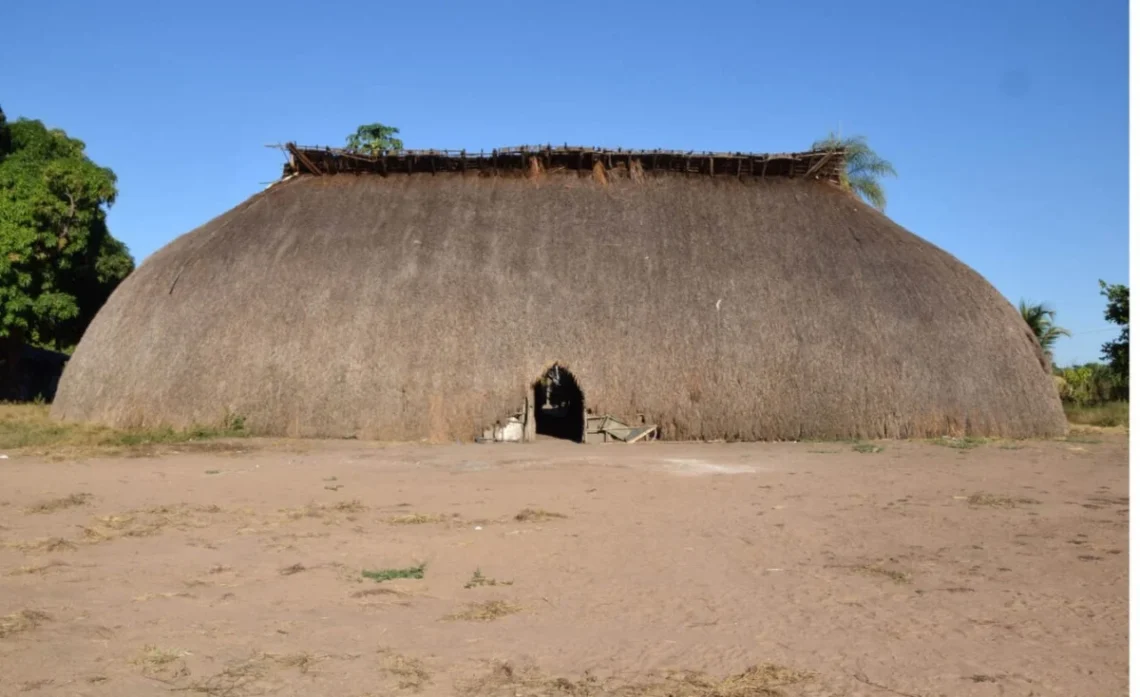
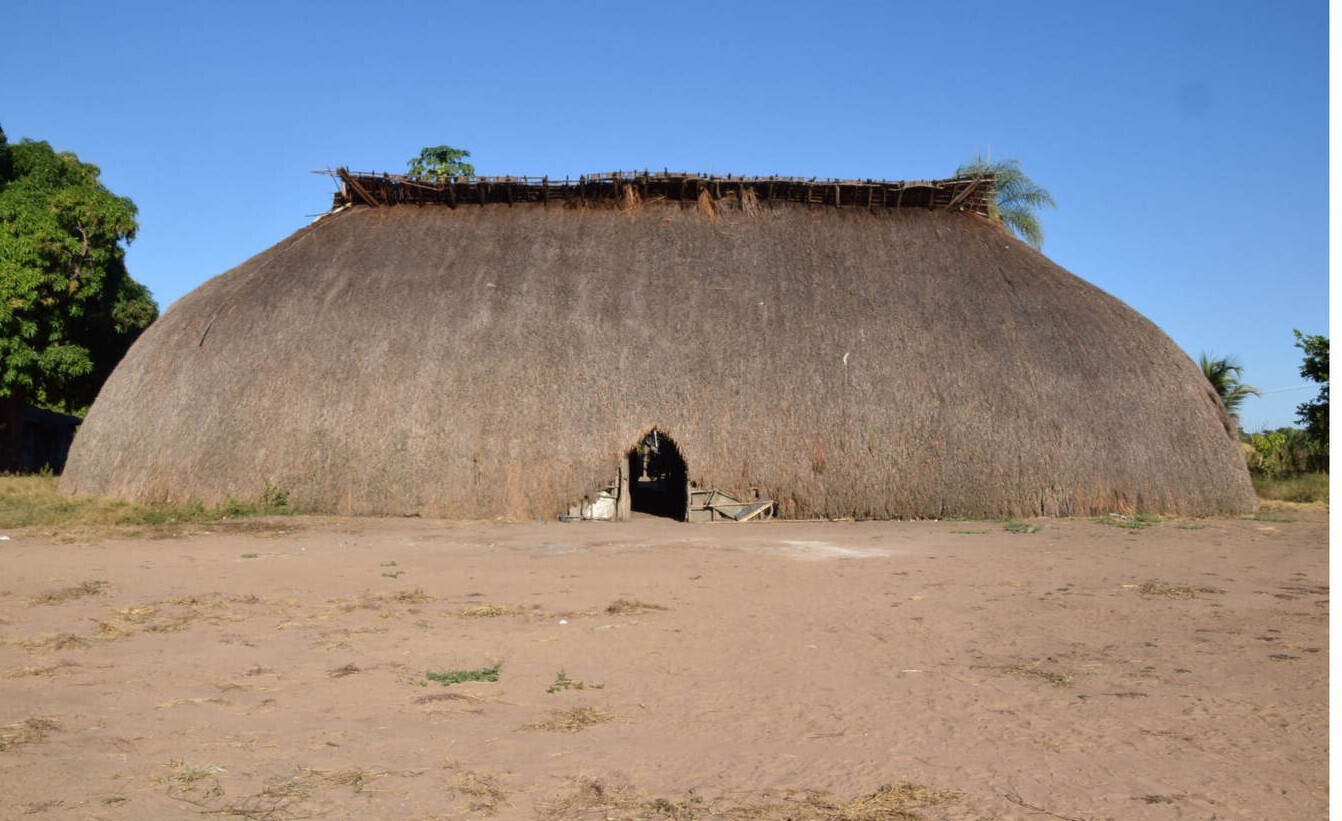
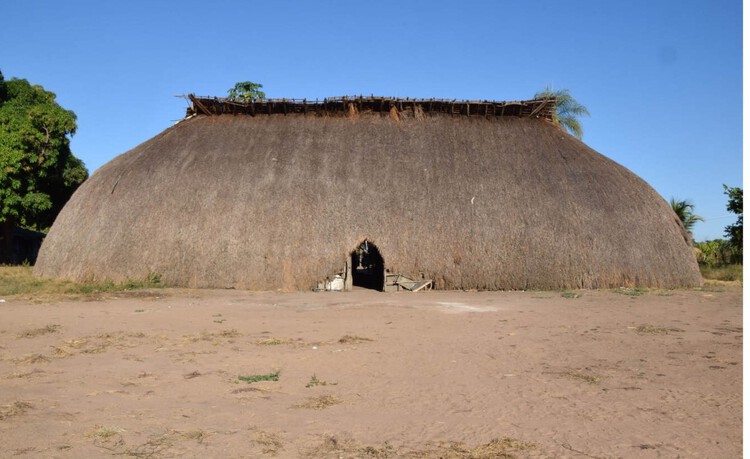
The Yanomami leader and shaman has long argued that the Western separation of "humanity" from "nature" is the root of the climate crisis. Kopenawa emphasizes that the Yanomami maloca (communal house) is a microcosm of the universe. To destroy the forest is to destroy the architecture of the sky.
Ailton Krenak: Blending into the Landscape
Ailton Krenak, a renowned Indigenous leader and member of the Brazilian Academy of Letters, offers a radical critique of modern landscape architecture. "Instead of operating in the landscape, we should blend in with it," Krenak suggests. He posits that the modern urge to "fix" or "improve" land is a symptom of a civilization that has lost its sense of belonging to the earth.
Ana María Gutiérrez and the Organizmo Foundation
Colombian architect Ana María Gutiérrez has become a leading voice in "unlearning" colonial architectural education. Through her Organizmo Foundation, she promotes ancestral knowledge as a living, evolving science.
"Our idea of progress is completely based on colonial and extractive practices," Gutiérrez stated in a 2025 interview. "People talk about sustainability, but what exactly are we sustaining? We need to recognize that traditional communities have been practicing regenerative design for millennia."
Implications: Architecture for a Post-Extractive World
The integration of Indigenous worldviews into contemporary architecture has profound implications for the future of the built environment, particularly in the face of the global climate emergency.
1. The Death of the "Architect-Author"
In the Indigenous model, the "architect" is not a singular figure who imposes a vision. Building is a collective act of kinship and community. This challenges the Western prestige system of "starchitects" and shifts the focus toward participatory, community-led design that prioritizes social cohesion over aesthetic novelty.
2. Redefining Sustainability
Current Western sustainability metrics often focus on "doing less harm" through technology (e.g., solar panels, LEED certification). Indigenous worldviews offer a "regenerative" model where the act of inhabiting actually enhances the ecosystem. This moves the goalpost from "sustainable" (maintaining the status quo) to "symbiotic" (improving the health of the land).
3. Ontological Humility
Perhaps the most significant implication is a shift in architectural philosophy toward "ontological humility." This involves recognizing that humans are not the only architects on the planet. By observing how Indigenous cultures share space with animals, spirits, and the elements, modern architecture can begin to design for a "transspecies" world.
4. Urban Planning and "Forest-Cities"
The archaeological evidence of "urban" Amazonian structures provides a blueprint for future cities. These findings suggest that high-density living can coexist with high-biodiversity environments. Future urban planning in tropical regions may move away from concrete grids and toward "amphibious" and "forested" urbanisms that respect natural hydrological cycles.
In conclusion, the architecture of Indigenous peoples in Latin America is not a relic of the past to be archived; it is a sophisticated, living philosophy. It teaches that building is not about occupying the Earth, but about learning how to live with it. As the world searches for ways to postpone the "end of the world," the answers may lie not in new technologies, but in the ancient wisdom of hanging a hammock in a forest that is both home and kin.